Coffee Water Temperature Guide: Ideal Temp for Every Method

Boiling water ruins coffee. Most people don't know that.
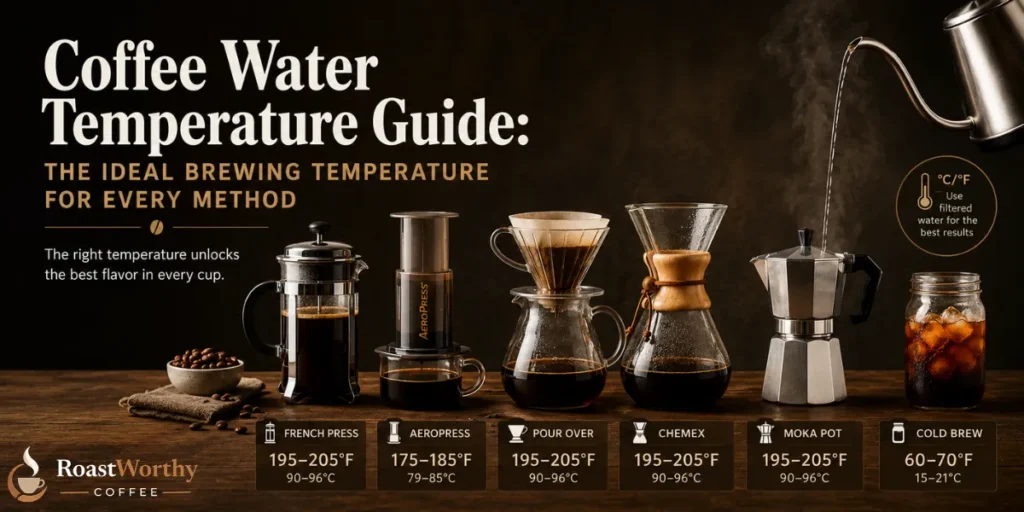
The best coffee water temperature sits between 90–96°C (195–205°F) — never the full 100°C rolling boil straight off the kettle. That's the range the Specialty Coffee Association has stood behind for years, and it's the single easiest fix for a brew that tastes off.
Here's what the heat is actually doing. Water is the solvent. It pulls acids, sugars, and oils out of the grounds in a specific order. Too cool, and it stops short. Too hot, and it strips the harsh stuff you don't want. Temperature is the dial that controls all of it. 🌡️
I logged eight hundred roast profiles before I trusted my own palate over a thermometer. You don't have to. The numbers below are the shortcut.
Coffee Water Temperature — Key Takeaways
Why 90–96°C Is the Sweet Spot
Coffee extraction is a chemistry problem with a clean answer.
Below 90°C, water can't dissolve enough of the good solubles. You get under-extraction — sour, sharp, thin. That nasty lemon-tang that makes people add sugar. It's not the bean's fault. It's the heat.
Push past 96°C and you tip into over-extraction. Now you're pulling the bitter, astringent compounds that come out last. Dry, hollow, burnt-tasting. ⚗️
The 90–96°C band is where the desirable acids, sugars, and body come out in balance — without the bitterness chasing them. Target roughly 18–22% extraction and you're in specialty coffee territory.
One more thing the data shows clearly: a 10°C rise in brew temperature roughly doubles the rate of extraction. So small temperature swings aren't small. They're the difference between a great cup and a flat one.
Ideal Brewing Temperature by Method
Different methods contact water and grounds for wildly different lengths of time. Contact time changes the math. A 25-second espresso shot and a 4-minute French press steep cannot use the same logic.
Here's the breakdown.
| Brewing Method | Ideal Water Temp | Contact Time | Notes |
|---|---|---|---|
| Espresso | 90–96°C (194–205°F) | 25–30 sec | Start at 93°C; temperature stability is critical |
| Pour-over (V60, Chemex) | 90–96°C (195–205°F) | 2.5–4 min | Just off boil; let kettle rest 30 sec |
| French press | 92–96°C (198–205°F) | 4 min | Full immersion tolerates higher heat |
| Drip / batch brewer | 92–96°C (196–205°F) | 4–6 min | SCA-certified machines hold this automatically |
| AeroPress | 80–85°C (175–185°F) | 1–2 min | Lower works because of short, pressurized contact |
| Cold brew | 20–24°C (room temp) | 12–18 hrs | Time replaces heat entirely |
Espresso
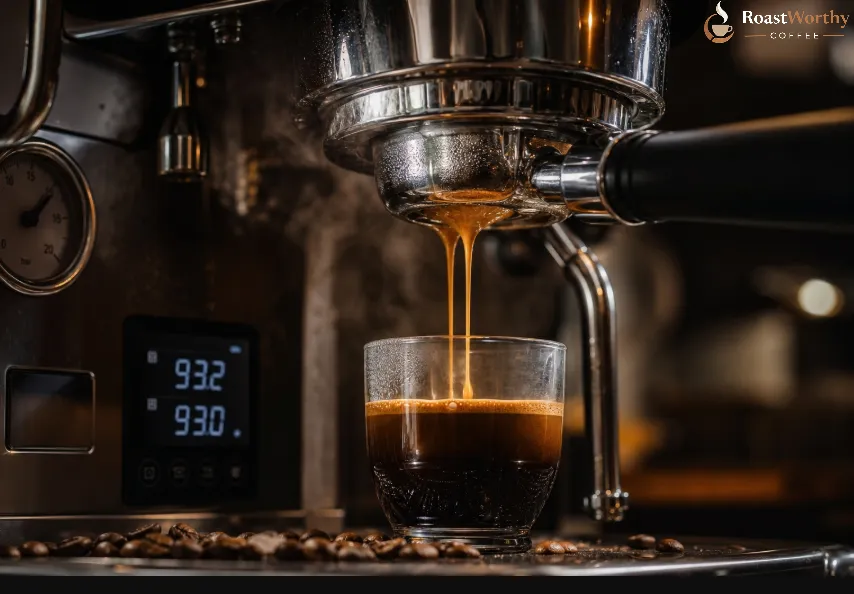
The water temp for espresso is 90–96°C, and 93°C (200°F) is the reliable starting point for most beans. Lighter roasts climb toward 96°C. Darker roasts drop toward 90–92°C to avoid burnt, ashy notes.
But the number is only half the story. Espresso machines must hold that temperature through the entire shot — a concept called temperature stability or thermal stability.
A machine that swings 3°C mid-extraction gives you a different cup every time. PID controllers exist for exactly this reason. ☕
Pour-over
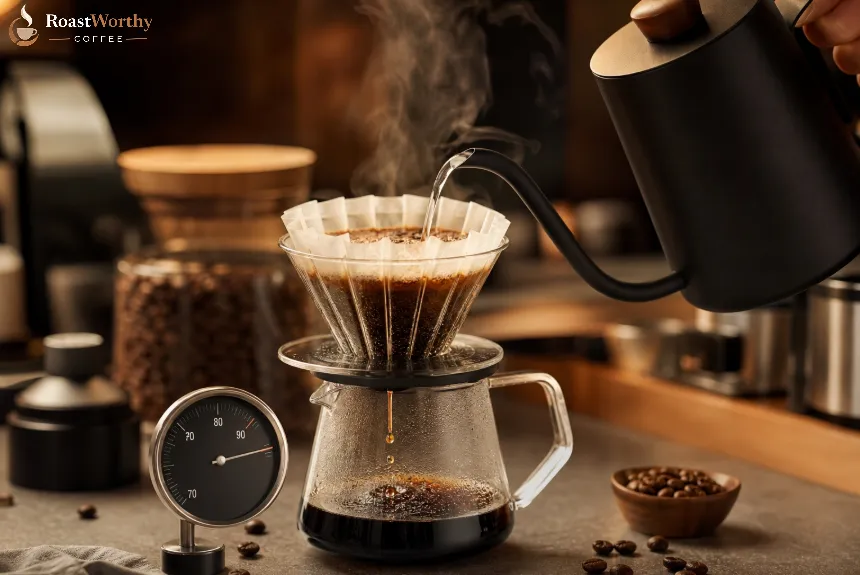
V60, Chemex, Kalita — all live in the 90–96°C window. Boil the water, kill the heat, wait about 30 seconds. You'll land near 94°C. That's perfect for most pour-overs.
Lighter, denser beans? Pour hotter and steeper. They resist extraction and need the energy.
French Press
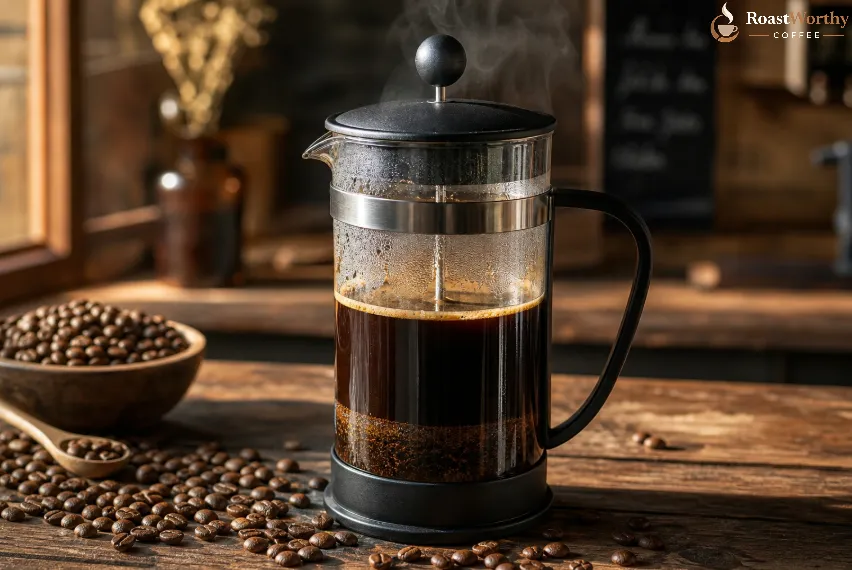
Full immersion is forgiving. The grounds sit in the water the whole time, so 92–96°C works cleanly. Coarse grind, four-minute steep, then plunge. Don't let it sit longer — that's where bitterness creeps in.
AeroPress
The outlier. AeroPress recommends 80°C (175°F) for dark roasts and 85°C (185°F) for medium and light. Lower than everything else on this list.
Why? Short contact time plus light pressure extracts efficiently. Hotter water on an AeroPress over-extracts fast and turns harsh.
Cold Brew
No heat at all. Room-temperature water — around 20–24°C — does the work over 12 to 18 hours. Time replaces temperature. The result is low-acid, smooth, naturally sweet. Different chemistry entirely.
Roast Level Changes Everything
The rule is simple and it holds: lighter roasts brew hotter, darker roasts brew cooler.
Here's why. Dark roasts are more porous and more soluble. They extract aggressively. Hit them with 96°C water and you blow past the sweet spot into bitter, smoky, over-extracted territory. Drop to 87–90°C and the rich, chocolatey notes come through clean.
Light roasts are dense and stubborn. They resist extraction. You need 93–96°C just to coax the fruit and florals out. Brew a light roast too cool and it tastes like sour water. No joke.
Adjust within these by 1–2°C and taste the difference. The curve doesn't lie.
Tools That Hold the Right Temperature
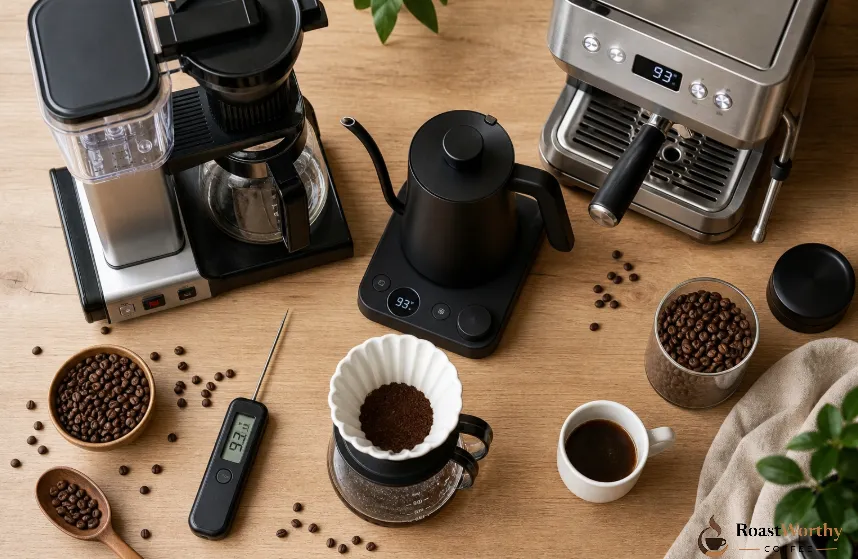
You don't need a lab. You need consistency.
If you brew without a variable kettle, the “boil then wait 30 seconds” trick gets you within range. Free, and it works.
Common Temperature Mistakes
Most bad coffee at home comes down to three errors.
- Pouring straight off the boil. 100°C scorches grounds and over-extracts. Wait 30 seconds.
- Cold or stale water from a thermos. Reheated, flat water under-extracts and tastes dull.
- Ignoring roast level. Using espresso-machine heat on a dark roast you bought for French press. Match the temp to the bean.
Fix these and your coffee improves more than any bean upgrade will deliver.
FAQ Related to Coffee Brewing Temperature
What is the best water temperature for coffee?
The ideal range is 90–96°C (195–205°F), per the Specialty Coffee Association. It applies to most brewing methods except AeroPress and cold brew.
Should I use boiling water for coffee?
No. Boiling water at 100°C over-extracts and creates bitterness. Boil, then let it rest about 30 seconds to drop into the 90–96°C range.
What water temperature is best for espresso?
Aim for 90–96°C, with 93°C (200°F) as your starting point. Lighter roasts go hotter; darker roasts go cooler. Temperature stability throughout the shot matters as much as the number.
Why does my coffee taste sour or bitter?
Sour usually means under-extraction — water too cool. Bitter usually means over-extraction — water too hot or steeped too long. Adjust temperature before anything else.
Does roast level change the ideal brewing temperature?
Yes. Light roasts need 93–96°C to extract fully. Dark roasts do better at 87–92°C to avoid bitterness. Medium roasts sit comfortably in the middle.
What temperature should AeroPress water be?
Lower than other methods — 80°C (175°F) for dark roasts and 85°C (185°F) for medium and light. The short, pressurized brew extracts efficiently at cooler temps.
How This Fits the Bigger Brewing Picture
Temperature is one of four levers. The others: grind size, brew ratio, and time. They interact. Change one and you often have to rebalance another.
But temperature is the one most people get wrong and never check. Nail it first. Then dial in grind and ratio. That's the order that gets you to genuinely good specialty coffee at home — without buying anything you don't already own.
Taste it. Write it down. Brew it again.
More Recommendations from RoastWorthy Coffee