Matching Coffee Roast Levels with Brewing Methods (2026)


Key Takeaways
Light roasts need heat, control, and pour-over or AeroPress to extract cleanly. Medium roasts adapt to almost anything. Dark roasts need speed, coarser grinds, and lower water temps. Roast level and brew method are a system — change one, adjust the other.
There's a farm in Sidama I think about when I brew a light roast pour-over. Not the cup — the altitude. 2,100 metres. Washed process. Raised-bed dried. That delicacy doesn't survive a French press. Matching coffee roast levels with brewing methods isn't a style preference. It's how you honour what's already in the bean.
Most home brewers pick a roast, pick a brewer, and wonder why it tastes flat or sharp. The roast and the brew method are a system. Change one without adjusting the other and you're working against yourself.
❓ Why Roast Level Changes How Coffee Brews
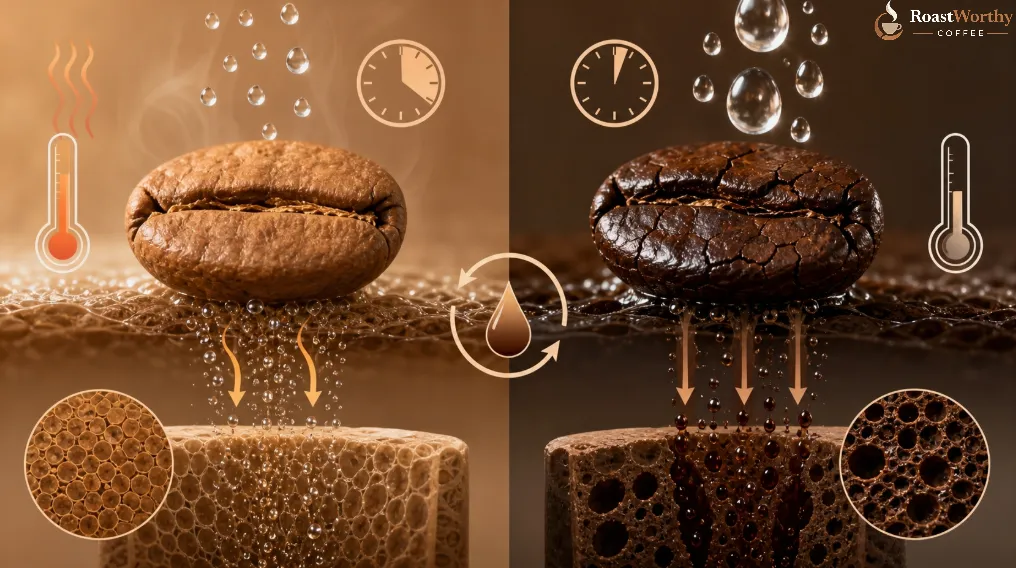
Here's what most guides skip: roast level physically changes the bean.
A light roast is dense. Its cellular structure is mostly intact. It takes longer to extract, needs higher water temperatures, and releases flavours slowly. A dark roast is fragile, porous, and oily at the surface. It extracts fast — sometimes too fast.
Solubility is the variable that controls everything. Light roasts have lower solubility. Dark roasts dissolve more readily into water. Brew them with identical parameters and you'll over-extract one while under-extracting the other.
This isn't abstract. It shows up in your cup every single time.
✨ Light Roast: Where to Brew It — and Where Not To
Light roasts carry the origin's character most honestly. Floral notes. Bright acidity. Stone fruit. Bergamot. These come from the bean's natural compounds — not from roast chemistry. 🌱
The terroir is doing something here. Your job is not to get in the way of it.
Pour-Over (V60, Chemex, Origami)
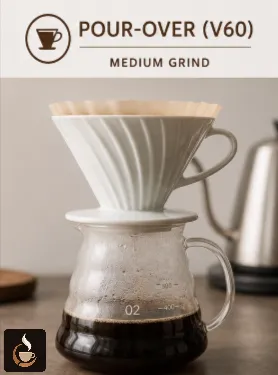
This is the native habitat of a light roast. Pour-over brewing gives you direct control over flow rate, bloom time, water temperature, and draw-down speed. For light roasts, that precision matters more than equipment.
Brew at 94–96°C. Light roasts need heat to open up. Lower temperatures under-extract them — you end up with thin, sour coffee that tastes like something is missing. It is.
Use a 1:15 brew ratio. Grind medium-fine. Bloom for 40–45 seconds using twice the coffee's weight in water. That pre-infusion releases trapped CO₂ and prepares the grounds for even extraction.
A well-extracted light roast pour-over from a washed Ethiopian or Colombian bean can taste like a fruit tisane. That's not romantic exaggeration. That's the bean.
AeroPress
AeroPress works well with light roasts — especially for travel or small-batch brewing. Use the inverted method. Steep for 90–120 seconds at 90–93°C. Press slowly. This gives the light roast enough contact time to extract sweetness without turning sharp.
What to Avoid with Light Roasts
Skip the French press. Coarse grind and long immersion time work against delicate light roast compounds. You'll get murky, uneven extraction. The origin nuance disappears into the cup.
Standard drip machines running at 85°C are also a problem. The temperature is too low for dense, lightly roasted beans. You'll under-extract every time.
☕ Medium Roast: The Flexible Middle Ground
Medium roasts are the workhorse of home brewing. They've lost some of the origin's brightest acidity but gained roast sweetness — caramel, brown sugar, toasted grain. Body is fuller. Bitterness stays low.
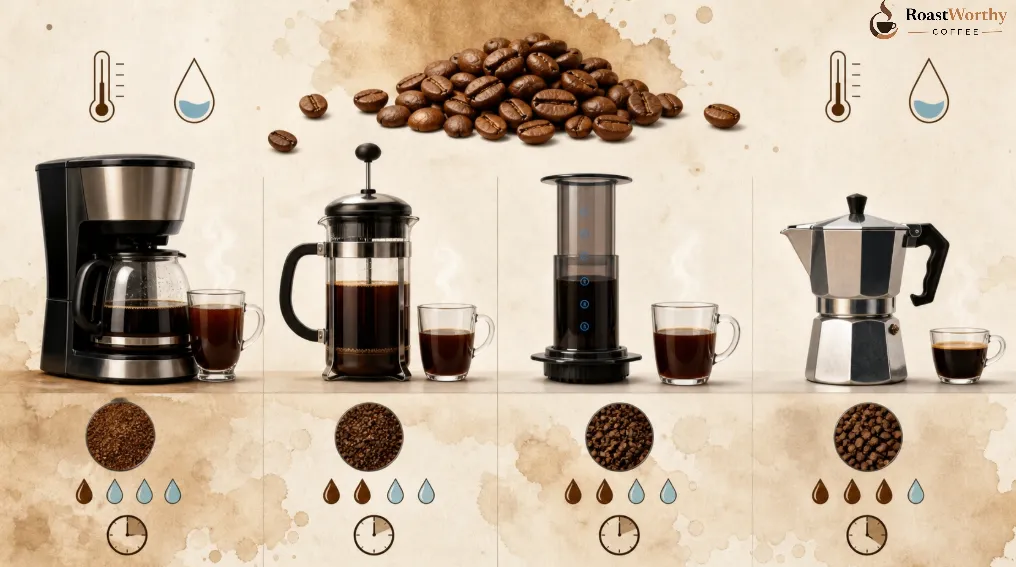
The trade-off is flexibility. A medium roast adapts to almost any brew method without punishing you for minor imprecision.
Drip Coffee Machine
Medium roasts were practically built for drip brewing. Consistent temperature, repeatable extraction, low maintenance. Set your grind to medium, use a 1:16 ratio, and the machine does the heavy lifting.
Use 91–93°C water if your machine allows temperature control. Most don't. That's fine — medium roasts tolerate the range without collapsing.
French Press
Medium roasts shine in French press. Immersion brewing pulls out oils that paper filters remove. That's where the full body and mouthfeel come from.
Use a coarse grind, a 1:15 ratio, and steep for exactly 4 minutes. Plunge slowly. The result is round, heavy in the cup, with sweetness that holds up even as it cools.
A medium roast Brazilian or Colombian works especially well here — the terroir plays into the richness.
AeroPress and Moka Pot
Both work cleanly with medium roast. AeroPress gives you a brighter, cleaner cup than French press.
Moka pot intensifies the caramel and roast sweetness — especially good with medium-dark roasts from Brazilian or Sumatran origins.
⚡ Dark Roast: High Tolerance, Low Margin for Error
Dark roasts get a bad reputation they don't always deserve. ⚗️
The story is that dark means low-quality — roasting away defects. Sometimes that's true. But a well-sourced, intentionally dark-roasted bean has real depth.
Bittersweet chocolate. Dried fig. Cedar. These are legitimate flavour outcomes, not just bitterness wearing a disguise.
The problem is that dark roasts extract fast. Brewing a dark roast the same way as a light roast over-extracts it in minutes. You get ash and sharpness instead of depth.
Espresso
Dark roasts and espresso were made for each other — Italian coffee culture built itself around this pairing for a reason. High-pressure, short extraction time. The speed works in dark roast's favour.
Use a slightly extended output ratio: 1:2.2 to 1:2.5. This prevents over-concentration. Grind one click coarser than you think you need.
Drop water temperature to 88–91°C — the porosity of a dark bean extracts faster, and cooler water slows that down to a workable pace.
Done right, a dark roast espresso pulls with heavy golden-brown crema. Bittersweet at the front. Smooth on the finish.
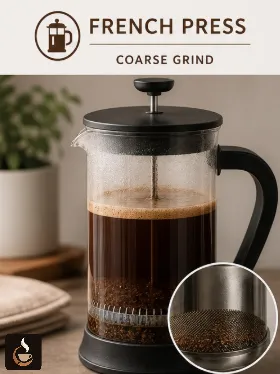
French Press
French press is a natural match for dark roasts. Coarse grind, oil-preserving immersion extraction, no paper filter. A dark roast in a French press is rich, full-bodied, and forgiving.
Use a 1:14 ratio — slightly stronger than medium — and steep for 3.5 minutes, not 4. Dark roasts over-extract fast with prolonged contact time.
Cold Brew
Dark and medium-dark roasts produce the best cold brew. The slow, cold extraction softens bitterness and draws out chocolate, brown sugar, and caramel. Use a 1:8 ratio for concentrate, 1:15 for ready-to-drink.
Steep 18–24 hours at room temperature or refrigerated.
Light roasts in cold brew go flat. The low extraction temperature can't pull out their delicate aromatic compounds. There's a whole story in a dark roast cold brew that you won't find in a light one. ☕
What to Avoid with Dark Roasts
Pour-over at high water temperatures. Running 95°C water over a porous, brittle dark roast extracts bitter compounds fast. If you insist on pour-over with a dark roast, drop to 88–90°C and widen the ratio to 1:17.
Long AeroPress steep times also over-extract dark roasts quickly. Keep contact time under 60 seconds.
👀 The Variable Most Brewers Ignore: Grind Size Across Roast Levels
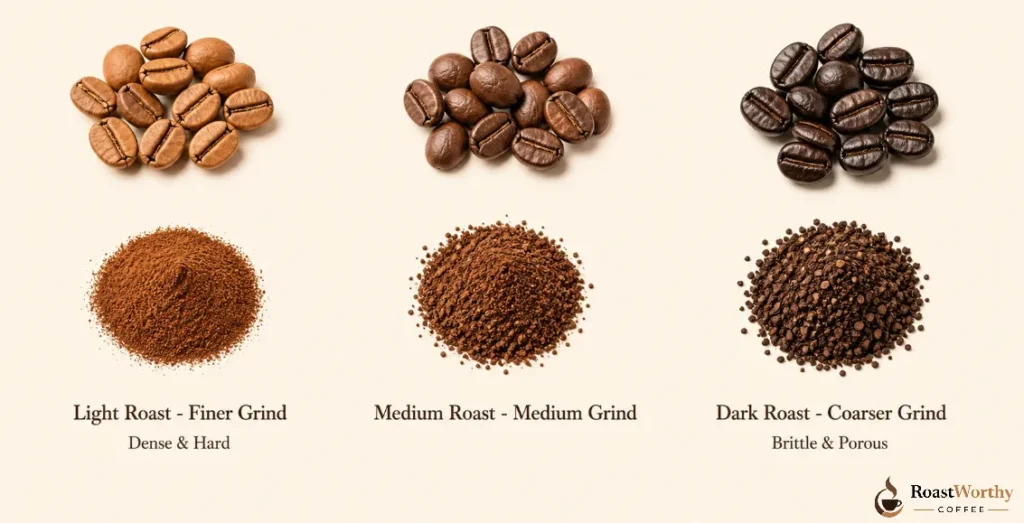
Roast level changes the physical structure of the bean. That changes how it grinds.
Light roasts are dense and hard. They resist the burrs more. They produce slightly uneven particle distribution at certain grinder settings. Grind medium-fine for pour-over and expect to dial in for two or three batches.
Dark roasts are brittle and porous. They shatter rather than grind. Always go one step coarser when switching from a light roast to a dark roast on the same brew method. That single adjustment prevents over-extraction.
The consistent rule: lighter roast = finer grind. Darker roast = coarser grind. Same brew method, different beans, different setting. Always.
🔥 Matching Coffee Roast Levels with Brewing Methods at a Glance
| Brew Method | Best Roast Level | Water Temp | Brew Ratio | Grind Size |
|---|---|---|---|---|
| Pour-Over (V60, Chemex) | Light | 94–96°C | 1:15 | Medium-fine |
| AeroPress | Light / Medium | 90–93°C | 1:15 | Medium-fine |
| Drip Machine | Medium | 91–93°C | 1:16 | Medium |
| French Press | Medium / Dark | 93–95°C | 1:14–1:15 | Coarse |
| Espresso | Medium / Dark | 88–93°C | 1:2–1:2.5 | Fine |
| Cold Brew | Medium-Dark / Dark | Cold / room temp | 1:8 (concentrate) | Coarse |
| Moka Pot | Medium / Dark | Boiling base | 1:7 | Medium-fine |
🎯 Roast × Brew Method: Common Questions
What roast level works best for pour-over coffee?
Light roast. Brew at 94–96°C with a 1:15 ratio — the controlled flow rate extracts floral notes and fruit acidity that heavier brew methods lose.
Can you use light roast in a French press?
You can, but it rarely works well. Coarse grind and long steeping time under-extract light roasts — the result is flat and slightly sour. Use pour-over or AeroPress instead.
Why does dark roast turn bitter in pour-over?
Dark roasts are porous and extract fast. High water temperature over-extracts them quickly. Drop to 88–90°C, go one step coarser on grind, and widen your ratio to 1:17.
What is the best roast level for espresso?
Medium to dark roast. Medium gives balanced, sweet shots with good crema — ideal for milk drinks. Dark gives bittersweet, heavy shots that work well straight.
Does roast level affect how much coffee you should use?
Yes. Dark roasts are less dense by volume. Always weigh in grams — never measure by scoops. Scoops give inconsistent results across roast levels.
Which roast makes the best cold brew?
Medium-dark or dark roast. Cold extraction suppresses light roast brightness. Dark roasts give chocolate, brown sugar, and dried fruit — smooth and naturally sweet. Use a 1:8 ratio for concentrate.
More Recommendations from RoastWorthy Coffee