6 Best Gooseneck Kettles in 2026, Ranked for Pour Over

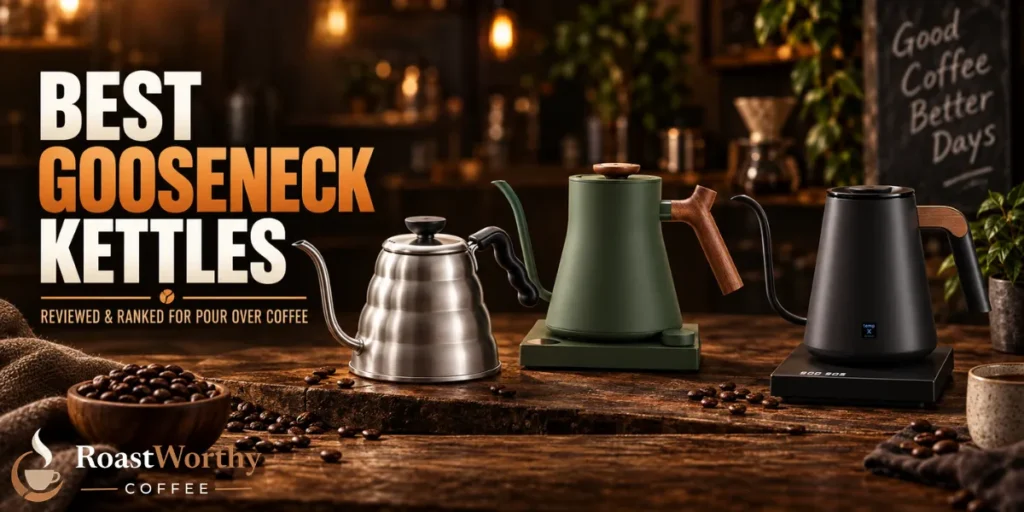
The best gooseneck kettle is not the one with the biggest screen or longest feature list. It is the one that gives you a repeatable flow rate, reaches the right temperature, and stays comfortable through a three-minute pour.
For most brewers, the Fellow Stagg EKG Pro is the strongest overall choice. The Timemore Fish Pro X comes close and offers more aggressive flow control. Budget-minded buyers should look at the Bonavita Classic 1.0L.
Key Takeaway
The Fellow Stagg EKG Pro is the best gooseneck kettle for most serious pour-over brewers in 2026. It combines accurate temperature control, a controlled spout, a built-in timer, and useful scheduling features.
Choose the Timemore Fish Pro X for faster heating and wider flow adjustment. Pick the Hario Buono if you want a simple stovetop kettle that may outlast every electric model on this list.
Best Gooseneck Kettles at a Glance
| Rank | Gooseneck kettle | Best for | Capacity | Type | Score |
|---|---|---|---|---|---|
| 1 | Fellow Stagg EKG Pro | Best overall | 0.9 L | Variable temperature electric | 9.4/10 |
| 2 | Timemore Fish Pro X | Best precision and flow control | 0.9 L | Variable temperature electric | 9.2/10 |
| 3 | Bonavita Classic 1.0L | Best value | 1.0 L | Variable temperature electric | 8.8/10 |
| 4 | OXO Adjustable Temperature Pour-Over Kettle | Best everyday usability | Not stated | Variable temperature electric | 8.7/10 |
| 5 | Brewista Artisan | Best design and larger batches | 1.0 L | Variable temperature electric | 8.5/10 |
| 6 | Hario V60 Buono | Best stovetop kettle | 0.8 L practical | Stovetop | 8.4/10 |
How I Ranked These Pour-Over Kettles
A kettle is part heater, part flow-control tool. Both jobs matter.
I weighted pour control at 30%, temperature accuracy and stability at 25%, ergonomics at 15%, heating speed at 10%, capacity at 10%, and value at 10%.
A fast kettle with a clumsy spout loses points. So does a beautiful kettle that overshoots temperature or becomes tiring during a slow pulse pour.
Flow control matters more than raw boiling speed. A V60 recipe may use pours as small as 40 to 60 grams. A kettle that jumps from a trickle to a flood makes repeatable brewing harder.
1. Fellow Stagg EKG Pro: Best Gooseneck Kettle Overall
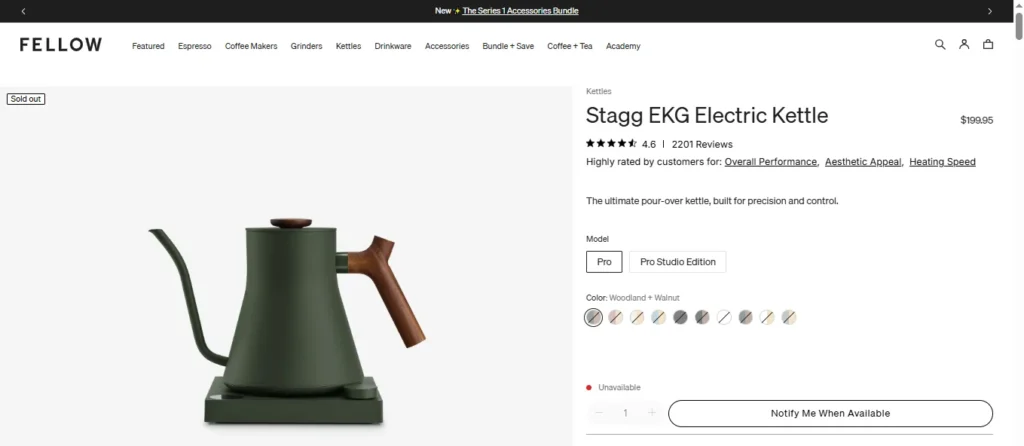
The Fellow Stagg EKG Pro gets the main things right. Its precision spout supports a slow, steady stream, while the counterbalanced handle keeps wrist movement controlled.
The 0.9-litre stainless steel kettle offers temperature settings from 40°C to 100°C. It also includes a brew stopwatch, scheduled heating, altitude adjustment, and hold settings from 15 to 60 minutes.
Its biggest strength is consistency. The Stagg makes it easier to repeat the same bloom, pulse pattern, and agitation level each morning.
The slower maximum flow is intentional. That suits a V60, Kalita Wave, Origami, or small Chemex. It becomes annoying when you need to fill a French press quickly or make tea for four people.
The price is the obvious weakness. You are paying for control, interface quality, and countertop design. You are not getting more capacity.
Verdict: This one earns its price for people who brew pour-over coffee several times per week.
2. Timemore Fish Pro X: Best for Precision and Flow Rate
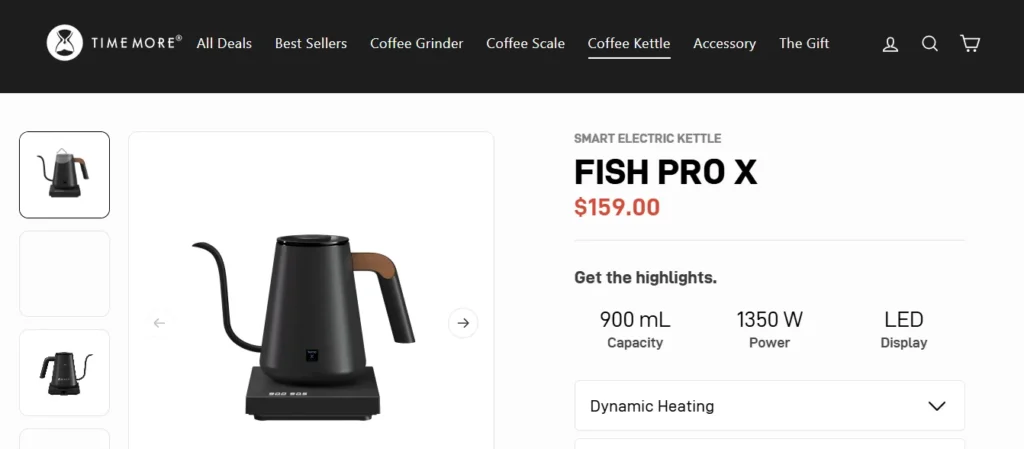
The Timemore Fish Pro X is the sharper technical tool. It has a 0.9-litre capacity, 1350-watt heating system, half-degree temperature adjustment, and temperature stability rated within ±0.5°C.
Its spout can move from a very low trickle to roughly 16 grams per second. That wider range gives experienced brewers more control over agitation.
The Fish Pro X is the better choice for people who actively change pouring styles. You can run a gentle central pour for a low-agitation brew, then increase flow for a fast final pulse.
Timemore also includes altitude-aware boiling and dry-boil protection. Those features matter more than they sound. Water boils below 100°C at elevation, and a kettle that keeps driving heat can spit or boil over.
The touch-style temperature strip takes some adjustment. Physical knobs remain easier when your hands are wet.
Availability can also vary by market. Check voltage and regional support before ordering an imported model.
Verdict: Faster and more adjustable than the Fellow. Slightly less intuitive.
3. Bonavita Classic 1.0L: Best Value Variable Temperature Kettle
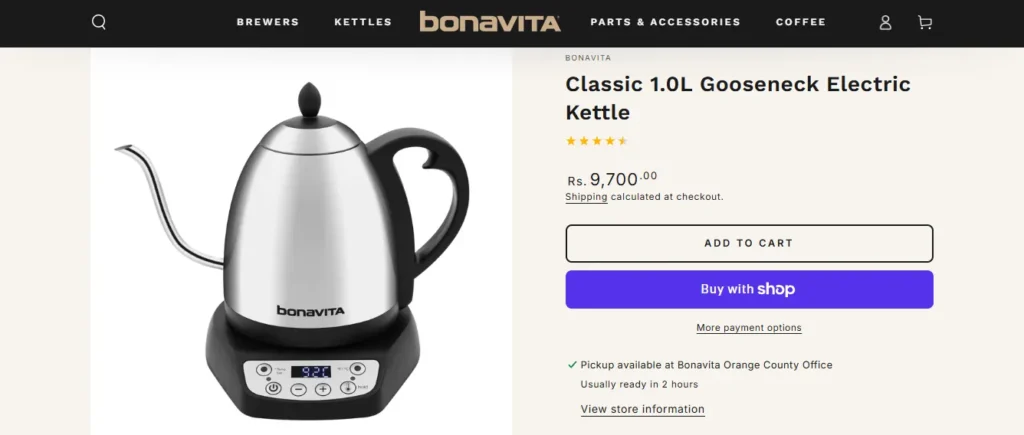
Bonavita built its reputation by making coffee equipment that does the job without turning every control into theatre.
The current Classic model pairs a 1.0-litre stainless steel body with 1200 watts of heating power and an LED control panel. It offers more usable capacity than the Fellow or Timemore while costing much less.
This is the sensible value pick. Temperature control is direct, the handle is familiar, and the gooseneck works well for standard pulse pours.
The Bonavita is not as polished. The base looks functional rather than premium, and the handle-to-spout balance feels less refined than the Stagg.
Its flow is also more eager. Beginners may need a few brews before holding a stable low stream.
That is not a deal-breaker. Use a scale, practise pouring 100 grams in 20 seconds, and watch how the stream changes with kettle angle. The curve does not lie.
Verdict: The best pour-over kettle for buyers who care more about coffee than countertop fashion.
4. OXO Adjustable Temperature Pour-Over Kettle: Best Everyday Usability
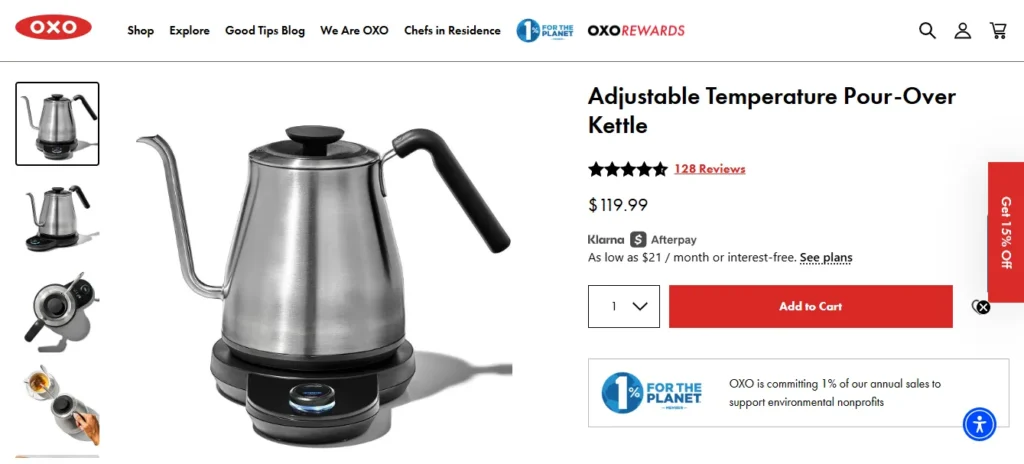
OXO’s variable temperature kettle is built around balance and simple control. The handle, body, and precise-pour spout feel designed as one system rather than separate parts.
A built-in timer removes one object from your brew station. Set the water temperature, start the clock, and pour.
The OXO is easy to understand on the first morning. That matters in a shared kitchen where not everyone wants a ten-minute equipment tutorial.
The flow rate sits between the restrained Fellow and the quicker Bonavita. It works well for medium-size brews from 300 to 600 millilitres.
The base and kettle take up more visual space than the Stagg. It also lacks some of the scheduling and altitude features found on newer premium models.
Verdict: A strong daily driver with minimal setup friction.
5. Brewista Artisan: Best for Design and Larger Batches
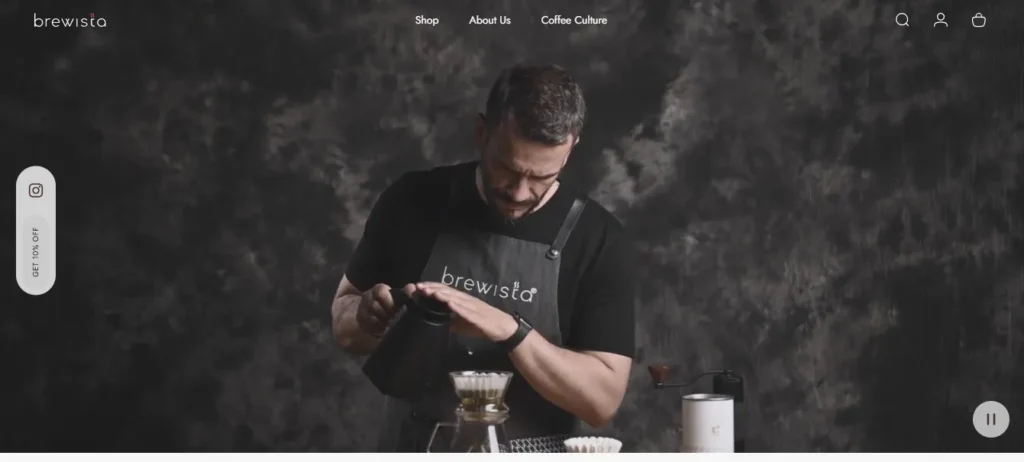
The Brewista Artisan remains one of the most distinctive gooseneck kettles on the counter. The 1.0-litre capacity gives it an edge for larger Chemex brews or back-to-back cups.
North American versions use an 1100-watt heating system. Variable temperature controls make it suitable for coffee and tea.
Buy it for capacity, grip, and visual character. The angled handle supports controlled pouring without copying the Fellow’s design.
The Artisan’s shape can feel bulky in smaller kitchens. Some finishes also cost enough to put it close to premium competitors with newer interfaces.
Pour control is good, though the kettle feels more substantial in the hand when filled near capacity. That weight helps stability for some brewers and tires others.
Verdict: A capable 1.0-litre kettle for brewers who want their equipment to look less generic.
6. Hario V60 Buono: Best Stovetop Gooseneck Kettle
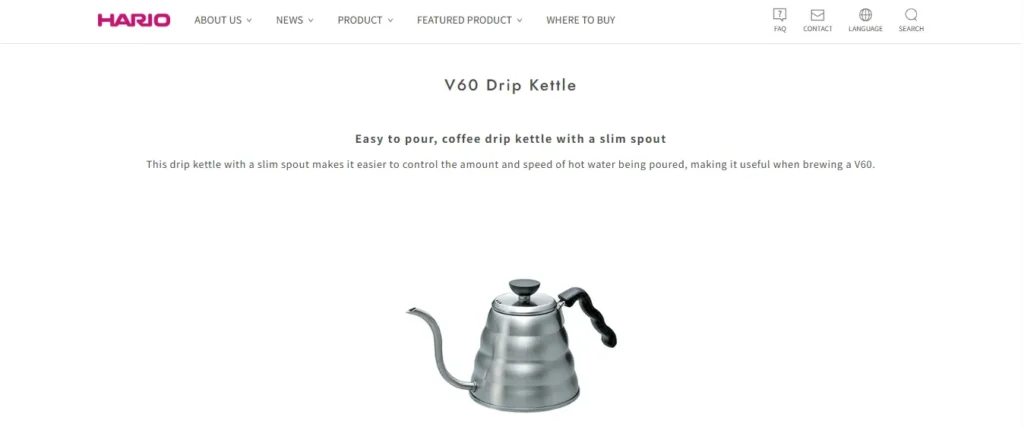
The Hario Buono proves that electronics are optional. Its slim spout gives clean control, the stainless steel body is simple to maintain, and the classic 1.2-litre model has an 800-millilitre practical capacity.
Hario makes this model in Japan. There is no screen, hold mode, timer, or temperature sensor.
Its simplicity is the whole argument. Heat it, wait, and pour.
You will need a separate thermometer for exact water temperature. You can also bring water to a boil, remove the lid, and wait 30 to 60 seconds for many medium-roast recipes.
Do not fill it to the stated outer volume. The practical limit leaves room for boiling water and safer pouring.
The Buono also stores more easily because there is no electric base. It is a smart fit for small kitchens, travel setups, and brewers who dislike disposable electronics.
Verdict: The best stovetop option for V60 users. Old-school, precise, and hard to kill.
Electric vs Stovetop Gooseneck Kettles
Electric kettles win on speed, repeatability, and temperature control. A variable temperature kettle lets you return to 93°C tomorrow without guessing.
Stovetop kettles win on simplicity, storage, repair risk, and lifespan. They also work during an electrical failure if you have gas.
Choose electric for daily precision. Choose stovetop for durability and lower cost.
An electric kettle makes the most sense when you rotate between light, medium, and dark roasts. A stovetop model works well when you brew one familiar coffee and know your cooling time.
What Temperature Should You Use for Pour-Over Coffee?
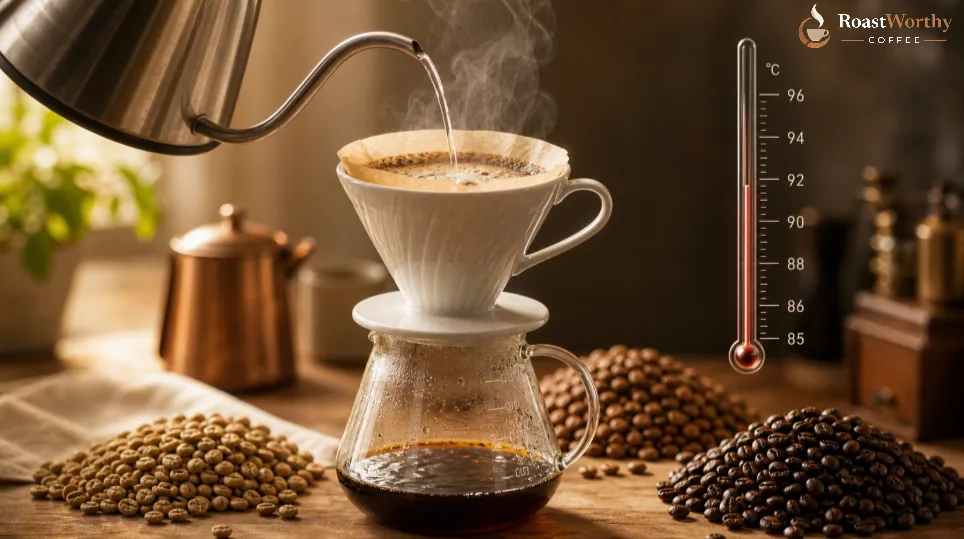
Start with these ranges:
Hotter water increases extraction speed. That helps dense, lightly roasted coffee.
Dark roasts are more soluble. Lower water temperature can reduce harsh bitterness and dry, smoky finishes.
Here is what the heat is actually doing. It changes how quickly acids, sugars, and bitter compounds move from the grounds into the water. ⚗️
Temperature is only one variable. Grind size, brew time, water chemistry, and agitation still matter.
For a starting recipe, use 20 grams of coffee, 320 grams of water, and a total brew time near 2:45 to 3:30. Our pour-over coffee ratio guide explains how to adjust from there.
What to Look for in the Best Pour-Over Kettle
Stable Low Flow
A good spout should hold a thin stream without sputtering. Try targeting 4 to 8 grams per second for controlled V60 pulses.
Comfortable Balance
The handle should keep your wrist away from the hot body. It should also remain stable as the water level falls.
Useful Capacity
A 0.8 to 1.0-litre kettle covers most home brewing. Larger is not always better because extra water adds weight.
Temperature Control
One-degree control is useful. Half-degree control is nice, but grind adjustment usually has a larger effect on taste.
Safe Steam Direction
Look for lid vents that direct steam away from your fingers. Keep your thumb behind the lid line during pouring.
Correct Voltage
Imported electric kettles may use the wrong voltage or plug. Check local requirements before buying.
FAQs About Gooseneck Kettles
Do Gooseneck Kettles Make Better Coffee?
They make controlled pouring easier. Better flow control helps you manage agitation, saturation, and brew time, which can improve consistency.
Is a Variable Temperature Kettle Worth It?
Yes, for people who brew different roast levels or teas. It removes temperature guesswork and speeds up repeatable recipes.
What Size Gooseneck Kettle Should I Buy?
Choose 0.8 to 1.0 litres for most home brewing. That covers a single cup, a two-cup V60, and many small Chemex recipes.
Is the Fellow Stagg Better Than the Timemore Fish?
The Fellow has the friendlier interface and more established workflow. The Timemore offers faster heating and a broader controllable flow range.
Can I Use a Gooseneck Kettle for Tea?
Yes. Variable temperature models work especially well because green, oolong, and black teas need different water temperatures.
Do I Need a Gooseneck Kettle for a French Press?
No. A standard kettle works because French press coffee does not require a controlled circular pour. A gooseneck may fill it more slowly.
Final Verdict
The Fellow Stagg EKG Pro is the best gooseneck kettle for most pour-over coffee drinkers in 2026. It is accurate, controlled, and pleasant to use.
The Timemore Fish Pro X is the technical alternative. The Bonavita Classic is the value choice.
For a stovetop setup, buy the Hario Buono and add a thermometer. Simple equipment still makes excellent coffee. ☕
More Recommendations from RoastWorthy Coffee