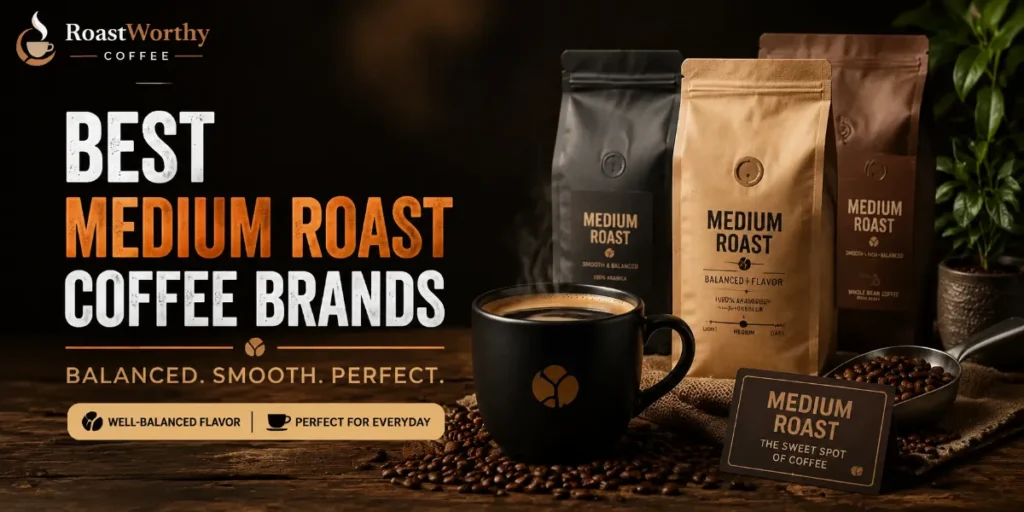
11 Best Medium Roast Coffee Brands of 2026 (Tasted & Ranked)

Let’s be honest. Most “best coffee” roundups are spec sheets with affiliate links bolted on. Nobody tasted anything.
I have. Over eight thousand cups, and counting.
So here’s the promise: every one of these medium roast coffee brands has been through a cup, not just a copy-paste. Ranked. Scored out of 10. With verdicts you can actually spend money on.
The best medium roast coffee lives in a narrow, precise window. Enough acidity to keep the cup alive. Enough body to feel like breakfast. Chocolate and caramel where a light roast gives you lemon and jasmine.
Get that window right and you’ve got the most useful bag in your kitchen. Get it wrong and you’ve got a dark roast wearing a friendlier label.
Eleven brands got it right in 2026. To varying degrees. Let’s taste.
First — What Medium Roast Actually Is (and Isn’t)
Skip ahead if you only want the list. Stick around if you want to buy like someone who knows.
A medium roast comes off the roaster just after first crack — that audible pop when the bean’s internal moisture flashes to steam — but before second crack begins. Bean surface temperature typically lands between 410°F and 428°F (210–220°C).
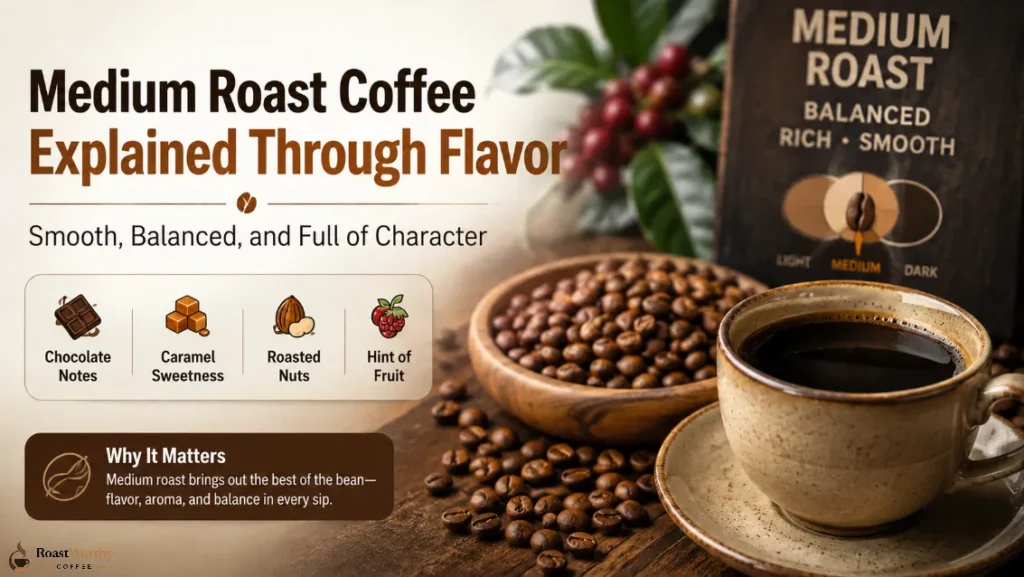
Here’s what that heat is doing to your cup.
The natural sugars caramelize. The sharp, citric acidity of a light roast softens and rounds. But the roast stops short of the point where smoke and char bulldoze the origin flavour, the way a dark roast does.
The result is a word that gets thrown around too loosely: balance. Acidity and body meeting in the middle, neither one shouting over the other.
In practice, most good mediums taste like some combination of chocolate, caramel, roasted nuts, and — if the origin’s interesting — a soft red-fruit or dried-fruit edge. No sour bite. No ashy finish.
Who should actually drink medium roast
There’s a real answer here, not a vague “everyone.”
If you drink your coffee black most mornings and want something smooth and dependable, a strong medium is your correct default. That’s not settling. That’s just right.
Medium Roast Coffee Brands: The Comparison
| Brand | Best For | Origin | Acidity | Testing | Price Tier | Score |
|---|---|---|---|---|---|---|
| Lifeboost Grata | Overall | Nicaragua (SO) | Low | Full 3rd-party | Premium | 9/10 |
| Koa Estate | Splurge | Kona, Hawaii (SE) | Balanced | — | High | 9/10 |
| Fabula | Low-acid value | High-altitude SO | Very low | Mold/mycotoxin | Mid-Premium | 8.5/10 |
| Purity FLOW | Health focus | Organic SO | Low | Mold/antioxidant | Premium | 8.5/10 |
| Kion | Everyday organic | Honduras | Balanced | Mold/mycotoxin | Mid | 8/10 |
| Bulletproof | Mold-anxious | GT/CO/SV | Low-med | Toxin | Mid-Premium | 7.5/10 |
| Atlas Coffee Club | Subscription | Rotating global | Varies | — | Mid | 8/10 |
| Volcanica | Sensitive stomach | Volcanic SO | Low (pH 5.2–5.6) | — | Mid | 7.5/10 |
| Counter Culture | True specialty | SO / blends | Bright-med | — | Mid | 8/10 |
| Stumptown Hair Bender | Bold & complex | 3-region blend | Medium | — | Mid | 8/10 |
| Peet’s Big Bang | Grocery grab | Blend | Balanced | — | Budget-Mid | 7/10 |
SO = single origin. SE = single estate.
How These Rankings Were Built
Four criteria. No filler.
Flavour balance: Does acidity and body genuinely meet in the middle? A “medium” that lands flat, roasty, and one-note loses points fast.
Sourcing and transparency: Single-origin traceability, organic certification, and — where the brand leans on it — third-party testing for mold and mycotoxins.
Freshness and format: Whole bean beats pre-ground. Roast dates beat vague “best by” stamps. Nitrogen-flushed packaging is a bonus.
Value: Price per ounce against what’s actually in the cup. A $46 bag can be worth every cent. It can also be a con. I’ll tell you which.
“The flavour doesn’t lie. Everything else is marketing.”
The 11 Best Medium Roast Coffee Brands of 2026
1. Lifeboost Grata — Best Overall Medium Roast ☕
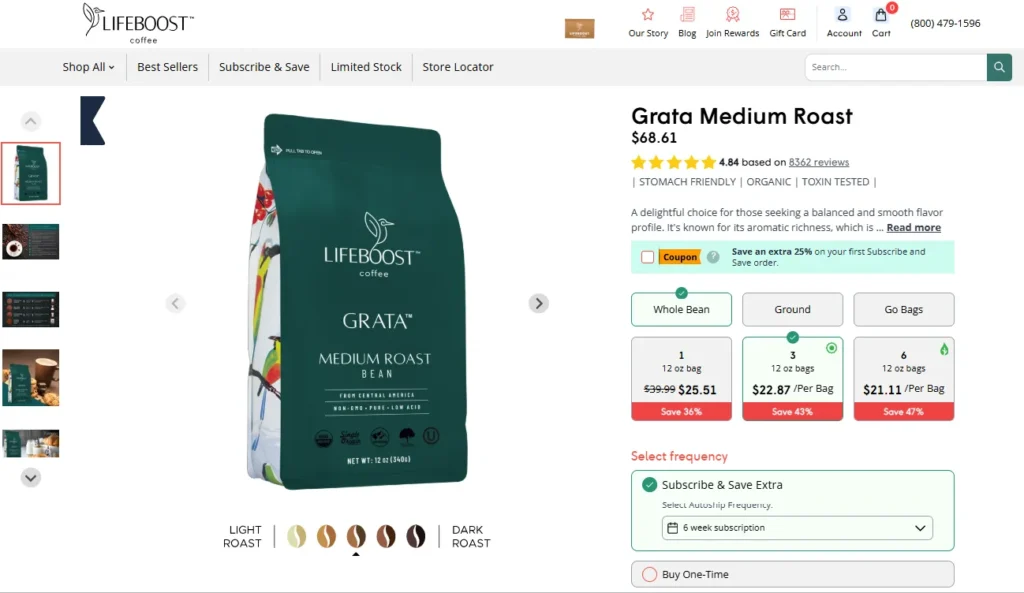
Smooth, low-acid, obsessively tested, and genuinely tasty. The rare wellness-branded coffee that also delivers in the cup. Best all-rounder on the list.
Grata is Lifeboost’s most popular roast, and for once the bestseller is the right one.
It’s single-origin from the mountains of Nicaragua. Shade-grown, hand-picked, spring-water washed, sun-dried. USDA organic, non-GMO. And crucially — third-party tested for mycotoxins, heavy metals, and pesticides. Most roasters skip that step entirely.
The official tasting note is “chocolate-covered fig,” and that’s not marketing fluff. It really does drink creamy and nutty with a dried-fruit sweetness underneath. Milk chocolate, toasted almond, a soft caramel finish. The acidity is low and clean.
| Origin | Nicaragua, single origin |
| Balance | Low acidity / medium-full body |
| Formats | Whole bean, ground, single-serve |
| Price | ~$22.87 per 12 oz (subscription) |
The list price stings until you hit the subscription tier. At around $22–23 a bag it’s fair for what you’re getting.
This one earns its price if a smooth, gut-friendly daily cup is the goal. Buy the bag.
2. Koa Coffee Estate Medium Roast — Best Single-Origin Splurge
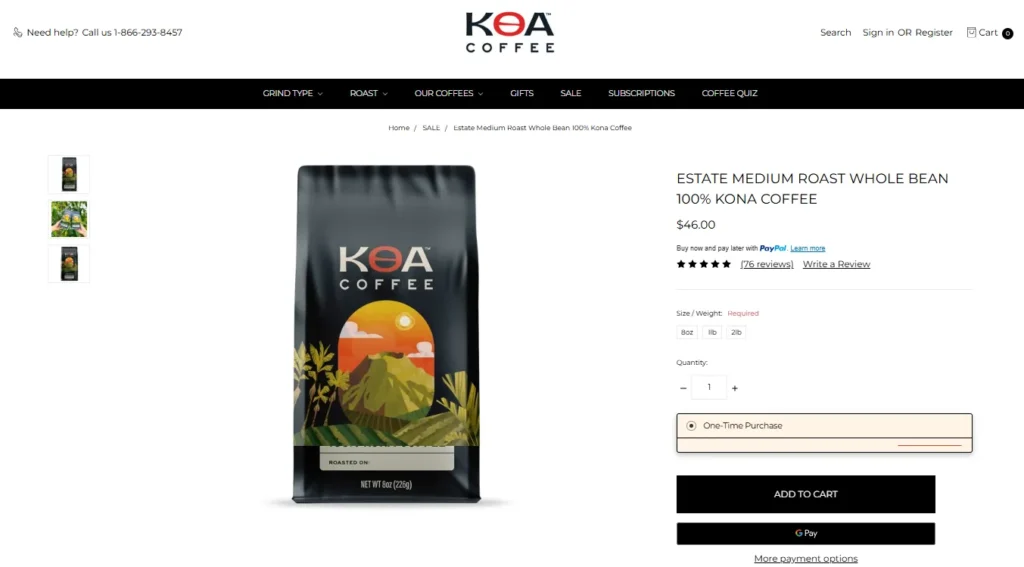
100% Kona. From a single high-elevation estate on Hawaii’s Big Island.
That “100%” matters. Most “Kona” on supermarket shelves is a 10% Kona blend riding the name. Koa’s is the genuine article — and the trophy cabinet backs it up. Their Kona has won the Gevalia Cupping Competition, PCCA Coffee of the Year, and landed in Forbes’ “Top 10 Coffees of the World.”
In the cup it’s clean and buttery. Milk chocolate, honey, a whisper of macadamia. Bright but never sharp, with a silky body that coats the palate.
Why so pricey? Kona is a tiny growing region with high U.S. labour costs and limited output. You’re paying for genuine scarcity, not hype. An 8 oz bag runs premium, and the tri-packs climb well past $100.
Not an everyday budget coffee. But as a weekend pour-over, or a gift for someone who actually cares? No notes. (And that’s rare.)
3. Fabula Organic Medium Roast — Best Low-Acid Value
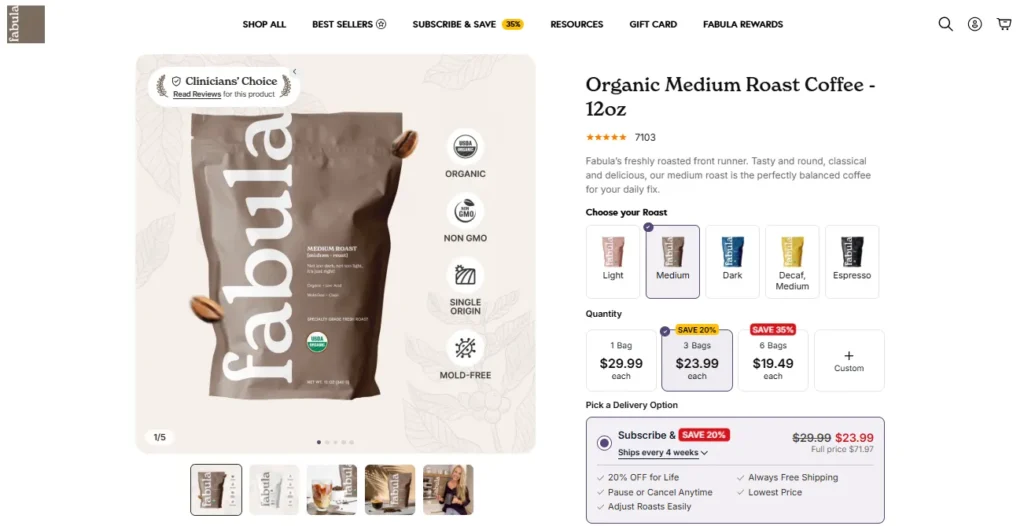
Fabula built its identity on low acid and clean testing, and the medium roast is its strongest case.
USDA organic, single-origin, non-GMO, high-altitude grown. Tested to be free of molds, mycotoxins, and pesticides. That altitude naturally tightens the bean’s density, which helps the roast stay even.
It drinks smooth and rounded — chocolate, a little nuttiness, gentle sweetness — with the acidity dialled right down. If coffee usually leaves your stomach unhappy, this is a soft landing.
On subscription it lands around $19–24 per 12 oz, which for a tested, organic, low-acid single-origin is a strong number. I’ve paid more for less. Much less.
The main knock: it’s not the most exciting cup here. There’s no thrilling fruit note, no surprise. But that’s arguably the point of a daily low-acid medium. Reliable beats flashy at 6am.
4. Purity Coffee FLOW — Best for the Health-Obsessed ✒️
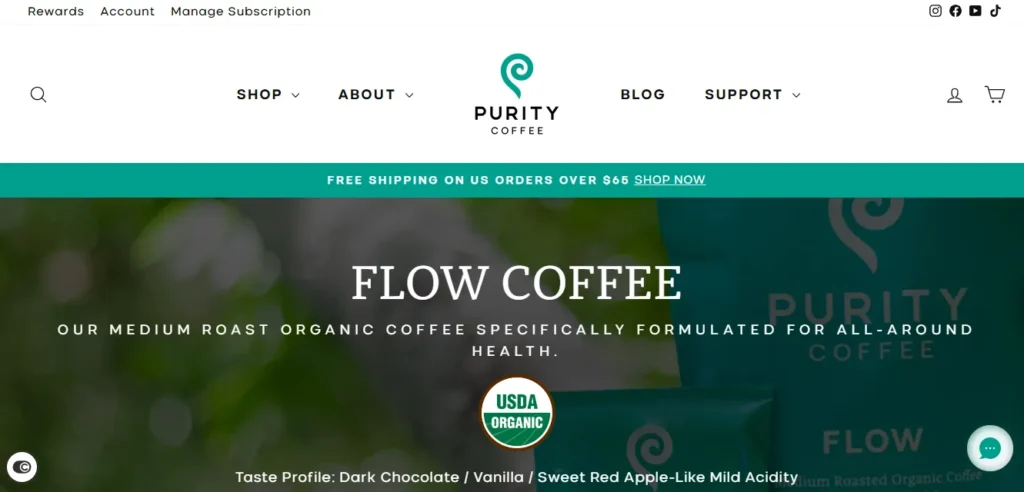
Purity is the health-nerd’s coffee, and I mean that with respect.
The company started when founder Andrew Salisbury dug through more than 19,000 studies on coffee and health. FLOW is the flagship medium — specialty-grade, USDA organic, third-party tested for mold and toxins, with antioxidant content measured batch to batch. Regeneratively farmed on top.
FLOW sits a touch darker than the industry’s “cupping-level” medium, so expect more cocoa and a rounded finish than bright fruit. Smooth, clean, easy.
Is it the most interesting flavour on this list? No. But nobody’s buying Purity for a wild cup. They’re buying it for a functional daily driver with a lab report behind it. On that brief, it delivers.
If you drink coffee for the benefits as much as the taste — this is your bag.
5. Kion Medium Roast — Best Clean Everyday Organic
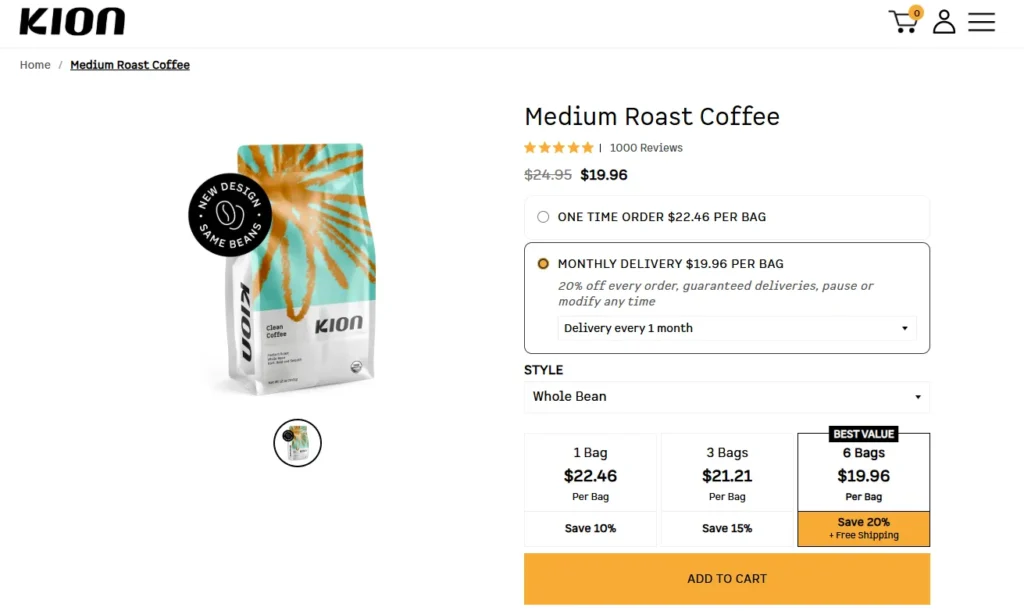
Kion sources from a handful of small producers in Honduras and roasts in Boulder, Colorado.
100% organic Arabica, ethically sourced from fair-trade cooperatives, and tested for mold, mycotoxins, and pesticides. Every batch is nitrogen-flushed within 24–48 hours of roasting — a freshness detail most brands in this price range ignore.
The cup is where it surprises. Genuinely balanced: sweet apple, marzipan, and baking spice up front, then dark chocolate as it cools. Clean, rich, smooth.
At around $20 per 12 oz (I last saw $19.96), the freshness-to-price ratio is one of the best here. A tidy, honest, everyday organic medium. Harder to find than it should be.
6. Bulletproof Original Medium Roast — Best for the Mold-Anxious
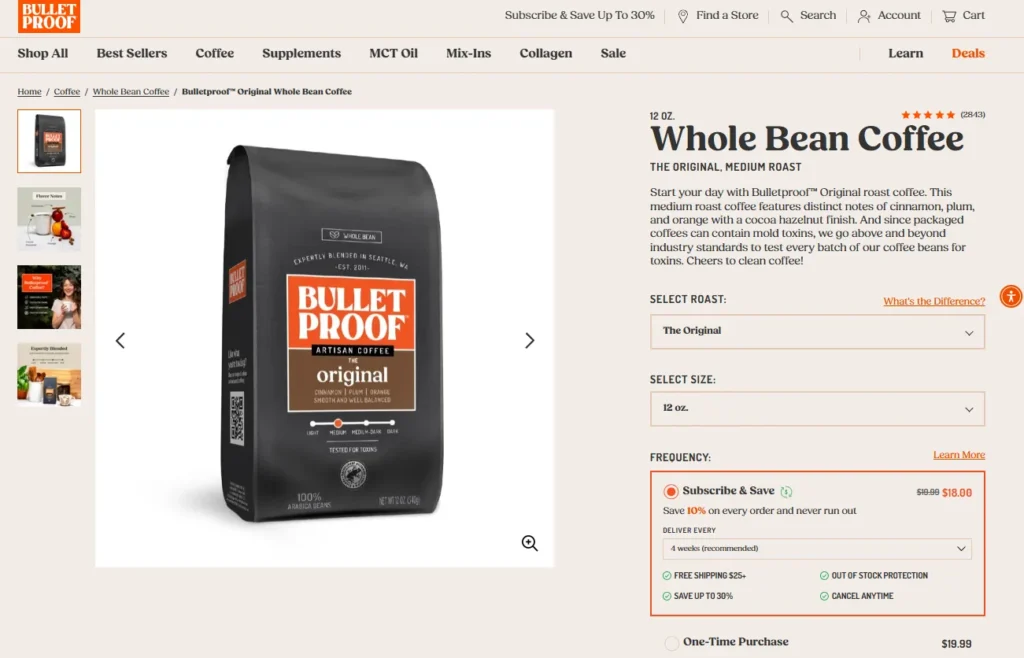
Bulletproof turned mycotoxin testing into a marketing pillar, and whatever you think of that, the coffee itself is fine.
100% Arabica sourced from Guatemala, Colombia, and El Salvador. Rainforest Alliance Certified, small-batch, and tested for toxins. This is the coffee that launched a thousand butter-in-your-brew mornings.
Flavour is straightforward: chocolate, a hint of cinnamon, a smooth low-acid finish. Nothing that’ll make a cupper sit up. But nothing offensive either.
Here’s the honest part. The mycotoxin scare is somewhat overstated in the specialty world — reputable specialty coffee is already low-risk without a special brand promise. So you’re partly paying for peace of mind.
If that peace of mind is worth it to you, the coffee holds up its end. Just know you can get more flavour per dollar elsewhere on this list.
7. Atlas Coffee Club — Best Medium Roast Subscription
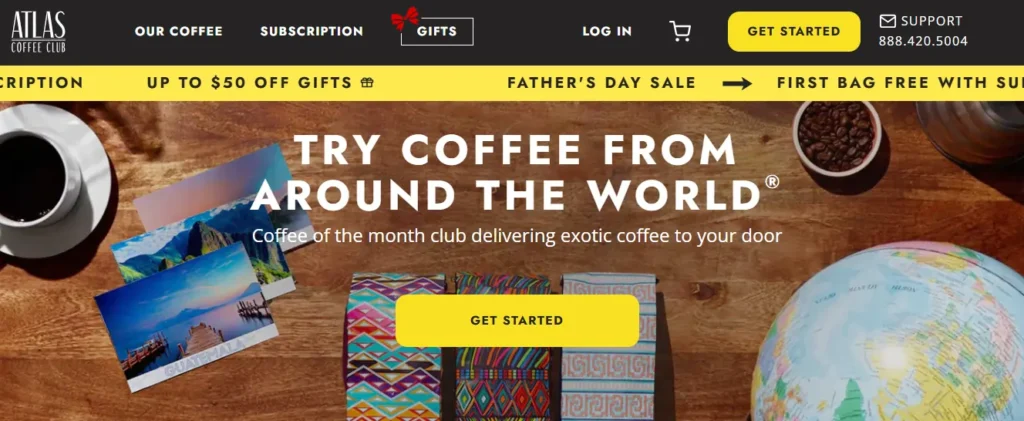
Atlas doesn’t sell one medium roast. It sends you a different single-origin every month, from a new country each time.
Many of the rotations land in the light-to-medium range — fruit, berry, citrus, and chocolate, depending on where that month’s coffee came from. Each 12 oz bag ships with flavour notes, a postcard, and a bit of origin history.
That’s the real value. One month you’re drinking a chocolatey Colombian, the next an earthy Sumatran, the next a bright Central American. You learn your palate by comparison, which no single static bag can teach you.
Pricing sits around $14–20 per bag depending on plan. If you’re bored drinking the same coffee every day, this fixes it — and turns your kitchen into a low-key cupping lab.
8. Volcanica Coffee (Low-Acid Line) — Best for Sensitive Stomachs
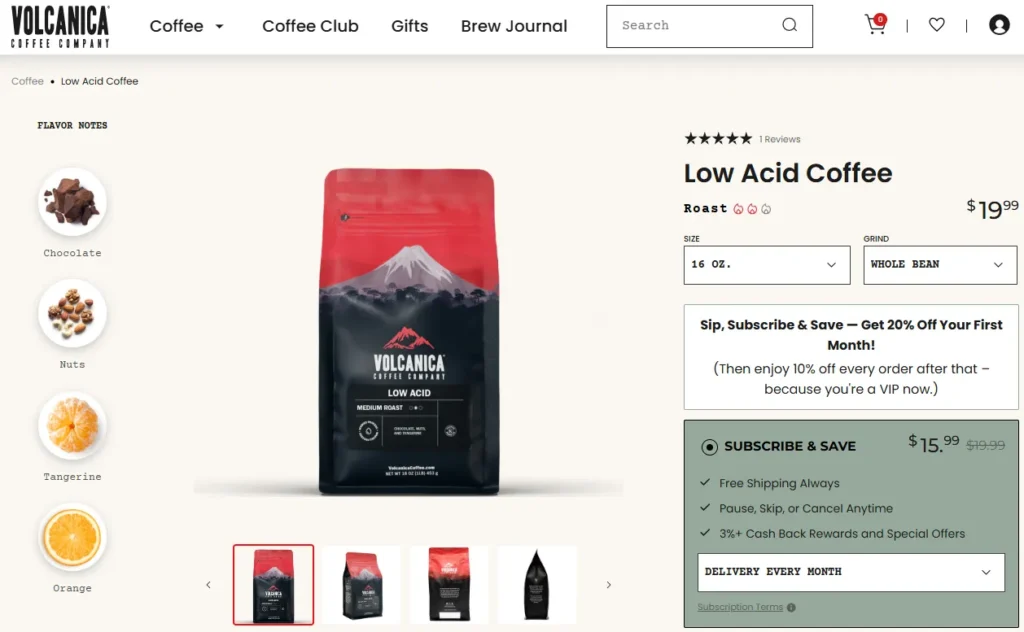
Volcanica specializes in coffees grown in volcanic-soil regions, and its low-acid line is why it made the list.
Those low-acid mediums sit around pH 5.2–5.6 — meaningfully gentler than the typical 4.8–5.0 of most coffee. Fresh-roasted, Kosher certified, with plenty of single-origin options to pick from.
Taste depends on which origin you grab. The Costa Rica Tarrazú, for instance, runs smooth and syrupy with a heavy body, low acidity, and a long aftertaste. Chocolate and toasted nut lead across most of the line.
It’s not going to blow the doors off a serious cupper. But the selection is enormous and the low-acid promise is consistent. For a sensitive stomach that still wants real coffee flavour, that reliability is the whole point.
9. Counter Culture (Apollo / Fast Forward) — Best True-Specialty Pick
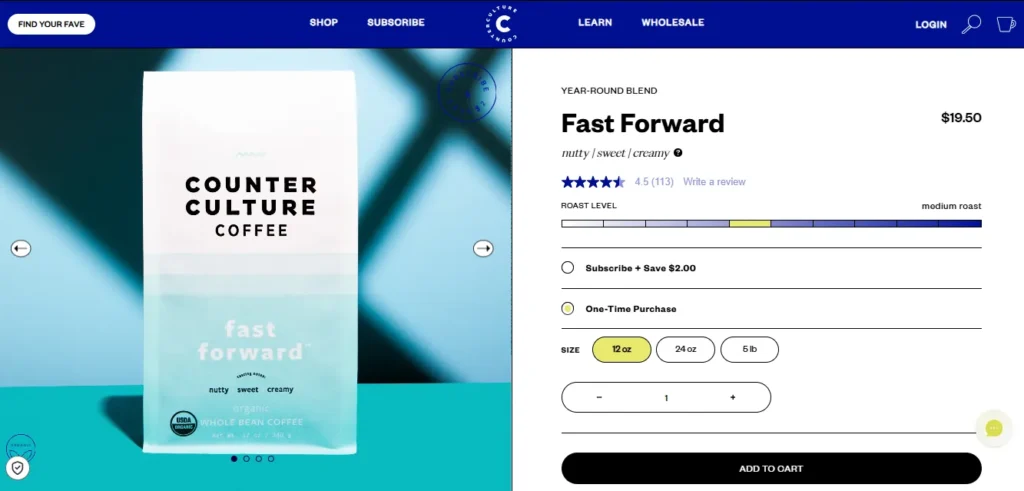
Counter Culture helped build American specialty coffee, and it still knows exactly what it’s doing.
Two mediums stand out. Apollo is an organic Ethiopian that leans floral and fruit-forward — brighter than most on this list. Fast Forward is an organic-certified blend built around nutty, chocolate, and citrus notes, deliberately reformulated season to season for freshness.
What separates Counter Culture from the health-halo brands is transparency you can trace to the farm level, plus genuinely fresh roasting. This is origin character on display, not sanded off.
At roughly $16–17 per 12 oz, it’s also one of the better value specialty picks here. If you want a medium that tastes like where it came from, this is your roaster. The flavour doesn’t lie.
10. Stumptown Hair Bender — Best Bold, Complex Medium
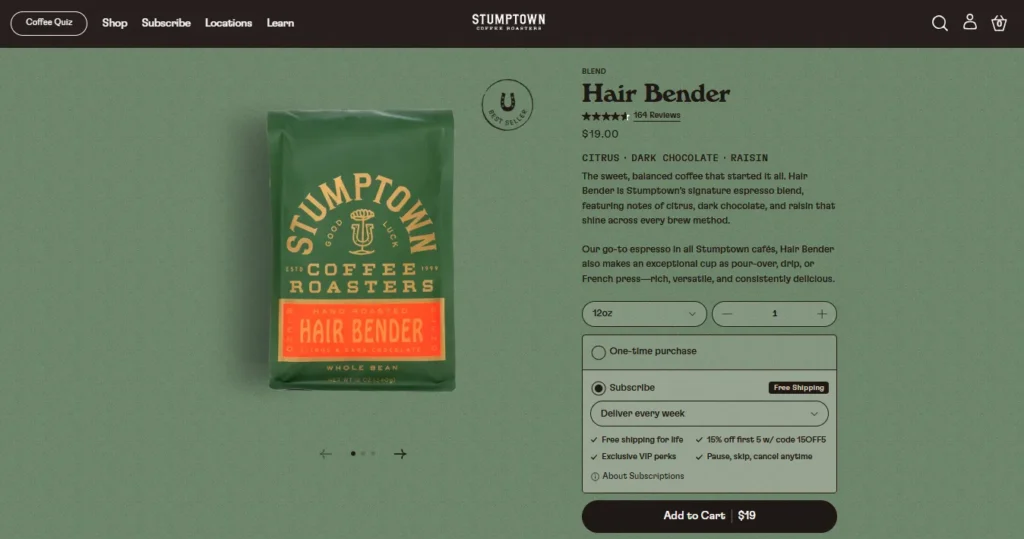
Hair Bender is Stumptown’s flagship, and it’s built differently to everything above it.
It pulls coffee from three growing regions at once — Central and South America, East Africa, and Indonesia. That combination is where the complexity comes from: chocolate, citrus, and raisin, with a subtle smoky depth underneath.
It’s a medium, technically, but it leans toward the punchier end of the spectrum. That makes it a genuinely excellent espresso — sweet and full without the harsh bitterness of a true dark roast — and a robust daily drip.
This is not a delicate, floral coffee. If that’s what you want, go with Counter Culture’s Apollo. But if you want a medium with muscle and a flavour that’s stayed a benchmark for years, Hair Bender remains a classic for good reason.
11. Peet’s Big Bang — Best Grocery-Aisle Medium
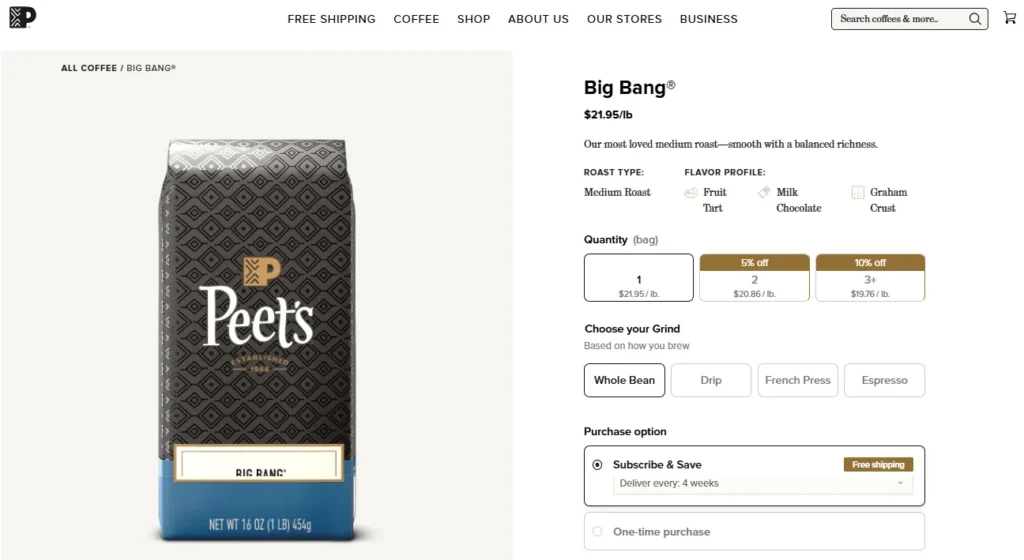
Peet’s built its name on dark roasts. Big Bang is one of its few genuine mediums — and the best of them.
It tastes like fruit tart, milk chocolate, and graham crust. Sweet, easy, unintimidating. And you can grab it in most grocery stores or online without a subscription or a wait.
Let’s be honest: it’s not specialty-grade in the way Koa or Counter Culture are. There’s less complexity and less traceability. But that’s not the job it’s doing. As a medium you can pick up on a normal shopping run, it sits well above the surrounding shelf.
If online ordering isn’t your thing and you just want a solid, sweet medium tonight — this is the smart pick. I’ve had worse. Much worse.
Head-to-Head: The Two Comparisons People Actually Search
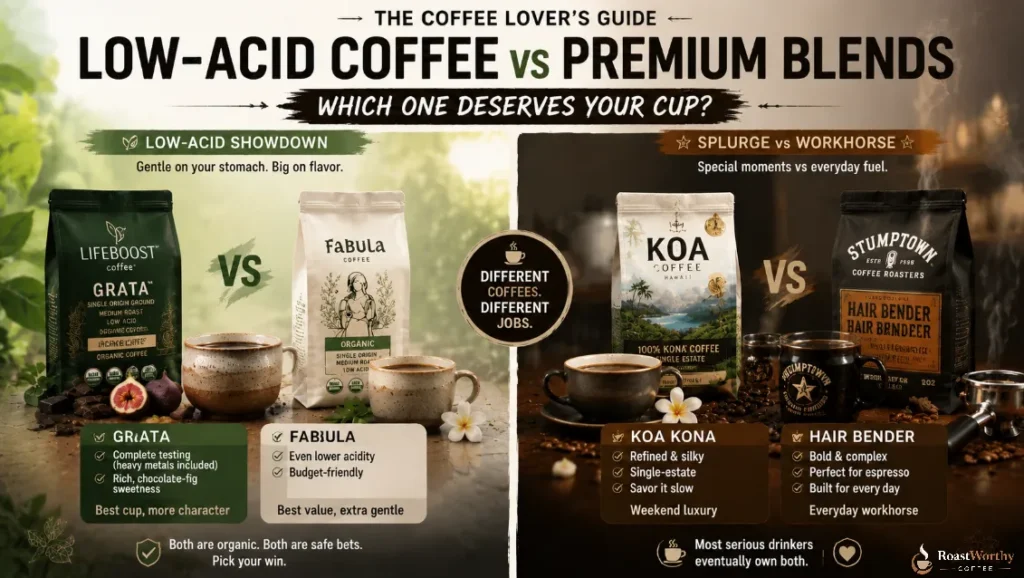
Lifeboost Grata vs Fabula (the low-acid showdown)
Both are organic, single-origin, low-acid, and tested. So which?
Grata has the more complete testing (heavy metals included) and, honestly, the more characterful cup — that chocolate-fig sweetness gives it depth. Fabula wins on price and pushes the acidity even lower.
Pick Grata for the better cup. Pick Fabula to save money while staying gentle. Both are safe bets.
Koa Kona vs Stumptown Hair Bender (splurge vs workhorse)
Not really a fair fight — they’re built for different jobs.
Koa is a refined, silky single-estate you sip slowly on a weekend. Hair Bender is a bold, complex blend you lean on every morning and pull as espresso. One’s a special occasion. One’s a lifestyle. Most serious drinkers eventually own both.
How to Choose Your Medium Roast in 30 Seconds
Read the one line that fits you. That’s your bag.
One rule beats every recommendation above it. Buy whole bean and grind fresh. A $14 bag ground at home beats a $30 bag that was ground three weeks ago. Every single time. Coffee stales fast once the cell walls are broken.
More Recommendations from RoastWorthy Coffee

Frequently Asked Questions
What is the best medium roast coffee brand in 2026?
Lifeboost Grata takes the top spot for its balance of smooth low-acid flavour, single-origin Nicaraguan sourcing, and full third-party testing. For the best pure single-origin quality regardless of price, Koa Estate Kona is the standout splurge.
Is medium roast coffee less acidic than light roast?
Slightly. Longer roasting breaks down some acids, so a medium is generally a touch less acidic than a light roast. But origin, growing altitude, and brew method affect acidity far more than roast level alone.
Does medium roast have more caffeine than dark roast?
Effectively no. By weight the two are nearly identical, and any real difference is tiny. The bigger factor is how you measure — scoop by volume and dark roast gives slightly less, since those beans are larger and lighter.
What does medium roast coffee taste like?
Balanced. Expect chocolate, caramel, and toasted nuts, sometimes with a soft fruit or dried-fruit note. Less sour than a light roast, less smoky and bitter than a dark roast.
Is medium roast good for espresso?
Yes. Bolder mediums like Stumptown Hair Bender pull beautifully as espresso — sweet and full-bodied without the harshness of a very dark roast. Plenty of specialty cafés run mediums on the espresso bar today.
Should I buy whole bean or ground medium roast?
Whole bean, if you own a grinder. Ground coffee stales fast — flavour drops noticeably within days of grinding. Grinding fresh right before you brew is the single biggest upgrade you can make to any bag on this list.
Is low-acid medium roast better for your stomach?
For many people, yes — coffees like Fabula, Lifeboost Grata, and Volcanica’s low-acid line (around pH 5.2–5.6) are gentler than standard coffee. But sensitivity varies, and brew method matters too. Cold brew and coarser grinds also lower perceived acidity.
Scores reflect my own tasting and value assessment. Prices shift constantly, so check the current listing before you buy.
Found this useful? Tap thumbs up. Disagree with a score? Even better — tell us why with the thumbs-down button.