Coffee Grinder Buying Guide: What to Look for Before You Buy

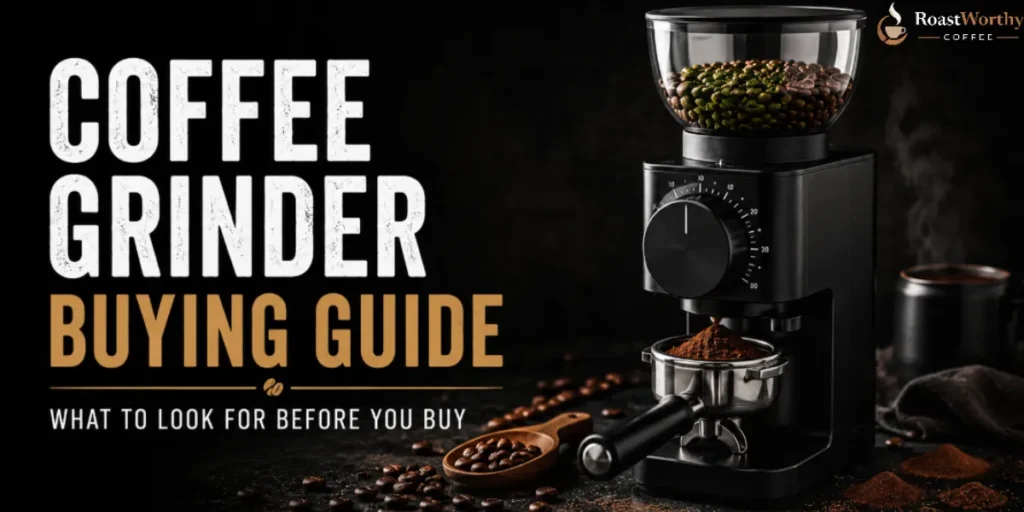
Let's be honest. Your grinder matters more than your machine.
You can pull a decent shot on a mid espresso machine with a great grinder. Flip it — great machine, bad grinder — and you're drinking mud. That's the whole argument for reading a proper Coffee Grinder Buying Guide before you spend a penny.
Here's the part nobody tells beginners: grind size affects extraction more than water temperature, more than bean freshness, more than the machine's price tag. Get the grind wrong and nothing downstream can fix it. Get it right and even a modest setup punches above its weight.
So here's what actually matters in a coffee grinder buying guide. No spec-sheet worship. Just the stuff that changes the cup.
TL;DR: Buy a burr grinder, not a blade. Conical for value, flat for espresso clarity. Prioritise consistent grind and low retention over motor size. Budget realistically — a good grinder costs more than beginners expect, and it's worth it.
How to Choose a Coffee Grinder: The Short Version
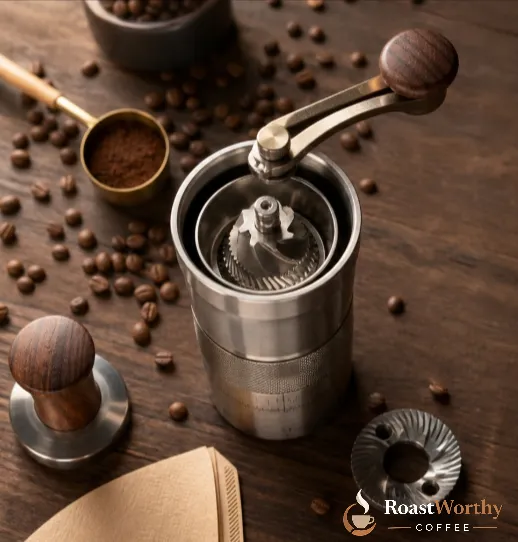
Work through it in order.
- Burr, always. Never blade.
- Match the brew. Filter-only? Conical, stepped, done. Espresso? Flat or micro-stepped, stepless, low retention.
- Check retention if you weigh doses.
- Prioritise low RPM for a cooler, cleaner grind.
- Spend in the mid-range unless espresso clarity is your religion.
Do that and you'll skip the $150 mistake almost everyone makes on their first grinder — buying a blade unit, hating the coffee, then buying a burr grinder six months later anyway. Skip the detour.
Burr vs Blade: This Isn't a Debate
A blade grinder chops. A burr grinder crushes to a set size.
Blades give you dust and boulders in the same batch. Uneven grind means uneven extraction — bitter and sour in one cup. No amount of skill fixes that. You can be the best barista alive and a blade grinder will still betray you.
Burr grinders win. Every time. Full stop.
The only reason to own a blade grinder is if it came free with something. Even a $40 entry burr beats a $20 blade for actual coffee. This is the one place I won't hedge.
If you're on the tightest budget, buy a hand grinder before you buy an electric blade. A decent manual burr will outperform any blade unit on the market, and it'll cost you less than a fancy latte subscription.
Here's why the physics matters. Blade grinders work like a mini blender — spinning metal chops beans into random sizes based on how long you hold the button.
Ten seconds might give you mostly fine dust with a few large chunks still floating on top. That inconsistency is baked into the design. There's no technique that solves it, because the problem isn't you. It's the tool.
Conical vs Flat Burr: What's the Difference?
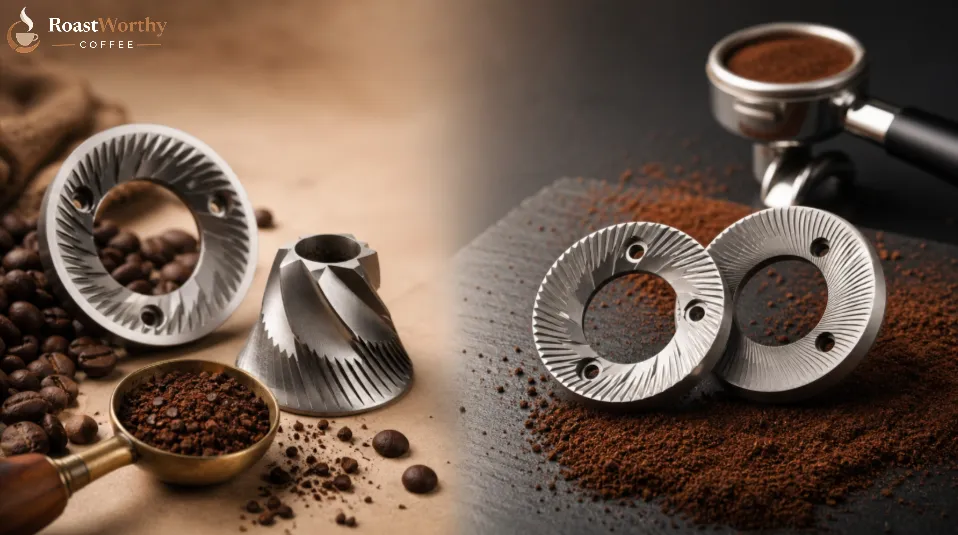
Both are real burrs. They just cut differently.
Conical tends to give a rounder, sweeter, slightly muddier cup. Flat gives clarity — you taste the individual notes more distinctly, almost like the difference between a phone speaker and good headphones.
For most people brewing filter at home, conical is the smart money. You get roughly 90% of the performance for half the price, and the wider particle distribution actually helps methods like French press and pour-over.
Chasing espresso clarity? Flat burr. That's where it earns the premium. Flat burr grinders also tend to run hotter and louder, so factor that into your kitchen setup.
Grind Settings: Stepped vs Stepless
This is where people overthink it.
Stepped grinders click into fixed positions. Easy to repeat, easy to dial in, harder to fine-tune. Perfect for filter, French press, and anyone who wants a reliable “set it and forget it” grind. Most stepped grinders offer somewhere between 15 and 40 positions.
Stepless grinders adjust on an infinite scale. You can nudge the grind by a hair. That micro-adjustment is why espresso people need it — a tiny change moves your shot from sour to perfect, and there's no “click” to guide you back if you lose your setting.
If you drink drip and pour-over, stepped is fine. Genuinely. Don't pay for stepless you won't use. It's an upgrade wasted on brew methods that tolerate a wider grind window anyway.
If espresso is the goal, stepless (or micro-stepped, offering dozens of tiny steps within each main setting) isn't a luxury. It's the whole point. Espresso extraction is so sensitive to particle size that even half a step can swing your shot from watery to choked.
RPM: Why Grind Speed Matters
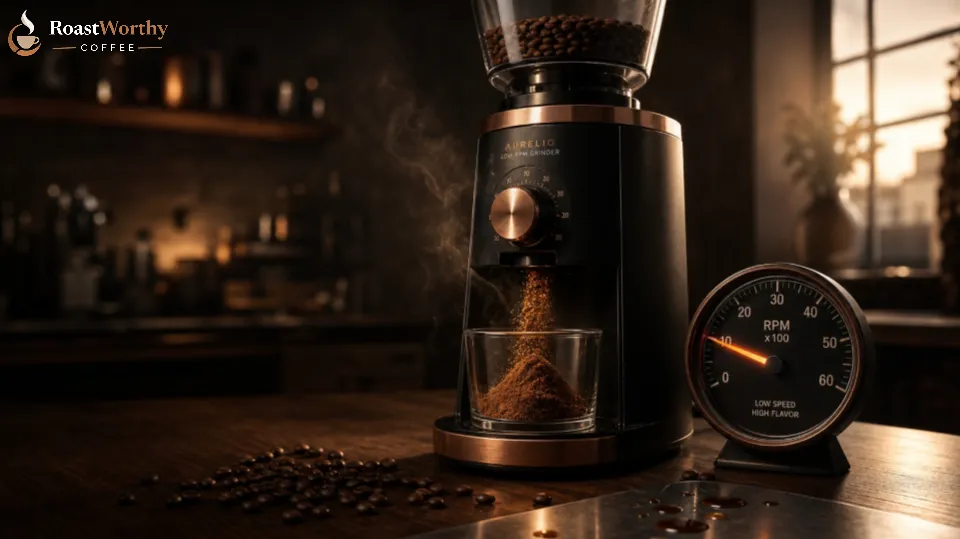
Faster isn't better. Here's the honest version.
High-RPM motors generate heat. Heat during grinding can scorch the coffee and dull the flavour, particularly the volatile aromatic compounds that give a fresh roast its brightness. It's subtle, but on light roasts you'll notice it as a flatter, duller cup.
Low-RPM grinders run cooler and quieter. They grind slower — a few seconds longer per dose — and you get a cleaner, more consistent particle size because the burrs aren't fighting centrifugal force at high speed.
For daily home use, low-to-medium RPM is the better call. You're not running a café. The extra five seconds costs you nothing and protects the cup.
Commercial high-RPM grinders exist for throughput, not quality. They're built to grind pounds of coffee back-to-back during a morning rush. Don't buy volume you don't need — you're grinding one or two doses a day, not fifty.
Retention: The Spec Nobody Mentions
Retention is how much ground coffee stays trapped inside the grinder after each dose — stuck in the chute, the burr chamber, or static-clinging to the walls.
This matters more than you'd think. High retention means stale grounds from yesterday mixing into today's fresh batch, and it means your 18g dose comes out as 16.5g because the rest is hiding inside the machine. That inconsistency wrecks espresso especially, where a gram or two changes the entire shot.
Low-retention grinders push nearly everything out, often using design tricks like angled chutes, anti-static tech, or single-dose hoppers that hold zero beans between grinds. You get what you weighed in. Fresh coffee, accurate dose, repeatable results.
Look for grinders marketed as “single dose” or “low retention” if you weigh your coffee. If you're a scoop-and-brew filter drinker, retention matters less — but it still adds up over months, and nobody enjoys cleaning stale coffee dust out of a hopper.
Budget Grinder vs Premium: Where's the Line?
Here's the real spend breakdown. No fantasy numbers.
| Tier | Price Range | Best For | Trade-offs |
|---|---|---|---|
| Hand grinder | $40–$120 | Filter, travel, tight budgets | Slow, manual effort |
| Entry electric | $100–$180 | Drip, French press, beginners | Louder, higher retention |
| Mid-range | $180–$400 | Serious filter + light espresso | Best value-to-quality ratio |
| Premium | $400–$1,200+ | Espresso obsessives, clarity chasers | Diminishing returns above $700 |
The sweet spot for most people sits in the mid-range. That's where you get flat or quality conical burrs, low retention, and grind consistency that actually shows in the cup.
Below $100 electric, you're buying compromise — usually inconsistent burrs, high retention, and a motor that struggles on darker, oilier roasts.
Above $700, you're buying refinement most palates won't detect, chasing the last 5% of consistency for diminishing sensory returns. Spend where the returns are real, which for almost everyone is that $180–$400 band.
Do You Need Espresso-Grind Capability?
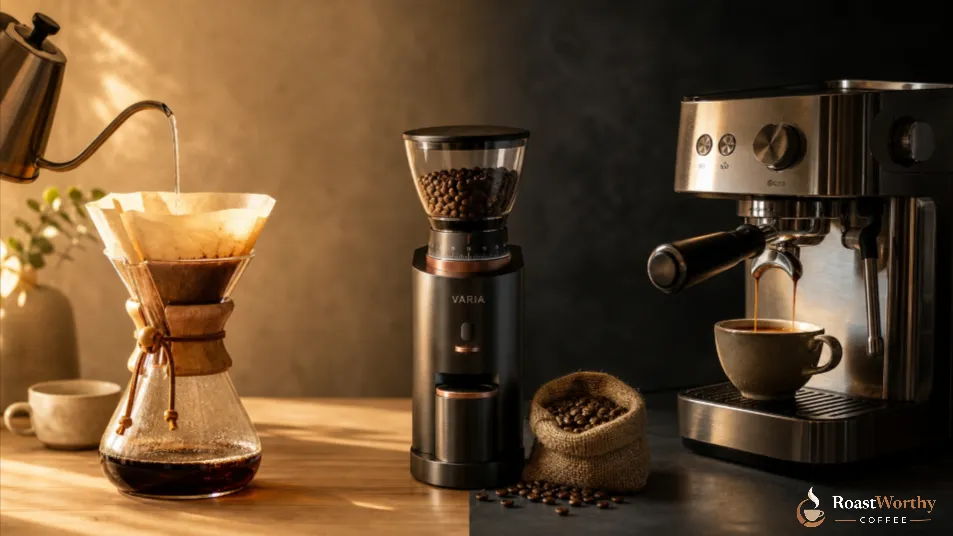
Ask yourself one thing: will you pull espresso in the next year?
If no — don't pay for it. A great filter grinder that can't go fine enough for espresso is often better at filter than a do-everything unit, because manufacturers make trade-offs to cover both ranges.
If yes — you need fine, adjustable grind and low retention. That narrows your list fast, and it raises your budget. Espresso is unforgiving. The grinder has to keep up, because a grind that's slightly too coarse gives you a sour, underextracted shot, and slightly too fine chokes the machine entirely.
Trying to do both on a cheap unit usually means doing neither well. If you genuinely need both filter and espresso capability, budget for the mid-range tier or above — anything cheaper forces a compromise you'll taste.
Build, Noise, and the Boring Stuff
Nobody markets these. They matter anyway.
Freshness beats convenience. Grind what you'll drink, drink it fast. That's the whole game. ☕
FAQ
Is a burr grinder really worth it over a blade?
Yes. Burrs grind to a consistent size, which means even extraction. Blades chop unevenly and give you bitter-and-sour in the same cup. It's the biggest upgrade in coffee, full stop.
Conical or flat burr — which should I buy?
Conical for filter and value; it's cheaper and forgiving. Flat for espresso clarity, where you want distinct, separated flavours. Most home brewers do great with conical.
What RPM is best for a home coffee grinder?
Low to medium. Lower RPM runs cooler and quieter, protecting flavour, especially on light roasts. High-RPM grinders are built for café throughput, not home quality.
Does grinder retention actually matter?
It matters most for espresso and anyone who weighs doses. High retention means stale grounds and inaccurate weights. Low-retention or single-dose grinders solve both.
How much should I spend on a good coffee grinder?
The mid-range, roughly $180–$400, is the value sweet spot for quality burrs and low retention. Below $100 electric means compromise; above $700 hits diminishing returns for most palates.
Do I need a separate grinder for espresso?
Kind of. Espresso needs fine, adjustable, stepless grinding with low retention, which a basic filter grinder can't deliver. If espresso's the goal, buy for it specifically.
The Verdict
Buy the best burr grinder your budget allows — then stop upgrading everything else.
A great grinder is the single highest-value coffee purchase you'll make. More than the machine. More than the beans, even, because a bad grinder ruins good beans before the water ever touches them.
Get consistency. Get low retention. Match it to how you actually brew. That's the whole guide, stripped of the marketing noise.
The rest is marketing. ✒️
More Recommendations from RoastWorthy Coffee