French Press Coffee: How to Brew It Perfectly Every Time


TL;DR: Use a 1:15 coffee-to-water ratio, coarse grind, 200°F water, 4-minute steep. Plunge slow. Pour immediately. That's it.
French press coffee is one of the most forgiving brews you can make. It's also one of the most misunderstood.
Most people under-grind, over-steep, or ignore the bloom entirely. The result is bitter, muddy, or flat. None of that is the French press's fault. It's technique.
Fix the technique. The cup fixes itself.
What Makes French Press Different
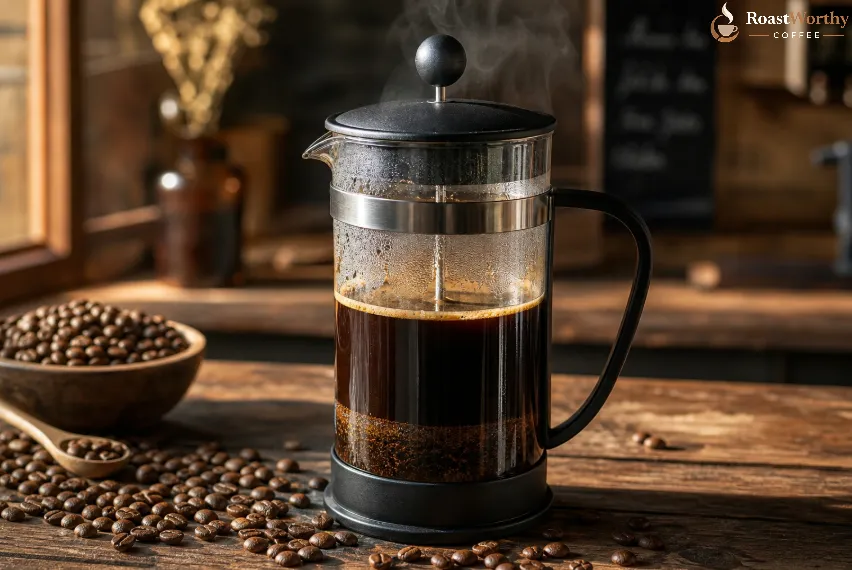
The French press is an immersion brewer. The coffee grounds sit in the water for the entire steep — not just pass through it like a pour-over.
That contact time is what drives flavour. More contact = more extraction. Which means every variable matters more, not less.
No paper filter either. The metal mesh lets natural oils pass through. That's why a well-made French press has body that a drip machine will never match.
The Gear You Actually Need
You don't need expensive equipment. But you do need the right kind.
That's the full kit. Under $60 total if you buy smart.
French Press Coffee Ratio: Get This Right First
The single biggest mistake in French press brewing is using too little coffee.
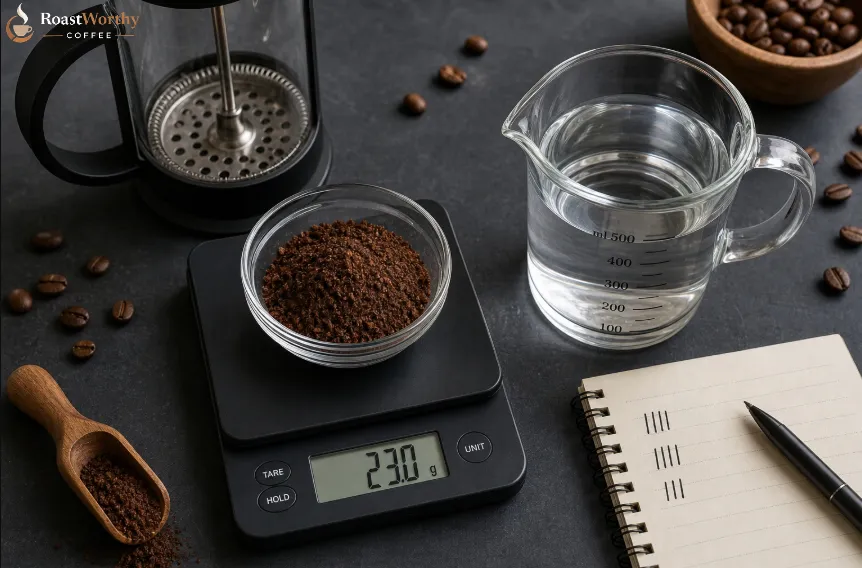
The baseline ratio: 1g of coffee per 15g of water.
For a 350ml press, that's roughly 23g of coffee to 350ml of water. For a 1L press: 65–67g of coffee to 1000ml of water.
Want it stronger? Go 1:13. Lighter? 1:17. But don't go past those edges. Past 1:17 and it tastes like dishwater. Below 1:12 and extraction gets messy fast.
Here's what the numbers are actually doing — more coffee means more surface area for the water to extract from. Change the ratio before you change anything else.
Grind Size: Coarse, and Coarser Than You Think
Coarse grind. Every time.
For French press, you want grounds that look like rough sea salt or breadcrumbs. If your grind looks like sand — that's too fine. Fine grounds slip through the mesh filter, cloud your cup, and over-extract during the steep.
Set your burr grinder to the coarsest third of its range as a starting point. Different grinders vary, so dial it in by taste: if the cup tastes bitter and harsh, go coarser. If it tastes thin and sour, go slightly finer.
Plunger coffee lives and dies on grind consistency. ⚗️
Step-by-Step French Press Brewing Guide
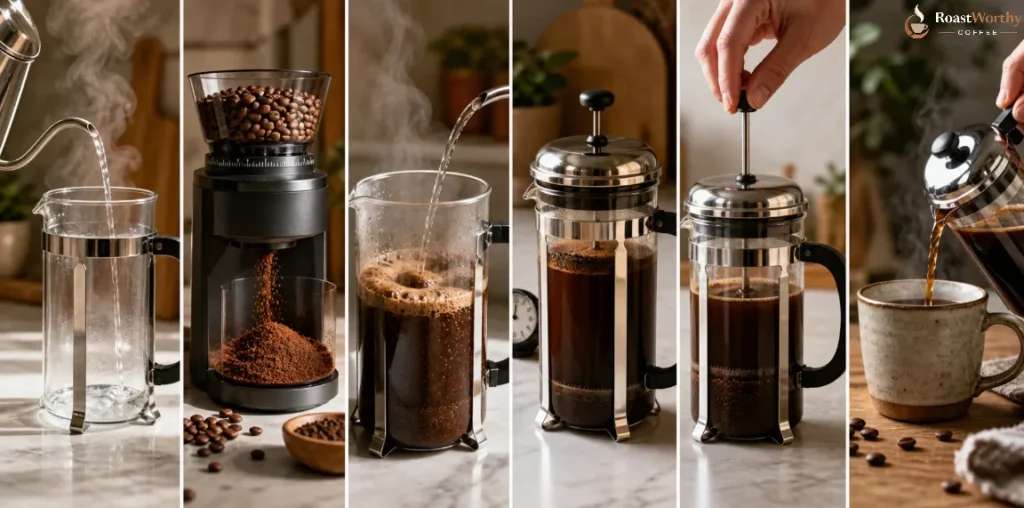
Step 1 — Preheat the Press
Pour hot water into the empty press. Swirl it. Dump it.
This keeps the brew temperature stable during steeping. Cold glass steals heat. 30 seconds of preheating matters.
Step 2 — Grind Fresh
Grind your beans immediately before brewing. Not the night before. Not an hour before. Right now.
Coffee degasses fast after grinding. Pre-ground loses 60–70% of its volatile aromatics within 15 minutes. Grind fresh or don't bother.
Step 3 — Add Grounds, Start the Bloom
Add your measured grounds to the preheated press. Level them out.
Pour about twice the weight of water as coffee — so for 23g of coffee, pour 46ml of water. This is your bloom.
The bloom releases CO2 trapped in the grounds. Fresh coffee blooms aggressively. You'll see it bubble and swell. If nothing happens, your coffee is stale.
The bloom matters for even extraction — without it, CO2 pushes water away from parts of the grounds during the steep.
Wait 30–45 seconds.
Step 4 — Fill and Steep
Pour the remaining water in a slow, circular motion. Fill to about 1 inch below the top of the press.
Place the lid on with the plunger pulled all the way up. Don't press yet.
Steep for 4 minutes. Set the timer now.
4 minutes is the sweet spot for a 1:15 ratio at 200°F. Shorter steep = under-extracted, sour. Longer steep = over-extracted, bitter. Go to 4:30 only if you've gone slightly coarser on the grind.
Step 5 — Press Slowly
At 4 minutes, apply gentle, steady downward pressure on the plunger.
The plunge should take 20–30 seconds. If it's falling through with no resistance, your grind is too coarse. If it requires real force, too fine.
Never force it. Forcing the plunger drives fine particles through the mesh and into your cup.
Step 6 — Pour Immediately
This is the step most people skip. Don't skip it.
Once you've pressed, pour all the coffee out right away. Every drop. If you leave brewed coffee sitting on the grounds — even pressed grounds — it keeps extracting. Within 10 minutes, your cup goes from balanced to bitter.
Use a preheated carafe or thermos if you're making a full litre.
Brew Variables at a Glance
| Variable | Target | Adjust If |
|---|---|---|
| Coffee-to-water ratio | 1:15 | Weak = use 1:13; Strong = use 1:17 |
| Grind size | Coarse (sea salt) | Bitter = coarser; Sour = finer |
| Water temperature | 200°F / 93°C | Never use boiling water |
| Steep time | 4 minutes | Bitter = less time; Sour = more |
| Plunge speed | 20–30 seconds | Slow and steady, always |
Common French Press Mistakes (And How to Fix Them)
Bitter cup — You're either grinding too fine, steeping too long, or your water is too hot. Fix one variable at a time. Start with grind size.
Muddy, gritty cup — Grind is too fine, or you forced the plunger. Go coarser. Plunge slower.
Weak, flat cup — Not enough coffee, or steep time was too short. Check your ratio first.
No aroma, dull flavour — Your coffee is stale or you're not blooming. Buy fresher beans. Roast date should be within 2–4 weeks on the bag. ☕
Film of grounds in the cup — Normal for French press. A small amount is unavoidable. If it's excessive, your grind is too fine.
What Coffee to Use in a French Press
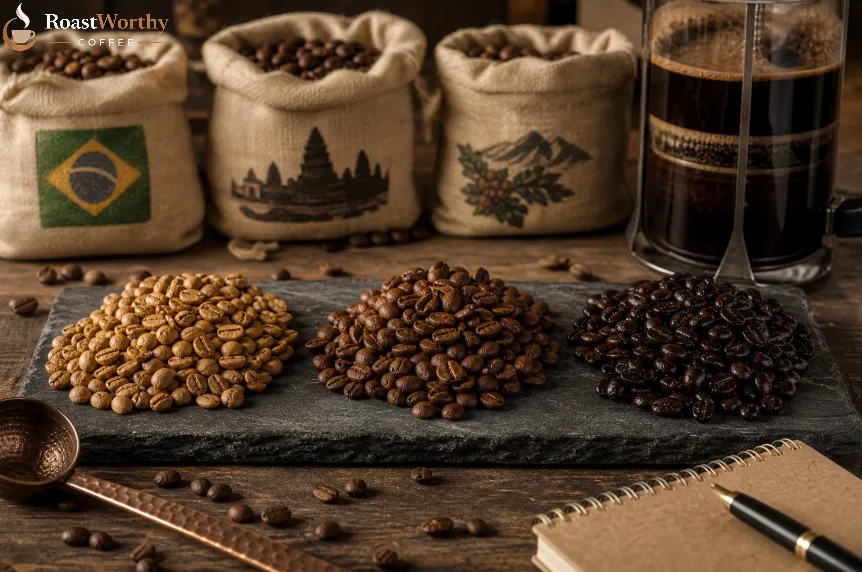
Medium roast is the classic choice. The French press brings out body and sweetness that medium roasts carry well.
Light roasts work — but you need to nail the temperature (drop to 195°F / 90°C) and go slightly coarser to avoid over-extraction of those more soluble light-roast compounds.
Dark roasts are forgiving on technique but often taste one-dimensional in a press. The oils that French press pulls out can amplify the bitterness in dark roasts.
Single-origin beans from Brazil, Sumatra, or Colombia tend to shine in a French press. Their natural body and lower acidity fit the brew method.
Ethiopian naturals are exceptional too — the press method amplifies those fruit-forward characteristics without needing a perfect pour.
Taste it. Write it down. Roast it again.
FAQ: French Press Coffee
What is the best coffee-to-water ratio for French press?
Start at 1:15 — 1 gram of coffee per 15 grams of water. Adjust up to 1:13 for stronger brew or down to 1:17 for lighter.
How long should you steep French press coffee?
4 minutes at 200°F is the standard starting point. Over 5 minutes risks over-extraction and bitterness.
Why is my French press coffee bitter?
Most likely cause: grind too fine, steep time too long, or water too hot. Adjust coarseness first.
Should you bloom French press coffee?
Yes. A 30–45 second bloom with twice the weight of water as coffee improves extraction evenness — especially with fresh beans.
What grind size is best for French press?
Coarse grind — roughly the texture of sea salt or breadcrumbs. Finer grinds clog the mesh and over-extract.
Can you use pre-ground coffee in a French press?
You can, but the flavour will be noticeably flat compared to fresh-ground. If using pre-ground, buy it specifically labeled “coarse grind for French press.”
More Recommendations from RoastWorthy Coffee