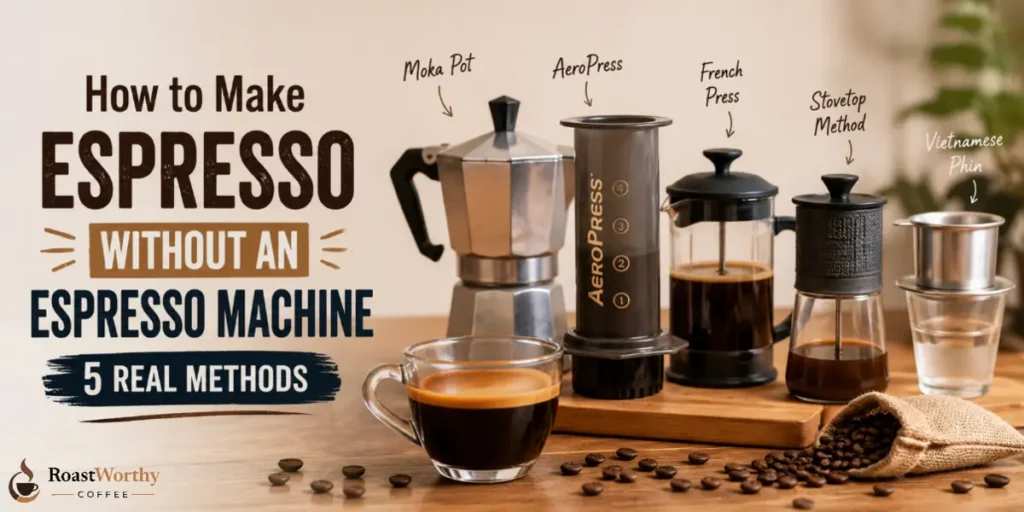
How to Make Espresso Without an Espresso Machine: 5 Real Methods

Let's get one thing straight first.
You can make espresso-strength coffee without a machine. You cannot make technically true espresso. Real espresso needs 9 bars of pressure. A moka pot makes about 1.5. An AeroPress, maybe 1.
But here's what the heat and pressure are actually doing: forcing hot water through finely ground coffee, fast, pulling out a concentrated, syrupy shot. That's the part you actually taste. And you can get most of the way there with gear you probably already own.
So this is the real guide on how to make espresso without espresso machine — five methods, real numbers, no vague hand-waving. 🔥
Espresso Without an Espresso Machine — The fast answer
First — what actually makes espresso “espresso”?
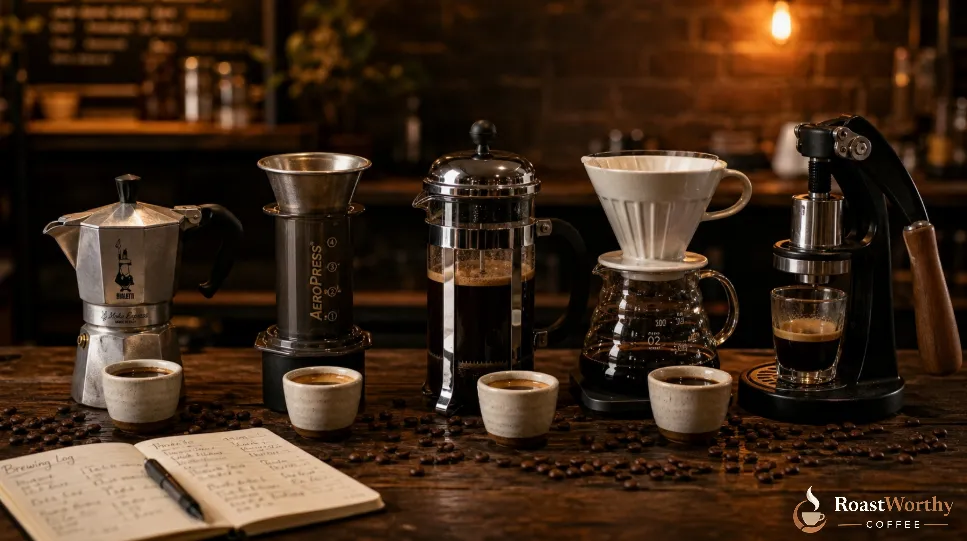
Three things define a true shot. Pressure, around 9 bars. A fine, even grind. And a short extraction — 25 to 30 seconds.
DIY espresso methods nail the grind and the concentration. They miss the pressure. That's why your crema will be thin… or absent entirely.
That's fine. Strong, concentrated, espresso-style coffee is the goal here. Not a barista flex on Instagram.
One rule across all five methods: use a dark roast. It's more forgiving, and it reads as “espresso” on the palate. Medium roasts can work, but they go sour faster when something's off.
Taste it. Write it down. Brew it again. That's the whole loop.
Method 1 — The Moka Pot (the real winner)
If you buy one thing, buy this. A Bialetti moka pot costs around $30 and makes the most espresso-like cup on this list. Period.
Here's what the heat is actually doing. Water in the bottom chamber boils. Steam pressure — roughly 1.5 bars — pushes that water up through the coffee bed and into the top. Not 9 bars. But enough for a thick, intense stovetop espresso with real body.
The recipe
That gurgle is your warning shot. Past it, you're scorching the coffee and pulling bitter, ashy flavors. ⚗️
Pre-heat your water. This is the one tip beginners skip, and it's the biggest single upgrade. Cold water means the metal body cooks your grounds before extraction even begins. Hot water in the chamber = a cleaner, sweeter shot.
The curve doesn't lie. Heat too high, you burn it. Too low, it stalls and turns sour.
This is the closest you'll get to a real shot without spending real money. Honestly, a well-pulled moka pot beats a lot of cheap espresso machines.
Method 2 — The AeroPress (most control, best body)
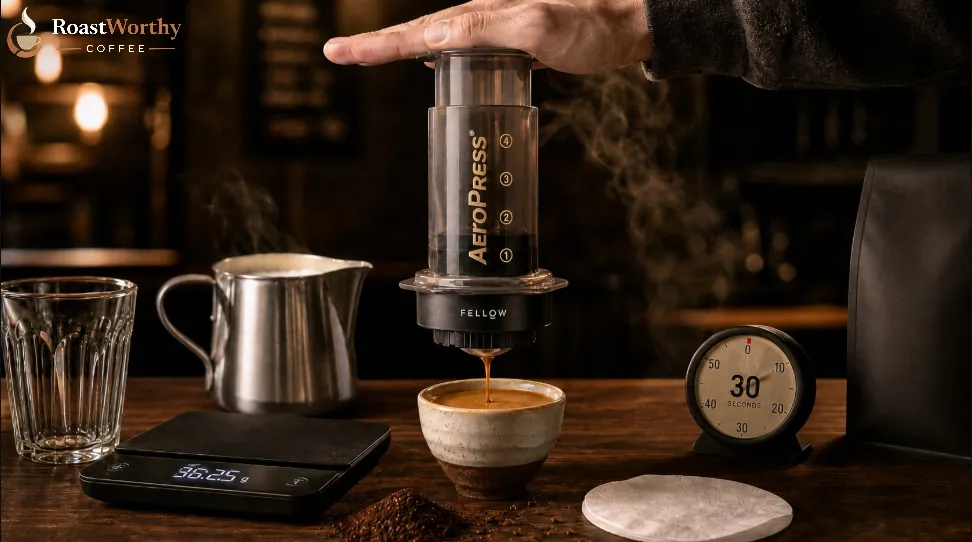
The AeroPress is the nerd's choice. And I mean that as a compliment.
You press the water through manually, so you control the pressure and the timing. Stock, it makes about 1 bar. Bolt on a Fellow Prismo or use a Flair-style pressure valve, and you get genuine back-pressure — close to a crema-topped short black.
Espresso-style AeroPress recipe
- Insert a paper filter. Rinse it with hot water first (kills the papery taste).
- Add 18–20g of finely ground dark roast.
- Pour 60ml water at 93–96°C.
- Stir hard for 10 seconds.
- Insert the plunger. Press slowly and firmly for about 30 seconds.
That's roughly a 1:3 ratio. Tight. Concentrated. Syrupy.
This shot holds up under steamed milk far better than the French press version. No contest. If you're building lattes and flat whites at home, this is your method.
It's also the most repeatable once you dial it in. Same grind, same water, same press time — same cup. The AeroPress rewards consistency more than any other tool here.
Method 3 — The French Press (strong, not strictly espresso)
Everyone owns one. So let's actually use it.
A French press won't make true espresso — there's no pressure at all. It's pure immersion brewing. But push the ratio dark and concentrated, and you get a bold, full-bodied shot that works fine in milk drinks.
The recipe
Do not let it sit on the grounds after pressing. It keeps extracting, and it turns bitter and astringent in minutes.
Honest take: this is the weakest “espresso” of the five. The body's there, the punch isn't quite. But it's free if the press is already in your cupboard. I've had worse. Much worse.
Bonus trick: a French press also makes decent milk foam. Heat your milk, then pump the plunger up and down for 30 seconds. Cheap microfoam. Works for cappuccinos.
Method 4 — Nespresso (the cheat code)
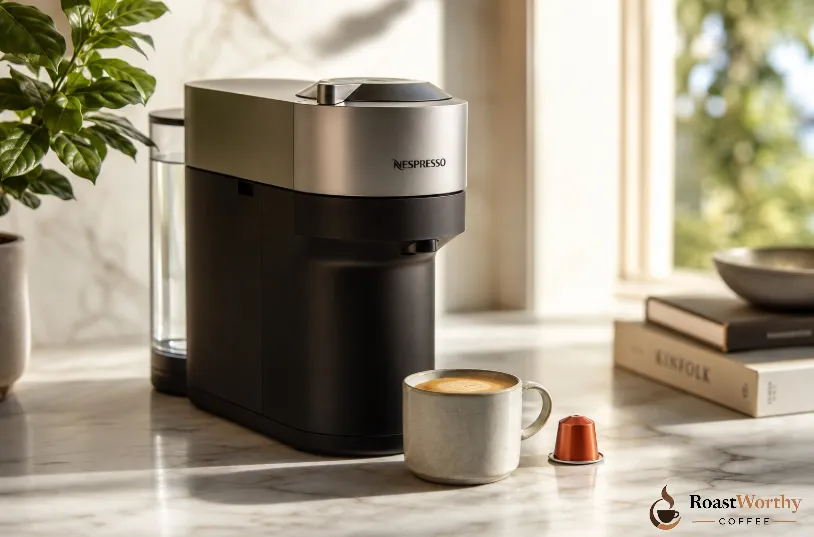
Let's be honest. A Nespresso is a machine. Sort of.
But it's not a traditional espresso machine, it's cheap, and here's the kicker — it actually hits real pressure. Most models run around 19 bars. That's more than a commercial machine.
So if your only objection to “espresso machine” is the $600 price tag and the steep learning curve, this is your shortcut. Pop a pod. Press a button. Real crema in 30 seconds.
The trade-offs are real though:
If you value zero effort over craft, start here. If you want the coffee to actually taste better — go moka pot with fresh beans.
Method 5 — Whisked Instant Espresso (the emergency)
No gear at all? You can still get an espresso-style hit.
Use instant espresso powder — not regular instant coffee. There's a real difference. Espresso powder is darker, finer, and built for intensity. Regular instant is flat and watery by comparison.
The recipe
Whisking aerates the mix and fakes a thin crema layer on top. It won't fool a barista. But in a hotel room at 6am with no kitchen? It does the job.
This is also the base for whipped dalgona coffee, if that's still your thing. ☕
Quick Comparison: Which DIY Espresso Method Wins
| Method | Pressure | Cost | Crema | Difficulty | Espresso-likeness |
|---|---|---|---|---|---|
| Moka pot | ~1.5 bar | ~$30 | Light | Easy | 8/10 |
| AeroPress + Prismo | ~1 bar (more w/ valve) | ~$40–70 | Medium | Medium | 7.5/10 |
| French press | None | ~$20 | None | Easy | 5/10 |
| Nespresso | ~19 bar | ~$100+ | Strong | Very easy | 8.5/10 |
| Instant espresso | None | ~$8 | Faked | None | 4/10 |
The moka pot is the answer for most people. Best ratio of cost to quality on the entire list.
The Grind is the Thing Everyone Gets Wrong
Here's what nobody tells you about making espresso at home without a machine: the grind matters more than the gear.
Too coarse, and your shot runs weak and sour. Too fine for the method, and it clogs, stalls, or turns bitter.
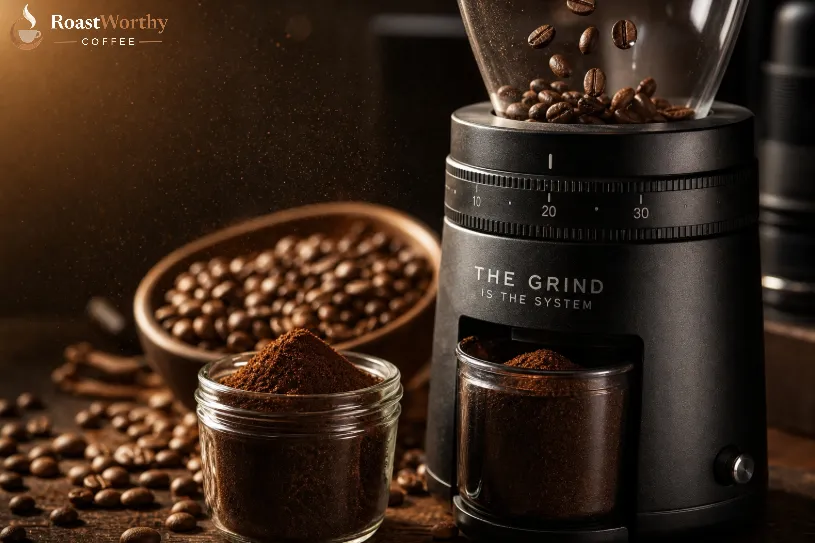
Match the grind to the method:
And grind fresh. Whole beans go stale within days of cracking. Pre-ground coffee is already halfway gone before you open the bag.
A $40 burr grinder will upgrade every single method on this list more than a $400 espresso machine ever could. That's not an exaggeration. The grind is the system. Everything else is downstream.
Your first shot will be imperfect. Make it anyway.
Turn Your DIY Shot into Real Espresso Drinks
Got your concentrate? Now build the drink. No steam wand required.
Heat your milk on the stove, then plunge it in a French press for 30 seconds. That's free microfoam. It's not latte-art-grade, but it pours clean.
FAQ
Can a moka pot make real espresso?
No. A moka pot makes about 1.5 bars of pressure. Real espresso needs around 9. But it's the closest stovetop method to espresso strength and body, which is why it's the top pick here.
What's the best way to make espresso without a machine?
A moka pot, for most people. It's cheap, simple, and makes the most espresso-like cup. The AeroPress wins if you want more control over pressure and extraction time.
Can you make espresso with a French press?
Not true espresso — there's no pressure, only immersion. But a high coffee-to-water ratio plus a dark roast gives you a strong, concentrated shot that works well in milk drinks.
What grind size should I use for DIY espresso?
Fine for a moka pot and AeroPress, medium-coarse for a French press. Always grind fresh. The grind affects your result more than the equipment does.
Is instant espresso the same as real espresso?
No. Instant espresso powder is concentrated and convenient, but it lacks the body, crema, and freshness of brewed methods. Treat it as a fallback, not a replacement.
Do I need crema for it to count as espresso?
Crema signals fresh beans and pressure, but it isn't flavor itself. A moka pot shot with thin crema often tastes better than a crema-heavy shot from a stale pod.
Bottom line: Buy a moka pot. Use fresh dark beans. Grind them fine, pre-heat your water, and pull it off the heat the moment it gurgles. That's espresso-style coffee for under $35 — no machine required.
Taste it. Write it down. Brew it again. 🔥
More Recommendations from RoastWorthy Coffee