
Moka Pot Coffee Guide: How to Use a Stovetop Espresso Maker


TL;DR: Use a 1:7 coffee-to-water ratio. Medium-fine grind. Low heat. Pull it off the flame the second you hear the gurgle. That's it. The rest is dialing in.
Most people who own a moka pot are making it wrong. Not badly wrong. Just wrong enough that they're getting bitter, metallic, burnt coffee instead of what this little pot is actually capable of.
Moka pot coffee is not espresso. It produces roughly 1–3 bars of pressure. A real espresso machine runs at 9 bars. Different animal. But when you brew it right, it's concentrated, rich, and genuinely excellent. Worth every one of the five minutes it takes.
What Is a Moka Pot?
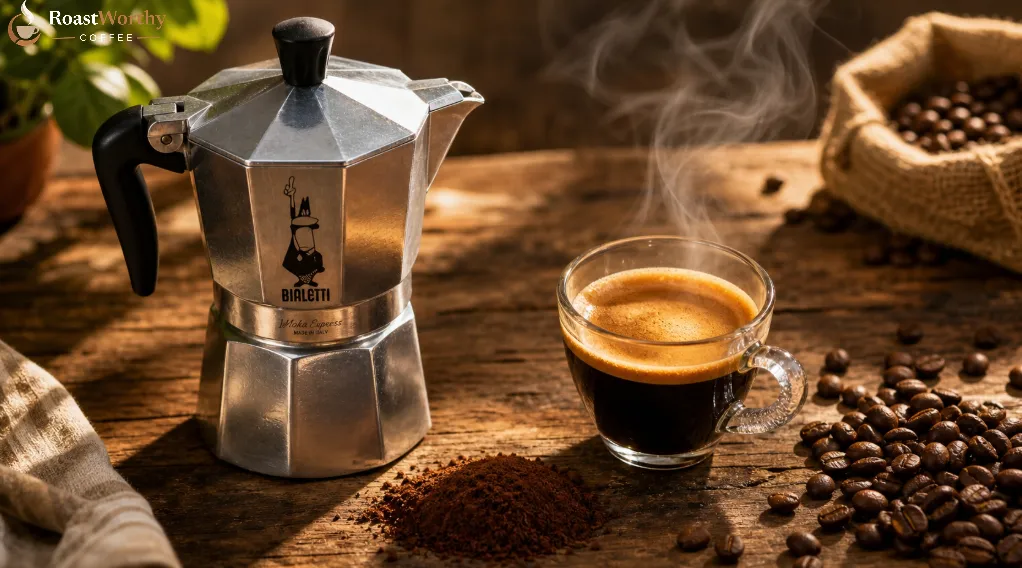
The moka pot — invented by Alfonso Bialetti in 1933 — is a stovetop brewer with three chambers: a bottom boiler, a metal filter basket, and an upper collection chamber.
Water heats in the bottom. Steam pressure pushes it up through the grounds. Coffee collects above.
The Bialetti Moka Express is still the benchmark. Cheap, durable, and available everywhere. If you don't own one yet, start with a 3-cup or 6-cup model depending on how much you drink.
What You Actually Need
That's it. No gooseneck kettle. No paper filters. No thermometer. This is stovetop coffee at its most direct.
The Moka Pot Ratio That Works
Use 1 gram of coffee for every 7 grams of water. For a standard 3-cup moka pot, that's roughly 15–17g of coffee and 110–120ml of water.
Don't go by “cups” on the pot label. That measurement is based on a 2oz demitasse. Measure by weight and you'll get consistency every single time. ⚗️
A lot of guides tell you to fill the basket “until it's full.” That's vague guidance. Weigh it once. You'll never guess again.
Grind Size: The Variable Most People Get Wrong
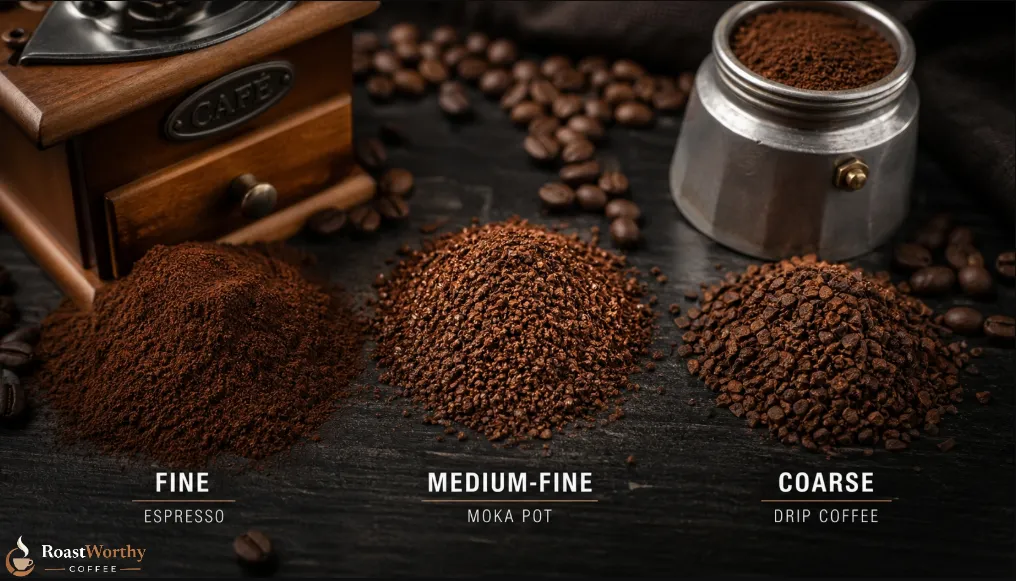
Medium-fine. Not espresso grind. Not drip grind.
Espresso grind in a moka pot creates over-extraction and builds dangerous pressure. Drip grind produces weak, watery output. You want something between the two — about the texture of coarse sea salt.
If you're buying pre-ground: look for bags labeled “moka” or “stovetop espresso.” Most Italian brands like Lavazza and illy make specific moka grinds.
If you're grinding at home: set your burr grinder one notch coarser than your espresso setting. Dial from there based on taste.
Step-by-Step: How to Use a Moka Pot
1. Pre-heat your water.
Fill the bottom chamber with hot water up to — but not above — the pressure relief valve. Cold water means the pot sits on heat longer, which scorches the grounds before extraction even starts. Pre-heating cuts that risk.
2. Fill the basket evenly.
Add your ground coffee to the filter basket. Level it off with your finger. Do not tamp it down. Tamping increases resistance, slows the flow, and over-extracts.
3. Assemble carefully.
Screw the top and bottom together firmly, but don't overtighten. Hand-tight is enough. Use a cloth if the lower chamber is already warm.
4. Set the heat to low-medium.
This is the most important step. Low heat is the non-negotiable. High heat rushes extraction, scorches the coffee, and produces that burnt, metallic taste that gives moka pots a bad reputation.
On gas: a small, steady flame that doesn't lick the sides of the pot.
On electric: medium-low setting. Give it time.
5. Leave the lid up.
Watch the brew. You'll hear a hiss, then a steady stream of dark coffee. When the stream turns from dark amber to light blonde and sputters, pull it immediately.
6. Stop the extraction fast.
Run the bottom chamber under cold water, or set it on a cold damp cloth. This stops residual heat from continuing to extract. That step alone can fix bitter moka pot coffee.
7. Pour and drink right away.
Moka pot coffee doesn't hold well. It continues to change as it sits. Pour it within two minutes of pulling. ☕
Heat Settings: The Detail That Changes Everything
Here's what the heat is actually doing.
Low heat means slower pressure buildup. Slower pressure means the water contacts the grounds for longer at a lower temperature. That produces sweeter, more balanced extraction with less bitterness.
High heat means rapid pressure, fast brew, high temperature. Result: channeling, scorching, metallic edge.
The target extraction window is 4–5 minutes from the moment you put it on heat. If it's done in under 3 minutes, your heat is too high. If it takes more than 7, your grind is too fine.
Time it once. Adjust from there.
Choosing the Right Coffee for a Moka Pot
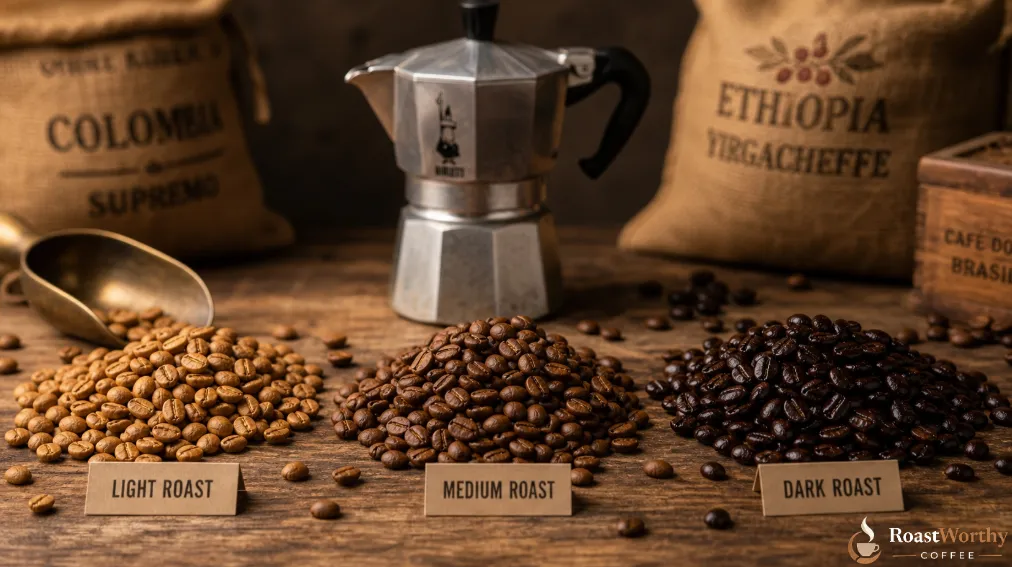
Medium roast performs best. It has enough body to handle the pressure extraction without turning bitter like a dark roast will.
Light roast works too — but only if your grind and heat are dialed. Light roasts have more soluble compounds and extract faster. Go slightly coarser.
Dark roasts… risky. Most are already over-developed. Push them through pressure extraction and you're just compounding the bitterness. If that's your preference, use the coarsest setting you have and cut extraction early.
For origin: Brazilian naturals and Colombian washed coffees are classic moka pot pairings. The natural sweetness of a Brazilian Cerrado at medium roast in a moka pot is genuinely excellent. Taste it. Write it down. Roast it again.
Common Moka Pot Problems (and Fixes)
Bitter, burnt taste:
Heat too high. Grind too fine. Extraction ran too long. Fix one at a time.
Weak, watery output:
Grind too coarse. Not enough coffee in the basket. Water level too low.
Coffee spurting out the top:
Gasket is worn or the pot isn't fully sealed. Replace the rubber seal — they're under $5 and widely available for all Bialetti models.
White residue on the outside:
Mineral buildup from hard water. Use filtered water. Clean with diluted white vinegar monthly.
How to Clean a Moka Pot
Never use soap. Especially on aluminum models. Detergent strips the protective patina that builds up over time and makes your coffee taste metallic.
After every use: rinse with warm water. Disassemble and dry completely before storing. Moisture trapped inside causes oxidation.
Once a month: check the rubber gasket and the small filter plate. Both degrade over time. Both are replaceable. Both directly affect brew quality.
Once a year minimum: replace the gasket. It costs almost nothing and makes a real difference.
Moka Pot vs. Espresso Machine: What's the Real Difference?
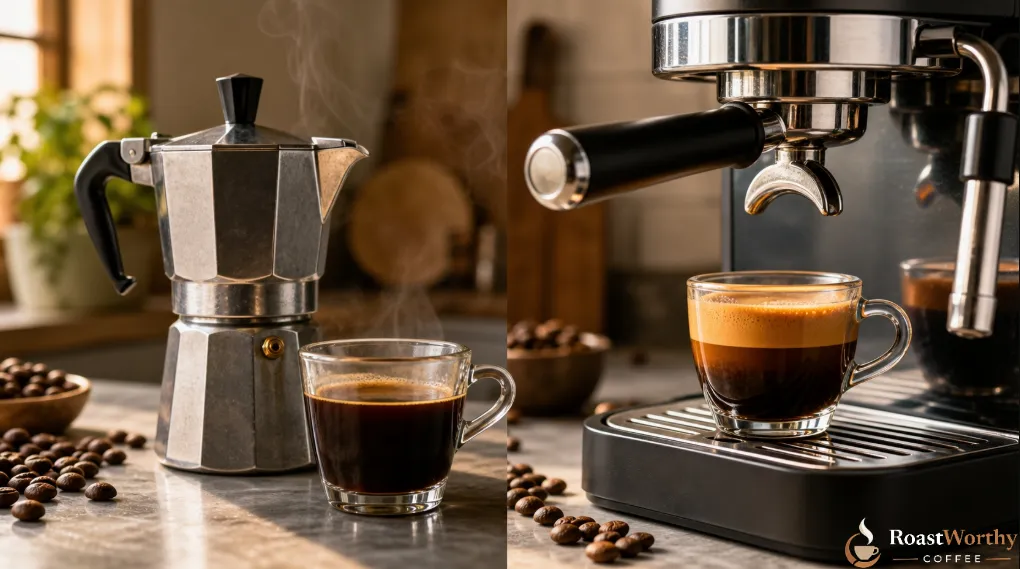
A moka pot produces strong coffee. Not espresso. That distinction matters if you're making milk drinks.
Espresso has genuine crema because of the pressure. Moka pot output is denser than drip but doesn't produce true crema in the same way.
For an Americano or a black concentrated cup: moka pot is exceptional. For a latte or cappuccino at home: you'll want a machine that hits 9 bars. A moka pot with steamed milk is still good. Just different.
FAQ Related to Moka Pot Coffee
What ratio should I use for a moka pot?
1 gram of coffee to 7 grams of water. For a 3-cup pot, that's roughly 15–17g coffee to 110–120ml water.
Why does my moka pot coffee taste burnt?
Heat is too high or extraction ran too long. Use low-medium heat and pull the pot off the moment the stream turns light and starts sputtering.
Can I use espresso grind in a moka pot?
No. Espresso grind is too fine, creates over-extraction, and can cause dangerous pressure buildup. Use medium-fine grind.
How do I clean a moka pot?
Rinse with warm water only — no soap. Dry completely before storing. Replace the rubber gasket every 6–12 months.
Is a stainless steel or aluminum moka pot better?
Both work. Aluminum is lighter and traditional. Stainless steel is more durable, easier to clean, and compatible with induction cooktops.
How long should moka pot brewing take?
4–5 minutes from when you set it on the heat. Under 3 minutes means heat is too high. Over 7 minutes means grind is too fine.
More Recommendations from RoastWorthy Coffee