Classic Irish Coffee Recipe: Warm Whiskey Coffee Cocktail

Most people have had a bad Irish coffee. Weak whiskey. Cream that sank. Sugar still gritty at the bottom.
This isn't that.
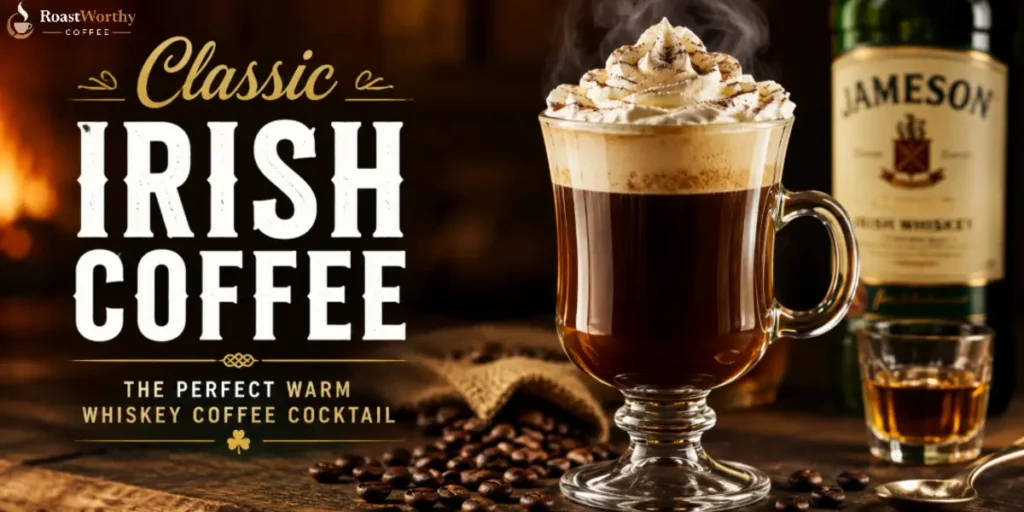
This Irish coffee recipe follows the method Joe Sheridan built at Foynes Airport in 1943 — and the same one the Buena Vista Café in San Francisco has been making 2,000 times a day since 1952. Four ingredients. Specific ratios. A sequence that matters. 🔥
Why the Buena Vista Method Still Wins
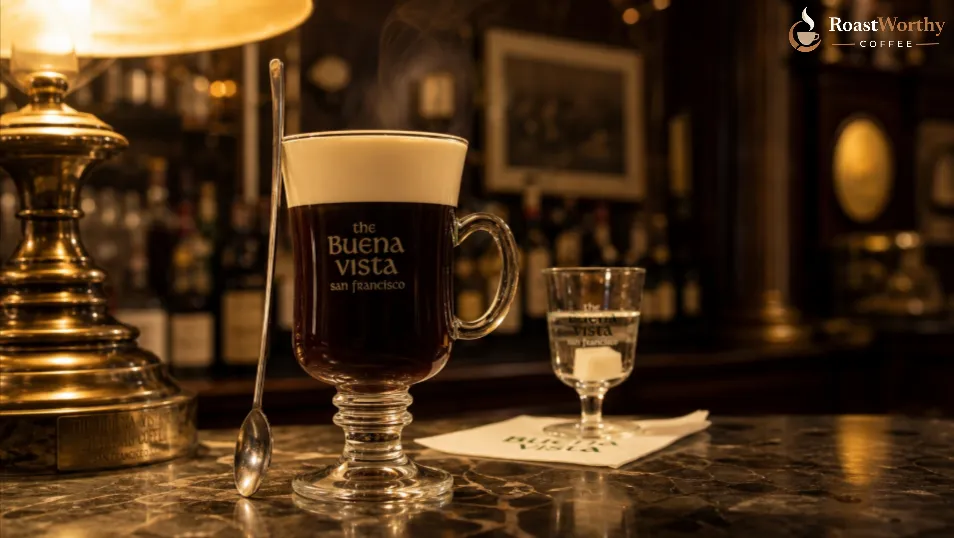
The Buena Vista doesn't free-pour. They don't eyeball. They warm every glass, dissolve every sugar cube, and float every cream with a spoon.
That precision is the reason their Irish coffee still tastes the same after seventy years. The recipe isn't complicated — it's just unforgiving when you skip steps.
Every step below has a reason behind it. Not just instruction — explanation.
What Goes Into a Traditional Irish Coffee: The Four Ingredients
Hot Coffee
Use a strong medium roast. Pour-over or French press at a 1:12–1:13 ratio. Brew temperature at serving: 82–88°C (180–190°F).
Avoid dark roasts. The bitterness fights the whiskey instead of working with it. A Colombian or Brazilian medium — chocolate body, low acidity — is the cleanest base.
Irish Whiskey
The Buena Vista uses Tullamore D.E.W. Jameson is equally traditional. Both are triple-distilled: smooth, not sharp.
45ml (1.5oz) is the target. Under-pour and the whiskey disappears. Over-pour and you're drinking a hot whiskey with coffee flavouring.
Avoid peated Scotch. Avoid bourbon on your first build. The grain-forward sweetness of Irish whiskey is doing specific work here.
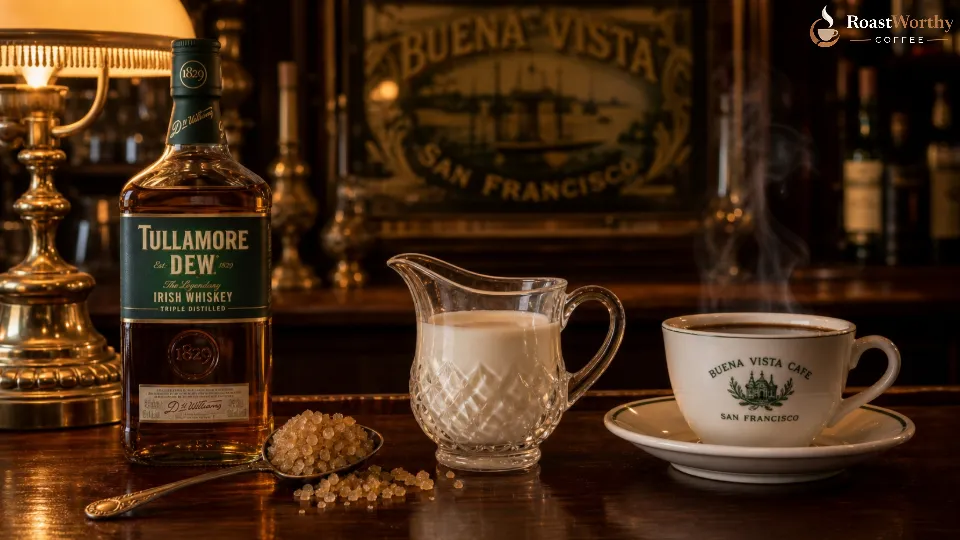
Brown Sugar
Brown sugar. Not white.
The molasses note deepens the drink in a way white sugar doesn't touch. One level teaspoon for balance. Two if you want it noticeably sweet. Demerara is the best upgrade — coarser grain, richer flavour, cleaner dissolve.
Double Cream
This is where most home versions fall apart. ⚗️
You need double cream (48%+ fat), lightly whipped. Not stiff. Not liquid. Pourable — but with enough body to float as a clean white layer on the coffee surface.
Single cream won't float. Canned whipped cream collapses. Neither has a place here.
The Classic Irish Coffee Recipe
Yield: 1 serving | Build time: 7 minutes
Ingredients
Method
Step 1 — Warm the glass.
Pour boiling water into your glass. Wait 30 seconds. Discard.
A cold glass drops your brew temperature the moment you pour. Pre-warming is the step most people skip. It's why their drink goes cold before the second sip.
Step 2 — Add the brown sugar first.
Into the warm glass. Before anything else.
Step 3 — Pour the hot coffee.
120ml. Fill the glass three-quarters full.
Stir for a full 15 seconds until the sugar is completely dissolved. Undissolved sugar sits at the bottom and throws off the balance of every sip. This dissolve step is non-negotiable.
Step 4 — Add the whiskey.
45ml. Stir once to incorporate.
Step 5 — Float the cream.
Hold a teaspoon upside-down just above the surface of the coffee. Pour lightly whipped double cream slowly over the back of the spoon.
The spoon disperses the pour energy across the surface instead of breaking through it. Without the spoon, the cream sinks. With it, you get a clean white collar — about 1cm thick — sitting on top of the coffee.
Step 6 — Don't stir. Don't touch it.
The drink is designed to be drunk through the cream. The contrast between the cool cream cap and the hot coffee underneath is the whole point. ☕
Here's What the Heat Is Actually Doing 🔥
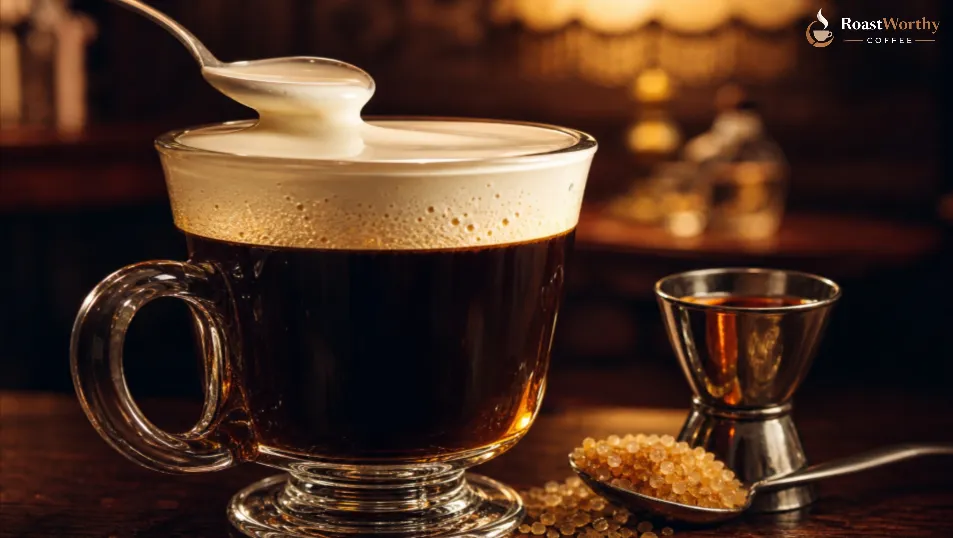
The coffee surface at 82–88°C has enough tension to support a fat-rich cream layer. Lightly whipped double cream has trapped air bubbles that increase buoyancy — that's why it floats and liquid cream sinks.
Pour that cream too fast and you introduce turbulent flow. The cream breaks through the surface. You lose the layer.
The teaspoon method keeps the pour in laminar flow — force disperses horizontally across the surface rather than concentrating and punching through.
The Buena Vista ages their cream for 48 hours to increase density before floating it. At home, lightly whipped double cream with a spoon pour gets you 90% of the same result.
The Most Common Mistakes (And the Fix)
Cream sinks.
Three causes: cream too thin, coffee too hot (above 90°C), or pour too forceful. Whip slightly more. Drop the brew temp. Use the spoon. Every time.
Drink tastes bitter.
Your ratio is off, or your roast is too dark. Pull back to 1.5oz whiskey and switch to a medium roast. The bitterness of a dark roast dominates the entire build.
Sugar is still gritty.
It wasn't dissolved before the cream went on. Add the sugar before the coffee — not after — and stir longer than you think you need to.
Glass cracked.
You poured near-boiling water into a cold glass. Pre-warming prevents thermal shock. Never skip it.
Choosing the Right Irish Whiskey
Not all Irish whiskeys perform equally in this build. The coffee amplifies certain characteristics — it doesn't hide them.
| Whiskey | Character | Works Best When |
|---|---|---|
| Jameson | Clean, slightly sweet, grain-forward | You want the coffee to lead |
| Tullamore D.E.W. | Lighter, honeyed edge | You want the classic Buena Vista result |
| Redbreast 12 | Rich, oily, single pot still | You want the whiskey to be distinct |
| Bushmills Black Bush | Sherry-cask, dried-fruit note | Paired with a natural-process coffee |
| Connemara Peated | Light smoke | One experimental build — not traditional |
Avoid anything under 40% ABV. Under-strength spirits make the entire drink taste flat.
Irish Coffee Variations Worth Making at Home
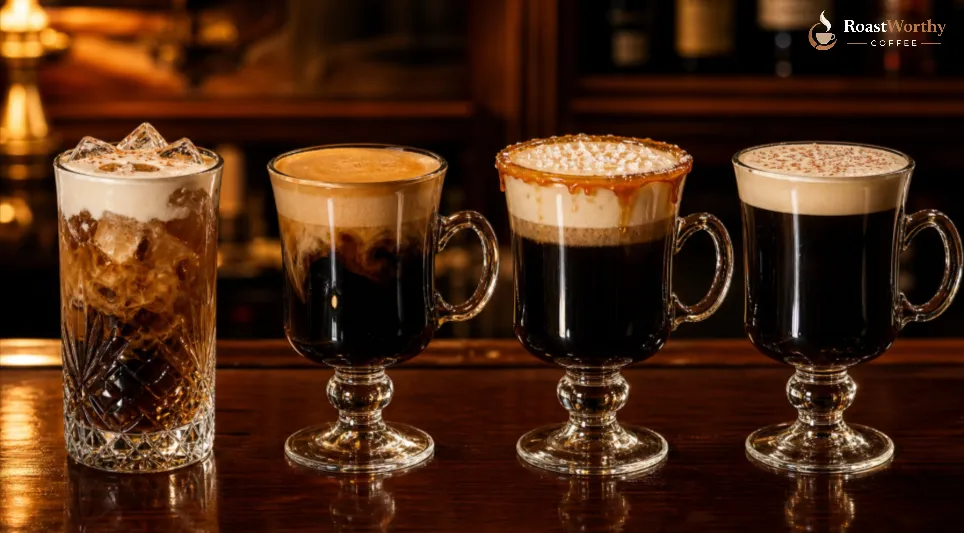
Build the original correctly first. Once you have it dialled in, these variations all make sense.
Iced Irish Coffee
Brew twice as strong. Cool completely. Pour over ice. Add whiskey and brown sugar syrup (1:1 ratio). Float lightly whipped cream using the exact same spoon technique. Same physics, colder application.
Espresso Irish Coffee
Replace the brewed coffee with a double espresso topped with 80ml hot water. More concentrated, sharper edge. Pairs well with Redbreast 12 or Bushmills Black Bush.
Salted Caramel Build
Swap the demerara for a small measure of salted caramel syrup. Finish with flaky sea salt on the cream. Works particularly well with Slane Irish Whiskey.
Decaf Version
A quality decaf medium roast holds up completely in this build. The cream float behaves identically. The flavour barely shifts. A clean after-dinner option for anyone avoiding caffeine.
What Coffee to Use at Home
The coffee carries half the flavour load in this build. It deserves as much attention as the whiskey.
Medium roast is the target. You want caramel body, gentle acidity, and enough structure to hold up under whiskey and cream. A Colombian or Brazilian single origin is the cleanest fit — low acidity, slight chocolate or nut character.
Brew it strong. Pour-over at 1:12. French press at 1:13 with a 4-minute steep. You're building a base that needs to hold its flavour through dilution.
The Buena Vista uses Peerless Coffee — an Oakland-roasted, smooth Italian-style blend with enough body to anchor the build at scale. At home, any honest medium roast does the same job.
Taste it. Write it down. Roast it again.
FAQs
What's the actual origin of this Irish coffee recipe?
Joe Sheridan invented it in 1943 at Foynes Airport in County Limerick, Ireland — a warming drink for passengers on delayed transatlantic flights. Travel writer Stanton Delaplane brought the recipe to San Francisco's Buena Vista Café in 1952, where it became an institution. The Buena Vista has since served over 40 million Irish coffees.
Why does my cream always sink?
Usually one of three things: cream isn't whipped enough, coffee is too hot (above 90°C), or the pour was too direct. Use the teaspoon float method every single time and whip to soft — not stiff — peaks.
Can I use an espresso machine instead of filter coffee?
Yes. Pull a double shot and top with 80ml of hot water to build an Americano base. The result is stronger and slightly more bitter — it changes the flavour balance but still works well. Adjust your whiskey pour slightly downward to compensate.
Is brown sugar really necessary, or can I use white?
White sugar works technically. But the molasses note in brown sugar pairs specifically with the grain sweetness of Irish whiskey in a way white sugar can't replicate. Demerara is the single best upgrade in the entire recipe.
Can I make Irish coffee without alcohol?
Yes. Replace the whiskey with 15ml of Irish cream syrup or a non-alcoholic spirit alternative. The build technique is identical and the cream float behaves exactly the same way.
How many calories are in an Irish coffee?
Roughly 220–280 calories per serving depending on cream quantity and sugar. The whiskey contributes around 95–100 of those.
More Recommendations from RoastWorthy Coffee