Espresso vs Drip Coffee: Grind, Pressure & Caffeine Compared

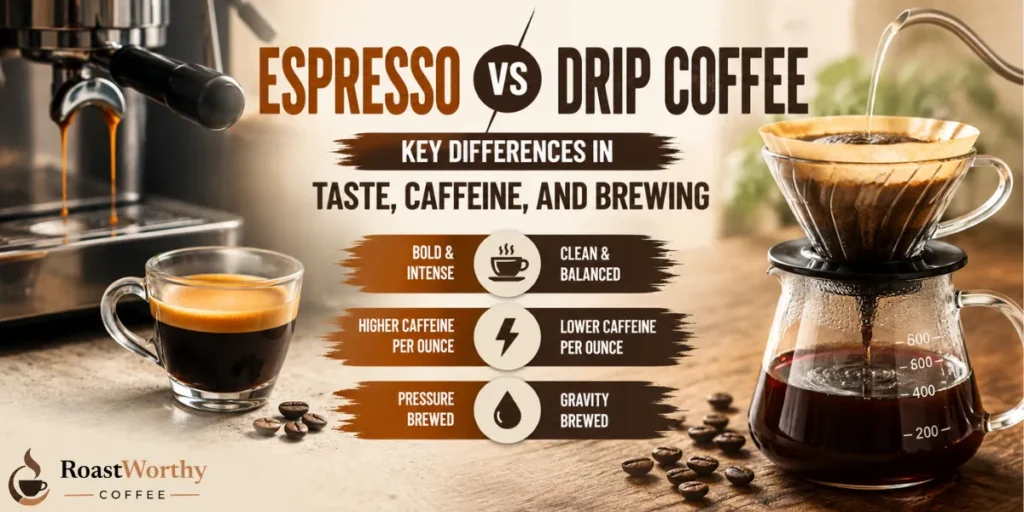
Espresso vs drip coffee comes down to one thing: pressure. Same bean, same roast… two drinks that taste nothing alike.
Espresso forces water through fine grounds at 9 bars in 25 seconds. Drip lets gravity do the work over four minutes. That single difference reshapes everything—flavor concentration, body, crema, even caffeine content.
Most people get the caffeine part backward, too. And the difference between espresso and drip coffee isn't about which is “stronger.” It's about what each method pulls from the cup.
Here's what the heat and water are actually doing… and how to brew both right. ⚗️
Espresso vs Drip Coffee — The Quick Take
That's the whole article in a box. The rest is the why.
The Core Difference: Brew Pressure
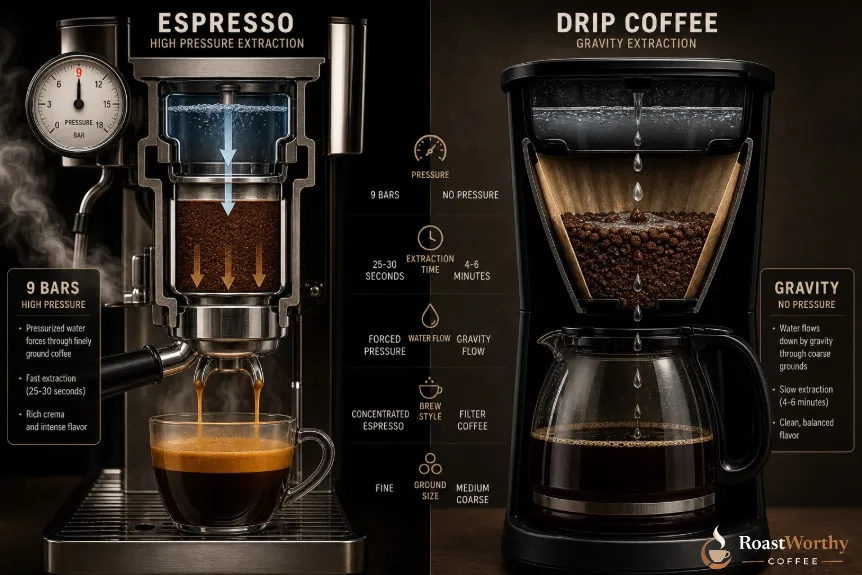
This is the line that separates the two. Everything else follows from it.
Espresso uses roughly 9 bars of pressure—about nine times atmospheric pressure—to force hot water through compacted, finely-ground coffee. Drip coffee uses gravity. Just water falling through grounds.
That brew pressure is why espresso has crema. Drip never will. The curve doesn't lie.
What pressure does to extraction
Pressure speeds extraction up dramatically. You pull a shot in 25–30 seconds. Drip takes 4–6 minutes to do its work.
Same target—dissolve the good compounds, leave the bitter ones behind. Different roads to get there.
The numbers back it up. Espresso runs a total dissolved solids (TDS) of 8–12%. Drip sits closer to 1.2–1.5%. That's not a small gap. That's the entire reason these two drinks feel nothing alike.
Grind Size: Fine vs Medium
Grind size is the lever you pull to match the brew method. Get it wrong and both drinks fall apart.
| Factor | Espresso | Drip Coffee |
|---|---|---|
| Grind size | Fine (like table salt) | Medium (like sea salt) |
| Brew pressure | ~9 bars | None (gravity) |
| Brew time | 25–30 seconds | 4–6 minutes |
| Water temp | 90–96°C | 92–96°C |
| Coffee-to-water ratio | 1:2 | 1:16 |
| TDS (strength) | 8–12% | 1.2–1.5% |
| Body | Heavy, syrupy | Light to medium |
| Crema | Yes | No |
The fine grind for espresso isn't optional. A fine grind packs more surface area into the puck. That resistance is what lets the machine build pressure.
Use a coarse grind in an espresso machine and water blasts straight through. Sour, thin, sad. Use a fine grind in a drip machine and you get over-extracted, bitter sludge.
Match the grind to the method. Every time.
Caffeine Content: The Part Everyone Gets Wrong
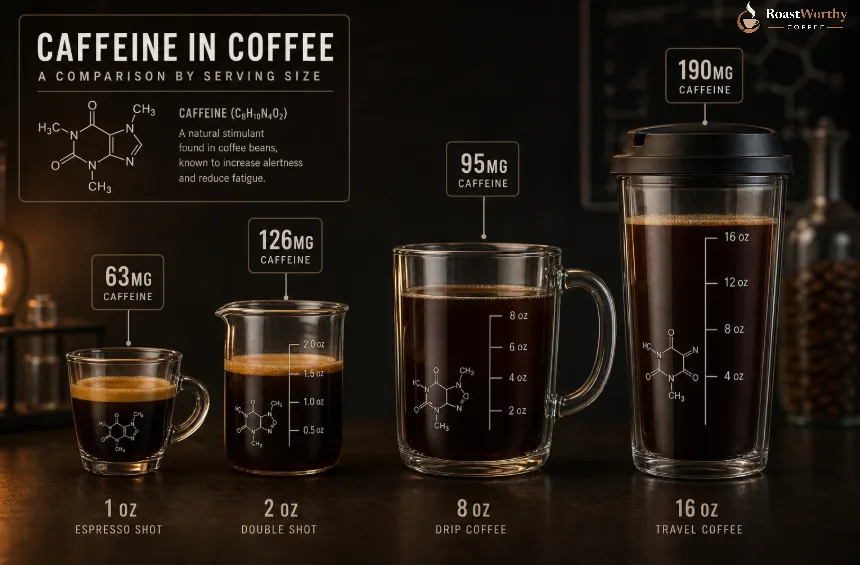
People assume espresso is the caffeine bomb. Half right.
A single shot of espresso (1 oz) has about 63 mg of caffeine. An 8 oz cup of drip coffee has about 95 mg.
So drip wins on total caffeine per serving. But per ounce? Espresso is nearly 8x more concentrated.
Why the espresso vs coffee caffeine confusion happens
Espresso feels stronger. It's intense, bitter, concentrated. Your tongue reads that as “strong caffeine.”
But flavor strength and caffeine content are two different things. A double shot (the café standard) gets you to ~126 mg—now it beats the drip mug. ⚗️
Caffeine at a glance
The takeaway: if you're chasing caffeine, a large drip coffee usually delivers more than one espresso shot. No joke.
Taste and Flavor Concentration
This is where the two drinks split hardest.
Espresso concentrates everything. The fine grind, the pressure, the tight 1:2 ratio… it pulls oils, sugars, and acids into a small, dense liquid. You taste flavor concentration on a level drip can't reach.
Drip coffee is the opposite. More water, longer contact, cleaner extraction. You get clarity. Subtle floral and fruit flavors that espresso flattens under its own intensity.
What espresso tastes like
Thick. Often chocolate, caramel, toasted nut. A good shot has sweetness balanced against bitterness. The crema adds a slight bittersweet edge.
Bad espresso? Sour (under-extracted) or harsh and ashy (over-extracted). The 25–30 second window is unforgiving.
What drip tastes like
Lighter on the palate. More room for origin character to show up. A washed Ethiopian in a drip machine can taste like lemon and tea—delicate stuff espresso would bury.
Drip is forgiving. That's why most home setups start there. Your first cup will be imperfect. Make it anyway.
One thing worth knowing: the roast level you choose shifts how each method behaves—light roasts go sour in espresso, dark roasts turn bitter in drip if you brew them hot. We broke that down in detail here:
Read: How Roast Level Affects Espresso vs Drip →
Espresso vs Filter Coffee: A Quick Clarification
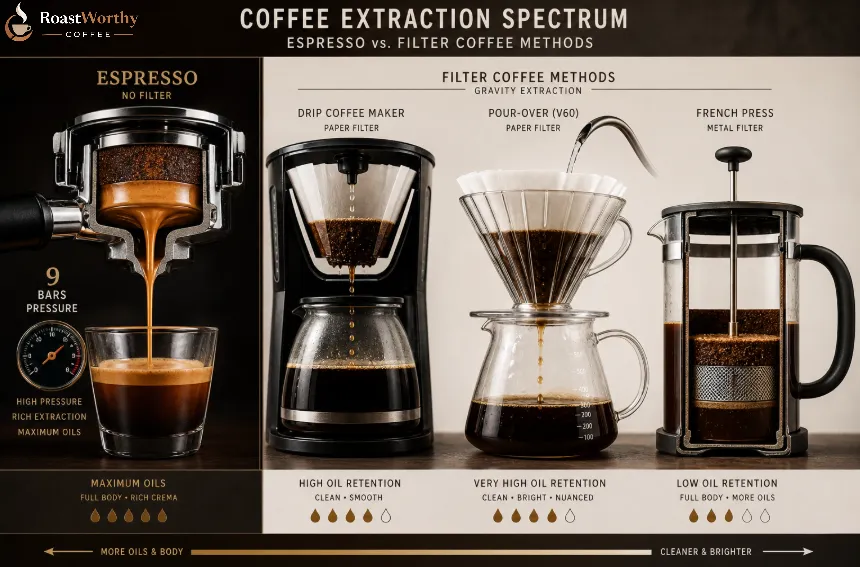
“Drip” and “filter coffee” get used interchangeably, but there's nuance.
Drip is one type of filter coffee—gravity pulls water through grounds in a paper or metal filter. Pour-over (V60, Chemex) is also filter coffee, just manual. South Indian filter coffee is a different animal, using a metal percolator.
For the espresso vs filter coffee comparison, the principle holds: no pressure, longer extraction, cleaner cup. Espresso stands alone because of those 9 bars.
One more thing the filter does. Paper traps oils. Metal lets them through. That's why a V60 tastes cleaner than a French press, and why espresso—filtered through nothing but a compressed puck—keeps every drop of oil. Those oils carry body and crema.
Brewing Method Breakdown
The two drinks aren't just “machine A vs machine B.” Each method asks something different from you.
Brewing espresso
You need a machine that hits 9 bars and holds temperature. You need a grinder fine enough—and consistent enough—to build resistance without choking the flow.
Every variable interacts. Grind finer, the shot slows. Dose heavier, pressure climbs. It's a closed system, and it punishes sloppiness fast.
That's the appeal for some people. For others, it's the reason they never bother.
Brewing drip
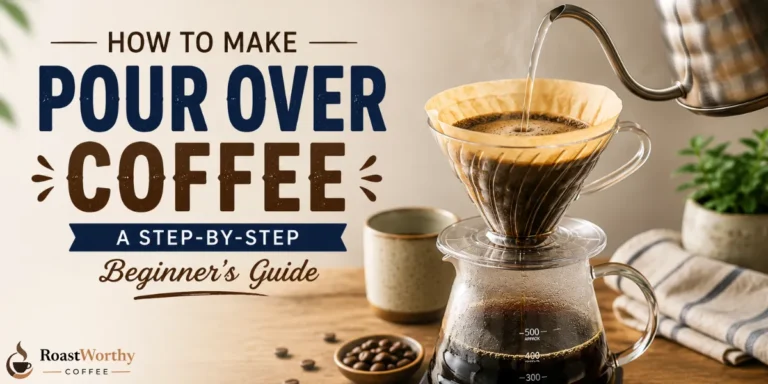
Forgiving by design. An auto-drip machine does the work—measure grounds, add water, walk away. Pour-over gives you more control if you want it, but you can still make a good cup half-asleep.
The wide margin for error is why drip is the world's default morning coffee. Honestly, that's not a knock. It's a feature.
The Equipment Reality
Cost and effort differ a lot. Worth knowing before you buy.
| Setup | Starting Cost | Learning Curve | Grinder Needed |
|---|---|---|---|
| Entry espresso machine | $300–500 | Steep | Yes—non-negotiable |
| Prosumer espresso | $700–1,500+ | Steep | Yes—quality burr |
| Auto-drip machine | $50–150 | Minimal | Helpful, not required |
| Pour-over (V60/Chemex) | Under $50 | Gentle | Recommended |
For beginners, drip wins on accessibility. Espresso rewards obsession. If you like dialing in variables and chasing the perfect shot, the machine is a rabbit hole worth falling into.
And here's the part people skip: for espresso, the grinder matters more than the machine. A $500 machine with a $40 grinder makes worse coffee than a $300 machine with a good one. Spend accordingly.
Which Should You Drink?
Depends entirely on what you want from the cup.
Choose espresso if you want intensity, crema, and the base for milk drinks like lattes and cappuccinos. Choose drip if you want a bigger cup, cleaner flavor, and something you can make half-asleep without ruining it.
Honestly? Most serious coffee people drink both. Espresso in the morning, pour-over in the afternoon. Different tools for different moods.
If you roast your own beans, both methods come alive—coffee that's 48 hours off the roaster tastes different in either brewer. That freshness matters more than the gear.
How to Get the Best Out of Each
A few specific numbers to take with you. ⚗️
For espresso: aim for an 18g dose, 36g out, in 28 seconds. That's your starting point. Too sour? Grind finer. Too bitter? Grind coarser. Taste it. Write it down. Adjust the grind.
For drip: use a 1:16 ratio—say 30g coffee to 480g water—with water at 94°C. Medium grind. Total brew time around 4 minutes.
Dial those in and you'll out-brew most cafés at home.
Frequently Asked Questions
What is the difference between espresso and drip coffee?
Espresso forces hot water through fine grounds at ~9 bars of pressure for 25–30 seconds, making a small, concentrated shot with crema. Drip coffee uses gravity through medium grounds over 4–6 minutes, making a larger, lighter, cleaner cup.
Is espresso stronger than drip coffee?
Stronger in flavor and concentration, yes. But a single espresso shot (~63 mg caffeine) has less total caffeine than an 8 oz drip coffee (~95 mg). Per ounce, espresso wins. Per serving, drip usually does.
Can I use drip coffee grounds for espresso?
No. Drip uses a medium grind that's too coarse to build the 9 bars of pressure espresso needs. You'll get a thin, sour shot. Always use a fine grind for espresso.
Why does espresso have crema and drip doesn't?
Crema comes from CO2 and oils emulsified under high pressure. Drip coffee uses gravity, not pressure, so it can't produce that foam layer.
What's the difference between espresso and filter coffee?
Filter coffee (including drip and pour-over) relies on gravity and longer extraction for a cleaner, lighter cup. Espresso uses ~9 bars of pressure for a concentrated, syrupy shot with crema.
Which is better for beginners?
Drip coffee. It's forgiving, cheap to start, and hard to ruin. Espresso has a steep learning curve and needs a quality grinder to do well.
The real answer to espresso vs drip coffee? They're not competitors. They're two ways of asking the same bean to show you something different.
Pick the method. Dial in the numbers. Taste it… write it down… brew it again. ☕
More Recommendations from RoastWorthy Coffee