
Washed vs Natural vs Honey: Best Coffee Processing Method?


Washed processing delivers clarity, brightness, and origin character. Natural processing brings wild, fruit-forward complexity through fermentation. Honey processing sits between the two — sweet, balanced, and body-forward. The best method depends on whether you want the origin to speak or the fruit to sing.
The first time I smelled a natural processed Ethiopian coffee, I was standing in a market in Addis Ababa. The beans smelled like blueberry jam. Not coffee. Blueberry jam.
That's when it clicked. Washed vs natural vs honey process isn't a technical detail. It's the single biggest decision that shapes how your coffee tastes. Bigger than roast level. Bigger than brew method. Not bigger than origin, but close.
Every coffee starts as a fruit. The seed inside is what we roast. Processing is how you get that seed out — and how much fruit you leave on during drying. That's it. That's the whole difference.
But that difference changes everything.
What Is Coffee Processing?
Coffee processing happens between picking and drying. The cherry is picked ripe. The seed inside is what becomes coffee. Processing is the method used to separate seed from fruit.
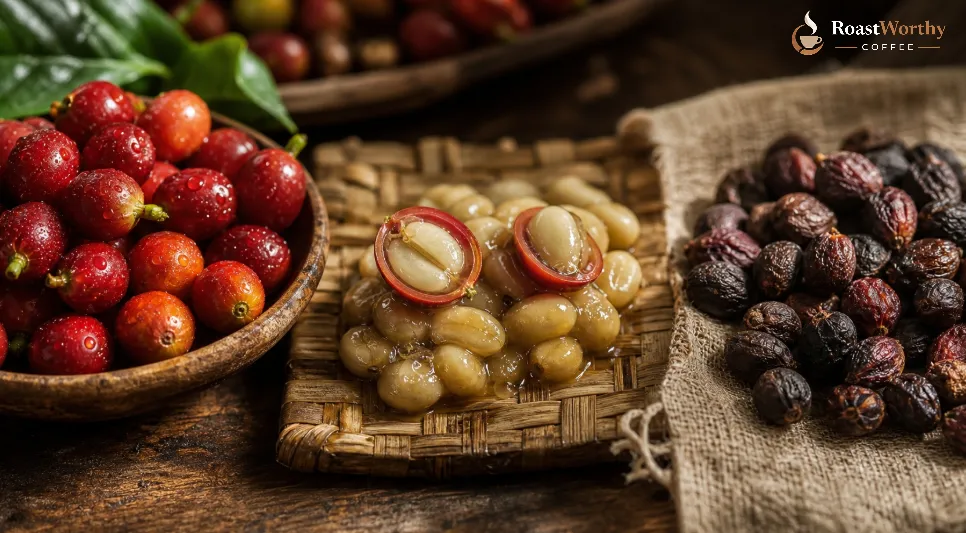
Three methods dominate specialty coffee:
Each method leaves different amounts of fruit on the seed. That fruit influence is what creates the flavour difference. Not the bean. Not the roast. The fruit.
Coffee processing methods explained simply: more fruit on the seed means more fermentation, more body, more fruit flavour. Less fruit means more clarity, more acidity, more origin character.
The Washed Process (Wet Process)
How It Works
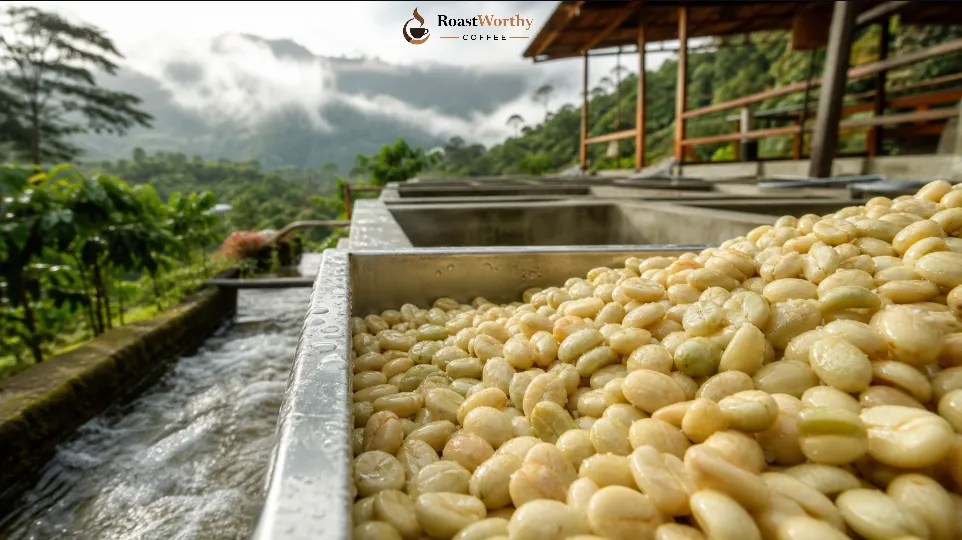
Washed processing is the precision method. Cherries are depulped within hours of picking. The seeds — still covered in sticky mucilage — go into fermentation tanks.
Water breaks down the mucilage over 12–48 hours. Then the seeds are washed clean and dried on raised beds or in mechanical dryers.
The result is a coffee that tastes like itself. The terroir is doing something here. Washed processing lets it show.
What It Tastes Like
Clean. Bright. Structured. Washed coffees are the translator that lets the bean speak.
A washed Ethiopian Yirgacheffe tastes like jasmine tea with lemon. A washed Kenyan AA hits you with blackcurrant acidity that makes your jaw tighten. A washed Colombian Geisha tastes like bergamot and honey.
The defining characteristic is clarity. You taste the origin, the varietal, the altitude. Not the fruit.
Why Washed Coffee Matters
Washed processing is the standard for specialty coffee competition. It demands skill and water — lots of water. Bad washing ruins good cherries through over-fermentation. Good washing reveals the bean's true character.
Washed coffees are also more consistent batch to batch. The wet process removes the variables that natural drying introduces. If you want reliability, this is your method.
Best washed origins to try: Ethiopia Yirgacheffe, Colombia Huila, Kenya Nyeri, Guatemala Antigua, Costa Rica Tarrazú.
If you're starting with single-origin coffee, start here. Our Ethiopian coffee guide breaks down why washed Yirgacheffe is the gateway to specialty.
The Natural Process (Dry Process)
How It Works
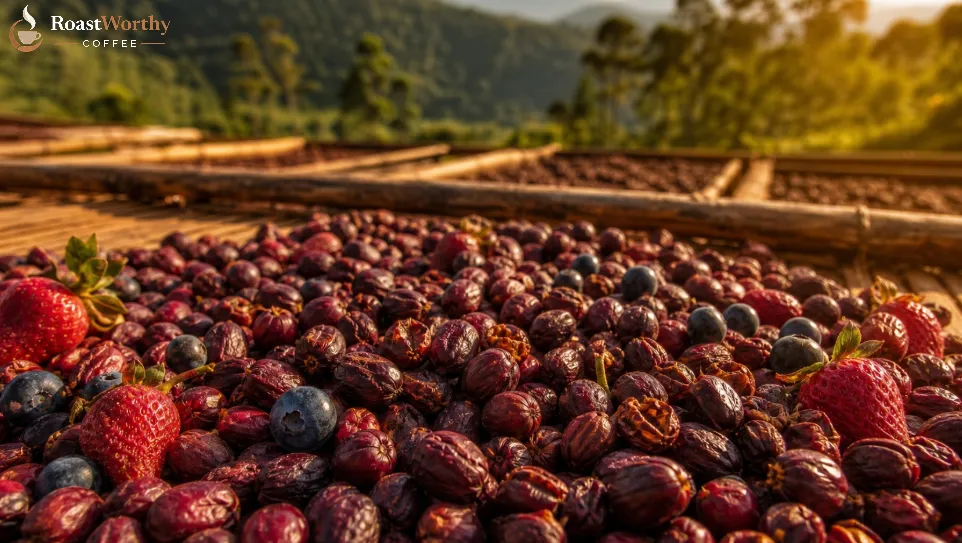
Natural processing is the oldest method. Whole cherries dry in the sun with the fruit completely intact. No water. No depulping. Just cherries on raised beds, raked and turned for two to three weeks until moisture drops to 10–12%.
That fermentation is where the flavour comes from. Sugars in the fruit break down. Compounds transfer from fruit to seed. The bean absorbs the flavour of the cherry around it.
What It Tastes Like
Wild. Fruity. Sometimes overwhelming.
Natural process coffee tastes like strawberry, blueberry, wine, mango, sometimes bubblegum. The fruit influence is unmistakable. A natural Ethiopian Sidamo can smell like a fruit smoothie before you even grind it.
But naturals are polarising. Some people taste blueberry and fall in love. Others taste fermentation and think something went wrong. Both reactions are valid.
Natural process vs washed is the biggest flavour contrast in coffee. It's the difference between a clean white wine and a natural orange wine. Not subtle.
Why Natural Coffee Matters
Ethiopia is the spiritual home of natural processing. Some regions still dry coffee on raised beds in the forest. The way it's been done for centuries. No other origin has that. 🌱
But naturals are risky. Uneven drying creates defects — fermented, medicinal, rotten flavours. One overripe cherry in the batch can taint the whole lot. This is why natural processing requires obsessive raking, sorting, and quality control.
Brazil is the world's largest producer of natural processed coffee. Their dry climate makes sun-drying reliable. Most Brazilian coffee you've tasted was natural processed.
Best natural origins to try: Ethiopia Sidamo and Harrar, Yemen, Brazil Cerrado and Sul de Minas, some Burundi lots.
The Honey Process (Pulped Natural)
How It Works
Honey processing is the middle ground. The cherry skin is removed — like washed processing — but some mucilage stays on the seed during drying. The amount left determines the “colour” of the honey.
The name comes from the sticky, honey-like texture of the mucilage during drying. Not from honey flavour.
What It Tastes Like
Sweet. Rounded. Body-forward without the funk.
A red honey Costa Rican Tarrazú tastes like brown sugar, honey, and soft citrus. A black honey Panama tastes like molasses and ripe plum. Honey process coffee is the most approachable of the three — sweet enough for beginners, complex enough for enthusiasts.
Honey processing creates balance. It borrows sweetness from natural processing and structure from washed. The result is a coffee that works in almost any brew method.
Why Honey Coffee Matters
Costa Rica practically owns the honey process. They perfected it. Some Costa Rican mills are named after the process colour they specialise in.
The pulped natural method is also standard in Brazil, where it's called “cereja descascada” — peeled cherry. Brazilian pulped naturals are the backbone of most espresso blends worldwide.
The people who grew this deserve credit for the honey process. It requires more labour than washed or natural — constant raking to prevent mould, careful monitoring of drying times. The skill is in the middle ground. 🗺️
Best honey origins to try: Costa Rica Tarrazú (red or black honey), Brazil Sul de Minas, El Salvador, some Panama lots.
Washed vs Natural vs Honey: Direct Comparison
| Factor | Washed | Natural | Honey |
|---|---|---|---|
| Fruit on seed during drying | None | Full | Partial |
| Body | Light to medium | Heavy | Medium to full |
| Acidity | Bright, clean | Wild, fermented | Sweet, rounded |
| Clarity vs complexity | Clarity wins | Complexity wins | Balance of both |
| Flavour profile | Origin-forward | Fruit-forward | Sweet, balanced |
| Fermentation risk | Low | High | Medium |
| Batch consistency | High | Variable | Moderate |
| Roasting behaviour | Predictable | Fast, more chaff | Moderate |
| Environmental water use | High | Minimal | Low |
| Best for | Pour-over, filter | Espresso, adventurous cups | Espresso, daily drinking |
There's a whole story in this cup. And the processing method is where it starts.
Clarity vs Complexity: The Real Decision
Here's the honest truth about washed vs natural vs honey process. There's no winner. There's a preference.
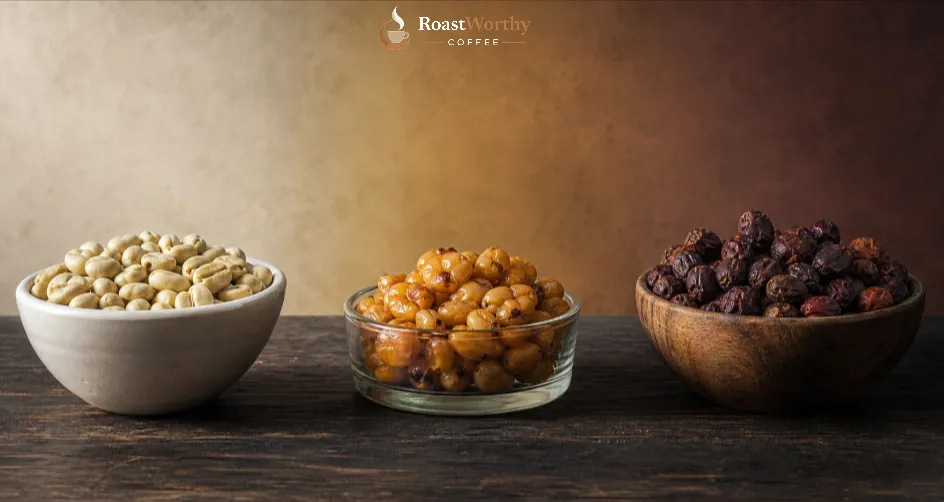
Most specialty coffee drinkers end up liking all three — for different moods, different brew methods, different times of day.
How Processing Affects Your Roast
If you roast at home, processing changes your approach.
Our home roasting guide covers DTR and roast curve basics if you're new to this.
Taste it. Write it down. Roast it again. The processing method changes the roast — and the roast changes what you taste. ☕
How Processing Affects Your Brew
Processing doesn't just change how coffee tastes. It changes how you should brew it.

Frequently Asked Questions
What is the difference between washed and natural coffee processing?
Washed processing removes all fruit from the seed before drying, producing clean, bright, origin-forward flavours. Natural processing dries the whole cherry with fruit intact, creating fruit-forward, complex, fermented flavours through extended fermentation.
Which coffee processing method produces the most acidity?
Washed processing typically produces the most perceived acidity. Without fruit on the seed during drying, the bean's natural acids — citric, malic, phosphoric — show clearly. Kenyan washed coffees are the global benchmark for bright acidity.
Is honey processed coffee actually sweet?
Yes. Honey processing retains fruit mucilage on the seed during drying, which adds natural sweetness and body. The name refers to the sticky texture of the mucilage, not honey flavour. Red and black honey processes are the sweetest variations.
Which processing method is best for espresso?
Honey and natural processed coffees are generally preferred for espresso. They produce more body, sweetness, and crema. Brazilian pulped naturals are the classic espresso base. Modern light-roast espresso also uses washed coffees for a brighter, more acidic profile.
Does coffee processing affect how I should roast?
Yes. Washed beans are denser and roast more predictably. Natural beans are less dense, roast faster, and produce more chaff. Honey beans fall between the two. Your charge temperature, DTR, and roast curve should account for the processing method.
What does natural process coffee taste like?
Natural process coffee typically tastes fruity — strawberry, blueberry, wine, and tropical fruit are common. The fermentation during drying creates complex, sometimes intense flavours. Some naturals taste clean and berry-like. Others taste deeply fermented and funky.
Which Coffee Processing Method Is Best For You?
Let's be direct.
You want washed if: You like brightness, clarity, and tasting the origin. You brew pour-over. You like light roasts. You want consistency. Start with a washed Ethiopian Yirgacheffe.
You want natural if: You like intensity, fruit, and bold flavours. You don't mind some funk. You brew espresso or French press. You want an experience, not a routine. Start with a natural Ethiopian Sidamo.
You want honey if: You want sweetness and body without wildness. You drink coffee daily and want something reliable. You brew espresso. You want something that works with milk. Start with a red honey Costa Rican.
Start with the origin, not the roaster. A good roaster will tell you the processing method on the bag. A great one will tell you the farm, the altitude, and the varietal too.
This matters beyond the flavour. The processing choice a farmer makes reflects their climate, their water access, their infrastructure, and their tradition. Natural processing uses almost no water. Washed processing can use 140 litres per kilogram of coffee. That's not a footnote. That's a decision with real impact. 🌱
More Recommendations from RoastWorthy Coffee