Does Decaf Coffee Have Caffeine? The Honest Answer

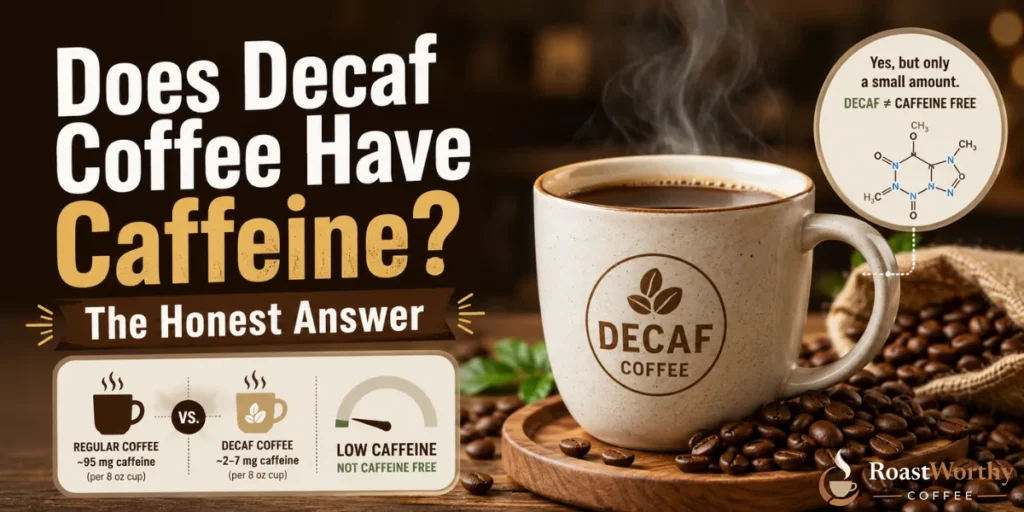
Yes. Decaf coffee has caffeine. Just not much.
Here's the honest answer most labels won't give you straight: “decaffeinated” does not mean caffeine-free. It means mostly decaffeinated. The legal standard removes about 97% of the caffeine. The other 3% stays in your cup.
So if you're drinking decaf to dodge caffeine completely… I've got news. ⚗️
A green coffee bean is roughly 1.5–2% caffeine by weight. After decaffeination, that drops to about 0.1%. Tiny. But never zero.
Let me show you what the numbers actually look like — and where the caffeine in decaf coffee hides.
How Much Caffeine Is In Decaf Coffee?
A standard 8 oz cup of regular coffee carries roughly 95 mg of caffeine. Some brews push past 120 mg.
A cup of decaf? Around 2 to 7 mg. Most studies land near 2 mg for drip decaf, with outliers as high as 15 mg.
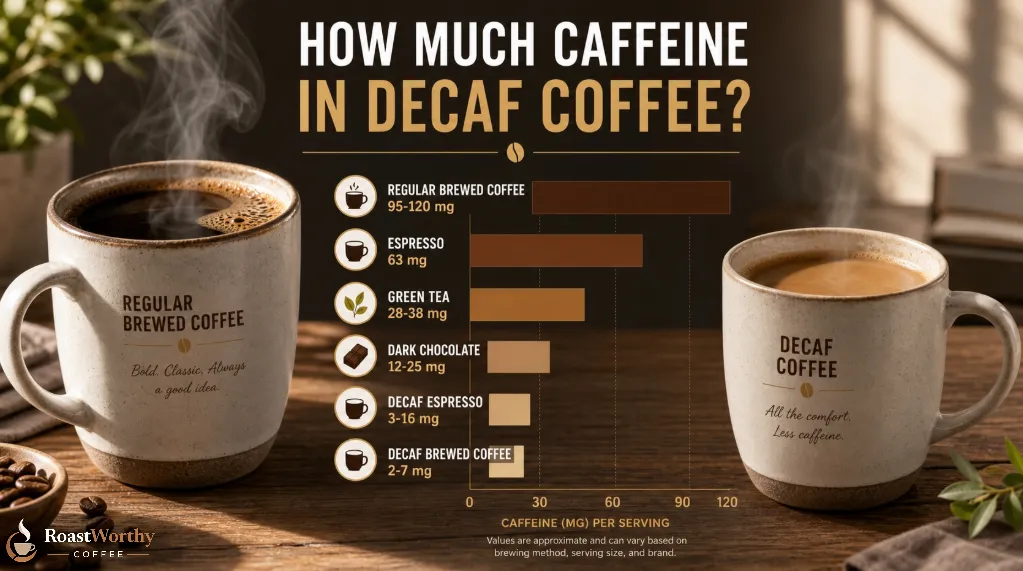
That's the real decaf coffee caffeine content. Small. But not nothing.
Here's the comparison that matters:
| Drink (8 oz / 240 ml) | Caffeine (mg) |
|---|---|
| Regular brewed coffee | 95–120 mg |
| Espresso (single, ~1 oz) | 63 mg |
| Decaf brewed coffee | 2–7 mg |
| Decaf espresso (single) | 3–16 mg |
| Green tea | 28–38 mg |
| Dark chocolate (1 oz) | 12–25 mg |
Notice something? Decaf espresso can carry more caffeine than decaf drip. Two shots stack up. The dose adds.
One study tested decaf espressos and found a range of 3 to nearly 16 mg per shot. Same drink, wildly different numbers. The bean and the machine both matter.
So how much caffeine in decaf depends on three things: the bean variety, the decaf method, and how you brew it.
Why Decaf Still Has Caffeine
You can't strip every molecule out of a green coffee bean without wrecking the flavor. Caffeine and flavor compounds are bound together inside the seed structure.
Here's what the process is actually doing. Decaffeination soaks or steams the green beans, then pulls caffeine out using water, solvents, or CO2. The caffeine leaves. So does some flavor — and a little caffeine always clings on.
Removing that last 3% would cost more and taste worse. Diminishing returns. So nobody bothers. The 97% rule is the practical floor the whole industry settled on.
That's the trade-off. Drinkable decaf with trace caffeine, instead of flavorless decaf with none.
The Decaf Methods — And How They Differ
Not all decaf is made the same way. The method changes the caffeine left behind, the cost of the bag, and the taste in your cup. Here's what the heat and chemistry are doing in each one.
Swiss Water Process
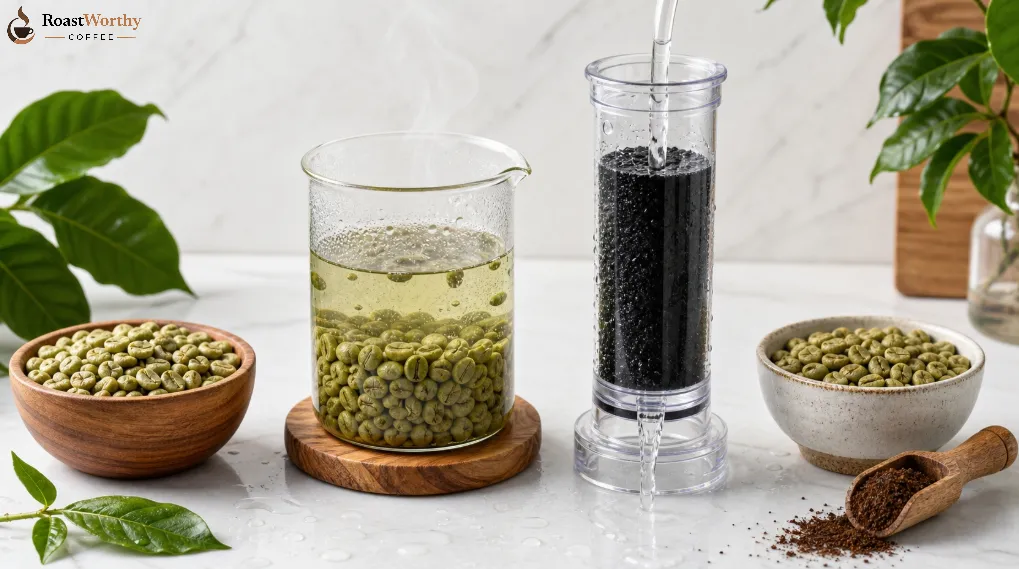
This one uses no chemicals. Just water, temperature, and time.
Green beans soak in hot water. The water pulls out caffeine and flavor. Then it runs through a carbon filter that traps only caffeine molecules — they're a specific size and the filter is tuned to catch them. The flavor-rich water cycles back to soak fresh beans, so flavor stays in the system.
The result: caffeine out, flavor mostly intact. Swiss Water removes up to 99.9% of caffeine and is certified chemical-free.
This is the method I'd point most people toward. Clean, traceable, honest. It's also the most common choice for organic-certified decaf.
CO2 Decaf (Carbon Dioxide Process)
Here's the engineering one. ⚗️
Beans get hit with pressurized CO2 in a supercritical state — somewhere between a liquid and a gas. At around 250 atmospheres of pressure, that CO2 behaves like a magnet for caffeine. It grabs the small caffeine molecules and leaves the larger flavor compounds alone.
CO2 decaf preserves flavor really well. It's expensive to run, so you mostly see it in premium and specialty bags.
If you want the cleanest flavor with no solvents, CO2 and Swiss Water are your two picks.
Solvent-Based (Methylene Chloride / Ethyl Acetate)
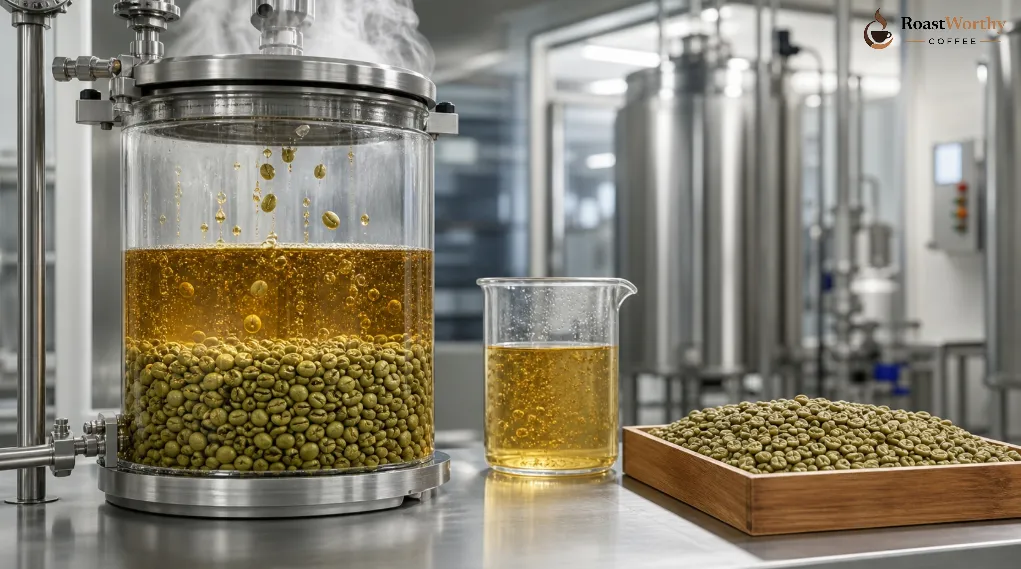
The cheapest and most common method worldwide. A solvent binds to caffeine and washes it out, either directly or indirectly through a water bath.
Ethyl acetate gets called “natural” because it occurs in fruit like apples and bananas. Methylene chloride gets more side-eye. But the FDA caps residue at 10 parts per million in roasted coffee — far below any level shown to cause harm, and most of it burns off during roasting anyway.
Still… if you want to skip the question entirely, buy Swiss Water or CO2.
Quick method comparison
| Method | Chemicals? | Caffeine removed | Flavor retention | Typical cost |
|---|---|---|---|---|
| Swiss Water | No | Up to 99.9% | High | Mid–high |
| CO2 (supercritical) | No | ~96–98% | Very high | High |
| Ethyl acetate | “Natural” solvent | ~97% | Medium | Low |
| Methylene chloride | Synthetic solvent | ~97% | Medium | Lowest |
Decaf For Pregnancy — The Real Guidance
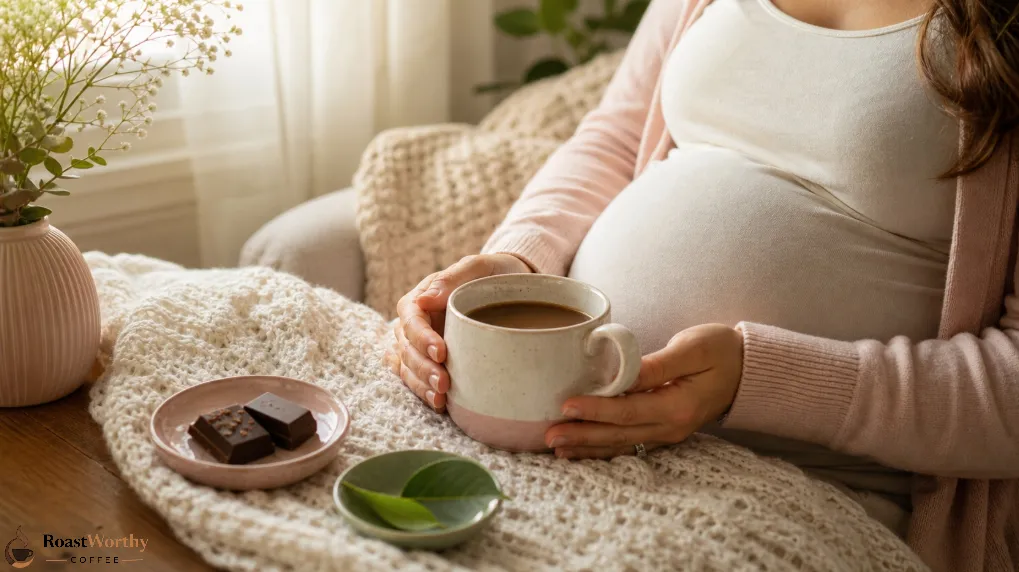
This is where the small numbers actually start to matter.
Most health bodies cap caffeine during pregnancy at 200 mg per day. Decaf makes that ceiling easy to live under.
At 2–7 mg per cup, you could drink several cups of decaf and barely register on that limit. Decaf is a genuinely good option during pregnancy. Just don't treat it as a free pass if you're also having tea, soda, and chocolate.
Add it all up. The caffeine in decaf coffee is tiny, but caffeine hides in a lot of places. A square of dark chocolate can out-caffeinate your whole cup.
Same logic applies if you're caffeine-sensitive or drinking coffee late. Decaf at 9 PM won't keep most people up. A double decaf espresso might nudge the sensitive ones.
Does Decaf Affect Sleep Or Anxiety?
For most people — no. 5 mg of caffeine isn't enough to spike your heart rate or wreck your sleep.
But sensitivity is real and personal. If you're someone who feels a cup of green tea, you might feel decaf too. Caffeine clearance is genetic — some people metabolize it in two hours, others take ten.
The fix is simple. Taste it. Track how you feel. Adjust. The data on your own body is the only data that counts here.
Is Decaf Coffee Actually Healthy?
Yes — and this surprises people. Decaf keeps most of regular coffee's good stuff.
The antioxidants and polyphenols largely survive decaffeination. So decaf still delivers the heart-friendly and anti-inflammatory benefits coffee is known for, minus the jitters.
The one trade-off: solvent-processed decaf carries trace residues. They're well below FDA safety limits. But if it bothers you, Swiss Water and CO2 sidestep the issue entirely.
For most drinkers, decaf is a clean swap. Same cup. Less buzz.
Buying Good Decaf — What To Look For
Most bad decaf isn't bad because it's decaf. It's bad because it's old, cheap, and over-roasted to hide flat flavor.
Here's what to check on the bag:
Specialty roasters increasingly offer Swiss Water decaf — worth seeking out over instant decaf, which tends to be the flattest option going.
What About Home Roasting Decaf?
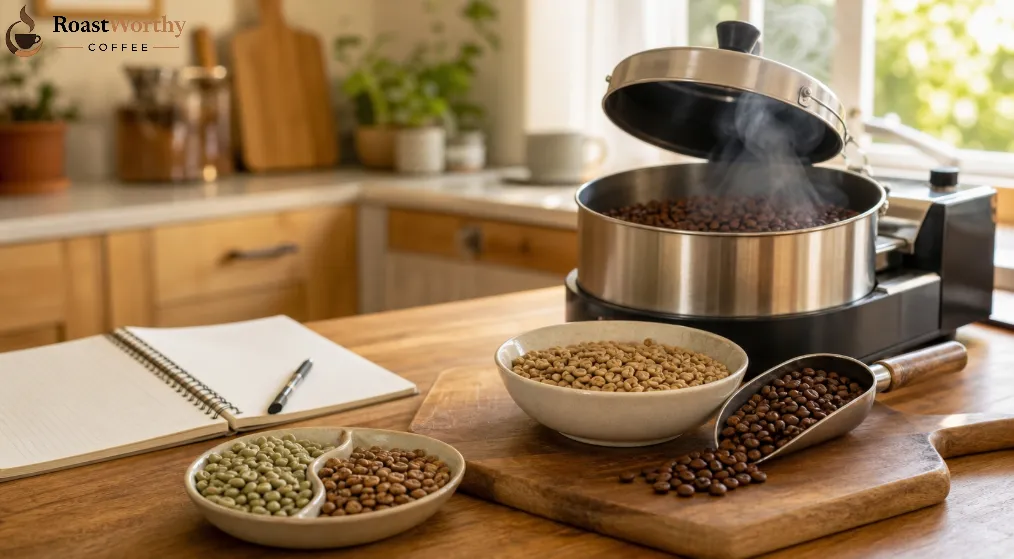
If you roast at home, decaf is its own beast.
Decaffeinated green beans are already partly cooked from the decaf process. They look brownish before you even start. That means they roast faster and you lose your usual visual cues.
Here's what the heat is doing differently: decaf beans absorb heat unevenly, and first crack comes earlier and quieter. You can scorch them before you even hear it.
My advice — drop your charge temperature by about 15–20°F versus your normal profile. Watch the color, not the clock. Keep your development time ratio honest; DTR is the number that matters even with decaf. Decaf will fool you if you roast it like regular coffee.
Your first decaf roast will be imperfect. Make it anyway. Taste it. Write it down. Roast it again.
Frequently Asked Questions
Does decaf coffee have any caffeine at all?
Yes. Decaf has roughly 2–7 mg of caffeine per 8 oz cup. The process removes about 97% of caffeine, not 100%, so a small amount always remains.
How much caffeine is in decaf compared to regular coffee?
Regular coffee has about 95 mg per 8 oz cup. Decaf has 2–7 mg. That's roughly a 97% reduction, but not zero.
Is decaf coffee safe during pregnancy?
Generally yes. With only 2–7 mg per cup, decaf sits comfortably under the 200 mg daily caffeine limit doctors recommend in pregnancy. Just count tea, soda, and chocolate too.
What's the difference between Swiss Water and CO2 decaf?
Swiss Water uses only water and carbon filtration — no chemicals — removing up to 99.9% of caffeine. CO2 decaf uses pressurized carbon dioxide to strip caffeine while preserving flavor. Both are clean, solvent-free.
Can decaf coffee keep you awake?
For most people, no. The caffeine in decaf is too low to disrupt sleep. But sensitive drinkers may feel a double decaf espresso, which carries more caffeine than decaf drip.
Is decaf coffee bad for you?
No. Decaf carries the same antioxidants as regular coffee with far less caffeine. Solvent-processed decaf has trace residues well below FDA limits, and Swiss Water or CO2 decaf avoid solvents entirely.
Why isn't decaf 100% caffeine-free?
Because removing the final 3% would damage the flavor and cost too much. The 97% standard is the practical limit that keeps decaf both drinkable and worth selling.
More Recommendations from RoastWorthy Coffee