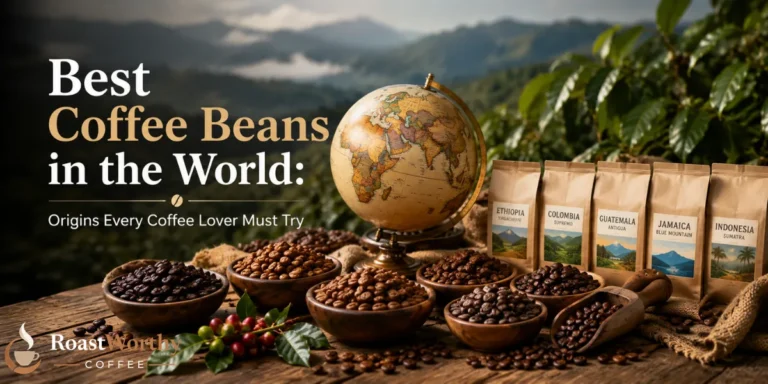
Ethiopian Coffee Guide: Yirgacheffe, Sidamo, Harrar Explained

Ethiopian coffee isn't a single thing. It's three completely different experiences dressed in the same passport.
Yirgacheffe, Sidamo, Harrar — each region grows coffee in a way that's geographically, culturally, and flavour-distinctly its own. If you've ever grabbed a bag labelled “Ethiopian” and wondered why it tasted nothing like the last one, that's why.
Ethiopia is the only country where coffee still grows wild in the forest. No other origin has that. Every other producing nation cultivated coffee from seeds that started here. The terroir is doing something here that nowhere else can replicate. 🌿
This guide is for anyone who wants to stop guessing and start choosing — by region, by process, by flavour.
Why Ethiopian Coffee Hits Different
Ethiopia sits on the Horn of Africa at elevations between 1,500 and 2,200 metres above sea level. That altitude slows the cherry's development. Slower growth means denser beans. Denser beans mean more concentrated sugars, acids, and aroma compounds.
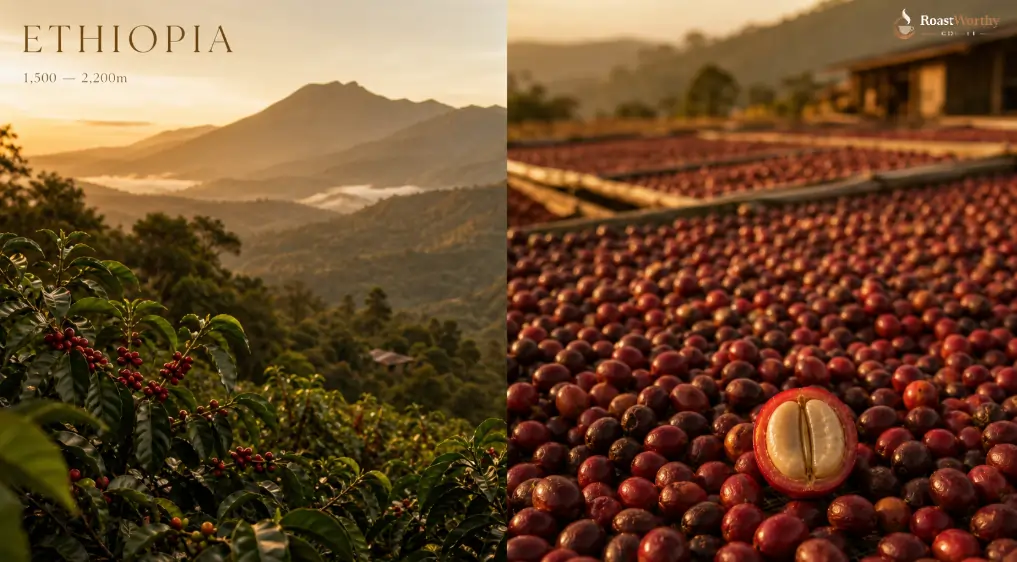
The heirloom varieties grown across Ethiopia haven't been formally catalogued the way Bourbon or Typica has in other origins. Farmers call them “heirloom” or “landrace” — and there are likely thousands of distinct varieties, most still unnamed by science.
That genetic diversity is why Ethiopian coffee has a flavour range no other origin can match. Floral to fruity. Bright to wine-heavy. Delicate to almost feral.
The processing method — washed or natural — splits the flavour story even further.
Start with the origin, not the roaster.
Yirgacheffe: The Benchmark for Floral Coffee
Yirgacheffe sits inside the Sidamo zone — technically a sub-region — but it earned its own designation because the flavour profile is that distinct.
The washed Yirgacheffe is the coffee that converts people. It's the one specialty cafés pull out when someone says they don't like black coffee. One cup of a well-roasted Yirgacheffe light roast and the argument is over.
Here's what's happening in that cup. The high altitude, consistent rainfall, and shade-grown canopy produce cherries with high acidity and delicate aromatic compounds. Washed processing removes the fruit skin cleanly, preserving those floral aromatics rather than fermenting them into something heavier.
The result tastes like bergamot and jasmine flowers steeped in warm water, with a lemon finish that doesn't bite.
There's a whole story in this cup — and it starts with the kebeles (farming communities) around Kochere, Gedeb, and Chelchele, where the best Yirgacheffe lots are still sourced cooperatively from smallholder farmers working less than two hectares each.
What to Look For on the Bag
If your bag just says “Yirgacheffe” with no other detail, it's probably fine. But the bags that name Kochere or Gedeb? Those earn the price.
Sidamo: The Origin That Does Everything
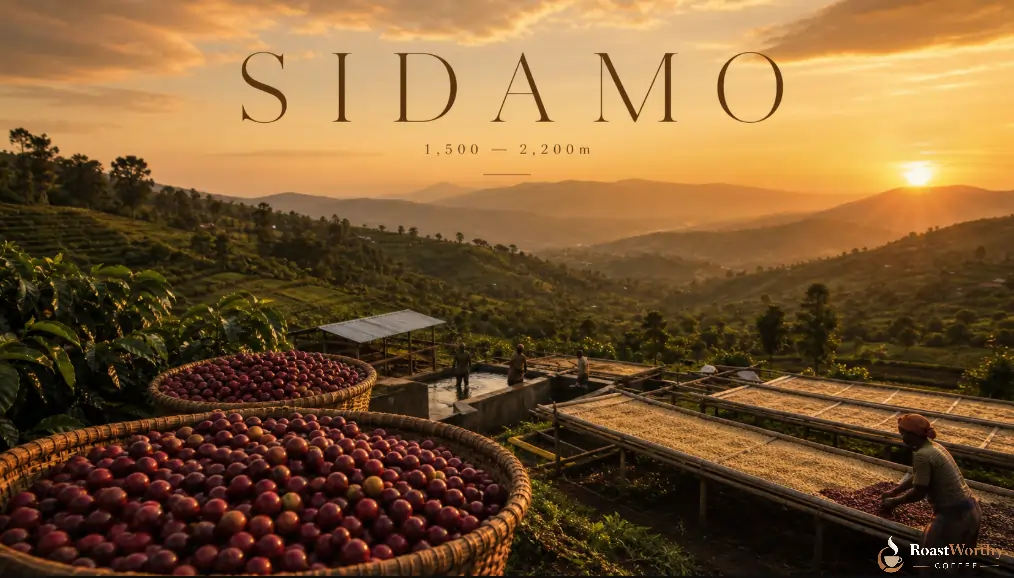
Sidamo (now often labelled as Sidama, following the regional renaming) covers a wide area in southern Ethiopia. It's larger and more varied than Yirgacheffe, which means the flavour profile is broader — and less predictable.
Sidamo is the everyday Ethiopian. Not a criticism. It's the most versatile of the three regions, which is exactly why it ends up in specialty blends and single-origin espresso programs alike.
The natural process Sidamo is where it gets interesting. Blueberry notes in Ethiopian natural coffees have become a cliché — but Sidamo naturals genuinely deliver it. Blueberry jam, not blueberry candy. There's depth underneath. Cocoa and brown sugar in the finish.
Washed Sidamo is cleaner, more approachable. Brighter acidity than a natural. Tastes like peach and light caramel with a medium body that holds up in milk-based drinks without disappearing.
The people who grew this deserve credit — Sidamo coffees are predominantly smallholder-sourced through the Ethiopian Commodity Exchange (ECX) and washing stations. That cooperative model has created some of the most consistent quality benchmarks in African coffee.
Sidamo vs. Yirgacheffe: The Honest Comparison
| Feature | Yirgacheffe | Sidamo |
|---|---|---|
| Flavour profile | Floral, citrus, tea-like | Fruity, chocolatey, versatile |
| Body | Light to medium | Medium |
| Best process | Washed | Natural or washed |
| Best brew method | Pour-over, Chemex | Pour-over, espresso, French press |
| Price point | Higher | Mid-range |
If you want delicate and floral — Yirgacheffe. If you want something that works across brew methods and won't break the budget — Sidamo.
Harrar: Ethiopia's Wild Card
Harrar (also spelled Harar) is the outlier.
Located in eastern Ethiopia — far from the southern highlands where Yirgacheffe and Sidamo sit — Harrar is drier, hotter, and older as a coffee-producing region. The Oromo people have been cultivating coffee here for centuries. This is where the coffee trade and the coffee ceremony both have deep roots.
This is not a polished coffee. That's the point. ☕
Harrar mocha-style coffee has been a reference in the trade for over a century — “mocha” as a coffee term actually traces back to the port of Mocha in Yemen, where Ethiopian Harrar beans were historically exported. The connection stuck. The flavour earned it.
The wild ferment character in Harrar naturals is not a defect. It's the expression of heirloom varieties drying slowly in a dry-climate natural process — slower fermentation, more contact time, more complex sugars. You get something that tastes like wine, chocolate, and dried fruit all at once. It's heavy. It's earthy. It's genuinely unlike anything else in Ethiopian coffee.
Harrar coffee divides opinion. Some roasters avoid it for inconsistency. But when you get a clean, well-sourced Harrar natural, it's one of the most memorable cups an Ethiopian coffee can produce.
Who Is Harrar Coffee For?
One thing to know: Harrar green beans are harder to source consistently than Yirgacheffe or Sidamo lots. Look for importers like Sweet Maria's, Genuine Origin, or Bodhi Leaf who specifically vet their Harrar lots for cleanliness.
How to Choose Between Them
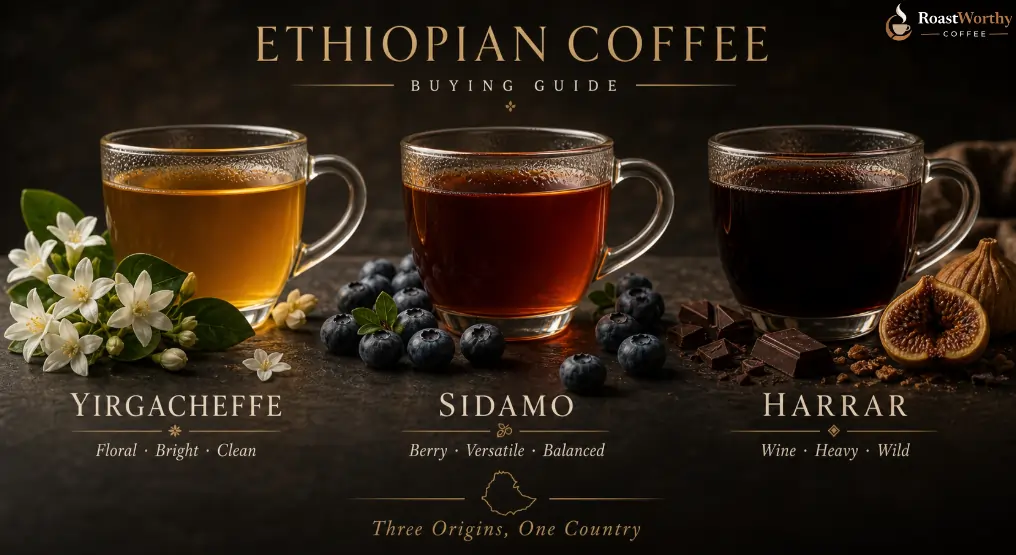
Three regions. Three completely different cups. Here's a simple decision tree.
Choose Yirgacheffe if:
Choose Sidamo if:
Choose Harrar if:
All three are best roasted light to medium. Dark-roasting an Ethiopian heirloom is technically legal. Flavour-wise, it's a waste.
Brewing Recommendations by Region
🌿 Yirgacheffe (washed): Hario V60 or Chemex. Water at 92–93°C. 1:16 ratio. Medium-fine grind. The floral aromatics need the bloom — 45 second bloom minimum.
Sidamo (natural): French press or flat-bottom brewer like Kalita Wave. 93–94°C. 1:15 ratio. The body holds up well with slightly coarser grind and longer contact time.
Harrar (natural): Espresso or moka pot for the full dark-chocolate-wine experience. Or a coarse French press with a 4-minute steep. This coffee is not for light extraction methods — it needs time.
FAQ
What is the difference between Yirgacheffe and Sidamo coffee?
Yirgacheffe is technically a sub-region of Sidamo, but its washed processing and high altitude produce a distinctly floral, citrus-forward cup. Sidamo is broader in range — more fruit and chocolate-forward, and more versatile across brew methods.
Why does Ethiopian coffee taste like blueberries?
Natural process Ethiopian coffees — especially Sidamo and Harrar naturals — ferment with the fruit skin still on the bean. That extended fruit contact produces blueberry, strawberry, and wine-like compounds. It's not added flavouring. It's the process.
What is Harrar mocha coffee?
Harrar mocha refers to the wild, chocolate-and-fruit flavour profile of naturally processed Harrar beans. The term “mocha” traces to the historic Port of Mocha in Yemen, where Harrar beans were once exported. The flavour — dark chocolate, blueberry, dried fruit — earned the name.
Is Ethiopian coffee strong?
Strength is a function of brew ratio, not origin. Ethiopian coffee is typically high in acidity and flavour complexity. Harrar naturals have a heavier body than Yirgacheffe washed, but all three are considered medium-bodied compared to Sumatran or Robusta-heavy blends.
What roast level is best for Ethiopian coffee beans?
Light to medium. High-altitude Ethiopian heirlooms have natural sugars and delicate aromatics that dark roasting destroys. A city to city+ roast on Yirgacheffe or Sidamo keeps the floral and fruit character intact.
Where can I buy Ethiopian green beans for home roasting?
Sweet Maria's, Genuine Origin, and Bodhi Leaf consistently stock traceable Ethiopian lots across all three regions. Look for kebele or washing station names on the listing — that's a sign of genuine traceability.
More Recommendations from RoastWorthy Coffee