How to Store Coffee Beans Properly: Keep Them Fresh for Longer

Your coffee starts dying the moment it leaves the roaster.
Not dramatically. But it starts. Oxygen, light, heat, and moisture all chip away at flavor from day one. The good news? You can slow that decay way down.
Here's what the staling is actually doing… and exactly how to store coffee beans so they taste the way the roaster intended. ☕
TL;DR — Key Takeaways
Why Coffee Goes Stale (The Science)
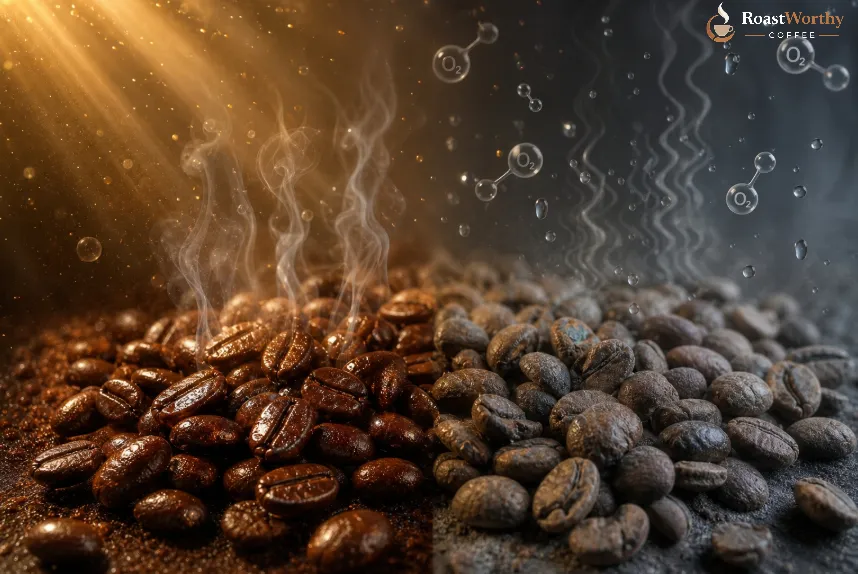
Four enemies. That's it. Oxygen, light, heat, moisture.
Oxygen is the big one. It oxidizes the oils and aromatic compounds in your beans, flattening flavor into something dull and cardboard-y. Exposure to light and air speeds this up. Heat accelerates it further. And moisture invites staling — and worse, mold.
Here's the part most people miss… fresh-roasted coffee releases CO2 for days after roasting. This is called degassing.
That gas is actually protective. It pushes oxygen out and shields the beans from the inside. Which is why a brand-new bag tastes different on day 2 than on day 10.
Think of it like a system with a built-in defense that slowly runs out. Your storage job is simple: keep the four enemies out while the beans hold their best window.
The curve doesn't lie. ⚗️
The role of oils and roast level
Darker roasts push more oil to the surface. That oil is delicious — and more exposed to oxygen. So dark roasts often stale a touch faster once opened.
Lighter roasts are denser and slightly more forgiving. Either way, the storage rules stay the same. Seal them, hide them from light, keep them cool.
How Long Do Coffee Beans Last?
Depends on the form and the storage. Whole beans win every time.
| Coffee Form | Peak Freshness | Still Drinkable | Storage |
|---|---|---|---|
| Whole beans (airtight) | 2–4 weeks | ~6 weeks | Pantry, sealed, dark |
| Ground coffee | 1–7 days | ~2 weeks | Airtight, dark |
| Frozen whole beans | 2–3 months | ~6 months | Freezer, single-dose |
| Opened, poor storage | 3–5 days | ~10 days | Anywhere warm/bright |
| Green (unroasted) beans | 6–12 months | ~1 year | Breathable bag, cool |
Whole beans hold up because less surface area is exposed to oxygen. Grinding multiplies that surface area instantly… which is why pre-ground coffee goes flat so fast — roughly 10x faster than whole beans.
Grind right before you brew. Every time. It's the single biggest freshness upgrade you can make, and it costs you nothing but 30 seconds.
One note on green beans: if you home roast and buy unroasted, those need the opposite treatment. They want a breathable bag, not an airtight seal, because raw beans need a little air circulation.
Where to Store Coffee Beans
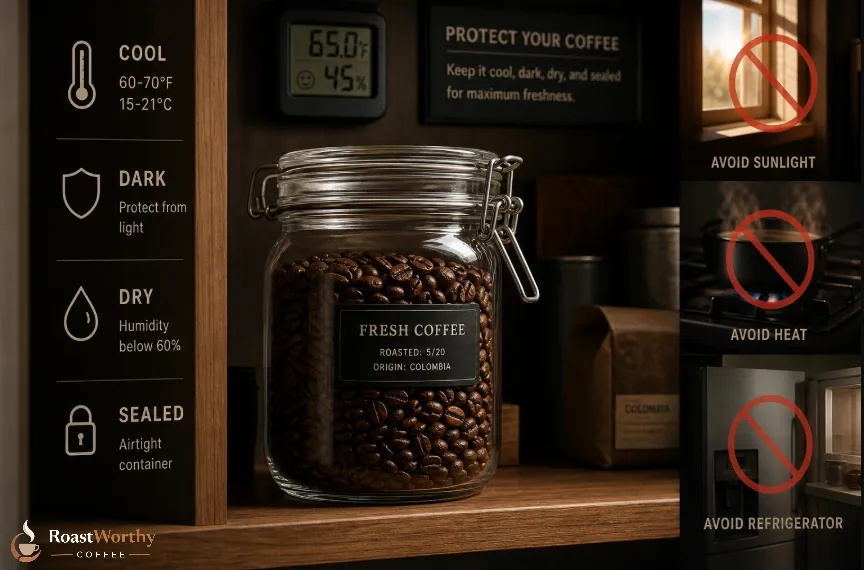
Cool, dark, dry, sealed. Memorize that.
A kitchen cabinet away from the oven works perfectly. So does a pantry shelf. The goal is a stable temperature with zero light and no humidity swings.
The numbers that matter: aim for 60–70°F (15–21°C) and under 60% humidity. That's just normal room conditions in most homes, which is exactly the point. Coffee likes boring and steady.
Avoid these spots:
The pantry is your best friend. It's unglamorous. It works.
The Best Container to Store Coffee Beans
You need an airtight, opaque container. Non-negotiable.
Plastic baggies and clip-tops don't cut it long term. Air still gets in, and plastic can hold old smells. Clear glass on the counter is even worse — it lets light wreck the beans. Glass, ceramic, or stainless steel with a tight gasket seal is the move, kept somewhere dark.
The upgrade worth making is a one-way valve canister. These let CO2 escape during degassing… while blocking oxygen from getting in. Brands like Airscape and Fellow Atmos do this well, and they're worth the money if you drink coffee daily.
Minimize headspace too. The less empty air sitting on top of your beans, the less oxygen they're exposed to. As you work through a bag, a smaller container helps.
If you're buying beans by the kilo, store the working amount in your canister and seal the rest separately. Don't open the big bag daily. Every open is an oxygen hit.
Quick container ranking
- Vacuum-seal or one-way valve canister — best.
- Glass or ceramic jar with rubber gasket, stored dark — great.
- Original valve bag, air pressed out and resealed — okay for 5–7 days.
- Plastic tub with a loose lid — don't.
Freezing Coffee Beans: Yes, But Do It Right
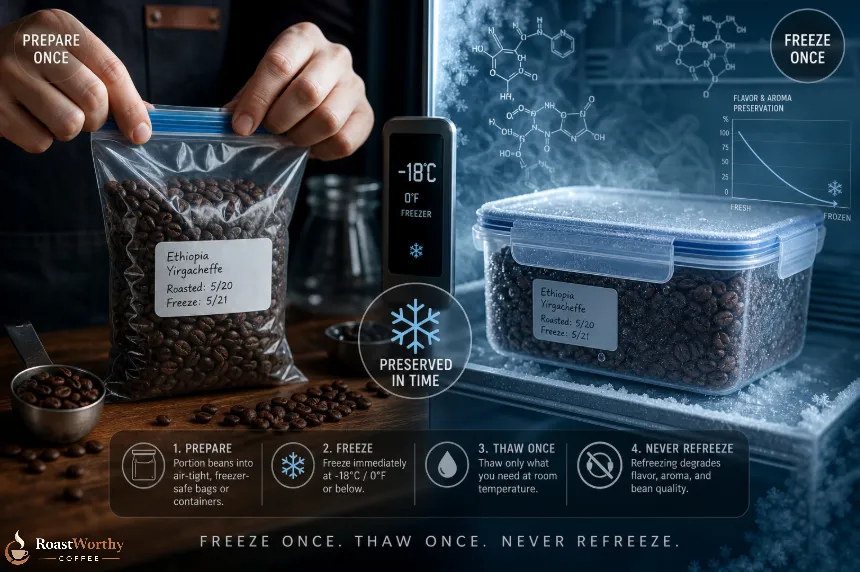
Freezing coffee beans is the most argued-about topic in coffee. Let me settle it.
It works. The research and the industry are coming around on this. Frozen beans can stay near-fresh for months. But there's a method, and breaking it ruins everything.
Here's what the cold is actually doing… it slows the chemical reactions behind staling almost to a stop. Frozen beans essentially pause in time. ⚗️
The rule that matters most: freeze once, thaw once, never refreeze.
How to freeze coffee beans properly
That last step is the whole game. Repeated freezing and thawing causes condensation. Moisture on beans is staling fuel — and the fastest way to ruin a good bag.
Do it right and you'll have great coffee in March from beans you bought in January. For real. The single-dose method is what separates “frozen and fine” from “frozen and ruined.”
The Roast Date Rule
Stop trusting “best by” dates. Start trusting the roast date.
A roast date tells you exactly when the beans came off the roaster. A “best by” date tells you almost nothing… it's often a year out and meaningless for flavor.
Good roasters print the roast date right on the bag. If yours doesn't, that's a red flag about how seriously they take freshness.
The sweet spot for most coffee: rest 3–10 days after roasting, then brew within 2–4 weeks. Espresso usually wants a touch more rest to settle the CO2. Filter and pour-over can start a little earlier.
Buy beans roasted within the last two weeks. Then store them well from there. Freshness you buy is freshness you have to protect.
Common Storage Mistakes (Stop Doing These)
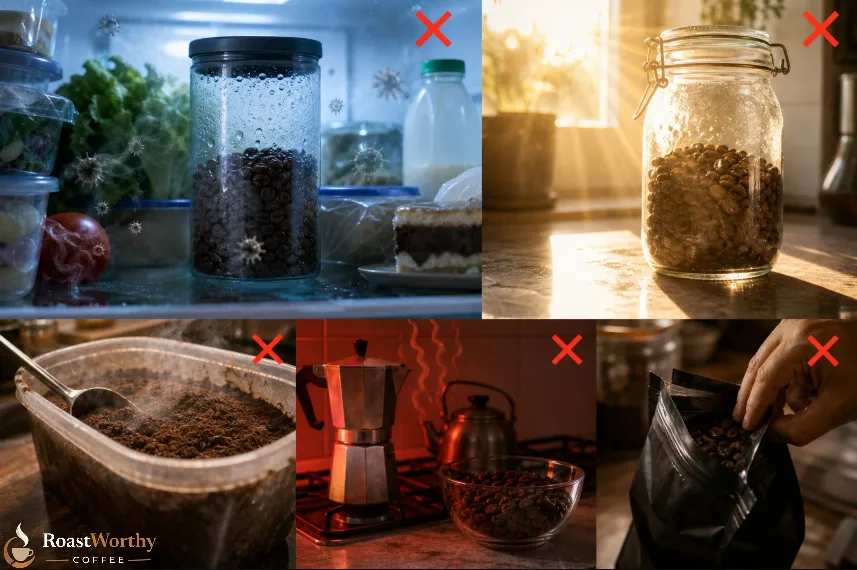
The fridge is the worst offender. People think cold equals fresh. It doesn't.
Your fridge is humid and full of odors. Coffee is porous and absorbs both. You'll get damp beans that taste faintly of last night's leftovers. And every time you take the container in and out, condensation forms. Skip it entirely.
More mistakes I see constantly:
Your storage setup doesn't need to be expensive. It needs to be airtight, opaque, and stable. That's the whole formula.
Quick Coffee Storage Tips That Actually Help
A few habits that compound over time:
Taste it. Write down what worked. Buy the next bag a little smarter. That's how you dial in your own routine.
How This Connects to Roasting Your Own
If you home roast, storage gets even more important. Fresh-roasted beans degas hard for the first 24–72 hours.
Seal them too early and the bag can balloon or even burst. Leave them fully open and you lose the protective CO2 too fast. The fix: a valve canister, or a loosely vented container for the first two days, then seal it up properly.
Home roasting means your coffee is never more than 48 hours off the roaster. That's the real flex. But only if you store it right afterward — fresh beans stored badly are just expensive stale beans.
FAQ: Storing Coffee Beans
Should I store coffee beans in the fridge?
No. The fridge is humid and full of odors that beans absorb. It also creates condensation every time you open it. The pantry is better in every way.
How long do coffee beans last once opened?
Whole beans stay at peak for 2–4 weeks if stored airtight and dark. Flavor fades noticeably after that. Ground coffee drops to just a few days.
Can you freeze coffee beans?
Yes. Freeze them in airtight, single-dose portions. Thaw each portion fully once, brew it, and never refreeze. Done right, beans stay fresh 2–3 months.
Why does my coffee taste flat after a week?
Oxygen exposure and CO2 loss. The protective gas has dissipated and oxidation has set in. Better sealing and grinding fresh fixes most of it.
Is it better to store whole beans or ground coffee?
Whole beans, always. Grinding exposes far more surface area to oxygen, so ground coffee stales in days while whole beans last weeks.
Do I really need an airtight container?
Yes, if you care about flavor past the first week. A one-way valve canister is the single best upgrade for keeping beans fresh longer.
The Bottom Line
Storing coffee well isn't complicated. Airtight container. Cool, dark, dry spot. Whole beans. Fresh roast date.
Skip the fridge. Freeze only when you do it properly. And grind right before you brew.
Get those right and your coffee tastes like the roaster intended… for weeks longer than it would otherwise. ⚗️☕
More Recommendations from RoastWorthy Coffee