10 Common Coffee Brewing Mistakes and How to Fix Them

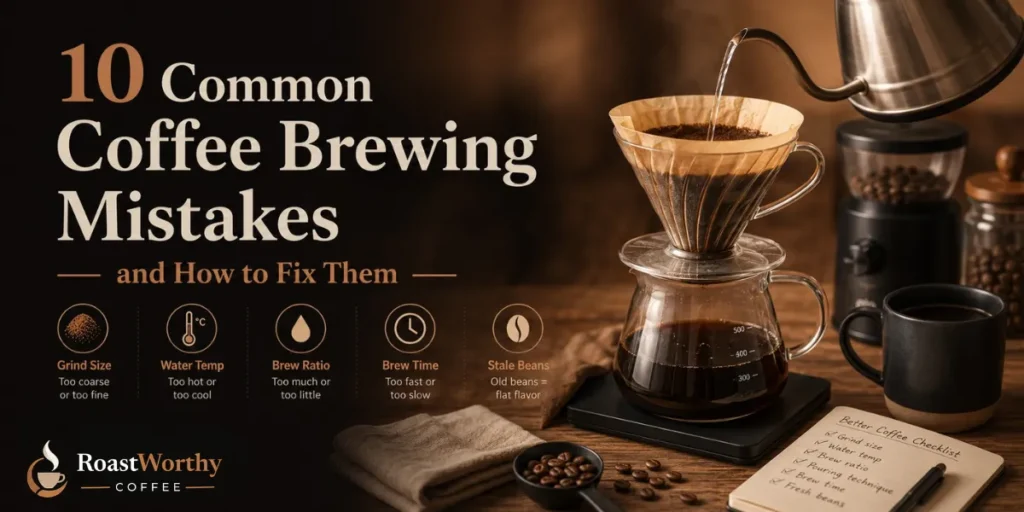
Your coffee tastes off and you don't know why. Bitter one day. Sour the next. Flat the day after that.
Here's the truth: it's almost never the beans. It's the brew.
Most coffee brewing mistakes come down to four things… grind, water, ratio, and time. Get those right and average beans taste great. Get them wrong and a thirty-dollar bag tastes like a gas station pour.
Here's what the heat and water are actually doing. And the ten errors that wreck the cup. With real numbers. Fix them in order.
TL;DR: Use a scale (1:16 ratio), grind fresh on a burr grinder, brew with filtered 200°F water, and clean your gear. That alone fixes 80% of bad coffee.
Coffee Brewing Mistakes Cheat Sheet: Quick Fixes by Taste
| Your Coffee Tastes… | The Likely Cause | The Fix |
|---|---|---|
| Bitter, harsh, dry | Over-extraction | Coarser grind, cooler water, less time |
| Sour, sharp, weak | Under-extraction | Finer grind, hotter water, more time |
| Flat, lifeless | Bad water or stale beans | Filtered water, fresh roasted beans |
| Muddy, gritty | Blade grinder | Switch to a burr grinder |
| Inconsistent daily | No scale | Brew by weight at 1:16 |
| Hollow, weak but strong | Wrong ratio | Lock in 1:16, then adjust |
Why Your Coffee Keeps Tasting Wrong
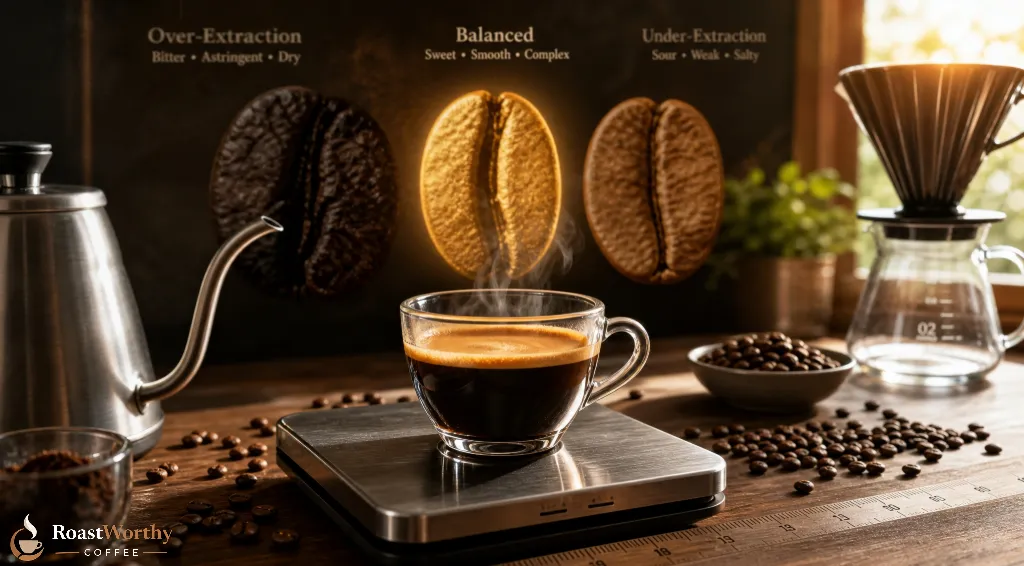
Two words. Extraction and consistency.
Under-extract and you get sour, sharp, thin coffee. Over-extract and you get bitter, dry, hollow coffee. The sweet spot sits in between… and every variable below pushes you toward one edge or the other.
You can't fix what you can't measure. So most of these fixes start with a number. The curve doesn't lie, and neither does a scale.
Let's go through the ten coffee brewing mistakes that show up in real kitchens every morning. Ranked by how much damage they do.
The 10 Brewing Mistakes (Ranked by Impact)
1. Wrong Grind Size
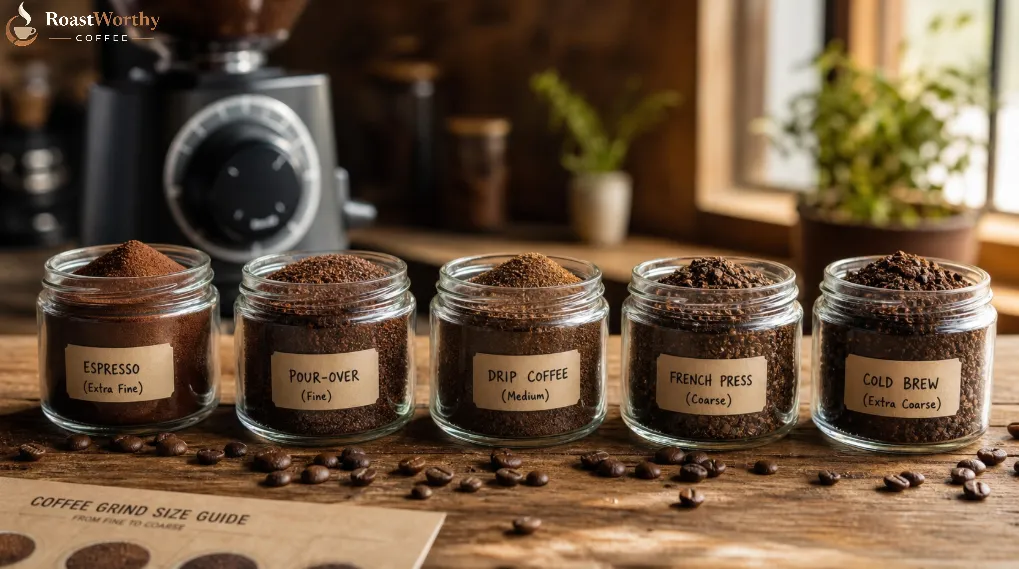
This is the big one. The wrong grind size is the most common coffee brewing mistake by a mile.
Grind too fine for your method and water moves too slow. Over-extraction. Bitter and dry. Grind too coarse and water rushes straight through. Under-extraction. Sour and weak.
Why does this happen? Grind size controls surface area and flow rate at the same time. Finer means more surface area and slower flow. Both pull more out of the coffee. Coarser does the opposite.
Match the grind to the method:
The fix is dialing in. Too bitter? Go coarser. Too sour? Go finer. Change one notch at a time. Taste it. Write it down. Brew it again. One variable per attempt. That's how you actually learn your setup.
2. Pre-Ground or Stale Beans
Coffee starts dying the moment it's ground. Surface area explodes, gases escape, and the aromatics burn off within 15 to 30 minutes.
Pre-ground beans from a bag you opened three weeks ago? They've got nothing left to give. The good stuff evaporated days ago.
Whole beans are different. The roasted bean is a sealed package. CO2 and oils stay locked inside until you crack them open with the grinder.
Buy whole beans. Grind right before you brew. Use them within 2 to 4 weeks of the roast date. Not the best-by date… the roast date. If a bag doesn't print one, that tells you something about the roaster.
Store them in an airtight container, away from light and heat. Skip the freezer for daily beans. Moisture and condensation do more harm than good.
3. No Burr Grinder
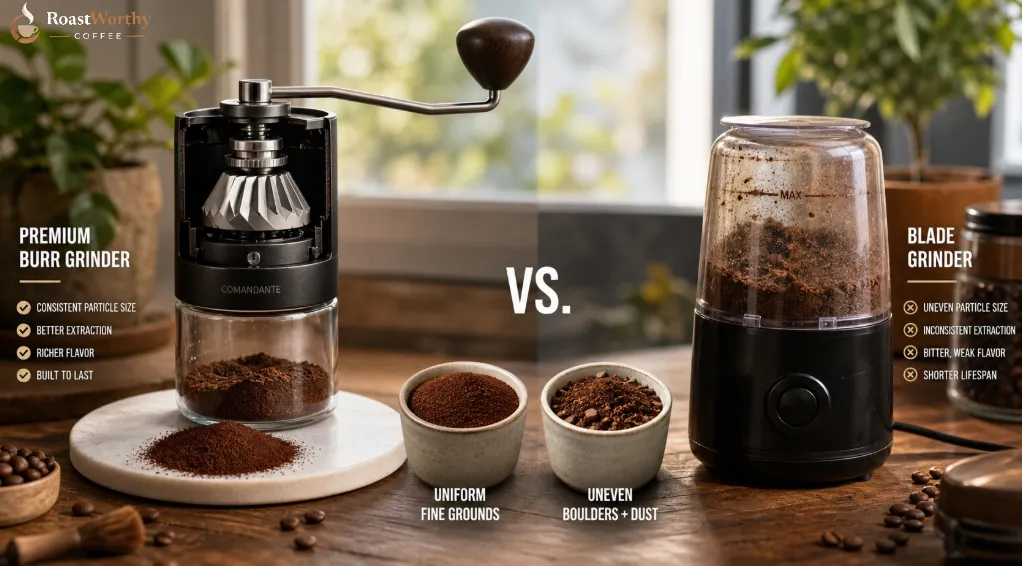
A blade grinder doesn't grind. It chops. You get boulders and dust in the same batch.
The dust over-extracts into bitterness. The boulders under-extract into sourness. Same cup. That's why blade-ground coffee tastes muddy and harsh no matter what else you do right.
A burr grinder crushes beans to a uniform size between two abrasive surfaces. Uniform grounds extract evenly. Even extraction is the whole game.
This is the single best upgrade for your coffee. More than any machine. More than fancier beans. A solid hand grinder runs $40 to $60. Worth every cent. If you only buy one thing after reading this, buy this.
4. Bad Water
Coffee is 98% water. If your water tastes bad, your coffee tastes bad. Simple as that.
Hard, mineral-heavy tap water mutes flavor and scales up your machine over time. Distilled or reverse-osmosis water is too clean and extracts flat, lifeless coffee. Neither one works.
Here's the chemistry. You need some minerals in the water to grab onto the flavor compounds. Too few and there's nothing to carry the flavor. Too many and the minerals crowd it out.
Use filtered water. Aim for around 150 ppm total dissolved solids if you want to nerd out. A basic carbon filter pitcher gets you 90% of the way for ten bucks. This is the cheapest upgrade on the list and one of the most noticeable. ⚗️
5. Wrong Water Temperature
Here's what the heat is actually doing. Hot water dissolves the soluble compounds in coffee. Too hot, it grabs the bitter ones first. Too cool, it can't reach the sweet and acidic ones at all.
Boiling water at 212°F scorches the grounds and pulls harsh, ashy flavors. Lukewarm water under-extracts and tastes sour and grassy.
The window is 195 to 205°F. Target 200. No thermometer? Boil the kettle, then let it sit 30 to 45 seconds off the heat. That drop lands you right in the zone. A gooseneck kettle with a built-in thermometer takes the guesswork out entirely.
6. Wrong Coffee-to-Water Ratio
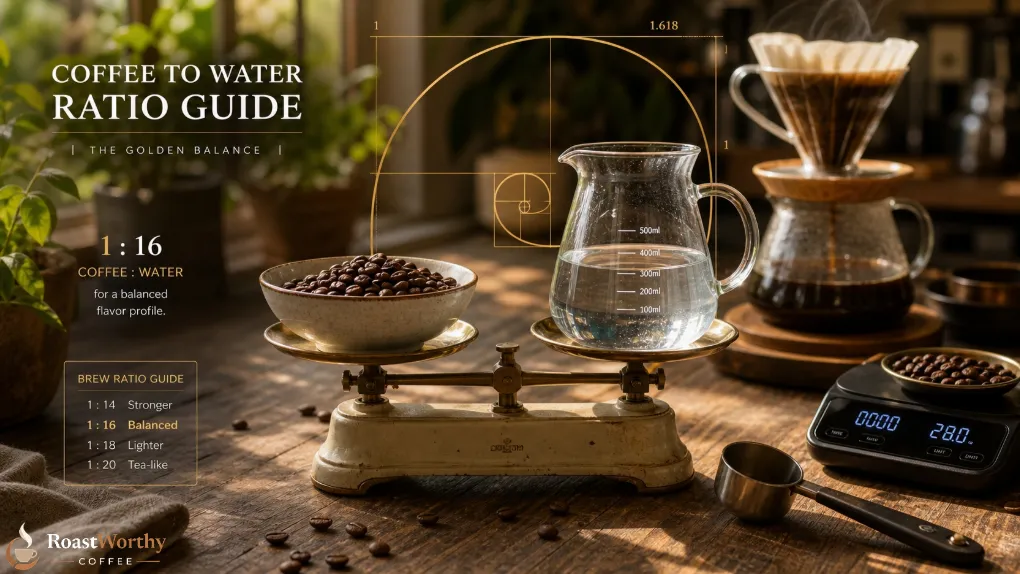
Eyeballing scoops is why your coffee is inconsistent. Beans vary in density and a scoop is meaningless. A scoop of light roast weighs more than a scoop of dark.
Too little coffee and it's watery and sour. Too much and it's a sludgy, over-strong mess that still somehow tastes weak.
Start at a 1:16 ratio. That's 1 gram of coffee per 16 grams of water. For one mug, that's 22 grams of coffee to 350 grams of water. Want it stronger? Go 1:15. Lighter? 1:17.
The ratio is your foundation. Everything else adjusts around it. Lock the ratio first, then tune grind and temperature. Change the ratio and grind at the same time and you'll never know which one moved the needle.
7. Brewing Without a Scale
You cannot hit a 1:16 ratio with your eyes. A $15 kitchen scale ends more brewing problems than any premium gadget you'll ever buy.
Weigh the beans. Weigh the water. Same numbers every morning means the same cup every morning.
This is the difference between guessing and brewing. Once you brew by weight, going back to scoops feels like driving blindfolded. A scale also lets you scale a recipe up or down without ruining the ratio. One mug or a full carafe, same proportions.
8. Dirty Equipment
Coffee oils go rancid. They build up on your machine, filter basket, carafe, and grinder… then leak that stale, bitter taste into every fresh brew.
That old-coffee flavor you can't shake? It's living in your gear. You're tasting last month's coffee, not today's.
Rinse everything after each brew. Deep-clean weekly with warm soapy water. Descale your machine monthly with a 1:1 water-vinegar mix or a dedicated descaling solution, especially if your water is hard.
Don't forget the grinder. Stale oils and grounds cake up in the burrs. Run a tablespoon of plain rice or grinder cleaning tablets through it every few weeks. A clean brewer tastes like a brand-new one.
9. Wrong Brew Time
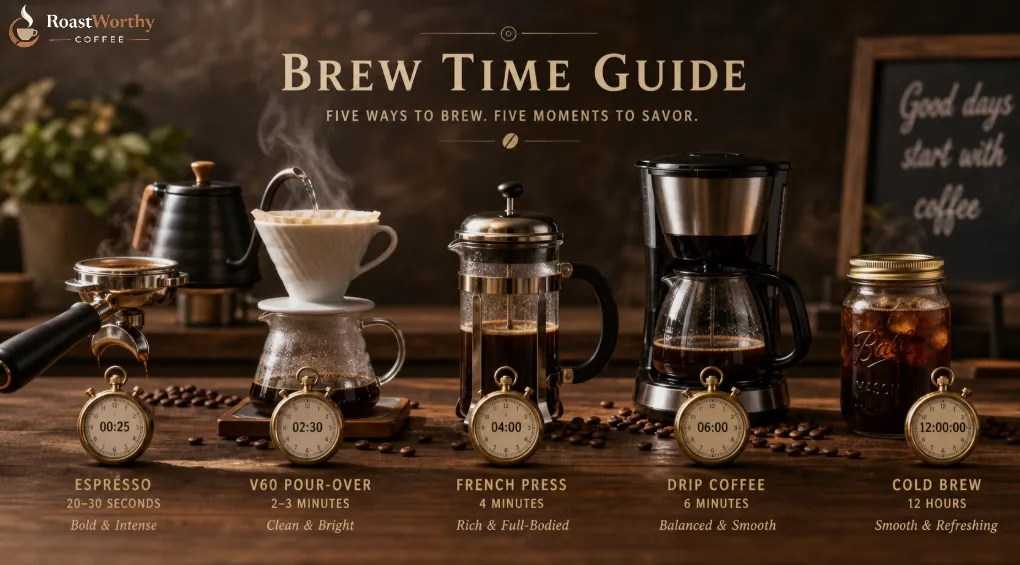
Brew time and grind size work together. Too long in contact with water means over-extraction. Too short means under-extraction. Time is the other half of the equation grind started.
Each method has a target window:
If you're hitting the time but the cup is still off, adjust grind size first. A finer grind slows the flow and lengthens contact. A coarser grind speeds it up. Time and grind are the two dials you turn together… never separately.
10. Skipping the Bloom
Fresh coffee releases CO2 when hot water hits it. That gas pushes water away from the grounds and blocks even extraction. You've seen it. The grounds puff up and bubble like a rising muffin.
The bloom releases that gas before the real brew starts. No bloom, and you're fighting the gas through the entire pour.
Pour just enough water to wet the grounds, about twice the coffee's weight. Wait 30 to 45 seconds. Then continue your pour. For 22 grams of coffee, that's roughly 45 grams of bloom water.
This one step sharpens flavor and adds sweetness. Fresher beans bloom more, which is also a quick way to judge how fresh your coffee really is. Flat, no bubbles? Your beans are stale.
Frequently Asked Questions
What is the most common coffee brewing mistake?
Using the wrong grind size. Too fine causes bitterness, too coarse causes sourness. Match your grind to your brew method and adjust one notch at a time from there.
Why does my home coffee taste bitter?
Bitterness means over-extraction. Your grind is too fine, your water is too hot, or it brewed too long. Go coarser, drop the water to 200°F, and shorten the brew time.
Why is my coffee sour?
Sour coffee is under-extracted. Grind finer, use hotter water at 195 to 205°F, and extend the brew time. A 1:16 ratio also helps balance it out.
What is the ideal water temperature for brewing coffee?
Between 195 and 205°F. Target 200. Boiling water scorches the grounds and lukewarm water leaves the cup flat and sour.
How long do coffee beans stay fresh?
Best within 2 to 4 weeks of the roast date. Store whole beans in an airtight container, away from light and heat, and grind right before brewing.
Do I really need a scale to make good coffee?
Yes, if you want consistency. A $15 scale lets you hit a repeatable 1:16 ratio every time, which matters more than almost any other piece of gear in your kitchen.
The Order That Actually Matters
If you only fix three things, fix these. Buy a burr grinder. Use a scale. Brew with filtered water at 200°F.
That's the 80/20 of good coffee. Nail those three and the rest is fine-tuning.
Your first few cups dialing this in will be imperfect. Make them anyway. Taste each one, note what was off, change one variable, brew again. That loop is the whole skill.
Coffee that's never more than a few weeks off the roaster… ground fresh… brewed by the numbers. It beats a café cup most mornings. And it costs a fraction of one. Taste it. Write it down. Brew it again. The cup doesn't lie. ☕
More Recommendations from RoastWorthy Coffee