Hawaiian Kona Coffee: Is It Really Worth the Premium Price?

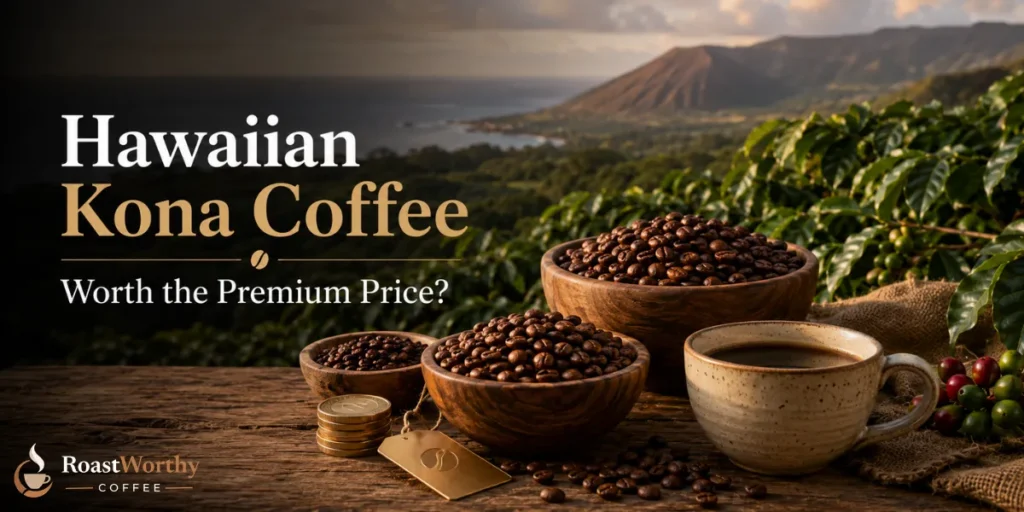
Quick Verdict: 100% Hawaiian Kona Coffee from a named Big Island estate — 7.5/10. Kona blends — 3/10. The gap between those two numbers is the whole story.
Hawaiian Kona Coffee sits at $45–$65 per pound. Sometimes more. And the word “Kona” appears on $12 airport tins sitting next to it — same label energy, completely different product.
That gap is where most buyers get burned.
Before the price question gets answered, you need to know what real Kona actually is — and what it isn't. Because the difference between a genuine 100% Kona and a commodity Kona blend isn't a small flavour gap. It's everything.
What Is Hawaiian Kona Coffee?
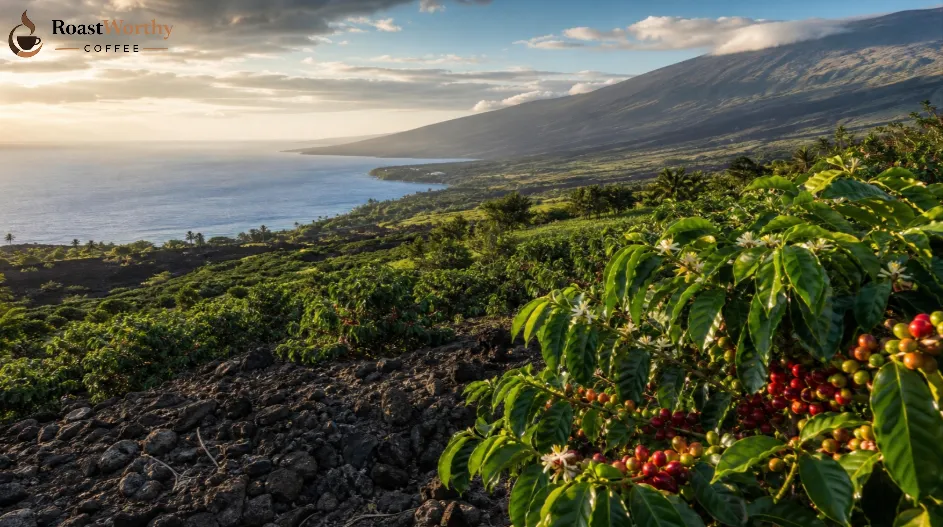
Hawaiian Kona Coffee is Arabica coffee grown exclusively in the Kona district on the Big Island of Hawaii — specifically along the western slopes of Mauna Loa and Hualalai.
The growing belt is narrow. Roughly 30 miles long, 1–2 miles wide. That geographic constraint is not a marketing angle — it's a hard physical limit on how much real Kona exists in the world.
The terroir inside that belt does specific, measurable things to the cup:
Cherries develop slowly under that cycle. Sugars accumulate. Acidity stays gentle. That mineral exchange from volcanic soil is why Kona cups so clean — no earthiness, no ferment funk, just clarity in the cup.
The terroir is doing something here. It's geology, not branding.
The Typica Variety — Why It Matters
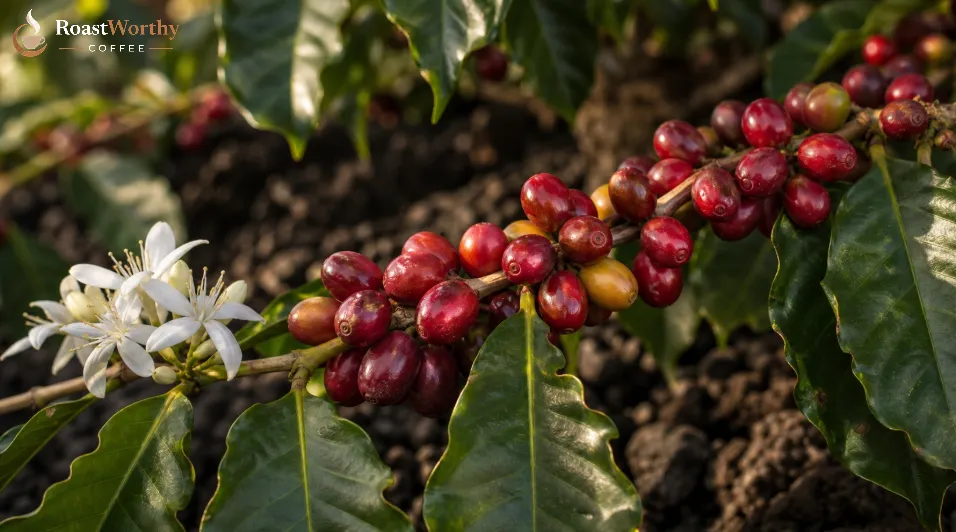
Most Kona coffee on the Big Island grows from Typica — one of the oldest Arabica varieties still in commercial production. The same variety that defined Colombian coffee before modern hybrids replaced it.
Typica is low-yield. Sensitive. It produces fewer cherries per tree than Catuai or Castillo, and it requires more care per harvest. That cost travels directly into the per-pound price — there's no shortcut in the math.
In the cup, Typica in volcanic soil delivers:
It won't challenge you the way a Kenyan AA does. It won't give you the blueberry-wine intensity of an Ethiopian natural. Kona coffee is composed and controlled — and that is not a weakness for a large part of the specialty market.
The Blend Problem — Read the Label First
This is where most buyers waste their money.
Hawaii state law allows a product labeled “Kona blend” to contain as little as 10% actual Kona coffee. The remaining 90% can be commodity-grade beans sourced from anywhere on earth.
That's the legal reality behind every $13 “Kona” tin in a grocery aisle. They taste like office break room coffee because that's what they are — commodity beans wearing a Hawaiian label.
Real Kona coffee has three things on the bag:
- “100% Kona” — not “Kona blend,” not “Kona style”
- A named Big Island estate
- A visible grading tier — Extra Fancy, Fancy, No. 1, etc.
If any of those three are missing, the price isn't justified. Walk away.
Hawaiian Kona Coffee Grades Explained
The Hawaii Department of Agriculture grades Kona by bean size and defect count per pound. For the prices this origin commands, the grade is not a minor detail.
| Grade | Max Defects/lb | What You Get |
|---|---|---|
| Extra Fancy | 10 | Top-tier sweetness, cleanest cup |
| Fancy | 18 | Excellent, marginally smaller beans |
| No. 1 | 36 | Solid everyday Kona, reliable quality |
| Select | 54 | Entry-level, noticeable quality drop |
| Prime | 72 | Lowest certified grade — avoid at premium price |
| Peaberry | Varies | Single round seed, often sweeter, roasts evenly |
At $45–$65 per pound, you should only be buying Extra Fancy or Fancy. Anything lower at that price point is a poor deal regardless of how the packaging looks.
Peaberry is worth a separate mention. It's a naturally occurring mutation — one seed develops inside the cherry instead of two, making it round rather than flat. Round beans roast more evenly. The cup is often slightly sweeter and more concentrated than regular flat-bean Kona. Buy it once. ☕
How Kona Coffee Actually Tastes
Direct tasting notes. No menu-speak.
A well-roasted 100% Kona Extra Fancy at light-medium tastes like brown sugar on the front, white peach through the middle, a faint macadamia nuttiness on the way out. Very low acidity — almost no sharpness. The finish is clean and lingers quietly.
What it doesn't do: it won't push you. It won't deliver the complexity ceiling of a top Kenyan or the wild fruit intensity of a natural Ethiopian. Kona is not that kind of coffee.
It's the kind of cup that everyone at the table enjoys without needing an explanation. Smooth, approachable, genuinely high-quality with no rough edges. For a lot of drinkers, that's exactly what a premium coffee should be.
The flavour doesn't lie — it's a good cup. The question is whether it's a $55 cup.
Hawaiian Kona Coffee vs Other Premium Origins
This is the honest test. Kona competes directly against other high-priced origins for the same $45–$65+ per pound budget. Here's how it stacks up:
| Origin | Approx. Price/lb | Acidity | Body | Flavour | Verdict |
|---|---|---|---|---|---|
| Hawaiian Kona Coffee (Extra Fancy) | $45–$65 | Low | Medium-light | Brown sugar, stone fruit, clean finish | Worth it — on 100% Kona only |
| Jamaica Blue Mountain | $50–$80 | Very low | Medium | Mild, sweet, nearly neutral | Overpriced for what's in the cup |
| Panama Geisha | $60–$100+ | High | Light | Jasmine, bergamot, tropical fruit | Better complexity, higher ceiling |
| Ethiopian Yirgacheffe Natural | $18–$25 | Medium | Light-medium | Blueberry, wine-like fruit | More intensity, far lower cost |
| Colombian Huila Single-Origin | $18–$28 | Medium-high | Medium | Red apple, caramel, citrus | Strong value, different drinker |
Kona vs Blue Mountain: Kona wins. Both are mild and low-acid, but Kona has more character. Blue Mountain often cups like expensive neutrality — you're paying heavily for the Jamaican label.
Kona vs Panama Geisha: Geisha is the more impressive cup — more aromatic, more complex, more memorable per dollar at similar price points. If maximum cup quality is the goal, Geisha edges ahead.
Kona vs Ethiopian or Colombian specialty: Not the same audience. Kona is for drinkers who want clean sweetness and no rough edges. Ethiopians are for drinkers who want intensity and wildness. They serve different purposes — don't compare them as substitutes.
Where to Buy Genuine 100% Kona
Skip supermarket tins and tourist blends entirely. Buy from named estates or specialty retailers with transparent sourcing.
Reliable sources:
If you home roast, buying green Kona from a specialty supplier and roasting it yourself is the most cost-effective way to experience the origin at its best.
Home Roasting Kona — Numbers That Matter 🔥
Kona Typica is a softer, lower-density bean than most South Americans. It develops faster than you'd expect on a drum.
Key parameters to start from:
Pull it at light-medium. Push into medium-dark and the brown sugar sweetness that defines this origin flattens into generic roast character. At that point, you've paid Kona prices for a cup that no longer tastes like the Big Island.
DTR is the number that matters here. Keep it honest. The curve doesn't lie.
Is Hawaiian Kona Coffee Overhyped?
Partly. Yes.
The hype operates on two levels:
Justified hype: volcanic soil, limited geography, Typica's low yield, genuine hand-picking labor costs, strict Hawaii DOA certification, and a cup that genuinely expresses its terroir.
Empty hype: Kona blends with 10% real content, decorative tin packaging, tourist-market pricing on commodity beans, and the word “Hawaiian” doing work that the beans inside can't support.
Real 100% Hawaiian Kona Coffee from a named farm is not a scam. It's a legitimately distinctive regional cup with a real story behind the price.
The market around it — especially blends — is where the hype becomes dishonest. That's the part worth being angry about.
FAQ — Hawaiian Kona Coffee
What is Hawaiian Kona Coffee?
Hawaiian Kona Coffee is Arabica coffee — primarily the Typica variety — grown exclusively in the Kona district on the Big Island of Hawaii. It's cultivated on volcanic slopes between 800–2,500 feet elevation, with mineral-rich basalt soil and specific rainfall patterns that produce a clean, low-acid, naturally sweet cup unlike most other origins.
Why is Hawaiian Kona Coffee so expensive?
The price reflects hand-harvesting on steep volcanic terrain, the low yield of the Typica variety, high labor costs in Hawaii, strict Hawaii DOA grading and certification overhead, and the hard geographic scarcity of the Kona belt — which is only about 30 miles long in total.
What is the difference between 100% Kona and a Kona blend?
100% Kona contains only beans grown in the Kona district. Hawaii state law allows Kona blends to legally contain as little as 10% Kona coffee — the rest can be commodity-grade beans from other countries. A Kona blend is not a budget version of the real thing. It's a different, lower-quality product using a protected geographic name.
What does Kona coffee taste like?
Good Kona coffee tastes like brown sugar and mild stone fruit with very low acidity, a quiet macadamia-like finish, and a clean, smooth aftertaste. It's approachable and composed — not bright, punchy, or aggressively complex.
Is Hawaiian Kona Coffee worth the premium price?
For drinkers who value clean sweetness, low acidity, and genuine volcanic terroir from a rare growing region, 100% Hawaiian Kona Coffee at Extra Fancy grade is worth buying at least once — and for many drinkers, it justifies repeat purchase. For those chasing maximum flavour complexity per dollar, Panama Geisha or Ethiopian naturals offer more in the cup at comparable or lower cost.
What Kona coffee grade should I buy?
At premium Kona price points, buy Extra Fancy or Fancy grade. These deliver the cup quality the price requires. Peaberry is worth one bag for its slightly sweeter, more concentrated expression of the same origin.
Final Verdict ✒️
The volcanic terroir on the Big Island is real. The Typica variety earns its production cost. The cup — when it's genuinely 100% Kona from a named estate at Extra Fancy grade — is clean, sweet, and geographically distinct in a way that commodity coffee cannot replicate.
Is it the world's best coffee? No. For pure complexity and flavour intensity per dollar, Panama Geisha or a top Ethiopian natural outperforms it.
But for a smooth, composed, low-acid cup with real volcanic identity behind it — this one earns its price.
Buy 100% Kona. Not the blend. Pour-over at light-medium roast, 48-hour rest minimum. That's when the Big Island terroir actually shows up in your cup.
More Recommendations from RoastWorthy Coffee