How to Make a Latte at Home Without an Espresso Machine


You don't need a $1,200 machine to pull a decent shot. You need strong coffee, frothed milk, and the right ratio. That's it.
Making a latte at home is more about technique than equipment. I've tested this with a moka pot, an AeroPress, and even a French press. All three work. Some work better than others.
Here's exactly what to do. 🔥
TL;DR — The Latte at Home Formula
Your first attempt won't be perfect. Make it anyway.
What Actually Makes a Latte a Latte
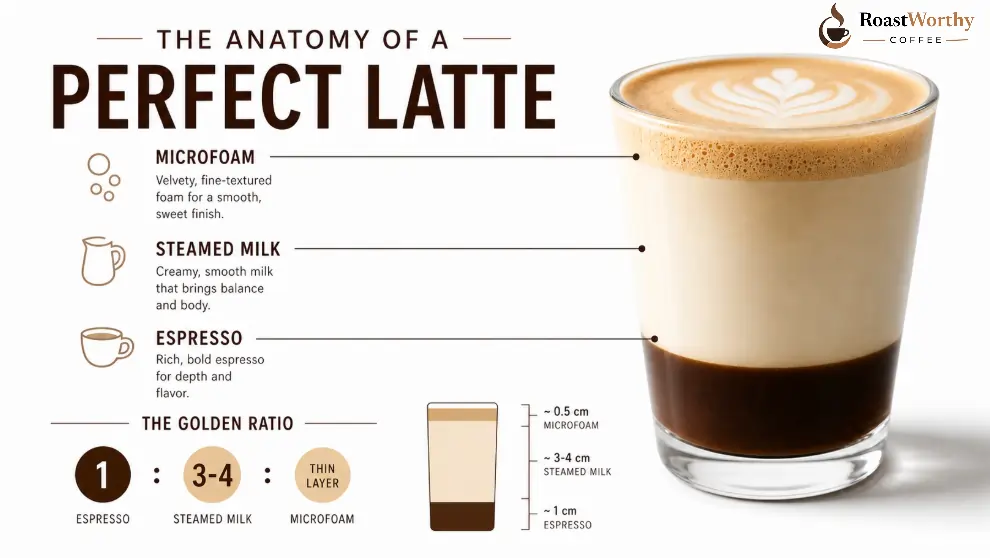
Before the steps — let's be clear on what we're building.
A latte is 1 part strong coffee to 3–4 parts steamed milk, topped with a thin layer of microfoam. That's the whole formula.
The espresso machine does two jobs: brew concentrated coffee and steam milk. You're going to replicate both. Separately. With tools you probably already own.
The Three Best Ways to Brew Strong Coffee at Home
1. Moka Pot (Best Espresso Alternative)
The moka pot latte is the closest you'll get to café espresso without the machine.
A moka pot brews at 1–2 bar of pressure. Real espresso runs at 9 bar. The flavour isn't identical — but it's concentrated, bold, and punchy enough to hold up against milk. That's what you need.
Ratio: Fill the basket completely. Don't tamp. Use fine-to-medium grind — finer than drip, coarser than espresso.
Brew: Medium heat. Remove from heat the moment you hear gurgling. That gurgling means the water is almost gone and the coffee is starting to burn.
You'll get roughly 60–90ml of strong coffee. That's your latte base. ☕
2. AeroPress (Most Consistent Results)
The AeroPress gives you more control than a moka pot, and it's faster.
For a latte at home, use the inverted method:
You'll get a concentrated brew that sits right at the line between strong drip and espresso. It doesn't have the same oils as moka pot coffee, but the flavour is clean and bright. Depending on your bean, that might actually be better.
3. French Press (The Backup Option)
French press cold brew concentrate is an underrated latte base.
Steep 1:4 coffee to cold water for 18 hours. Strain. You've got a cold concentrate that works well in an iced latte. For a hot latte, gently warm the concentrate — don't boil it.
It's not the same intensity as moka pot. But if that's what you have, it works.
How to Froth Milk Without a Steam Wand
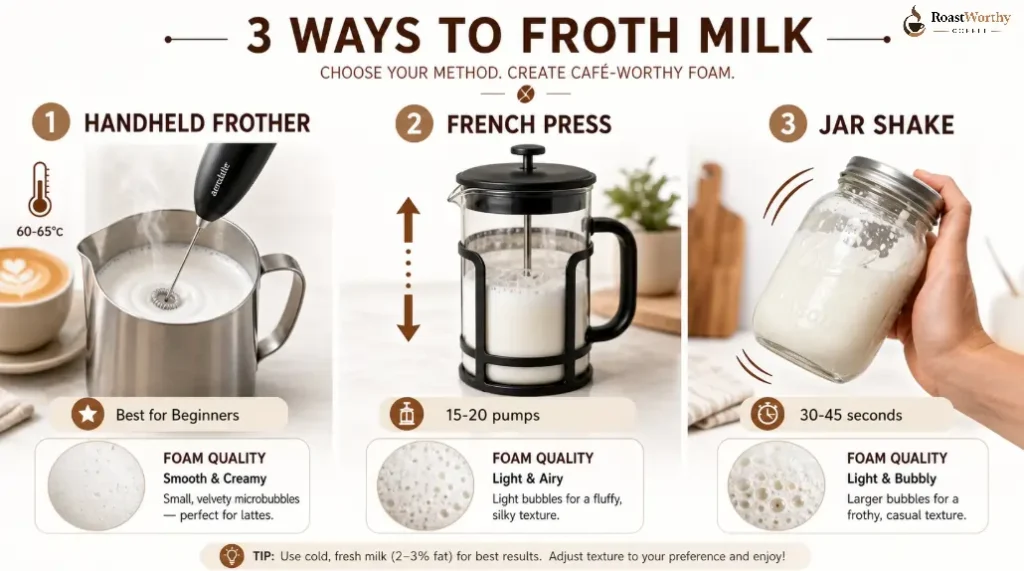
This is where most homemade latte recipes fall apart. The milk is the point.
Flat warm milk is not a latte. It's warm milk with coffee in it.
You need microfoam — small, uniform bubbles that integrate with the milk instead of sitting on top. Here's how to get there with what you have.
Handheld Milk Frother (Best for Beginners)
A $10–15 handheld frother does the job. It won't give you silky café-level texture, but it gets close.
Heat your milk first. 60–65°C is the target. That's just before it starts to simmer. Too cold and the foam is flat. Too hot and the milk scalds — you'll taste it.
Submerge the frother just below the surface. Run it for 20–30 seconds. Then lower the frother slightly to incorporate the foam back into the milk. Swirl the pitcher. Tap it gently on the counter to break large bubbles.
Pour immediately. Foam deflates fast.
French Press Frothing Method
Heat your milk. Pour it into a French press. Press and pull the plunger rapidly 15–20 times.
You'll get decent foam. Not microfoam — but textured enough to pour a recognizable latte.
Jar Method (No Equipment)
Shake warm milk in a sealed jar for 30–45 seconds. The foam is coarser but functional.
This works in a pinch. Don't expect café quality.
Step-by-Step: How to Make a Latte at Home Without a Machine ☕

Here's the full process, start to finish.
What you need:
Steps:
- Brew your coffee first. Let it sit while you prepare the milk — but don't let it sit longer than 3 minutes or it oxidizes and turns bitter.
- Heat milk to 60–65°C. Don't wing this. Use a thermometer at least once so you know what that temperature feels like by sight.
- Froth using your method of choice. Swirl and tap to settle the foam.
- Pour your coffee into the mug.
- Pour the milk slowly from a low height, then raise the pitcher and finish with a small pour to lay the foam on top.
The ratio to remember: 1 part coffee : 3 parts milk.
For a 240ml mug, that's 60ml coffee and 180ml milk. Adjust for a stronger or milkier cup.
Milk Matters More Than You Think
Whole milk is not optional if you want real foam. The fat content is what makes foam stable and creamy.
Oat milk is the best non-dairy alternative for frothing. Barista editions (Oatly Barista, Minor Figures) froth closest to whole milk. Regular oat milk separates.
Skim milk froths easily — but the foam is airy and collapses quickly. You'll notice the difference in the first sip.
Almond milk is the hardest to work with. It separates at high heat. If you're using it, keep the temperature at 55°C max.
The Bean Selection Is Doing Real Work Here

A latte at home is only as good as the coffee you put in it.
Use a medium or medium-dark roast. Light roasts are beautiful in a pour-over. In milk, they disappear. You need something with body — chocolate, caramel, brown sugar notes. Those hold up.
Grind fresh if you can. Pre-ground coffee off a shelf starts losing volatile compounds the moment the bag opens. For a moka pot, you need consistent fine-to-medium grind. A burr grinder makes a real difference here. ⚗️
Taste it. Write it down. Roast it again — or in this case, adjust your grind and ratio next time.
Common Mistakes (And the Fix)
| Mistake | What's Happening | Fix |
|---|---|---|
| Coffee tastes bitter | Over-extracted or too-fine grind | Coarsen grind, reduce brew time |
| Foam disappears instantly | Milk too hot or too cold | Target 60–65°C exactly |
| Latte tastes watery | Coffee not concentrated enough | Reduce water, fill moka basket fully |
| Milk tastes burnt | Scalded past 70°C | Use a thermometer |
| Foam is too bubbly | Frother held at surface too long | Submerge frother deeper, froth slower |
Homemade Latte FAQs
Can I make a latte without a frother?
Yes. Use a French press or a sealed jar. Shake or pump warm milk until foamy. The texture won't be as fine, but it works. Handheld frothers cost $10–15 and are worth it.
What's the best coffee for a homemade latte?
A medium or medium-dark roast with chocolate or caramel character. Light roasts get lost in milk. Aim for something with body — Ethiopian blends, Colombian single origins, or a Brazilian natural roast.
Can I use instant coffee for a latte at home?
You can. Use a 1:1 ratio of instant coffee to hot water to make a double-strength concentrate — about 30ml. It won't have the same depth, but in milk it's acceptable. Use good instant (Nescafé Gold, Cometeer, Mount Hagen).
What milk froths best without a steam wand?
Whole milk. It froths at the right temperature and holds structure. Barista oat milk is the best dairy-free option. Avoid skim milk and standard almond milk — they don't foam consistently.
How strong should the coffee be for a latte?
Twice the strength of regular drip coffee at minimum. For a moka pot: fill the basket completely. For AeroPress: use 20g coffee to 60ml water. That concentration holds up against 150–180ml of milk.
Does the grind size matter for a moka pot latte?
Yes. Too fine and the coffee over-extracts and tastes metallic. Too coarse and it's weak. Target just coarser than espresso grind — fine enough to feel almost powdery, but not as fine as flour.
More Recommendations from RoastWorthy Coffee