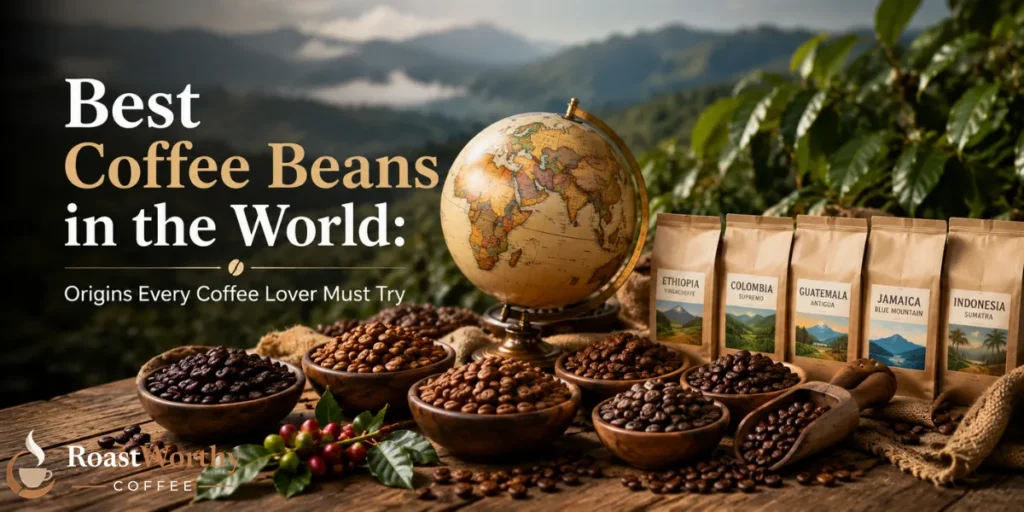
9 Best Coffee Beans in the World Every Coffee Lover Must Try

Some coffees are famous because they are rare.
Some are famous because they are expensive.
The Best Coffee Beans in the world earn their place for a better reason: the cup actually delivers. Not hype. Not packaging. Not a roaster telling you the word “exclusive” five times before you taste it.
This list is about origins every serious coffee lover should try at least once.
Start with the origin, not the roaster. The terroir is doing something here. 🌱☕
TL;DR: Best Coffee Beans in the World
| Rank | Coffee Origin | Best For | Typical Taste | Try It As |
|---|---|---|---|---|
| 1 | Ethiopian Yirgacheffe | Floral, bright coffee lovers | Lemon, jasmine, blueberry, tea | Pour-over |
| 2 | Panama Geisha | Luxury specialty coffee | Bergamot, peach, honey, florals | V60 or cupping |
| 3 | Jamaican Blue Mountain | Smooth, balanced coffee | Cocoa, nuts, soft citrus | Drip or French press |
| 4 | Hawaiian Kona Coffee | Sweet island-grown Arabica | Caramel, brown sugar, nuts | Auto drip or pour-over |
| 5 | Colombian Coffee | Everyday specialty drinkers | Red apple, caramel, orange | Espresso or filter |
| 6 | Kenya AA / SL28 | Bright acidity fans | Blackcurrant, grapefruit, tomato leaf | Pour-over |
| 7 | Yemen Mocha | History and wild flavour | Dried fruit, spice, cocoa | Moka pot or immersion |
| 8 | Guatemala Antigua | Chocolate-heavy coffee | Cocoa, baking spice, orange peel | Espresso or French press |
| 9 | Sumatra Mandheling | Low-acid, earthy coffee | Tobacco, cedar, dark chocolate | French press |
What Makes Coffee Beans “The Best”?
The world’s best coffee beans usually have four things working together:
That last one matters.
A brilliant Ethiopian Yirgacheffe can taste like burnt toast if roasted badly. A good Colombian coffee can become generic when roasted too dark.
The bean matters. The roast matters. The brew matters.
But origin comes first.
1. Ethiopian Yirgacheffe
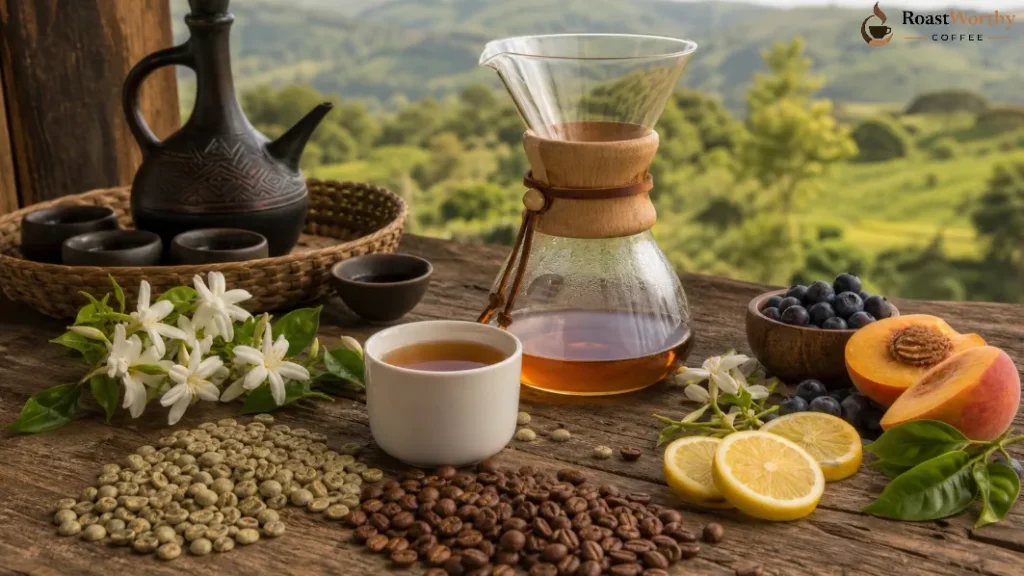
Ethiopian Yirgacheffe belongs near the top of any serious list of the best coffee beans in the world. It is bright, floral, and completely different from the heavy dark roast most beginners know. A good cup can taste like jasmine tea, lemon peel, bergamot, blueberry, peach, and soft honey.
The magic comes from high elevations, careful processing, and Ethiopia’s unmatched coffee genetics. Washed Yirgacheffe is clean and tea-like. Natural Yirgacheffe is fruitier and louder, often with blueberry or strawberry sweetness.
Verdict: Elegant, expressive, and unmistakably Ethiopian
2. Panama Geisha
Panama Geisha is the luxury coffee that actually deserves attention when the lot is good. It can taste like jasmine, peach, bergamot, honey, orange blossom, and black tea. The best cups are delicate but intense, which is a rare combination.
Geisha has Ethiopian roots, but Panama made it famous through farms in regions like Boquete and Volcán. Washed Geisha is usually cleaner and more floral. Natural Geisha can be sweeter, fruitier, and more dramatic.
It is expensive, yes. But the top lots have a level of aroma and clarity that cheaper beans rarely match.
Verdict: Pricey, refined, and genuinely world-class.
3. Jamaican Blue Mountain
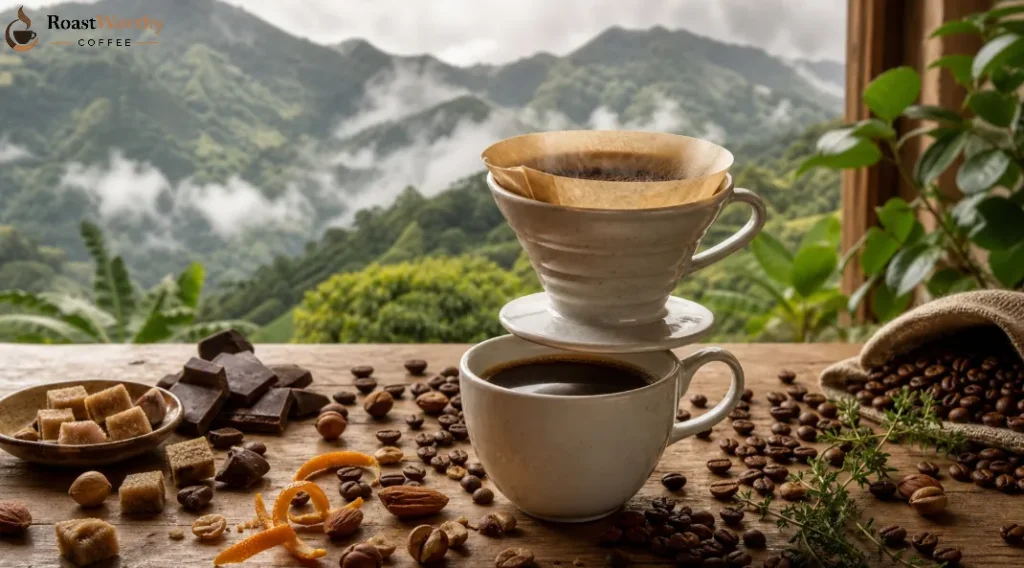
Jamaican Blue Mountain is known for smoothness, and in this case, the reputation makes sense. It is mild, balanced, clean, and easy to drink without tasting flat. Expect milk chocolate, almond, brown sugar, soft citrus, and a gentle herbal sweetness.
This coffee grows in Jamaica’s Blue Mountain region, where mist, elevation, and slow cherry development create a polished cup. It does not have the wild acidity of Kenya or the perfume of Panama Geisha. Its strength is balance.
The only warning is price. Avoid cheap “Blue Mountain blend” bags because many contain very little real Jamaican Blue Mountain.
Verdict: Refined, smooth, and premium when authentic.
4. Hawaiian Kona Coffee
Real 100% Kona coffee is sweet, mellow, and beautifully balanced. It usually tastes like caramel, toasted nuts, brown sugar, milk chocolate, and soft fruit. It is not the loudest coffee on this list, but it is one of the easiest to enjoy.
Kona grows on Hawaii’s Big Island, where volcanic soil, steady weather, and afternoon cloud cover help Arabica cherries ripen slowly. That gives the cup a soft sweetness and rounded body.
The key is buying real Kona. Look for “100% Kona coffee” on the bag. Kona blends are often weaker and less impressive.
Verdict: Smooth and sweet when genuine.
5. Colombian Coffee
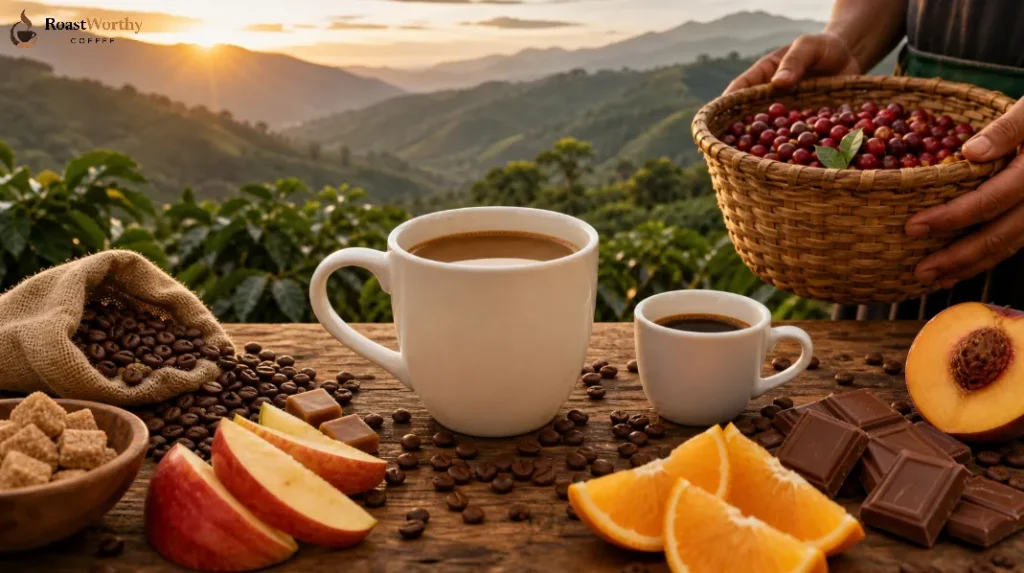
Colombian coffee is one of the best everyday specialty coffee origins in the world. It is not always the rarest or most expensive, but it is consistently excellent when sourced well. Regions like Huila, Nariño, Tolima, and Cauca produce some of the most reliable high-quality Arabica beans.
A good Colombian coffee can taste like red apple, caramel, orange, chocolate, brown sugar, and stone fruit. Washed lots are usually clean and balanced. Natural or anaerobic lots can be fruitier, but they need careful processing.
Colombian coffee works for filter, espresso, and milk drinks, which makes it extremely versatile.
Verdict: Reliable, flexible, and seriously underrated.
6. Kenya AA / SL28
Kenyan coffee is bright, juicy, and bold. It often tastes like blackcurrant, grapefruit, red berries, hibiscus, tomato leaf, and dark sugar. The acidity can be sharp, but the best cups have enough sweetness to keep everything balanced.
Kenya’s reputation comes from strong coffee varieties, careful washed processing, and quality-focused sourcing. SL28 and SL34 are famous varieties, while AA refers to bean size. AA does not automatically mean better flavour, but top Kenyan AA lots can be outstanding.
This is a great origin for pour-over drinkers who want structure, brightness, and a cup that actually wakes up the palate.
Verdict: Bold, sharp, and deeply rewarding.
7. Yemen Mocha
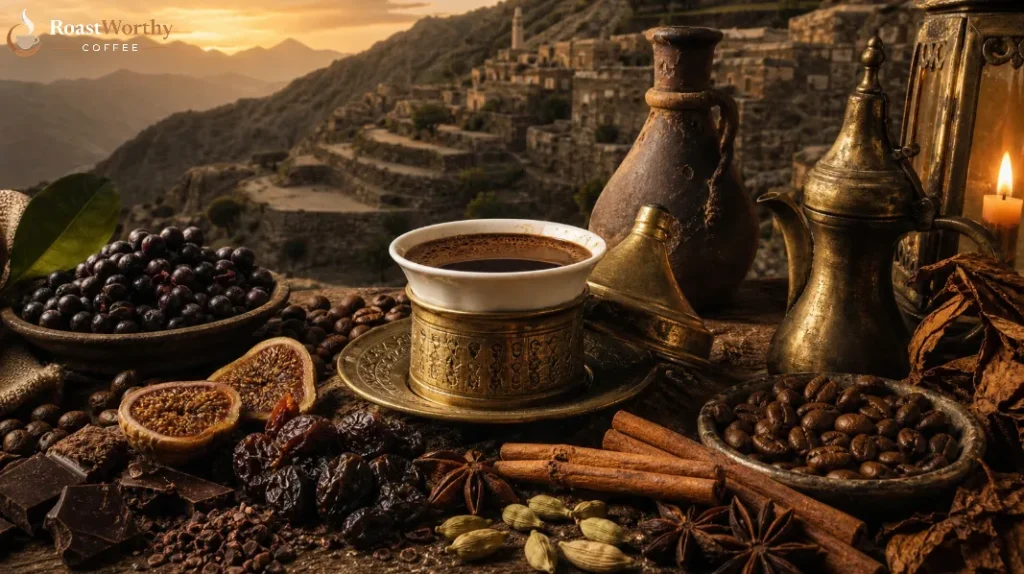
Yemen Mocha is historic, rustic, and deeply distinctive. It can taste like dried fig, cocoa, raisin, cardamom, tobacco, spice, and wild berries. This is not the cleanest or most polished coffee, but that rough edge is part of its charm.
Yemeni coffee is often grown on mountain terraces in dry conditions, then naturally processed. That means the coffee seed dries inside the fruit, giving the cup its dried-fruit sweetness and heavy character.
This origin is best for people who want something old-world, textured, and memorable. It is not for everyone. Good. The best origins rarely are.
Verdict: Wild, historic, and full of personality.
8. Guatemala Antigua
Guatemala Antigua is a classic chocolate-forward coffee origin. It tastes like cocoa, orange peel, baking spice, brown sugar, and toasted almond. It has enough sweetness for filter coffee and enough structure for espresso.
The Antigua region sits between volcanoes, and that volcanic soil helps create dense, flavourful beans. The cup is usually clean, balanced, and medium-bodied. It does not chase wild fruit or sharp acidity, which makes it a strong choice for people moving from regular coffee into specialty coffee.
A medium roast usually works best. Too light can feel tight. Too dark can hide the spice and citrus.
Verdict: Dependable, rich, and far from boring.
9. Sumatra Mandheling
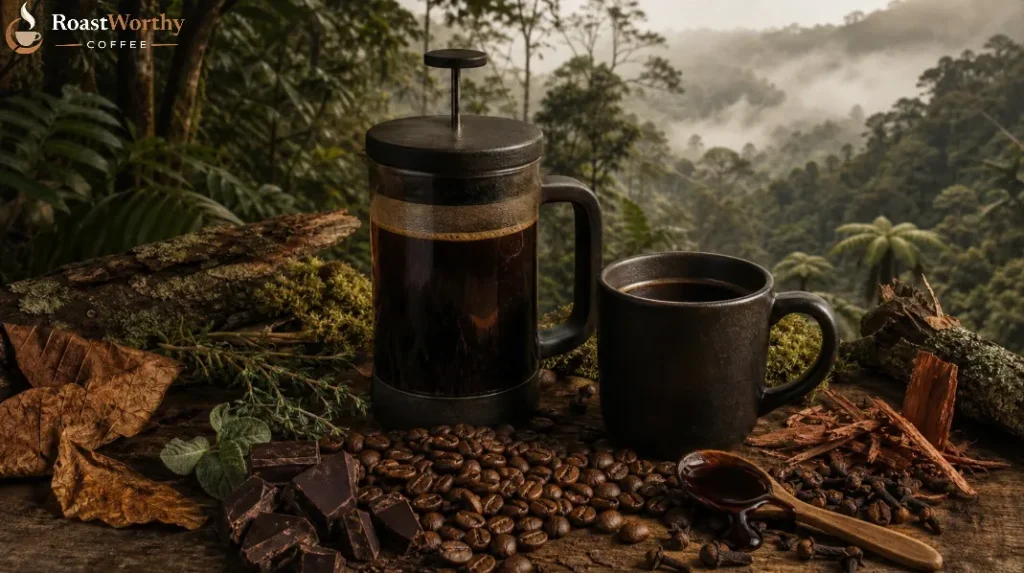
Sumatra Mandheling is bold, earthy, and low in perceived acidity. It often tastes like dark chocolate, cedar, tobacco, clove, molasses, herbs, and damp forest floor. That last part may sound strange, but in a good cup, it works.
Many Sumatran coffees use wet-hulling, a processing method that creates heavy body and earthy depth. This is not a delicate coffee. It is full-bodied, rich, and slightly wild.
Sumatra is a good choice for French press drinkers, low-acid coffee fans, and people who prefer darker, heavier cups without burnt bitterness. Avoid oily, over-roasted beans.
Verdict: Divisive, bold, and excellent when roasted carefully.
Best Coffee Beans by Taste Preference
| If You Like… | Try This Origin | Why It Works |
|---|---|---|
| Floral coffee | Ethiopian Yirgacheffe | Jasmine, citrus, tea-like clarity |
| Luxury coffee | Panama Geisha | Elegant, rare, aromatic |
| Smooth coffee | Jamaican Blue Mountain | Low bitterness, soft balance |
| Sweet coffee | Hawaiian Kona | Caramel and brown sugar character |
| Everyday specialty | Colombian coffee | Balanced, versatile, reliable |
| Bright acidity | Kenya AA / SL28 | Blackcurrant and grapefruit snap |
| Historic coffee | Yemen Mocha | Dried fruit, spice, cocoa |
| Chocolate coffee | Guatemala Antigua | Cocoa, spice, medium body |
| Low-acid coffee | Sumatra Mandheling | Heavy body, earthy sweetness |
FAQs About the Best Coffee Beans in the World
What are the best coffee beans in the world?
The best coffee beans in the world include Ethiopian Yirgacheffe, Panama Geisha, Jamaican Blue Mountain, Hawaiian Kona, Colombian coffee, Kenya AA, Yemen Mocha, Guatemala Antigua, and Sumatra Mandheling.
What is the most expensive coffee bean?
Panama Geisha is often one of the most expensive specialty coffees, especially auction-winning lots. Jamaican Blue Mountain and 100% Kona coffee can also be costly.
Which coffee origin is best for beginners?
Colombian coffee is the best starting point. It is sweet, balanced, widely available, and works well for filter coffee, espresso, and milk drinks.
Which coffee beans are best for low-acid coffee?
Sumatra Mandheling, Jamaican Blue Mountain, and some medium-roast Brazilian or Colombian coffees are good choices for low-acid coffee drinkers.
Is Panama Geisha worth it?
Yes, if it comes from a reputable farm and roaster. A good Panama Geisha tastes floral, sweet, and tea-like. A weak one is just expensive.
Which coffee beans are best for pour-over?
Ethiopian Yirgacheffe, Panama Geisha, Kenya AA, and washed Colombian coffees are excellent for pour-over. They have clarity, acidity, and aromatic detail.
My Final Ranking
If I had to choose only three origins from this list, I would pick:
- Panama Geisha for peak aroma and elegance
- Ethiopian Yirgacheffe for origin identity
- Colombian Huila or Nariño for weekly drinking
Those three show the range of specialty coffee.
Luxury. History. Daily beauty.
No filler.
More Recommendations from Roastworthy Coffee