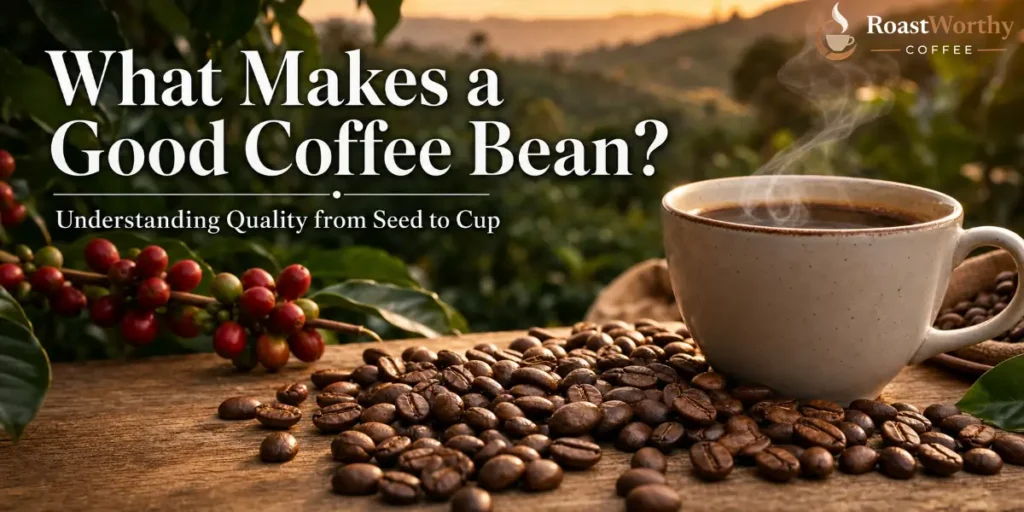
What Makes a Good Coffee Bean? From Seed to Cup

Start with the origin, not the roaster.
A good coffee bean isn't made in the roastery. It's made on a hillside, at altitude, on a specific varietal, processed a specific way, by people who decided to care. The roaster only reveals what's already there.
I've stood on farms in Ethiopia where coffee still grows semi-wild in the forest. I've watched cherries dry on raised beds in Colombia for three weeks. There's a whole story in this cup… and it starts long before anyone lights a burner.
So let's trace it. Seed to cup. Here's what actually separates a great bean from a forgettable one.
Key takeaway: A quality coffee bean is the sum of six things — altitude, varietal, ripe cherry selection, clean processing, zero defects, and freshness. Miss one, and the cup tells on you.
The Things That Make a Good Coffee Bean
Good coffee beans share measurable traits. Grown high. Picked ripe. Processed clean. Graded tight. Roasted recently.
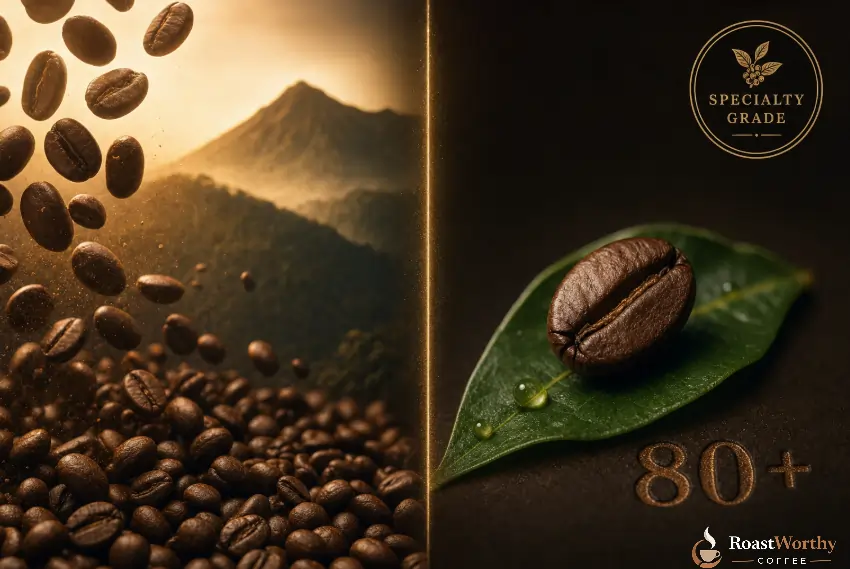
The Specialty Coffee Association draws a hard line here. A specialty-grade bean scores 80+ on the 100-point Q scale, has zero primary defects, and no more than five secondary defects per 350g sample.
Everything below that number is commodity coffee. Fine for a gas-station cup. Not what we're talking about.
The rest of this piece explains why those numbers exist — and how each stage builds coffee bean quality.
Altitude: Where the Bean Grows Slowly
The terroir is doing something here.
Coffee grown high — above 1,200 metres, often up to 2,200 — matures slowly. Cool nights slow the cherry's development. That slow ripening concentrates sugars and acids inside the seed.
Altitude is the single most reliable predictor of a bean's complexity.
You'll see this coded on bags:
A dense, high-grown bean holds more of what makes coffee taste like something. Low-altitude beans grow fast, soft, and flat. They're easier to farm. They just don't sing.
This matters beyond the flavour. Altitude is why an Ethiopian Yirgacheffe tastes of jasmine and lemon, and a lowland robusta tastes of… cardboard.
Varietal: The Genetics in the Cup
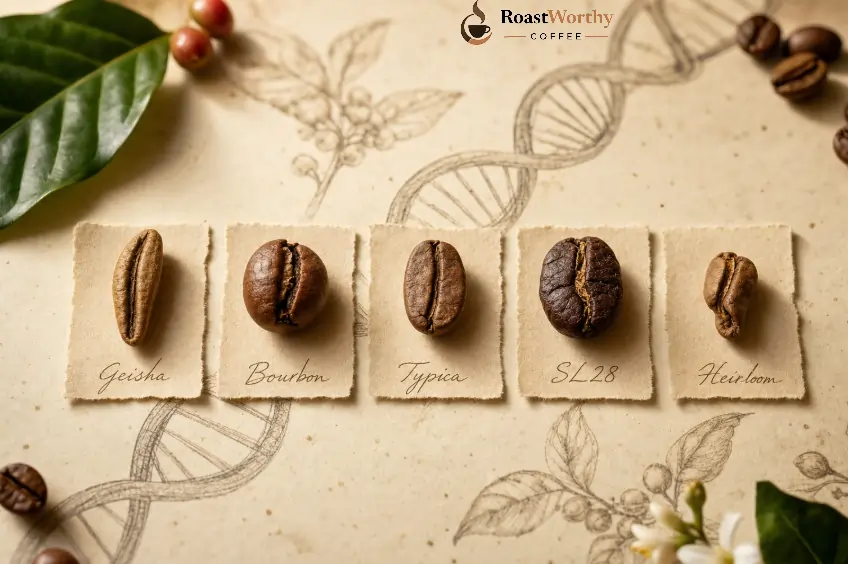
Two beans from the same farm, same altitude, can taste completely different. The reason is the varietal — the coffee's genetic lineage.
Arabica gives you the range and the subtlety. Robusta gives you body and caffeine, but rarely finesse. Within Arabica, the varietal is where the magic hides.
A few worth knowing:
| Varietal | Origin roots | What it brings |
|---|---|---|
| Geisha (Gesha) | Ethiopia → Panama | Jasmine, bergamot, tea-like; the celebrity varietal |
| Bourbon | Réunion / Rwanda | Sweet, balanced, red-fruit body |
| Typica | Yemen → the Americas | Clean, classic, mild acidity |
| SL28 / SL34 | Kenya | Blackcurrant, sharp acidity, huge structure |
| Heirloom | Ethiopia | Wild floral-fruit mix, hard to categorise |
Geisha changed the market when a Panamanian farm, Hacienda La Esmeralda, put it on the map in 2004. It broke auction records. It still does.
Varietal is genetics — and genetics set the ceiling for how good a bean can ever be.
The people who grew this deserve credit. Preserving rare varietals is slow, risky farming. It's why great coffee costs more.
Cherry Ripeness: The Picking Decision
Here's the part most people skip.
Coffee is a fruit. The seed we roast lives inside a cherry. And the ripeness of that cherry at picking decides half the quality outcome.
Ripe, red cherries carry maximum sugar. Underripe green ones taste grassy and astringent. Overripe ones ferment badly and turn sour.
Cheap coffee is strip-picked — every cherry yanked off at once, ripe or not. Great coffee is selectively hand-picked, cherry by cherry, sometimes across multiple passes over weeks.
Ripe cherry selection is invisible on the label but obvious in the cup.
This is human labour. Steep, hot, repetitive labour. When you pay for a good bean, this is a lot of what you're paying for.
Processing: How the Seed Meets the Fruit
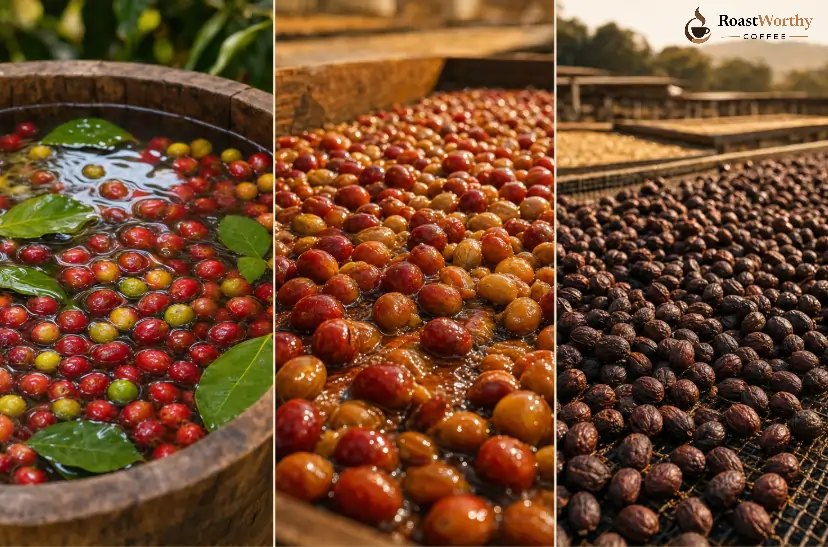
Natural processing means leaving the fruit on the seed while it dries. Sometimes for weeks. That fermentation is why it tastes like blueberries. Or wine. Or both.
Processing is where flavour gets made — the method decides how much of the cherry's sugar reaches the seed.
Three main paths:
Then there's the experimental frontier — anaerobic and carbonic maceration, where cherries ferment in sealed, oxygen-free tanks. Controlled fermentation. Intense, sometimes divisive results.
I can smell the difference between a washed and a natural before the first sip. Washed Ethiopia is jasmine and citrus. Natural Ethiopia is straight-up strawberry jam.
Processing doesn't add flavour that isn't there — it decides which flavours survive.
Neither is “better.” They're different intentions. A good bean is processed cleanly, whatever the method. Sloppy fermentation is where naturals go wrong — muddy, boozy, off.
Defects: What Separates Specialty from Commodity
This is the least romantic stage. It's also where quality is enforced.
Green graders inspect a 350g sample under the SCA standard, hunting for defects that wreck a cup.
Primary defects are the killers:
Secondary defects are lighter — floaters, shells, broken beans, immature beans, slight insect damage.
The bar is unforgiving. Specialty grade allows zero primary defects and five or fewer secondary defects per 350g. One black bean in a batch, and taints spread across the whole brew.
Moisture matters too. The SCA target sits at 10–12%. Wetter than that, and mould creeps in. Drier, and the aroma flattens.
A good bean is a clean bean — sorted until almost nothing is wrong with it.
Cupping: Scoring What's in the Cup
Green grading checks the body. Cupping checks the soul.
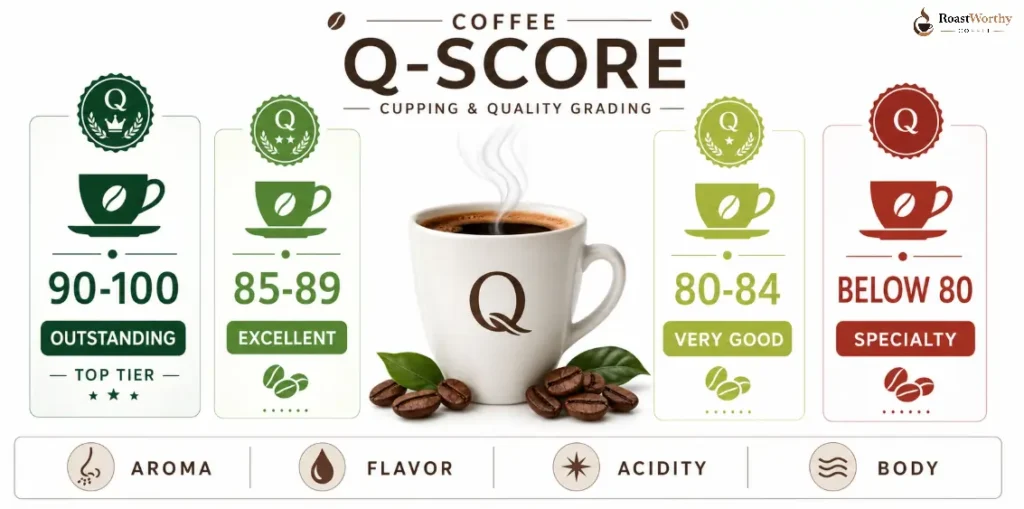
Cupping is the standardised tasting protocol used worldwide. Beans are roasted light, ground, steeped, and scored blind by trained tasters across ten attributes — aroma, flavour, aftertaste, acidity, body, balance, and more.
The result is a Q score out of 100:
| Q Score | Grade | What it means |
|---|---|---|
| 90–100 | Outstanding | Rare, auction-level lots |
| 85–89.99 | Excellent | Top specialty |
| 80–84.99 | Very good | Specialty threshold |
| Below 80 | Below specialty | Commodity coffee |
That 80-point line is the whole ballgame. It's the number that legally and commercially separates specialty from everything else.
A cupping score isn't marketing. It's a repeatable, trained judgement. When a bag lists an 87, that number was earned across a table of graders.
Freshness: The Bean's Expiry Nobody Prints Loudly
You can do everything right — altitude, varietal, processing, an 88 score — and still ruin it by buying stale.
Roasted coffee is perishable. It off-gasses CO₂ and oxidises. Flavour peaks roughly 4 to 21 days after roasting, then fades.
Look for a roast date, not a “best by” date. A best-by stamp usually means the roaster is hiding when it was actually roasted.
If there's no roast date on the bag, assume it's old.
Whole beans stay fresh far longer than pre-ground. Grind exposes surface area to oxygen, and aroma vanishes within an hour. Grind fresh, every time. This one habit outperforms most equipment upgrades.
Home roasting takes this furthest — your coffee is never more than a few days off the roaster. But even for buyers, roast date is the freshness signal that matters most.
Putting It Together: The Anatomy of a Good Bean
None of these factors works alone. Quality compounds.
Great genetics grown at low altitude underperform. High altitude with careless picking underperforms. A clean 88-point lot bought three months stale… underperforms.
A genuinely good coffee bean is:
- Grown high — 1,200m and above
- A quality varietal — Bourbon, Geisha, SL28, Heirloom
- Hand-picked ripe — red cherries only
- Cleanly processed — washed, natural, or honey, done right
- Defect-free — specialty grade, zero primary defects
- Cupped 80+ — verified on the Q scale
- Bought fresh — with a visible roast date
Miss any one, and the cup tells you.
Frequently Asked Questions
What makes a good coffee bean?
A good coffee bean is grown at high altitude, from a quality Arabica varietal, hand-picked ripe, cleanly processed, free of defects, cupped at 80+ on the SCA scale, and bought fresh with a roast date.
How can I identify quality coffee beans when buying?
Look for four things on the bag: origin and region, altitude, processing method, and a roast date. Specialty roasters print all of these. Vague “premium blend” labels with no roast date are a red flag.
Does altitude really affect coffee quality?
Yes. Higher altitude slows cherry maturation, concentrating sugars and acids in the seed. High-grown beans are denser and more complex. It's the most reliable single predictor of quality.
What is a good cupping score for coffee?
80 out of 100 is the specialty threshold on the SCA Q scale. 85+ is excellent. 90+ is rare and auction-grade. Below 80 is commodity coffee.
Are Arabica beans always better than Robusta?
Not always, but usually for flavour. Arabica offers acidity, sweetness, and complexity. Robusta brings body and caffeine but rarely finesse — though fine robusta does exist and is improving.
How long do coffee beans stay fresh?
Roasted whole beans peak between roughly 4 and 21 days after roasting, then decline over the following weeks. Ground coffee loses aroma within an hour. Buy whole, grind fresh, check the roast date.
There's a whole chain of decisions behind one good cup. Altitude. Genetics. Ripe cherries. Clean processing. A hard grading line. A roast date.
Buy the bag with the details on it. The ones that tell you where it grew and when it roasted. That's usually the bag worth drinking. ☕
More Recommendations from RoastWorthy Coffee