Coffee Around the World: How Every Country Drinks It Differently

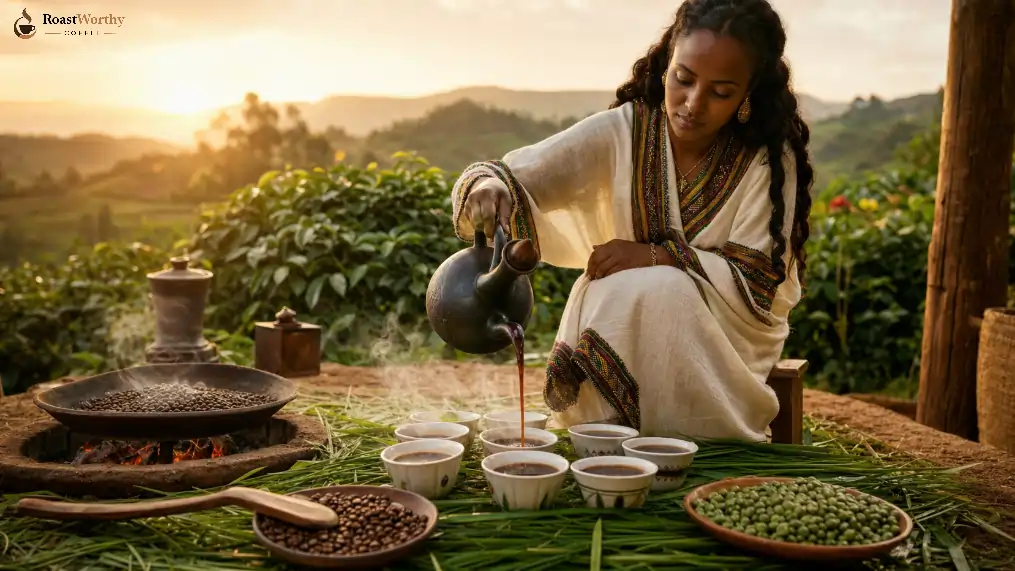
In a mud-walled house outside Addis Ababa, a woman roasts green beans over charcoal, fans the smoke toward her guests, and begins a ceremony that takes two hours. Nobody rushes her.
That's coffee. Not the 90-second drive-through version — the real thing.
Coffee around the world is never just a drink. It's ritual. Identity. Social architecture. The bean is the same species. What each country does with it says everything about who they are.
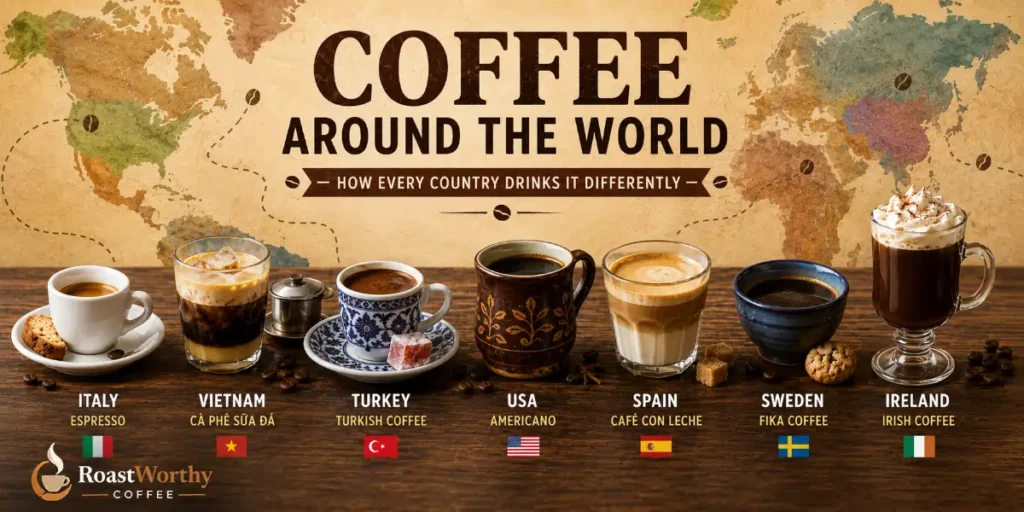
Here's the global picture — and why it matters beyond the flavour. 🌍
How Countries Drink Coffee: A Global Snapshot
| Country | Drink | Method | What Makes It Distinct |
|---|---|---|---|
| 🇪🇹 Ethiopia | Jebena Buna | Fresh-roasted, boiled | 3-round ceremony; smoke is a blessing |
| 🇮🇹 Italy | Espresso / Cappuccino | 9-bar pressure extraction | Standing at the bar; no to-go cups |
| 🇹🇷 Turkey | Türk Kahvesi | Copper cezve, unfiltered | Grounds read for fortune-telling |
| 🇸🇪 Sweden | Filter Coffee | Light roast, drip-brewed | Fika — twice-daily cultural pause |
| 🇻🇳 Vietnam | Cà Phê Sữa Đá | Phin drip, robusta | Condensed milk + ice; egg coffee variant |
| 🇬🇷 Greece | Frappé / Freddo | Shaken instant or espresso | Born from a 1957 trade fair accident |
| 🇯🇵 Japan | Pour-over / Iced | Hand-brewed, precision method | Kissaten culture; hot-brewed over ice |
| 🇨🇴 Colombia | Filter / Washed | Wet-milled arabica | Regional micro-terroirs; FNC quality infrastructure |
| 🇲🇦 Morocco | Qahwa | Spiced, light-roasted | Cardamom-forward; predates European coffee houses |
Ethiopia: Where Coffee Was Born
The origin story is real. Coffee was discovered in Ethiopia — likely in the Kaffa region — centuries before it reached Arabia or Europe.
Ethiopian coffee culture hasn't forgotten that.
The jebena buna — the traditional coffee ceremony — involves three rounds of coffee: abol, tona, and baraka. Each round gets progressively weaker. You don't leave after the first cup. Leaving early is genuinely rude.
The beans are roasted fresh in front of guests. The smoke from the roasting pan is considered a blessing. The ceremony is prayer, hospitality, and community all in one act.
Ethiopia also grows some of the world's most complex coffees — Yirgacheffe, Sidama, Guji — mostly heirloom varietals nobody has fully catalogued yet. Natural-processed Ethiopian coffee tastes like blueberries steeped in red wine. No hyperbole.
There's a whole story in this cup. ☕
Italy: Espresso Is Not a Size, It's a Philosophy
Italians do not order large coffees. They do not take their coffee to go. They do not apologise for this.
The Italian espresso ritual is standing at a bar for three minutes, paying under two euros, drinking in two sips, and leaving. Every day. Multiple times.
Caffè means espresso by default. If you want milk, you say so. A macchiato is an espresso with a drop of foam — not a 20-ounce caramel situation. A cappuccino is strictly a morning drink. Order one after noon and the barista will quietly judge you.
What Italy got right: the short extraction. 25–30 ml, 9 bars of pressure, 25–30 seconds. Everything after that is just noise.
The bar culture around Italian espresso is arguably the world's most refined coffee service model. No fuss. No menus. No theatre. Just a perfect shot, made fast, made consistently, every single time.
Turkey: Coffee as Divination
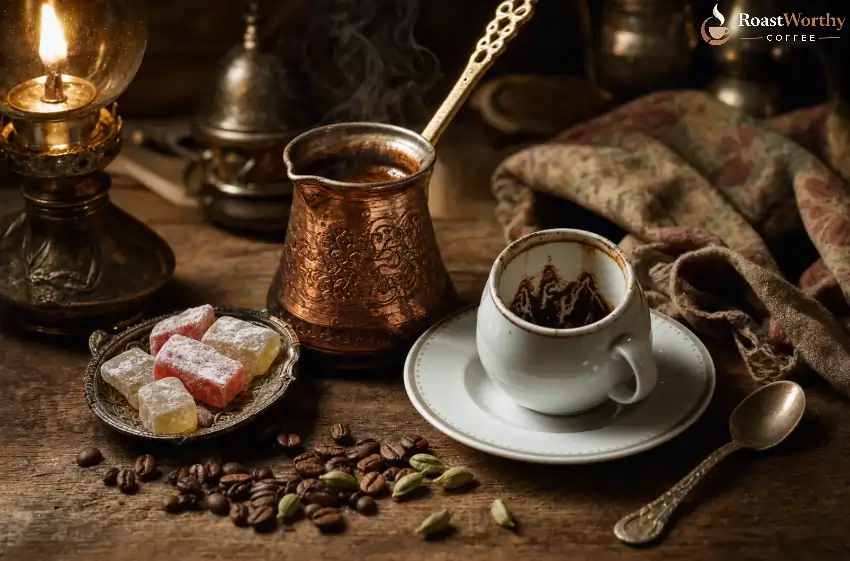
Turkish coffee (Türk kahvesi) is unfiltered, boiled in a copper cezve, and served with the grounds still in the cup.
You don't drink the grounds. You wait for them to settle.
And when you're done? You flip the cup. Let it dry. Someone reads your fortune in the patterns. This is not folklore — it's still practiced seriously across households and cafés in Istanbul, Ankara, and every Turkish grandmother's kitchen you'll ever visit.
The preparation itself is methodical. Cold water, fine-ground coffee, sometimes cardamom. Brought slowly to a foam — never a boil. Poured with the foam intact. The foam is a point of pride. A cup without foam is considered careless.
Turkish coffee was inscribed on UNESCO's Intangible Cultural Heritage list in 2013. That's how seriously Turkey takes this.
Sweden: Fika Is Not Optional
Fika isn't really about the coffee. It's about stopping.
Swedes built a word — and a national institution — around the act of taking a break with coffee and something sweet. Fika happens twice a day in most Swedish workplaces. Skipping it is, socially, a small act of aggression.
The coffee itself tends to be light-roasted, filter-brewed, and strong by volume. Sweden consistently ranks among the world's highest per-capita coffee consumers.
But the drink is almost secondary to the pause. Fika is about human connection — a 15-minute window where hierarchy flattens and people just talk. The Swedes decided this mattered enough to schedule it into the workday.
There's something the rest of the world could borrow there.
Vietnam: Ca Phe Is Its Own Category
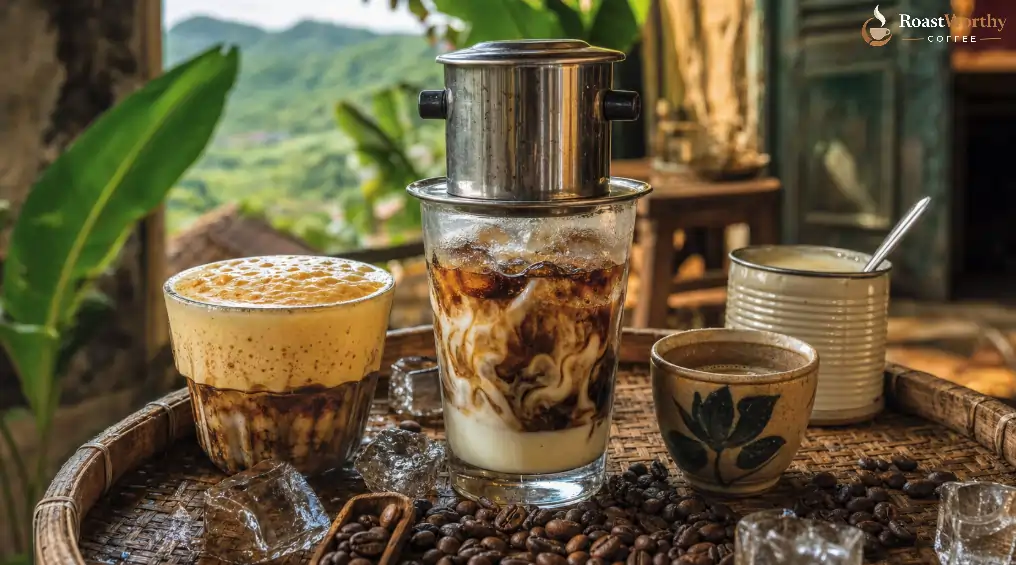
Vietnamese coffee doesn't play by anyone else's rules.
Cà phê is made with a phin — a small metal drip filter that sits on top of the glass and takes 4–5 minutes to brew. The grind is coarse. The coffee is typically robusta, which means it's higher in caffeine and lower in acidity than the arabica most specialty drinkers default to.
It drips into sweetened condensed milk. You stir. You drink it.
Cà phê trứng — egg coffee — is a Hanoi invention: egg yolk whipped with condensed milk into a thick, custard-like foam, spooned over espresso. It sounds unusual. It tastes like a coffee-flavoured tiramisu.
Iced Vietnamese coffee (cà phê sữa đá) is, genuinely, one of the best cold coffee drinks in the world. No cold brew kit required. Just patience, a phin, ice, and condensed milk.
The terroir is doing something here too — Vietnamese robusta from Đắk Lắk province has a chocolate-and-tobacco depth that arabica snobs underestimate. 🌱
Greece: The Frappé Accident That Became National Identity
In 1957, a Nescafé representative at a trade fair in Thessaloniki didn't have hot water. He mixed instant coffee with cold water in a shaker. The Greek frappé was born.
That's not mythology. That's the actual origin story.
The frappé — instant coffee, water, ice, optional milk — became the drink of Greek summers. Café culture in Greece is built on long, slow afternoons spent nursing a frappé at a marble table by the sea.
Frappé is the democratisation of café culture. It requires no equipment, no training, no expensive beans. It just requires time and company.
In recent years, the freddo espresso has overtaken the frappé in Greek cities — real espresso, shaken with ice, served cold. The ritual remains the same: sit, talk, don't rush.
Greece understood something fundamental. Coffee is permission to stay.
Japan: Precision and Ceremony Without Words
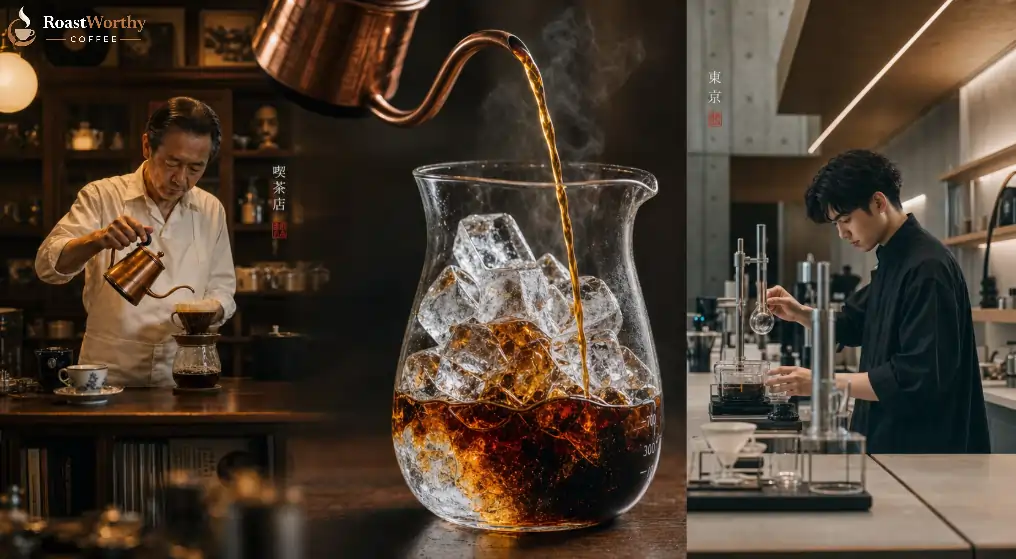
Japanese coffee culture exists in two registers. And both are worth understanding.
The first is the kissaten — the old-school Japanese coffee house. Dim lighting. Jazz records. A master brewer who has been making pour-overs for 40 years and doesn't need to talk about it. These are quiet places. Reverent, almost.
The second is the modern Tokyo third-wave scene — some of the most technically precise café work on the planet. Japanese baristas apply the same philosophy to coffee that Japanese craftspeople apply to everything: incremental perfection, documented process, no shortcuts.
Japanese-style iced coffee — hot-brewed directly over ice — is one of the cleanest and most aromatic cold coffee methods in the world. The volatile aromatics don't have time to dissipate. The result is bright, clear, and immediate.
Start with the origin, not the roaster — but in Japan, the roaster will have already studied the origin more carefully than most. ☕
Colombia: Coffee as National Mythology
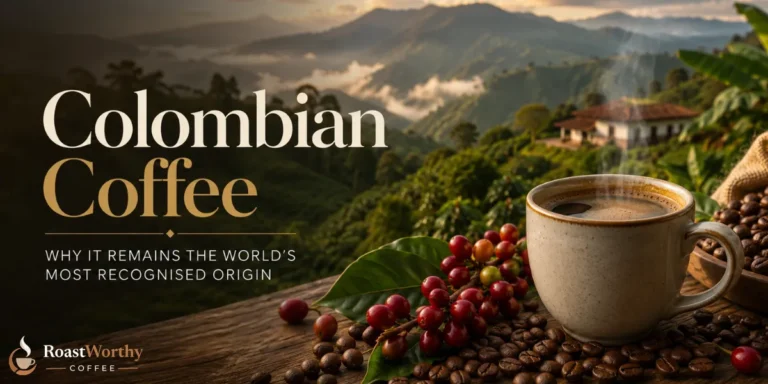
Colombia's identity and its coffee are inseparable. Juan Valdez — the fictional farmer created for a 1958 ad campaign — became one of the most recognised brand mascots on Earth.
The reality behind the myth is worth understanding.
Colombia grows coffee across dozens of distinct micro-regions: Huila, Nariño, Antioquia, Cauca. Each has meaningfully different flavour profiles. A washed Huila caturra at 1,800 metres tastes completely different from a honey-processed Nariño castillo.
What Colombia gets right is consistency at scale. The Coffee Growers Federation (FNC) has maintained quality infrastructure — wet mills, drying beds, cooperative support — for decades. That's why Colombian coffee is reliably good even when it's not extraordinary.
The people who grew this deserve credit. The smallholder farmers in these regions are running operations on steep, difficult terrain, at altitude, with unpredictable weather. The cup you're holding is the result of serious agricultural labour.
Morocco & the Middle East: Spice in the Cup
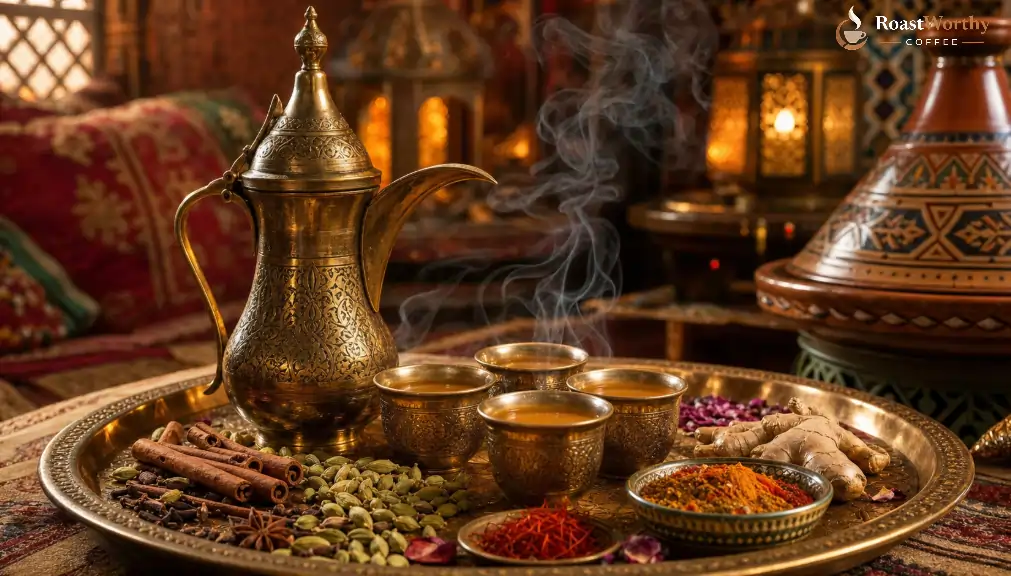
Coffee in Morocco is often blended with ras el hanout — a spice mix that can include cardamom, ginger, cinnamon, turmeric, and a dozen other things depending on the household.
Qahwa — Arabic spiced coffee — is lighter in roast, heavily cardamom-forward, and served in small handle-less cups. It's the coffee of hospitality across Saudi Arabia, the UAE, and the Gulf states.
The addition of spice isn't a modern trend. It predates the European coffee house by centuries. When coffee moved from Ethiopia to Yemen and then across the Arab world, spice was always part of the preparation.
FAQ: Coffee Around the World
Which country has the strongest coffee culture?
Ethiopia is arguably the origin of coffee culture itself — the traditional ceremony is one of the oldest and most structured coffee rituals on Earth. Italy and Turkey are close runners-up for depth of cultural integration.
What is the most unique way coffee is drunk globally?
Vietnamese egg coffee (cà phê trứng) and Turkish fortune-telling (tasseography) are two of the most distinctly unique coffee traditions. Ethiopian ceremony is the most structurally elaborate.
Which country consumes the most coffee per person?
Finland consistently ranks first globally for per-capita coffee consumption, followed closely by Norway, Iceland, and Sweden. Nordic countries drink more coffee than any other region.
What is Swedish fika?
Fika is a Swedish cultural practice of taking a scheduled coffee break — usually twice daily — with something sweet. It's embedded in workplace culture and considered a social norm rather than an option.
Why is Turkish coffee served with grounds in the cup?
Turkish coffee uses an ultra-fine grind and no filter. The grounds settle naturally at the bottom. Drinking before they settle is a beginner mistake. Flipping the cup for fortune-telling (tasseography) is a centuries-old tradition still practiced today.
Is Vietnamese coffee different from regular espresso?
Yes — significantly. Traditional Vietnamese coffee uses robusta beans (higher caffeine, lower acidity), a phin drip filter instead of pressure extraction, and is typically served over condensed milk and ice. The flavour profile and brewing method are both distinct.
What Coffee Around the World Is Actually Telling You
Every country on this list took the same raw material — a seed from a cherry on a tree — and built something culturally specific around it.
Ethiopia made it a ceremony. Italy made it an act of discipline. Sweden made it a human right. Vietnam made it dessert. Greece made it an excuse to stay. Japan made it a practice.
The way a country drinks its coffee tells you how that country thinks about time, community, and pleasure.
If you want to understand a culture quickly, skip the tourist sites. Find the café. Order what the locals order. Wait as long as they wait.
There's a whole story in this cup. Every time.
More Recommendations from RoastWorthy Coffee