What Is a Dirty Matcha? The TikTok Coffee Trend Explained

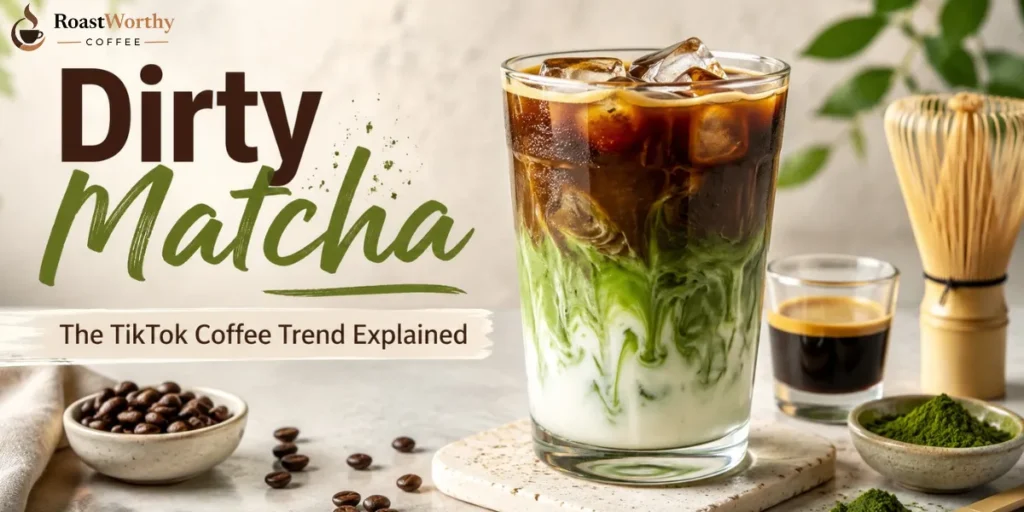
Green tea purists, look away.
Dirty matcha is what happens when a shot of espresso meets ceremonial Japanese green tea — and somehow, it works. Not just as a visual. As a drink with real flavour logic, real caffeine science, and a cultural backstory that makes it worth understanding properly.
This isn't just another TikTok coffee trend that evaporates in a week. It has legs. And once you understand what's actually going on in the glass, you'll see why.
What Dirty Matcha Actually Is
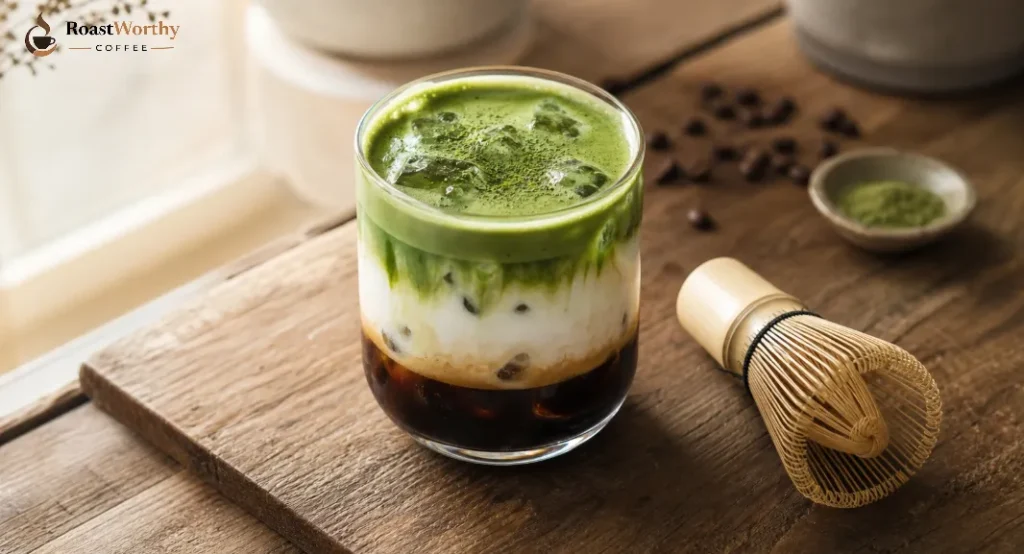
Dirty matcha is a layered espresso and matcha drink — espresso at the base, milk in the middle, and a whisked ceremonial matcha poured over the top.
The “dirty” naming follows the same logic as a dirty chai. You're taking a traditionally pure, clean drink — matcha — and running a shot of coffee through it. That's the point. The espresso “dirties” the matcha. The contrast is the whole flavour proposition.
The standard build:
The visual is three distinct layers. The flavour is earthy, bitter, creamy, and subtly sweet — all at once, without adding sugar.
Why It Blew Up on TikTok
TikTok rewards visual drama. A dirty matcha delivers it instantly — deep espresso brown at the bottom, creamy white in the middle, bright ceremonial green on top. Three clean bands of colour in one glass, visible in the first frame of a video.
Short-form content has always driven layered drink trends. The Dalgona coffee wave in 2020. The dirty latte format that followed. The cloud matcha variations. Dirty matcha is the logical next step — it combines two of the most-searched drink categories on TikTok (#matcha and #espresso) into a single, photogenic build.
But unlike a lot of TikTok food trends that collapse the moment someone actually makes them, this one holds up. The flavour works. The caffeine effect is genuinely different. And the recipe is simple enough to replicate at home with basic equipment.
That combination — visual payoff plus functional appeal plus easy execution — is what keeps a trend alive past the initial spike.
The Science Behind the Flavour
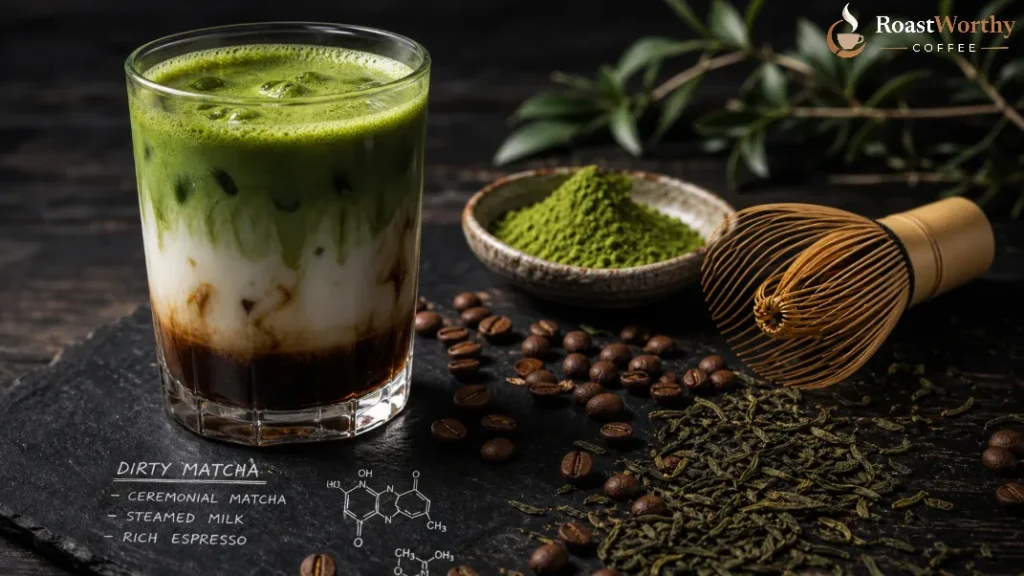
Here's what the heat and the chemistry are actually doing.
Shade-grown Japanese matcha leaves are high in L-theanine — an amino acid that produces calm, focused alertness rather than the sharp spike-and-crash cycle of coffee alone.
Espresso brings a fast, high-intensity caffeine hit. Together, the two caffeine sources layer rather than stack — most people describe the combined effect as “cleaner energy” that lasts longer without the jitters.
The flavour science is just as interesting. Ceremonial matcha has a deep umami character — grassy, slightly savoury, with natural sweetness. A well-pulled espresso brings bitterness and acidity. The milk bridges them. When the ratios are right, none of the three elements dominates. The drink is balanced.
Use a naturally processed, lower-acid espresso — something Guatemalan or Colombian, chocolatey and nutty — and the whole thing softens into something elegant. Use a bright, high-acid Ethiopian espresso and the contrast sharpens considerably. Both versions work. They're different drinks.
The terroir is doing something here. So is the roast level. Neither is decorative.
Ceremonial vs Culinary Matcha: Why It Matters
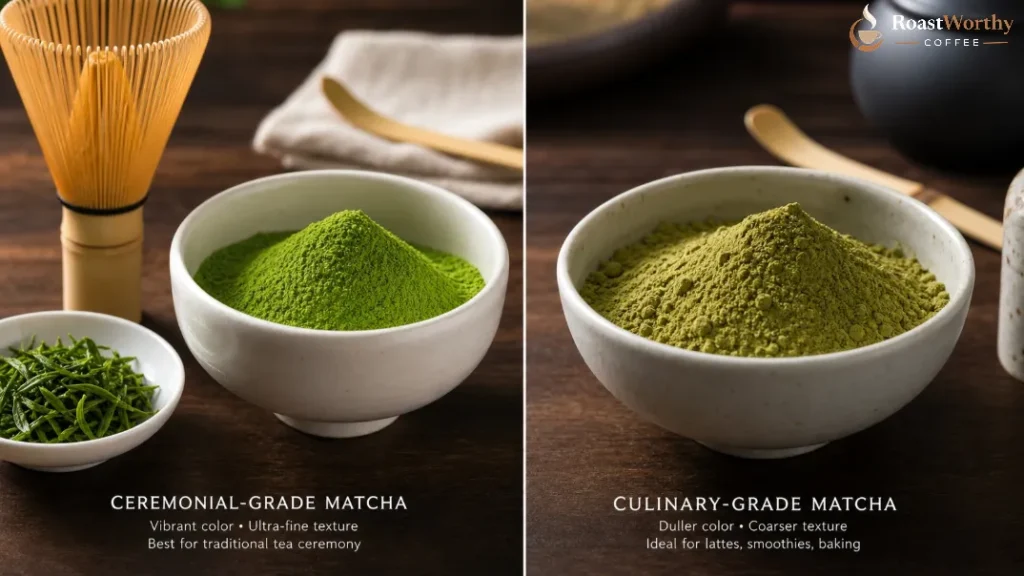
This is the decision most TikTok dirty matcha recipes gloss over. It shouldn't be.
Ceremonial-grade matcha is made from the youngest tea leaves, picked in early spring, stone-ground into a fine powder. It has natural sweetness, vivid green colour, and a clean umami finish. Against espresso, it holds its own — the flavours coexist rather than clash.
Culinary-grade matcha is made from older, coarser leaves and ground more aggressively. It's fine for smoothies and baked goods. In a dirty matcha, its inherent bitterness compounds with the espresso's bitterness. The drink tips harsh and astringent. It's not a good combination.
Look for matcha from Uji or Nishio, Japan — these are the two most respected growing regions for ceremonial-grade powder. Ippodo, Encha, and Matchabar all produce reliable ceremonial grades that perform well in this build. The price difference is real. So is the flavour difference.
The Classic Dirty Matcha Recipe
This is the version that works. Every number is specific.
Ingredients
Method
- Whisk the matcha first. Add matcha to a bowl or small jug. Pour 60ml of water at 70–75°C. Whisk in a fast W or M motion for 30–45 seconds until frothy, no clumps. Set aside.
- Pull your espresso. A medium roast works best here. Guatemalan or Colombian single-origin is the call. Avoid anything overly acidic or fruity for your first attempt.
- Build the glass. Fill a tall glass with ice. Pour the espresso directly over the ice — this creates the base layer.
- Float the milk. Pour cold oat milk slowly over the back of a spoon to layer it cleanly above the espresso.
- Pour the matcha last. Slowly pour the whisked matcha over the milk layer. It will sit on top, completing the three-layer visual.
- Serve immediately. The layers merge slowly as you drink — or stir it together if you prefer the blended version.
For a hot dirty matcha: steam the milk, pour espresso first, add milk, then gently pour hot whisked matcha over the top. Less photogenic. Arguably more interesting to drink.
Dirty Matcha vs Matcha Latte vs Dirty Chai
People search these comparisons constantly. Here's the actual difference:
| Drink | Base | Espresso | Caffeine (approx.) | Flavour Profile |
|---|---|---|---|---|
| Matcha Latte | Matcha + milk | No | 60–70mg | Earthy, creamy, grassy |
| Dirty Matcha | Matcha + espresso + milk | Yes | 120–150mg | Earthy, bitter, creamy |
| Dirty Chai | Chai tea + espresso | Yes | 95–135mg | Spiced, bold, bitter |
| Espresso Latte | Espresso + milk | Yes | 60–80mg | Bold, creamy, bitter |
The dirty matcha sits at the highest functional complexity — two distinct caffeine sources, two distinct flavour traditions, one glass. That's what separates it from a standard matcha latte with an espresso shot added as an afterthought.
Variations Worth Making
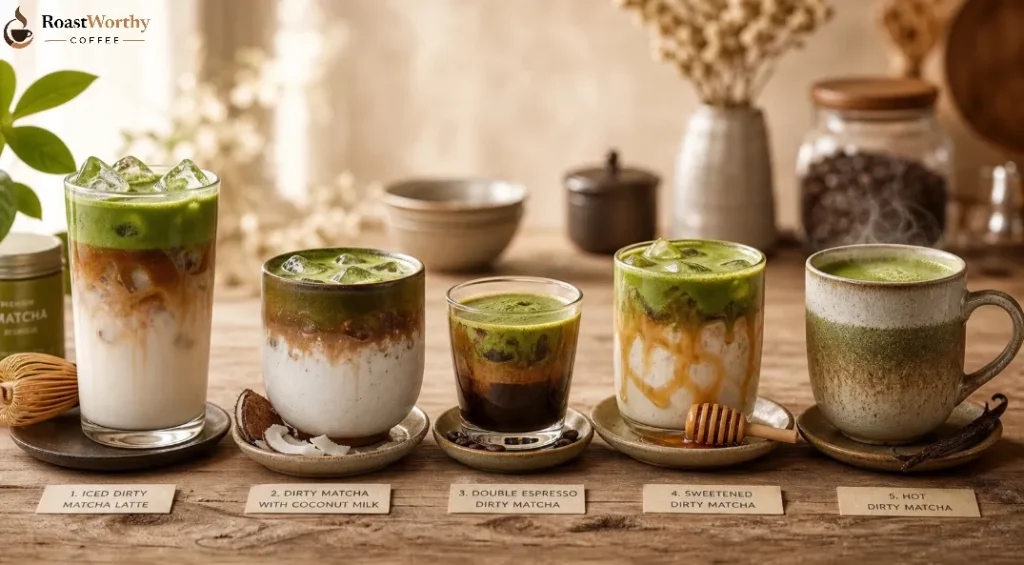
The base recipe opens into several useful directions:
Iced Dirty Matcha Latte — The TikTok default. Iced oat milk, espresso base, matcha top. Clean, photogenic, and easy to replicate at home.
Dirty Matcha with Coconut Milk — Coconut milk adds tropical sweetness that smooths out matcha's astringency. Works well if your matcha is slightly older or lower quality than ideal.
Double Espresso Dirty Matcha — Two shots instead of one. The drink tips toward coffee — matcha becomes a background note. High caffeine. Different flavour balance. Still good.
Sweetened Dirty Matcha — Half a teaspoon of honey or one pump of vanilla syrup whisked into the matcha before building. This is the commercial café version. It sells for a reason.
Hot Dirty Matcha — Heat opens up matcha's aroma significantly. The espresso's sharpness rounds off. Less visual drama, more flavour depth. Worth trying at least once.
Is Dirty Matcha Actually Good for You?
Let's be direct about this.
Matcha is one of the highest-antioxidant beverages documented in nutritional research — specifically high in EGCG (epigallocatechin gallate), which has a solid research base around anti-inflammatory and metabolic effects. Espresso carries its own antioxidant load. Both ingredients, separately, have real functional value beyond the caffeine.
A dirty matcha built with oat milk and no added syrup contains roughly 80–120 calories and delivers meaningful antioxidant coverage alongside a smoother, longer caffeine arc than either drink alone.
The health story breaks down when you add three pumps of vanilla syrup, oat milk foam, and a caramel drizzle. The base drink is sound. What goes on top of it is a separate decision.
Where to Order It
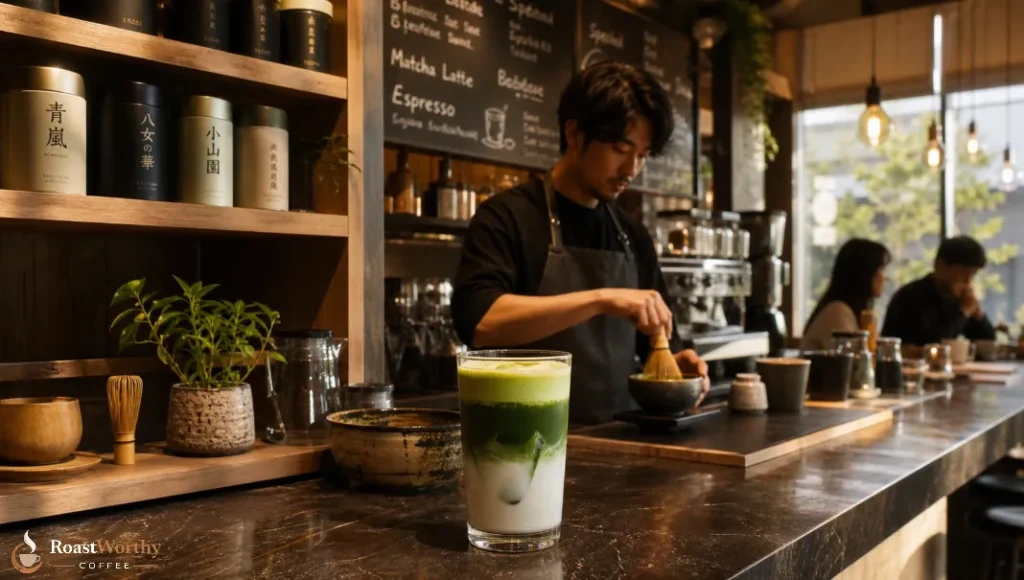
Most specialty cafés in metro areas carry dirty matcha by name now or can build it on request. Ask for a “matcha latte with a layered espresso shot underneath” at any independent café that takes both coffee and matcha seriously.
Starbucks doesn't have it as a standard menu item, but you can customise a matcha latte with an espresso shot — ask for the shot poured in first if you want the layered effect. It won't be ceremonial grade matcha. But it'll get you to the flavour.
The best versions are at cafés that treat matcha as seriously as their espresso. That intersection — specialty coffee meet points in Japan-influenced tea culture — is small but growing. Worth seeking out.
There's a whole story in this cup. Two traditions, two entirely different flavour philosophies, coexisting in the same glass. That's rare. And it's worth finding a place that handles both properly. ☕
Frequently Asked Questions
What is a dirty matcha?
A dirty matcha is a layered drink made with ceremonial-grade matcha, espresso, and milk. The espresso is poured at the base, milk in the middle, and whisked matcha on top. The result is a three-layer drink with earthy, bitter, and creamy flavour notes.
What does dirty matcha taste like?
Earthy and grassy from the matcha, bitter and slightly acidic from the espresso, and creamy from the milk. When the ratios are balanced, none of the three dominates. It's complex without being confusing.
How much caffeine is in a dirty matcha?
Roughly 120–150mg per serving — approximately 60–80mg from the espresso shot and 30–70mg from one teaspoon of ceremonial matcha. The L-theanine in matcha modulates the caffeine effect, producing a smoother, longer-lasting alertness than coffee alone.
Can I make dirty matcha without an espresso machine?
Yes. A strongly brewed moka pot or a concentrated cold brew works as a substitute. You need something dark, concentrated, and bold enough to hold up against the matcha. A standard drip coffee won't cut it — it's too dilute.
What's the difference between a dirty matcha and a matcha latte?
A matcha latte is whisked matcha and milk — no coffee. A dirty matcha adds an espresso shot, which raises the caffeine content, changes the flavour profile, and creates the layered visual effect. They're different drinks that happen to share a base ingredient.
Why is it called dirty matcha?
The same reason as dirty chai. You're taking a traditionally clean, single-ingredient drink — matcha — and running espresso through it. The “dirty” is descriptive, not a quality judgement. It refers to the adulteration of a pure drink with coffee.
Is dirty matcha a Starbucks drink?
Not officially. Starbucks doesn't carry it as a standard menu item, but you can order a matcha latte with an espresso shot added as a customisation. For the full layered effect with ceremonial-grade matcha, an independent specialty café is the better option.
The Bottom Line
Dirty matcha isn't a gimmick that aged badly. It's a genuinely well-constructed drink — one that borrows from two serious beverage traditions and lands somewhere neither could reach alone.
Make it once at home with the right matcha and a decent espresso. You'll understand immediately why it stuck.
The TikTok trend brought people to the glass. The flavour is what keeps them coming back.
Taste it. Write nothing down. Just make it again. ☕
More Recommendations from RoastWorthy Coffee