7 Best Fall Coffee Drinks to Make at Home This Autumn


The best fall coffee drinks don't come from a drive-through. They come from your kitchen, 48 hours off your roaster, with spices you actually control.
I've been making seasonal coffee at home since before pumpkin spice became a personality trait. Here's what I've learned: most café autumn coffee drinks are sugar with coffee as an afterthought. You can do better. Easier than you think. 🔥
TL;DR: What You're Making
Why Fall Coffee Drinks Hit Different at Home
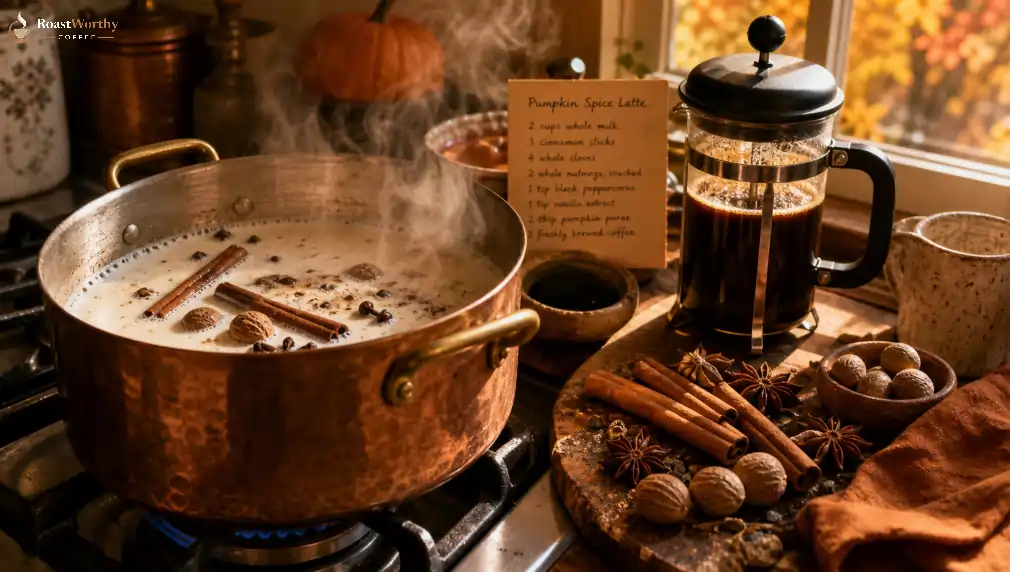
Coffee shops lean hard on autumn. Pumpkin spice everything. Apple-flavored everything. The markup on a seasonal latte is roughly 400% over ingredient cost. I did the math.
Your first roast will be imperfect. Make it anyway. Same goes for your first pumpkin spice latte. The commercial version uses synthetic flavoring — usually a pre-made pump syrup that's more sugar than spice. Your version uses real ingredients. That's the difference.
The science is simple: fat-soluble compounds in spices like cinnamon, nutmeg, and clove extract differently in milk than in water. Heat the milk with the spices, and you pull those flavors out properly. Dump syrup into cold milk, and you get sweetness without depth.
Here's what the heat is actually doing: when you simmer cinnamon in milk at around 70°C\text{70°C}70°C (160°F\text{160°F}160°F), the volatile oils release into the fat. That's why stovetop preparation beats adding cold syrup to hot coffee every time. ⚗️
Fall Coffee Drinks at a Glance
| Drink | Difficulty | Time | Key Flavor | Best Bean |
|---|---|---|---|---|
| Pumpkin Spice Latte | Medium | 8 min | Pumpkin, spice | Brazilian medium |
| Maple Pecan Latte | Easy | 5 min | Maple, nutty | Guatemala Antigua |
| Apple Cinnamon Coffee | Easy | 8 min | Apple, cinnamon | Colombian medium |
| Spiced Cold Brew | Easy (slow) | 18 hrs | Spice, berry | Ethiopian natural |
| Cinnamon Dolce Latte | Easy | 5 min | Cinnamon, sweet | Brazilian med-dark |
| Salted Caramel Mocha | Medium | 7 min | Chocolate, caramel | Sumatran dark |
| Brown Sugar Oat Latte | Easy | 5 min | Brown sugar, oat | Costa Rican medium |
1. Pumpkin Spice Latte (The Real One)
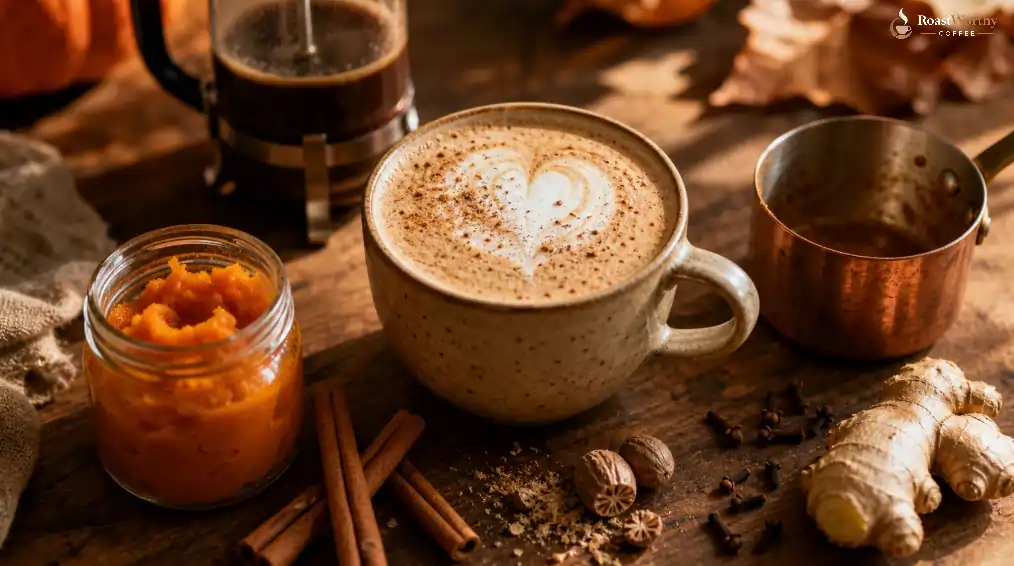
This is the one everyone asks for. Most versions taste like pie filling mixed with coffee. This one doesn't.
What you need:
The method:
Combine pumpkin puree, spice blend, sugar, and 2 tbsp water in a small saucepan. Heat on medium-low for 2 minutes. Stir constantly. You're not cooking the pumpkin — you're warming the spices to release their oils.
Add milk and heat to 65°C\text{65°C}65°C (150°F\text{150°F}150°F). Use a thermometer the first time. After that, you'll know by feel — steam rising, tiny bubbles at the edges, no simmer.
Froth the milk mixture. A French press works — pump the plunger 15–20 times. Strain through a fine mesh if you want a smoother texture. Pour over espresso.
My take: Use a Brazilian or Colombian medium roast. Something with chocolate and nutty undertones. The pumpkin adds sweetness, and you need a coffee that stands up to it without going bitter. A light Ethiopian will get lost here. ☕
👉 Ratio matters: Coffee to milk should be 1:3 for balance. More coffee and the pumpkin fights it. More milk and it's dessert.
2. Maple Pecan Latte
This is the autumn coffee drink for people who claim to hate pumpkin spice. Maple does the heavy lifting. Pecan adds depth.
What you need:
The method:
Heat milk to 65°C\text{65°C}65°C (150°F\text{150°F}150°F). Add maple syrup and salt directly to the warm milk. If using chopped pecans, steep them in the milk for 3 minutes before straining.
Froth. Pour over espresso. Top with a few toasted pecan pieces if you're feeling it.
My take: Darker maple = more flavor. Grade A Golden tastes delicate. Grade A Dark Robust tastes like actual maple. The difference is night and day. I tested both side by side with the same coffee. Dark Robust won by a mile.
👉 Best bean pairing: A Guatemala Antigua or a Mexican Chiapas. Both have natural caramel and spice notes that complement maple without competing. Avoid bright, acidic Africans here.
3. Apple Cinnamon Coffee
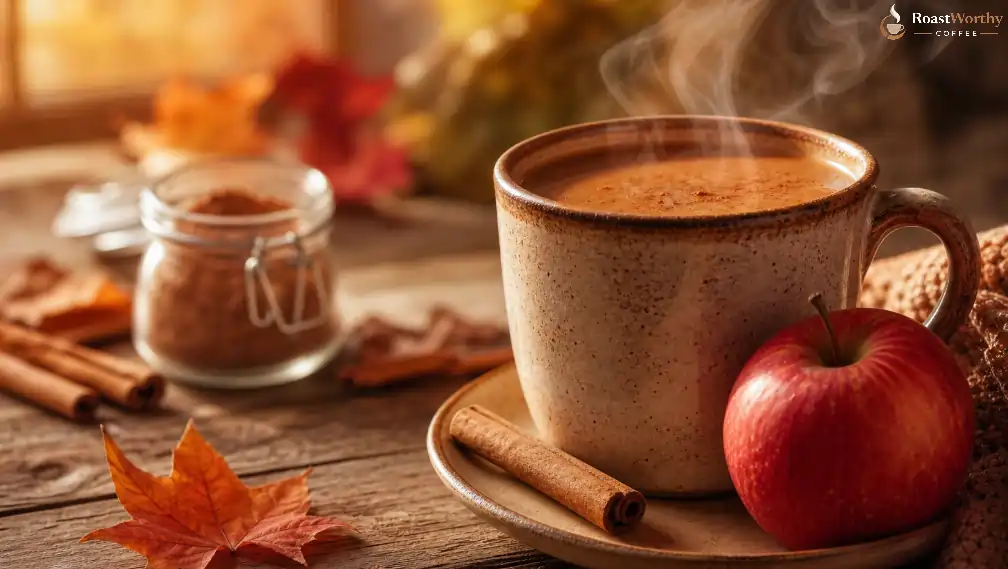
This one surprises people. Apple and coffee shouldn't work together. But brewed correctly, it does.
What you need:
The method:
Simmer apple cider with the cinnamon stick for 5 minutes on low heat. You want it steaming, not boiling. Boiling kills the apple flavor.
Brew your coffee slightly stronger than usual. Pour into a mug. Add the warm spiced cider. Sweeten to taste.
My take: This is the most underrated of the fall coffee drinks. The apple adds acidity that coffee actually needs in autumn — especially if you're using a darker roast. The cinnamon bridges them. ⚗️
👉 Bean pairing: A medium-roast Colombian works perfectly. The apple cider brings brightness, and Colombian coffee has enough body to carry it. A Sumatran would be too earthy. A Kenyan would be too much acid on acid.
4. Spiced Cold Brew
Not everyone wants hot coffee in October. Some of us live in places where it's still 30°C\text{30°C}30°C in “fall.” This one's for you.
What you need:
The method:
Combine coffee grounds, spices, and water in a large jar or French press. Steep 16–18 hours at room temperature. Strain through a fine mesh filter or cheesecloth.
Serve over ice. Dilute 1:1 with milk or water. Add brown sugar to taste if you want sweetness.
My take: The spices extract slowly in cold water. Different flavor profile than hot steeping — less bitter, more aromatic. The star anise adds a subtle licorice note that rounds everything out. Most people won't identify it. They'll just say “this tastes like fall.”
DTR is the number that matters — and for cold brew, steep time is your DTR. Under 16 hours and it's weak. Over 20 hours and it gets woody. 16–18 is the sweet spot.
👉 Bean pairing: A natural-process Ethiopian. The berry notes play beautifully with the spices. A washed coffee works too, but you lose some of the ferment-driven complexity that makes this drink interesting. ☕
5. Cinnamon Dolce Latte
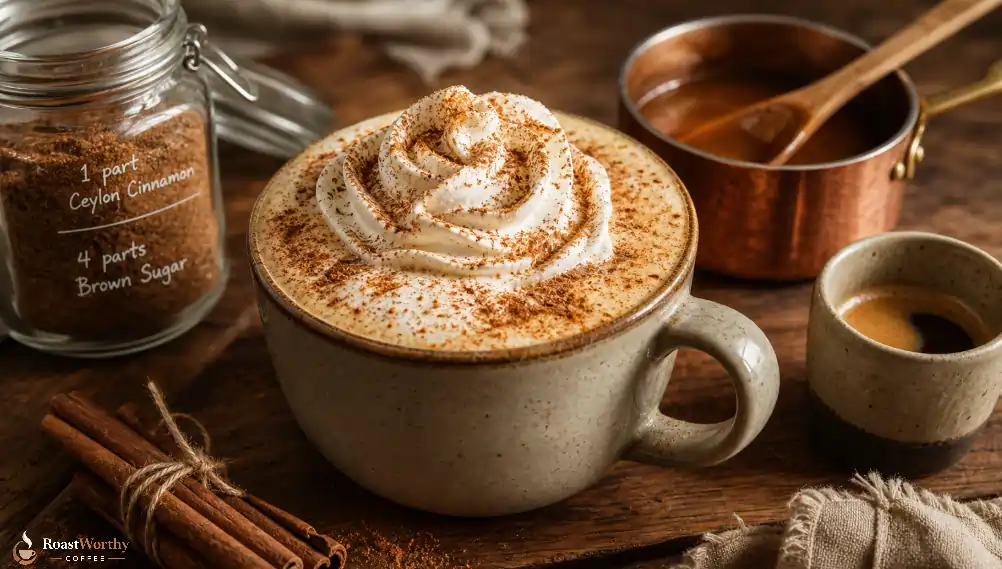
This is what Starbucks wishes their version tasted like. Real cinnamon. Real sweetness. Actual depth.
What you need:
The method:
Make a quick syrup: combine cinnamon sugar with 2 tbsp water. Heat until sugar dissolves. About 90 seconds on low.
Steam milk to 65°C\text{65°C}65°C (150°F\text{150°F}150°F). Froth. Combine syrup with espresso in a mug. Pour frothed milk over. Top with whipped cream and a dusting of cinnamon.
My take: The trick is the cinnamon-to-sugar ratio. Too much cinnamon and it's bitter. Too little and it's just a sweet latte. 1:4 is right. I tested 1:2 (too intense), 1:3 (close but sharp), and 1:4 (balanced). Trust the numbers.
👉 Bean pairing: A medium-dark Brazilian. Caramel and chocolate notes amplify the cinnamon sugar. Don't use a light roast here — it clashes with the sweetness and creates an astringent finish.
6. Salted Caramel Mocha
This is the richest of the fall coffee drinks on this list. Borderline dessert. No apologies.
What you need:
The method:
Whisk cocoa powder with 1 tbsp hot water to make a paste. This prevents lumps. Add caramel sauce and stir until smooth.
Steam milk to 65°C\text{65°C}65°C (150°F\text{150°F}150°F). Froth. Pour espresso over the chocolate-caramel mixture. Add frothed milk. Top with a pinch of sea salt.
My take: The salt is not optional. I mean, it is technically. But without it, this is just a sweet mocha. The salt makes the caramel pop. It transforms the drink. Use flaky salt, not table salt. The texture matters.
👉 Bean pairing: A dark roast. Specifically, a Sumatran or a French roast. You need bitterness to cut through the sugar and chocolate. A light roast gets buried here. ☕
7. Brown Sugar Oat Milk Latte
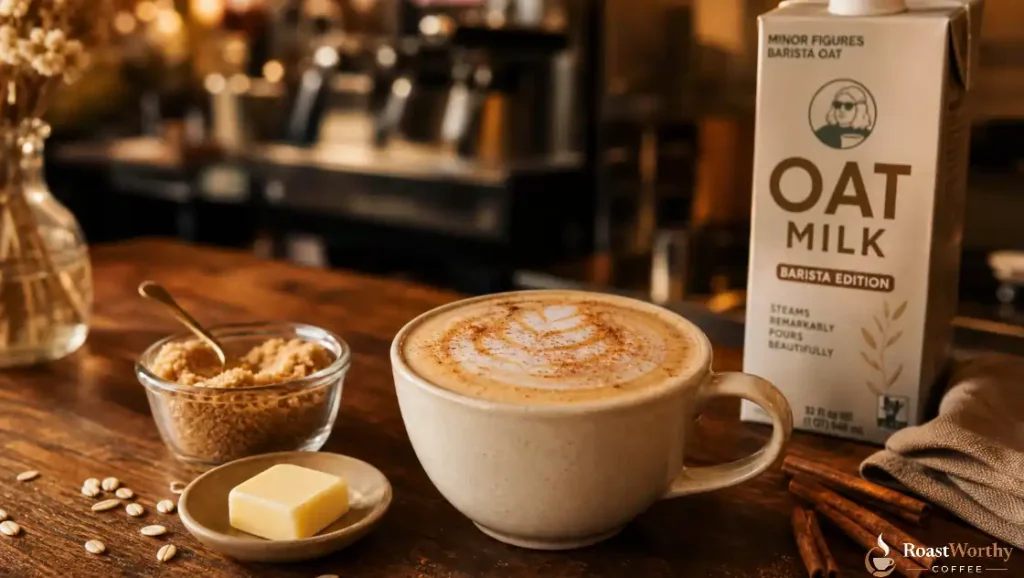
The newest addition to my fall rotation. Oat milk changed this category entirely. It's naturally sweet and pairs with brown sugar better than dairy.
What you need:
The method:
Melt brown sugar with 1 tbsp water on low heat. If using butter, add it now. Stir until you have a thin syrup. About 2 minutes.
Steam oat milk to 60°C\text{60°C}60°C (140°F\text{140°F}140°F) — slightly lower than dairy. Oat milk scorches easier. Froth. Combine syrup with espresso. Pour milk over. Dust with cinnamon.
My take: Oat milk's natural sweetness means you need less sugar. I cut the brown sugar from 3 tbsp to 2 tbsp after tasting it side by side. The oat milk adds a cereal-like sweetness that brown sugar amplifies. This is the drink I make most often during autumn.
👉 Bean pairing: A medium roast from Costa Rica or Honduras. These origins have a brown sugar quality already. The drink amplifies what's already in the bean. That's the goal with seasonal coffee — synergy, not masking.
Pro Tips for Better Fall Coffee at Home
Grind fresh. Pre-ground coffee loses volatile aromatics within 30 minutes. For fall drinks where spices dominate, you need the coffee to hold its own. A medium grind for pour-over. Coarse for cold brew. Fine for espresso.
Heat your milk correctly. 65°C\text{65°C}65°C (150°F\text{150°F}150°F) for dairy. 60°C\text{60°C}60°C (140°F\text{140°F}140°F) for oat milk. Higher than that and the proteins denature — you get cooked milk flavor instead of sweetness. Use a thermometer until you can eyeball it.
Use whole spices when possible. Ground cinnamon works, but a cinnamon stick steeped in warm milk gives a rounder, less aggressive flavor. Same for cloves and star anise. The curve doesn't lie — fresh spices extract more evenly. ⚗️
Don't skip the salt. Every drink on this list benefits from a tiny pinch of salt. Salt suppresses bitterness and amplifies sweetness. It's not a trick. It's chemistry.
Make your spice blend. Store-bought pumpkin spice is fine. But mixing your own takes 30 seconds and tastes noticeably better: 2 parts cinnamon, 1 part nutmeg, 1 part ginger, 1/2 part clove.
Best Beans for Seasonal Coffee Drinks
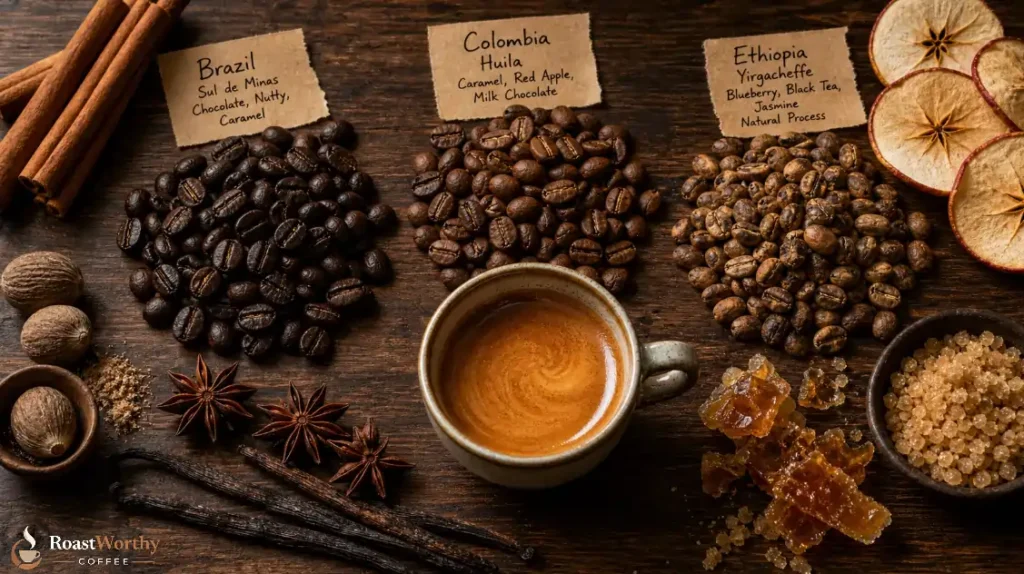
The coffee matters more than the spices. Here's what to look for:
For home roasters: aim for a DTR of 20–22% on your fall beans. This gives enough development to round off sharp acids while preserving the origin character. A slightly longer development than your summer roasts. ☕
If you want to go deeper on pairing beans to specific brew methods, check out our [pour-over ratios by roast level guide] and our [home roasting starter guide]. For cold brew specifically, our [best coffee beans for cold brew breakdown] covers origin selection in more detail.
FAQ: Fall Coffee Drinks
What is the most popular fall coffee drink?
The pumpkin spice latte is the most popular fall coffee drink by a wide margin. It accounts for roughly 90% of seasonal coffee sales at major chains between September and November. The homemade version tastes noticeably better because you control the spice ratio and sweetness level.
Can I make fall coffee drinks without an espresso machine?
Yes. Every recipe on this list works with strong brewed coffee instead of espresso. Use a 1:15 coffee-to-water ratio in a French press or pour-over. Aim for a concentrated brew — less water than your normal cup. The drink will be slightly less intense but still excellent.
What's the best milk for autumn coffee drinks?
Whole dairy milk works best for most recipes because its fat content carries spice flavors well. Oat milk is the best non-dairy alternative — its natural sweetness pairs particularly well with brown sugar and maple. Avoid skim milk; it lacks the fat needed to extract spice oils.
How do I make pumpkin spice syrup at home?
Combine 1/2 cup water, 1/2 cup sugar, 2 tbsp pumpkin puree, 1 tsp cinnamon, 1/2 tsp nutmeg, 1/4 tsp ginger, and 1/4 tsp clove in a saucepan. Simmer for 10 minutes. Strain through fine mesh. Store in the fridge for up to one week.
What coffee beans are best for seasonal coffee drinks?
Medium-roast Brazilian, Colombian, and Guatemalan beans work best for warm fall drinks. They have natural chocolate, caramel, and nutty notes that complement seasonal spices. For cold brew, use natural-process Ethiopian beans — their berry notes pair well with cold-extracted spices.
How long does homemade pumpkin spice latte last?
The pumpkin spice mixture lasts up to 5 days refrigerated. Assembled lattes should be drunk immediately — the pumpkin puree separates from milk over time. For meal prep, make the spice base ahead and assemble with fresh espresso and steamed milk when ready to serve.
The Bottom Line
Making fall coffee drinks at home isn't about saving money. Though you will — each drink costs about $0.80 compared to $5–7 at a café.
It's about control. You choose the beans. You choose the spices. You choose the sweetness level. You choose the milk. The result is a drink that tastes like what autumn coffee should taste like — not what a marketing department decided it should be.
Taste it. Write it down. Make it again. ☕
More Recommendations from RoastWorthy Coffee