Fabula Coffee Review 2026: Is Low-Acid Organic Worth It?

Fabula Coffee is built for people who love coffee but hate the stomach burn that comes after it. That is the honeCTst hook. This Fabula Coffee Review looks at whether its organic, low-acid, single-origin coffee actually earns the premium price—or just wears clean-coffee branding well.
After tasting the line, Fabula is not the most dramatic specialty coffee I have had. It is not a wild Ethiopian natural or a razor-bright Kenyan. But it is smooth, clean, low-acid, and genuinely easy to drink every day. For acid reflux, sensitive stomachs, and mould-concerned buyers, that matters.
Quick Verdict
| Review Factor | Rating |
|---|---|
| Taste | 8.1/10 |
| Low-acid performance | 8.8/10 |
| Smoothness | 9/10 |
| Freshness | 8.3/10 |
| Sourcing transparency | 8/10 |
| Format options | 9/10 |
| Value for money | 7.4/10 |
| Overall score | 8.3/10 |
✅ Best for: acid reflux, sensitive stomachs, mold concerns, organic coffee buyers, decaf drinkers, and people who want a gentle daily cup.
❌ Not best for: bargain hunters, high-acidity specialty coffee fans, and anyone who wants dramatic fruit-forward flavor.
Affiliate note: Roastworthy may earn a commission if you buy through our link. The score stays honest either way.
What Is Fabula Coffee?
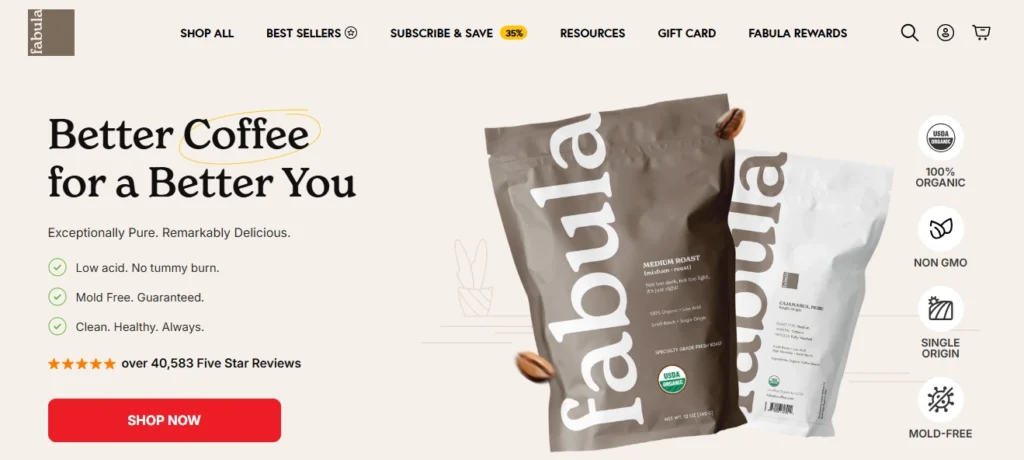
Fabula Coffee is a premium organic coffee brand focused on low-acid, single-origin coffee. Its core selling points are USDA Organic certification, Non-GMO coffee, low acidity, mold-conscious testing, and roast-to-order freshness.
The brand sources coffee from origins including Peru, Mexico, and Colombia. These are sensible choices for this style. You are not getting wild, screaming acidity here. You are getting softer profiles: chocolate, nuts, caramelized sugar, and rounded sweetness.
That fits the mission.
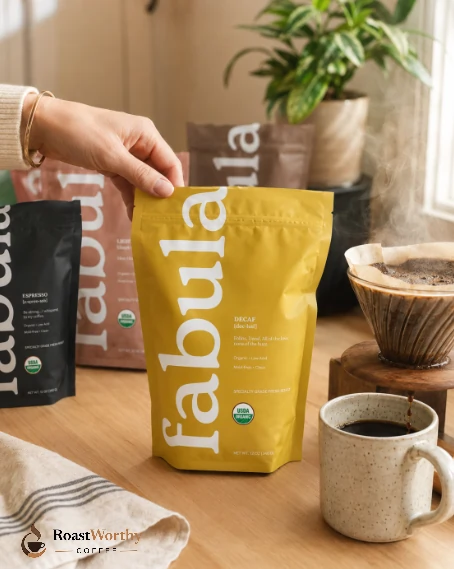
Fabula sells whole bean, ground coffee, compostable K-Cups, Swiss Water decaf, cold brew, and even coffee creamers. That range matters because most low-acid brands force you into one narrow format. Fabula does not.
The bigger point: there is no forced subscription policy. You can buy once, test the coffee, and leave if it is not for you. I like that. Coffee brands that trap the checkout behind subscription defaults deserve side-eye.
Taste Test: What Does Fabula Coffee Taste Like?
Fabula’s flavor sits in the soft, sweet, low-acid lane. The main cup character is caramelized sugar, toasted nuts, milk chocolate, and light cocoa. The finish is clean, with very little sourness or bitterness.
The medium roast is the best expression of the brand. It has enough roast development to round the edges, but it does not taste burnt. You get a warm chocolate base, some nutty depth, and a caramel sweetness that works well in drip coffee.
The darker roasts suit milk drinkers better. They pull more cocoa and roasted almond, with a deeper finish. Not a smoky mess. Just heavier.
The lighter options are still gentle. Do not expect a citrusy, floral, high-acid cup. Fabula’s light roast gives more lift, but the brand’s low-acid identity still controls the profile.
☕ The flavor does not lie: Fabula is built for smoothness, not fireworks.
Origin Notes: Peru, Mexico, and Colombia
Fabula’s sourcing from Peru, Mexico, and Colombia makes sense for a low-acid organic coffee line. These origins can produce soft, sweet, balanced coffees when handled well.
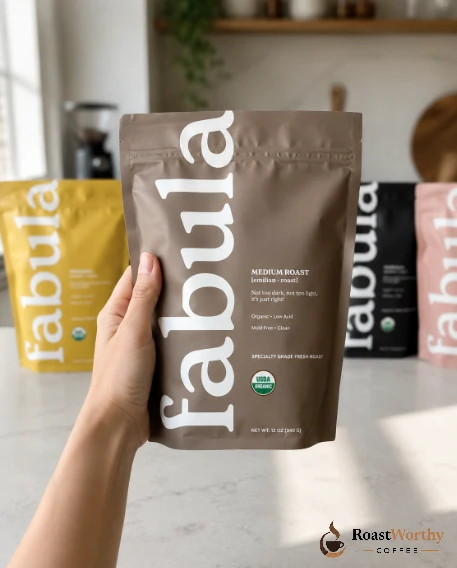
Peruvian coffee often brings cocoa, brown sugar, and toasted grain sweetness. In Fabula’s style, that translates into a calm cup with a rounded finish.
Mexican coffee can bring nuttiness, light chocolate, and mild spice. It is rarely aggressive, which makes it useful for low-acid blends and single-origin comfort cups.
Colombian coffee is the most familiar of the three. At its best, it gives caramel, chocolate, and gentle fruit. Fabula seems to lean into the caramel-chocolate side rather than the bright fruit side.
Start with the origin, not the marketing. Here, the origins support the promise.
Low-Acid Performance
This is where Fabula earns its audience. The coffee tastes noticeably lower in acidity than bright specialty roasts and many supermarket blends.
It does not have that sharp lemony snap. It does not hit the back of the throat with sourness. The cup stays soft from first sip to finish, which is exactly what acid-sensitive drinkers are looking for.
For people with acid reflux, GERD symptoms, or sensitive stomachs, that matters. Coffee is still coffee, so no brand can promise it will work for everyone. Caffeine itself can be a trigger for some people.
But as low-acid coffee goes, Fabula is one of the more convincing options because it does not taste hollow. Some low-acid coffees lose character. Fabula keeps enough sweetness and body to feel like proper coffee.
Organic, Non-GMO, and 350+ Contaminant Testing
Fabula’s clean-coffee pitch is not subtle. The brand highlights USDA Organic certification, Non-GMO standards, and lab testing for more than 350 contaminants.
That testing angle is a major part of the value proposition. It speaks to buyers worried about mold, mycotoxins, pesticide residues, heavy metals, and general coffee contamination.
Let’s be honest. Some brands overplay this category with fear-based marketing. Coffee can have quality problems when farming, drying, storage, or shipping are poor. But good green coffee buyers already care deeply about clean lots.
Still, Fabula’s testing claim gives nervous buyers a clearer reason to trust the product. For people with mold concerns or chemical sensitivity worries, that extra layer is meaningful.
The better way to frame it is this: Fabula is not the only clean coffee, but it makes the clean-coffee promise easy to understand.
Roast-To-Order Freshness
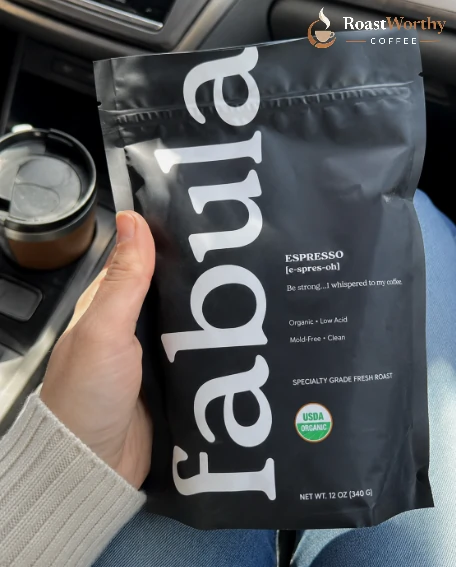
Fabula promotes roast-to-order freshness, which is the right approach for premium coffee. Coffee is at its best after roasting gases settle, usually between 4 and 21 days post-roast depending on brew method and roast level.
Freshness matters more than most people think. Stale coffee loses aroma first, then sweetness, then body. What remains is flat bitterness.
Fabula’s roast-to-order model helps protect the cup from that grocery-shelf problem. I would still like to see very clear roast-date visibility on every bag, because serious coffee buyers look for that first.
A “best by” date is not enough. Roast date tells the truth.
Still, this is a better freshness model than mass-market coffee that may sit in warehouses for months.
Formats: Whole Bean, Ground, K-Cups, Decaf, Cold Brew, and Creamers
Fabula gets format flexibility right. The brand offers more than just whole bean bags, which makes it easier for different drinkers to use.
The main options include:
Whole bean is the best choice if you care about flavor. Grind right before brewing and the cup will be noticeably better.
Ground coffee is fine for convenience. It will lose aroma faster, but not everyone wants another grinder on the counter.
The compostable K-Cups are useful but pricey, at around $2 per pod. That is expensive for pod coffee, but the buyer here is paying for organic sourcing, low-acid positioning, and convenience.
The Swiss Water decaf is a strong inclusion. Chemical-free decaf matters to the same people who care about organic certification and contaminant testing.
Cold brew also fits the brand well. Cold brew naturally tastes smoother and less acidic, so it pairs well with Fabula’s low-acid identity.
Pricing: Is Fabula Coffee Expensive?
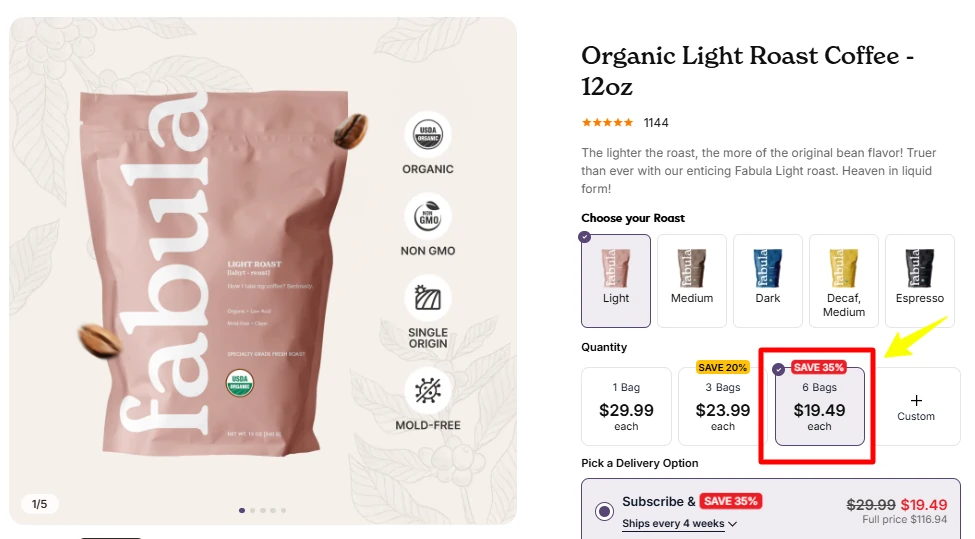
Fabula is premium-priced coffee. The core bag pricing sits around $19.49 for 12 oz, depending on format, roast, and deal availability.
That is not grocery-store pricing. But it is not shocking for organic low-acid coffee either. Brands in this space often charge more because they are selling a mix of sourcing, certification, testing, and stomach-friendly positioning.
The K-Cups are where the price feels steepest. Around $2 per pod is serious money for convenience coffee. If you drink two pods daily, that habit adds up fast.
Whole bean gives the best value. You get better flavor, better aroma, and better control over brewing.
The no-forced-subscription policy helps. You can order one bag without being pushed into a recurring plan you forgot to cancel. That should be normal. It is not always normal.
Amazon Rating Context
Fabula’s Amazon rating sits around 4.2 stars, which is solid but not flawless. That context matters.
A 4.2-star coffee usually means many people like it, but there are real complaints too. With low-acid coffee, those complaints often fall into predictable buckets: price, roast preference, mild flavor, or people expecting medical-level results from a beverage.
That sounds about right for Fabula.
The coffee is smooth and stomach-friendly for many buyers. But someone who wants bold diner coffee may find it too soft. Someone used to cheaper pods may find it expensive. Someone expecting zero reflux symptoms may still have issues because caffeine and coffee compounds vary by person.
A 4.2-star context feels believable. Good product. Not magic.
Fabula Coffee Pros and Cons
Pros:
Cons:
The biggest win is clear: Fabula solves a real coffee problem. The biggest weakness is also clear: the price needs the buyer to care about the problem.
Best Brewing Method For Fabula Coffee
Fabula works best in brew methods that highlight body, sweetness, and smoothness.
For drip coffee, use 60 grams of coffee per 1 liter of water. Brew around 195–200°F. This gives the medium roast a balanced chocolate-and-nut profile.
For French press, use 30 grams of coffee to 500 grams of water. Steep for 4 minutes, then plunge slowly. The darker roast works best here because the extra body suits immersion brewing.
For pour-over, use 22 grams of coffee to 350 grams of water. Aim for a total brew time of 2:45 to 3:15. The light or medium roast works best.
For K-Cups, use the smaller cup setting if your machine allows it. A 6 oz brew will taste stronger and sweeter than a watery 10 oz pull.
Taste it. Write it down. Adjust the grind or water next time.
Who Should Buy Fabula Coffee?
Fabula is best for people who want coffee to be gentler without giving up the ritual.
Buy it if you:
Skip it if you want intense acidity, rare micro-lots, ultra-specific farm data, or cheap daily coffee. Fabula is not built for that lane.
Fabula Coffee Alternatives
| Brand | Best For | Taste Style | Why Choose It |
|---|---|---|---|
| Fabula Coffee | Organic low-acid daily drinking | Chocolate, nuts, caramelized sugar | Best all-format option |
| Lifeboost Coffee | Premium clean coffee buyers | Smooth, mild, soft cocoa | Strong wellness positioning |
| Purity Coffee | Health-first coffee drinkers | Clean, balanced, gentle | Good for antioxidant-focused buyers |
| Lucy Jo’s Coffee | Budget low-acid buyers | Darker, simple, mellow | Lower price point |
| Volcanica Low Acid | Origin variety | Depends on origin | Better for variety seekers |
Fabula’s best advantage is its wide product range. Whole bean, ground, compostable K-Cups, Swiss Water decaf, cold brew, and creamers make it easier to stay within one brand.
Its weakest point is advanced coffee detail. If you want farm-level origin notes and processing data, other specialty roasters may satisfy you more.
FAQ: Fabula Coffee Review
Is Fabula Coffee actually low acid?
Yes. Fabula is designed for low acidity and tastes noticeably smoother than many bright light roasts and supermarket blends.
What does Fabula Coffee taste like?
Fabula Coffee tastes like caramelized sugar, toasted nuts, chocolate, and mild cocoa. The finish is smooth and low in bitterness.
Is Fabula Coffee good for acid reflux?
Fabula may be a good option for acid reflux-prone coffee drinkers because it is low acid. It is still coffee, so personal tolerance varies.
Is Fabula Coffee organic?
Yes. Fabula Coffee is USDA Organic and Non-GMO, with a clean-coffee focus.
Does Fabula test for mold?
Fabula says its coffee is lab-tested for more than 350 contaminants, which speaks to mold, mycotoxin, and purity concerns.
How much does Fabula Coffee cost?
Fabula Coffee costs around $19.49 for a 12 oz bag. Compostable K-Cups are priced around $2 per pod.
Does Fabula force subscriptions?
No. Fabula allows one-time purchases, so you do not have to join a forced subscription to try the coffee.
Which Fabula Coffee should I try first?
Start with the medium roast whole bean. It gives the best balance of smoothness, sweetness, low acidity, and daily drinkability.
Final Verdict: Is Fabula Coffee Worth It?
Fabula Coffee is worth it if low acidity, organic certification, and contaminant testing matter to you. The cup is smooth, sweet, and easy to drink. It tastes like caramelized sugar, roasted nuts, and chocolate rather than citrus or florals.
That is not a flaw. That is the assignment.
The price is the only real hesitation. At around $19.49 per 12 oz bag and roughly $2 per compostable K-Cup, this is premium daily coffee. If your stomach handles regular coffee well, you may not need to pay the premium.
But if normal coffee gives you reflux, bitterness, sourness, or stomach discomfort, Fabula becomes much easier to justify.
Not the most exciting coffee I have reviewed. But one of the more practical low-acid coffees for daily drinkers.
More Recommendations from RoastWorthy Coffee