Trade vs Blue Bottle 2026: Coffee Variety vs Freshness Compared

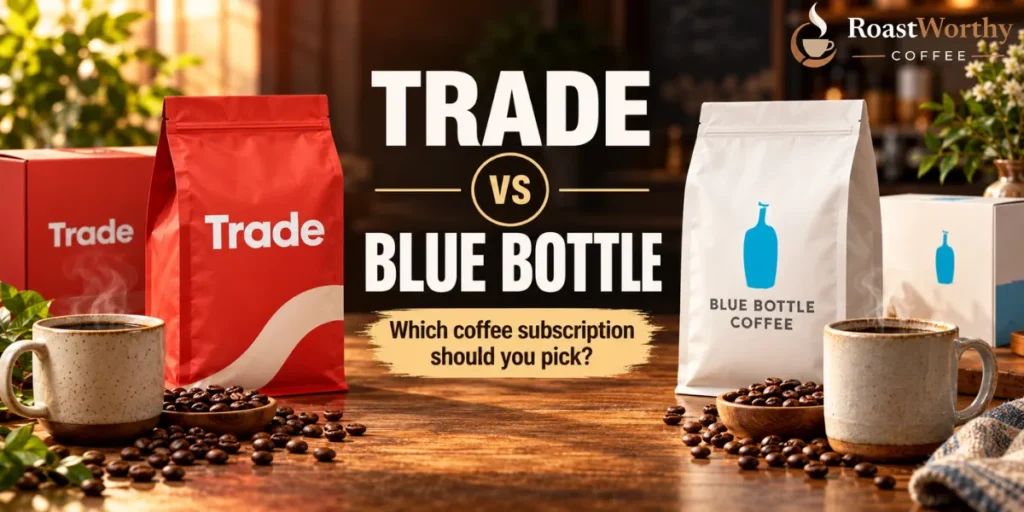
Trade vs Blue Bottle is not a choice between good and bad coffee. Both sell legitimate specialty coffee.
The difference is structural.
Trade connects you with coffees from independent roasters across the United States. Blue Bottle roasts and ships its own tightly controlled catalog.
One gives you almost endless variety. The other gives you consistency, recognizable roasting, and fewer decisions.
So… which coffee subscription is better?
For most curious coffee drinkers, Trade wins the overall comparison. Blue Bottle remains excellent for people who already like the Blue Bottle roasting style.
Quick Verdict
Trade vs Blue Bottle Coffee at a Glance
Here is the cleanest way to understand this coffee subscription comparison.
Trade is a marketplace and matching service. It connects subscribers with hundreds of roasted-to-order coffees from independent roasters.
Blue Bottle is one coffee company. Its subscriptions rotate through Blue Bottle blends, espresso roasts, single origins, decaf, and instant coffee.
That makes this a multi roaster vs single roaster contest.
Trade gives you a larger flavor map. Blue Bottle gives you a more controlled route through it.
Neither approach is automatically better. Your drinking habits decide the winner.
How Trade Coffee Works
Trade starts by asking questions about your coffee preferences.
You select roast level, flavor direction, brewing method, grind type, and drinking habits. Trade then recommends coffee from its participating roasters.
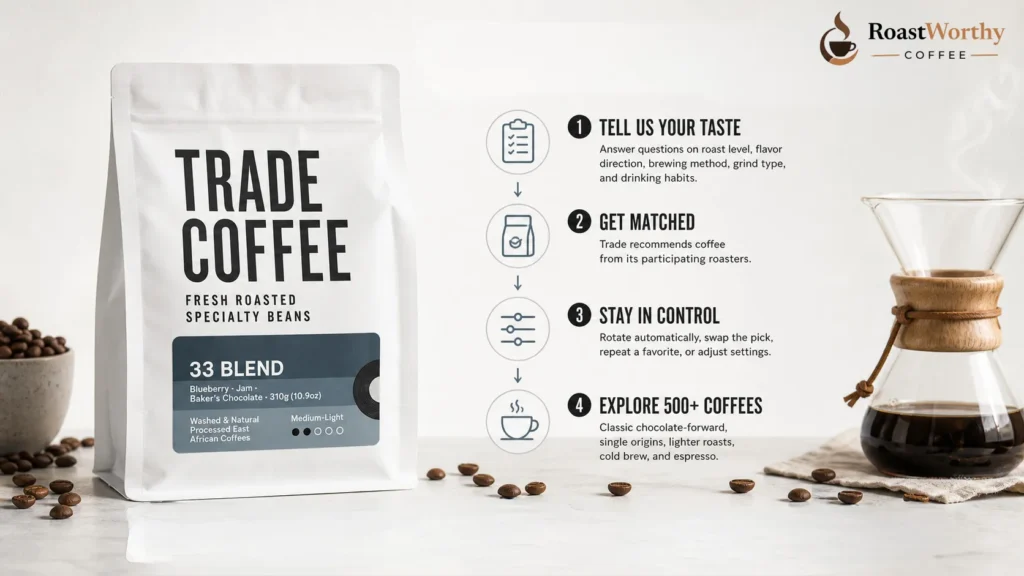
Your future deliveries can rotate automatically. You can also swap the selected coffee, repeat a favorite, or adjust your settings.
Trade currently lists more than 500 coffees across its collections. Some subscriptions focus on classic chocolate-forward coffee. Others emphasize single origins, lighter roasts, cold brew, or espresso.
Standard bags are usually around 10 to 10.9 ounces. Larger 32-ounce options are available for many coffees.
Pricing begins near $16.99 for classic selections. Premium and single-origin collections often begin around $21.99 per bag.
Pay-per-shipment subscriptions may include a shipping charge. Prepaid bundles and larger bags can qualify for free shipping.
Trade is built for people who want the subscription to keep learning their preferences.
Our full Trade Coffee Review explains its matching system and subscription controls in more detail.
How Blue Bottle Coffee Works
Blue Bottle keeps everything inside one roasting company.
Subscribers can choose a rotating assortment or receive the same Blue Bottle coffee repeatedly. Current assortment choices cover bright, balanced, bold, espresso, blends, cold brew, and single-origin coffee.
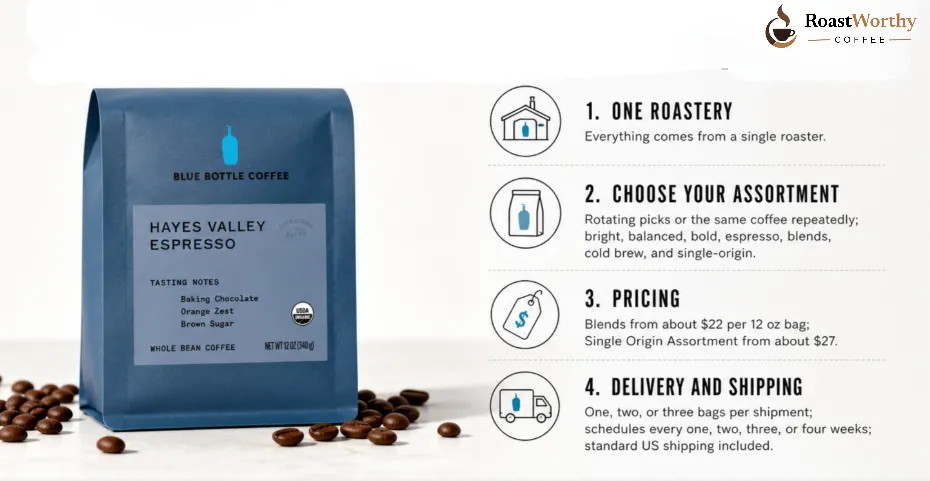
Most blend-based subscriptions begin around $22 for one 12-ounce bag. The Single Origin Assortment starts around $27.
You can usually choose one, two, or three bags per shipment. Multi-bag orders receive a percentage discount.
Delivery schedules are available every one, two, three, or four weeks. Standard subscription shipping is included for United States addresses.
Blue Bottle roasts in small batches and ships directly from its roastery. That creates a more consistent roast signature than Trade can offer.
Blue Bottle is closer to joining one roaster’s coffee club than browsing a national marketplace.
Its catalog is smaller… but much easier to understand.
Coffee Variety: Trade Wins Easily
This section is not close.
Trade offers coffee from numerous independent roasting companies. That gives it access to more origins, processing methods, roast interpretations, and seasonal releases.
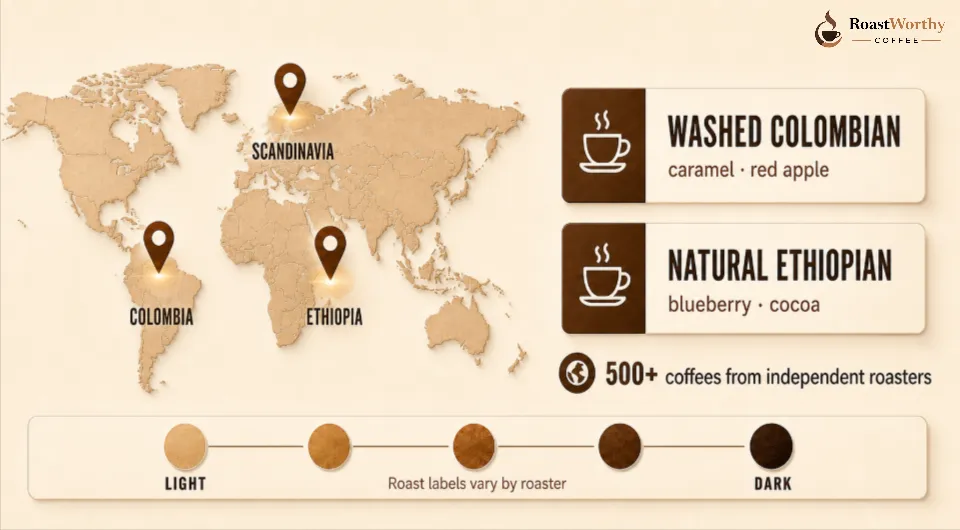
One delivery might contain a washed Colombian coffee tasting like caramel and red apple. The next could be a natural Ethiopian coffee tasting like blueberry and cocoa.
You can move between familiar blends and fruit-heavy single origins without changing subscriptions.
Trade also exposes subscribers to regional roasting styles. A light roast from a Scandinavian-inspired roaster can taste very different from one produced by a traditional American company.
That difference matters.
Roast level labels are not standardized across the coffee industry. One company’s medium roast may be another company’s light-medium.
Trade attempts to normalize these differences through its own flavor and roast classifications. The system is not perfect, but it helps.
Blue Bottle still offers meaningful variety.
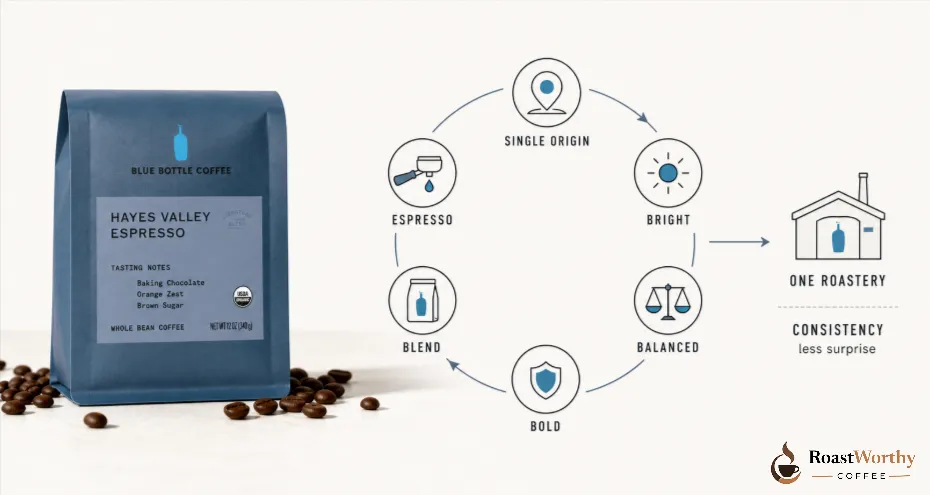
Its Single Origin Assortment rotates through seasonal coffees from different producing regions. Its Bright, Balanced, Bold, Blend, and Espresso assortments also rotate.
Yet every coffee passes through the same company and roasting philosophy.
That produces consistency. It also limits surprise.
Variety Scores
Trade is the obvious choice for anyone treating a subscription as an ongoing coffee education.
Freshness and Roast Date: Closer Than Expected
Blue Bottle has built much of its reputation around freshness.
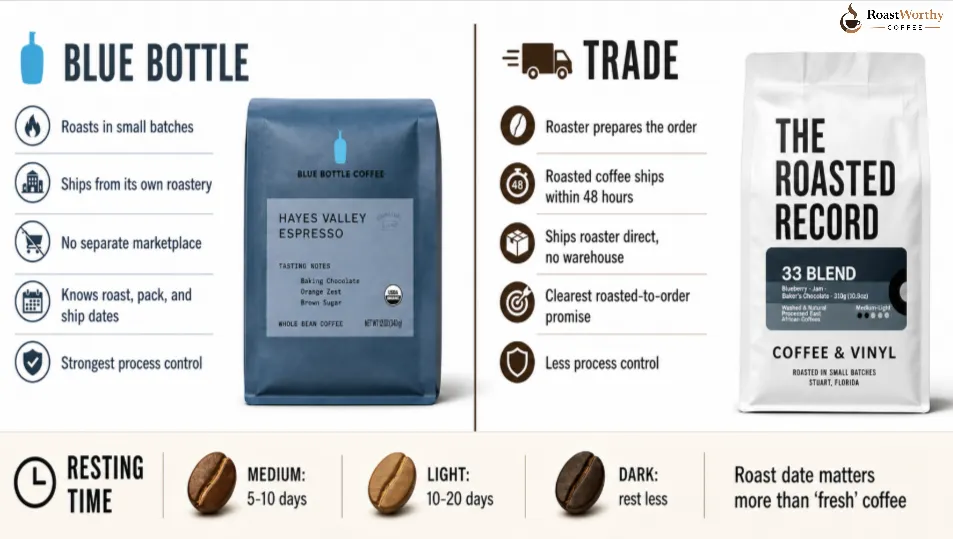
The company roasts regularly in small batches and ships coffee directly from its own facilities. There is no separate marketplace coordinating fulfillment between multiple roasters.
That operational control is valuable.
Blue Bottle knows when the coffee was roasted, packed, processed, and handed to the carrier. Its subscription bags also include roast information.
Trade follows a different model.
When a subscription order is placed, the selected roaster prepares the coffee. Trade states that roasted coffee is shipped within 48 hours.
That is a strong freshness policy.
The coffee does not first travel to a Trade warehouse. It ships from the roasting company to the subscriber.
Trade may actually provide the clearer roasted-to-order proposition. Blue Bottle provides stronger control over the complete process.
There is another detail people miss.
Coffee is not always best on the day it was roasted.
Freshly roasted beans release carbon dioxide. Very fresh coffee can bloom aggressively, drain unevenly, and taste sharp or hollow.
Most medium roasts become easier to brew around five to ten days after roasting. Dense light roasts may improve after ten to twenty days.
Dark roasts usually need less resting time.
The roast date matters more than a vague “fresh coffee” claim.
A bag arriving seven days after roasting can be better positioned for brewing than one arriving after two days.
For our normal pour-over testing, I start near a 1:16 ratio. That means 20 grams of coffee to 320 grams of water.
If the coffee is extremely fresh, I extend the bloom to 45 or 60 seconds. Gas needs somewhere to go. ☕
Freshness Scores
Blue Bottle wins for operational consistency. Trade narrowly wins for its explicit roasted-to-order shipping model.
Freshness is effectively a draw when both services arrive on schedule.
Personalization: Trade Has the Better System
Trade collects more information before choosing your coffee.
Its quiz asks about roast preference, flavor, brew method, and drinking style. Your answers shape the initial recommendation.
You can then rate deliveries. Those ratings help steer future matches.
Trade also lets subscribers view the next coffee, swap it, reschedule it, or repeat something they enjoyed.
This is actual customization rather than a decorative quiz.
Blue Bottle has improved its flexibility.
Subscribers can select a specific coffee, choose an assortment, change frequency, pause shipments, or cancel regular subscriptions.
The missing piece is cross-roaster personalization.
Blue Bottle can help you choose from Blue Bottle coffee. Trade can search across a much larger field.
Customization Scores
Trade is better for drinkers still figuring out what they like.
Blue Bottle works better once you already know.
Flavor Quality and Roast Consistency
Trade’s biggest strength also creates its main weakness.
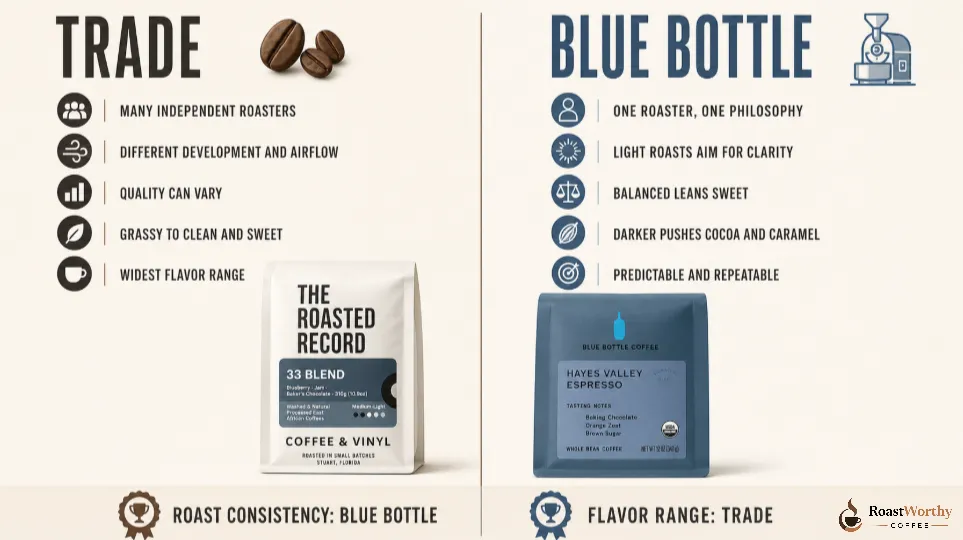
Every participating roaster approaches development, airflow, charge temperature, and final roast color differently.
That means quality can vary.
One light roast may be clean and sweet. Another may taste grassy because development ended too early.
The flavor does not lie.
Trade screens its selection, but it cannot make dozens of roasters taste identical. That would defeat the point anyway.
Blue Bottle is more predictable.
Its light roasts generally aim for clarity and controlled acidity. Balanced coffees emphasize sweetness. Darker options push cocoa, caramel, and toasted flavors without turning every bag into charcoal.
A Blue Bottle coffee labeled “bright” should behave like a Blue Bottle bright roast.
That makes dialing in easier.
You are not relearning the grinder for every new roasting company. Adjustments between shipments tend to be smaller.
Blue Bottle therefore wins roast consistency.
Trade wins flavor range.
Quality Scores
Serious experimenters will accept Trade’s variation. Routine-focused drinkers may prefer Blue Bottle.
Trade vs Blue Bottle: Price and Value
Trade’s entry-level coffees begin around $16.99. Many specialty and single-origin subscriptions sit closer to $21.99.
Standard bags are generally smaller than Blue Bottle’s 12-ounce format. Trade pay-per-shipment orders may also carry a shipping fee.
That changes the real per-ounce cost.
Blue Bottle’s core assortments begin around $22 for 12 ounces. Its Single Origin Assortment begins around $27.
Subscription shipping is included. Ordering multiple bags can reduce the per-bag price.
Blue Bottle looks more expensive at first glance. The gap becomes smaller after adjusting for bag size and Trade’s possible shipping charge.
Trade prepaid bundles can improve the calculation. They may include free bags or free shipping, depending on the selected plan.
Neither subscription is cheap supermarket coffee.
You are paying for recent roasting, better green coffee, curation, and home delivery.
Trade offers better value for discovery. Blue Bottle offers better value for consistency.
Shipping and Subscription Flexibility
Both companies provide useful subscription controls.
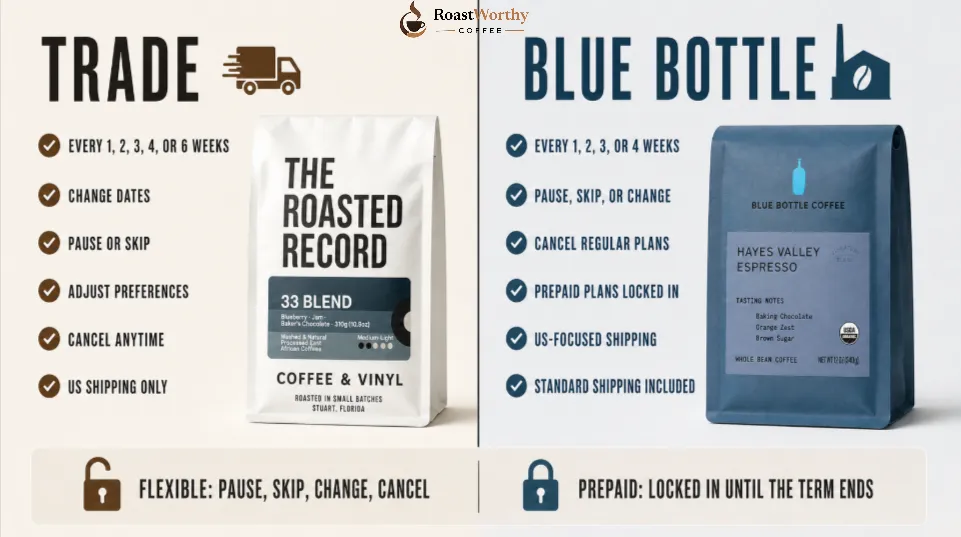
Trade allows subscribers to change delivery dates, pause the subscription, skip an order, adjust preferences, or cancel.
Available frequencies include every one, two, three, four, or six weeks after setup.
Blue Bottle offers delivery every one, two, three, or four weeks. Subscribers can pause, skip, change, or cancel regular plans.
Prepaid subscriptions are different.
Blue Bottle prepaid plans generally cannot be altered or cancelled during the prepaid period. Trade prepaid bundles also require more commitment than paying per shipment.
Check the renewal terms before paying upfront.
Trade ships only within the United States. Blue Bottle’s United States subscription shipping is also its main practical offering.
Which Subscription Is Better for Your Brew Method?
Choose Trade for Pour-Over
Trade offers the stronger playground for V60, Chemex, and Kalita Wave users.
The catalog includes washed, natural, honey-processed, and experimental coffees. That variety gives manual brewers more to work with.
Expect to adjust grind size frequently.
Choose Blue Bottle for Espresso Consistency
Blue Bottle’s espresso assortments are easier to dial in over time.
The coffees still rotate, but roast behavior is more predictable. That reduces wasted shots after each delivery.
Our Blue Bottle Coffee Subscription Review covers its espresso and blend options separately.
Choose Trade for Coffee Education
Trade introduces you to more roasters and sourcing styles.
You will start recognizing differences between Colombian regions, Ethiopian processes, and roasting approaches.
Taste it. Write it down. Order again.
Choose Blue Bottle for Simplicity
Blue Bottle removes more decisions.
Select Bright, Balanced, Bold, Espresso, or Single Origin. Choose a frequency. Let the roaster handle the rest.
For another tightly curated comparison, see our Atlas vs Blue Bottle breakdown.
Who Should Choose Trade Coffee?
Trade makes the most sense for:
Trade is not ideal for someone who wants identical brewing behavior every morning.
The next bag may require a different grind setting, water temperature, or brew ratio.
That is either the fun part… or the problem.
Who Should Choose Blue Bottle?
Blue Bottle makes more sense for:
The limitation is obvious.
You remain inside one roaster’s interpretation of specialty coffee.
It is a good interpretation. It is still only one.
Frequently Asked Questions
Is Trade better than Blue Bottle?
Trade is better for variety, personalization, and exploring independent roasters. Blue Bottle is better for consistent roasting and familiar house blends.
Which coffee subscription is fresher?
Both ship recently roasted coffee. Trade says coffee ships from the roaster within 48 hours of roasting. Blue Bottle roasts regularly and ships directly from its roastery.
Is Trade Coffee more customizable?
Yes. Trade matches coffee using your roast, flavor, and brewing preferences. You can also rate, swap, skip, or repeat deliveries.
Does Blue Bottle send a different coffee each time?
Rotating assortments send different coffees. Subscribers can also choose evergreen blends and receive the same coffee with every shipment.
Which subscription has more coffee variety?
Trade has far more variety because it works with multiple independent roasters. Blue Bottle subscriptions stay within Blue Bottle’s own catalog.
Is Blue Bottle more expensive than Trade?
Blue Bottle generally starts around $22 for 12 ounces. Trade starts near $16.99, though premium coffee and shipping charges can narrow the price difference.
Final Verdict: Is Trade or Blue Bottle Better?
Trade wins this comparison because its range, matching system, and subscriber control solve more problems for more drinkers. Blue Bottle remains the cleaner choice for anyone wanting one roaster, a stable house style, and fewer decisions. Freshness is not a simple Blue Bottle victory.
Trade ships roasted-to-order coffee quickly, while Blue Bottle controls roasting and fulfillment through its own operation. Both can arrive inside a useful brewing window. The real split is discovery against consistency.
Trade is the stronger subscription for curious drinkers. Blue Bottle is the more focused service for loyalists. Two good subscriptions… but only one keeps expanding your palate.
More Recommendations from RoastWorthy Coffee