Mushroom Coffee: Benefits, Best Brands, and & Does It Work?

Mushroom coffee is regular coffee blended with extracts from functional mushrooms like lion's mane, chaga, and reishi. The pitch is simple. Same caffeine ritual, less jitter, more focus. Let's find out if the cup backs up the claim. ⚗️
The category exploded for a reason. People want their coffee… without the 3pm cliff. Whether the mushrooms deliver, or whether it's just clever marketing, is the real question here.
What Mushroom Coffee Actually Is
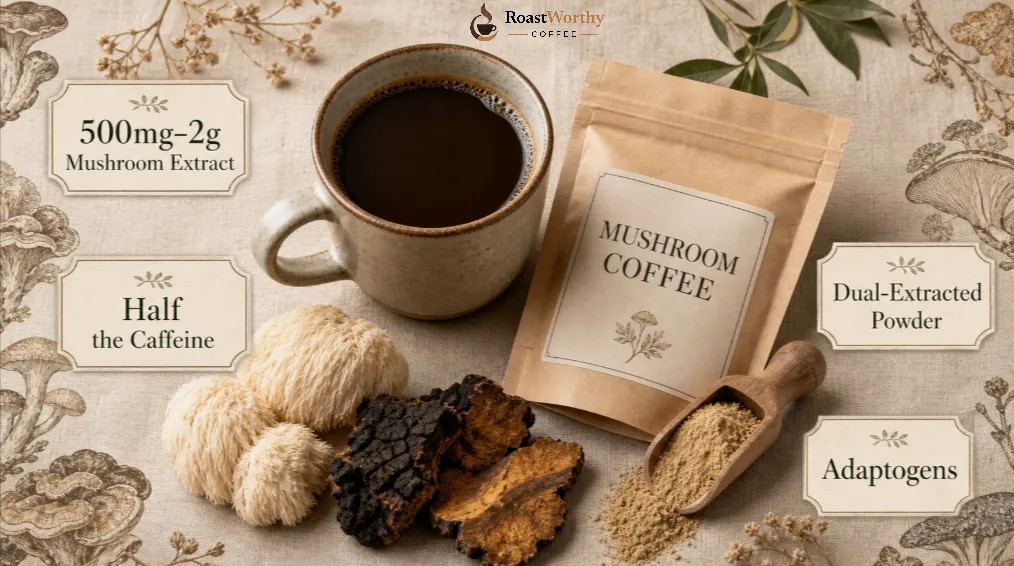
Here's what's actually in the bag. Ground or instant coffee, plus a dried mushroom extract powder. Usually around 500mg to 2g of mushroom per serving.
The mushrooms aren't the ones you sauté. They're medicinal fungi—adaptogens—dried and extracted into a fine powder. No earthy flavor bomb. Done right, you barely taste them.
Most blends cut the coffee dose too. So you get roughly half to two-thirds the caffeine of a normal cup.
That's the whole trick. Less caffeine, plus compounds that may smooth the ride.
A quick note on extraction. Dual-extracted powder—both hot water and alcohol—pulls out more of the active compounds. Cheaper blends use mushroom mycelium grown on grain, which dilutes the good stuff. Read the label.
TL;DR: Mushroom coffee = lower-caffeine coffee + functional mushroom extract. Smoother energy is real. The brain boost is subtle and builds over weeks.
The Mushrooms Doing the Work
There's a whole story in these fungi—and it's older than the coffee they're mixed with.
Chaga and reishi have been used in East Asian and Siberian traditions for centuries. Lion's mane shows up in Chinese and Japanese medicine. These aren't new. The coffee blend is.
What changed is the format. Someone figured out you could hide a centuries-old adaptogen inside the most popular drink on earth. Smart.
Lion's Mane — The Focus One
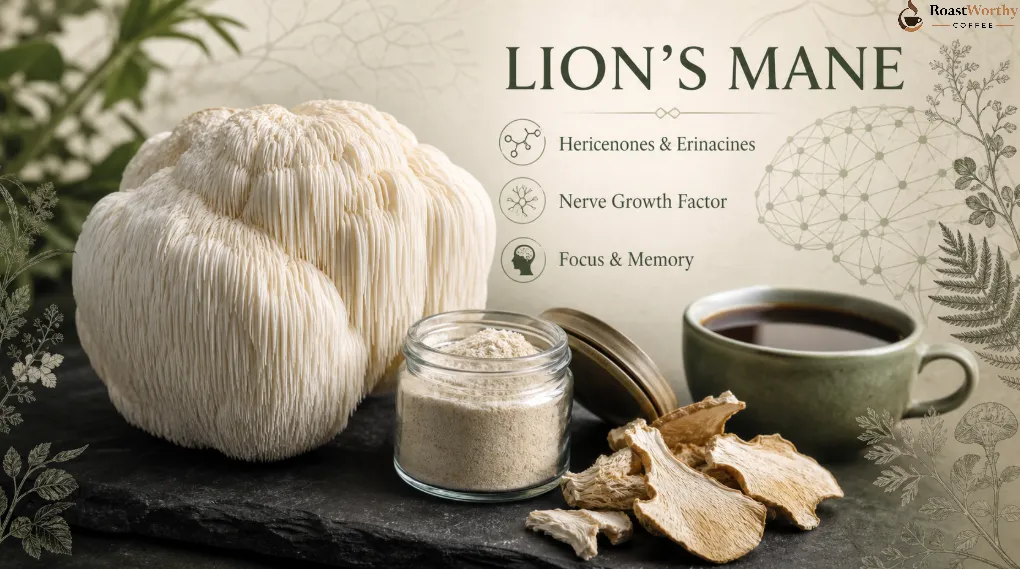
Lion's mane is the headline ingredient for cognition. Early research links its compounds (hericenones, erinacines) to nerve growth factor.
Small human studies suggest mild improvements in focus and memory. The data is thin but promising. Not magic.
This is the mushroom most “focus” blends lean on. If a brand markets cognition, lion's mane is almost always the lead.
Chaga — The Antioxidant One
Chaga grows wild on birch trees in cold forests. It's loaded with antioxidants and beta-glucans.
Most evidence is preclinical—test tubes and animals. Real, but early. Wild-harvested chaga also varies a lot in quality depending on the tree and region it came from.
Reishi — The Calm One
Reishi is the “calm down” mushroom. Often added to evening blends or to take the edge off caffeine.
Some studies tie it to reduced fatigue and better sleep quality. The terroir of the source matters here—quality varies wildly by grower.
Cordyceps — The Energy One
Cordyceps deserves a mention. It's the mushroom athletes chase, linked to oxygen uptake and stamina.
You'll find it in pre-workout-style blends. The endurance research is mixed but interesting.
Mushroom Coffee Benefits: What's Real, What's Hype
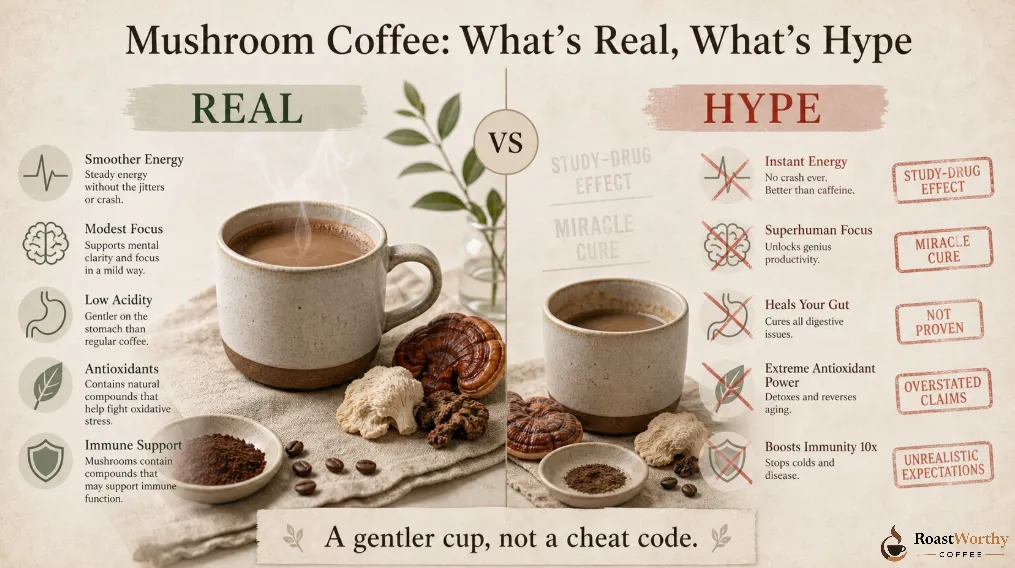
Let's be honest about the benefits people claim versus what holds up.
The honest summary? Real but understated. The flavor doesn't lie, and neither does the research. This is a gentler coffee, not a cognitive cheat code.
One caveat worth flagging. Many of the strongest claims come from studies using concentrated extracts at doses far higher than what's in a single cup. The coffee delivers a fraction of that. Manage expectations.
Does Mushroom Coffee Actually Work?
Taste it. Track it. Judge for yourself. That's the only real test.
For most people, the noticeable effect is the absence of a crash. You drink it. You don't get the 11am slump. That alone sells a lot of bags.
The “calm focus” most reviewers report is largely the lower caffeine dose at work. The mushroom benefits are slower and subtler—they build over weeks, not in one cup.
So does mushroom coffee work? For smoother energy, yes. For dramatic brain transformation in a single mug, no.
Give it a fair trial. One cup tells you almost nothing. Two weeks of daily use tells you whether the focus and gut benefits are real for your body. Everyone responds differently to adaptogens.
Best Mushroom Coffee Brands
Four brands worth your money. Rated honestly out of 10. I'd buy all of these—but for different reasons.
| Brand | Best For | Caffeine | Taste | Score |
|---|---|---|---|---|
| Four Sigmatic | Beginners, convenience | ~50mg | Mild, smooth | 8/10 |
| RYZE | Daily focus blend | ~48mg | Earthy-creamy | 7.5/10 |
| MUD\WTR | Coffee replacement | ~35mg | Spiced, bold | 7/10 |
| Everyday Dose | Latte lovers | ~45mg | Creamy, nutty | 7.5/10 |
Four Sigmatic — The Safe Starting Point
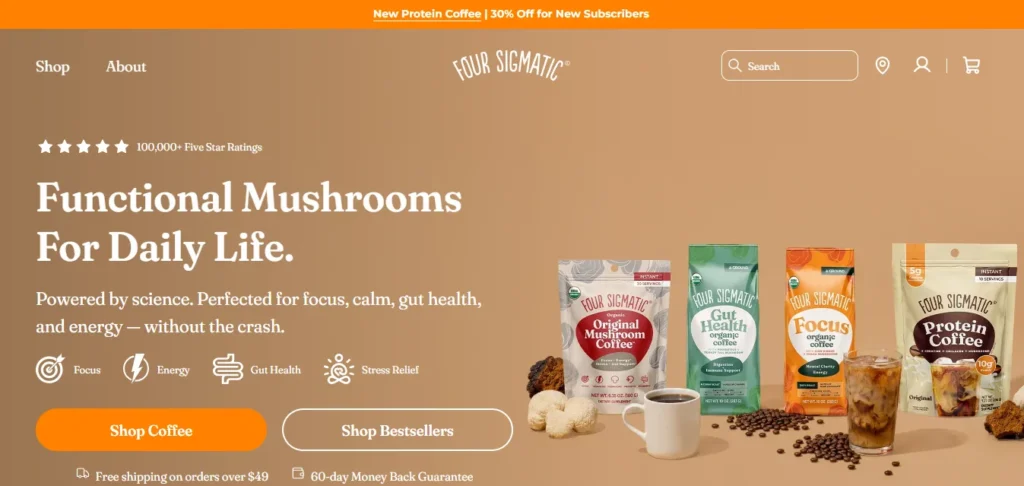
Four Sigmatic basically built this category. Their lion's mane instant is the one most people try first.
Taste? Clean. You wouldn't clock it as mushroom coffee blind. The easiest on-ramp into functional coffee.
RYZE — The Daily Driver

RYZE leans into a creamy, almost mocha-adjacent cup. The mushroom blend is broad—six types.
It mixes a little clumpy. But the flavor wins people over fast.
MUD\WTR — Barely Coffee
MUD\WTR is for people quitting coffee, not enhancing it. Tiny caffeine, big masala-chai energy from cacao and spices.
I've had worse. Much worse. But it's a different drink entirely. Score: 7/10.
Everyday Dose — The Latte Pick
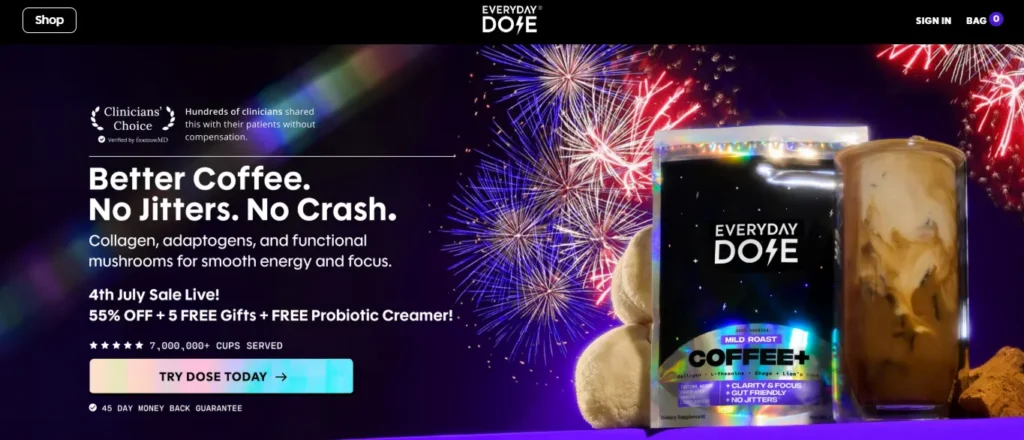
Everyday Dose blends lion's mane, chaga, collagen, and a little coffee. It's built to be a creamy latte.
Mixes smooth. Tastes nutty and rich. A solid pick if black coffee was never your thing. Score: 7.5/10.
How to Make Mushroom Coffee Taste Good
Here's what the heat is actually doing. Hot water rehydrates the extract and pulls out the coffee solubles. Get the temp wrong and you get bitter, flat, or chalky.
Your first cup might taste muddy. Make it anyway. Adjust the ratio. ☕
A trick that works: blend it. Ten seconds in a blender with milk turns a clumpy instant into a proper café-style foam. Worth the extra step.
Mushroom Coffee vs Regular Coffee
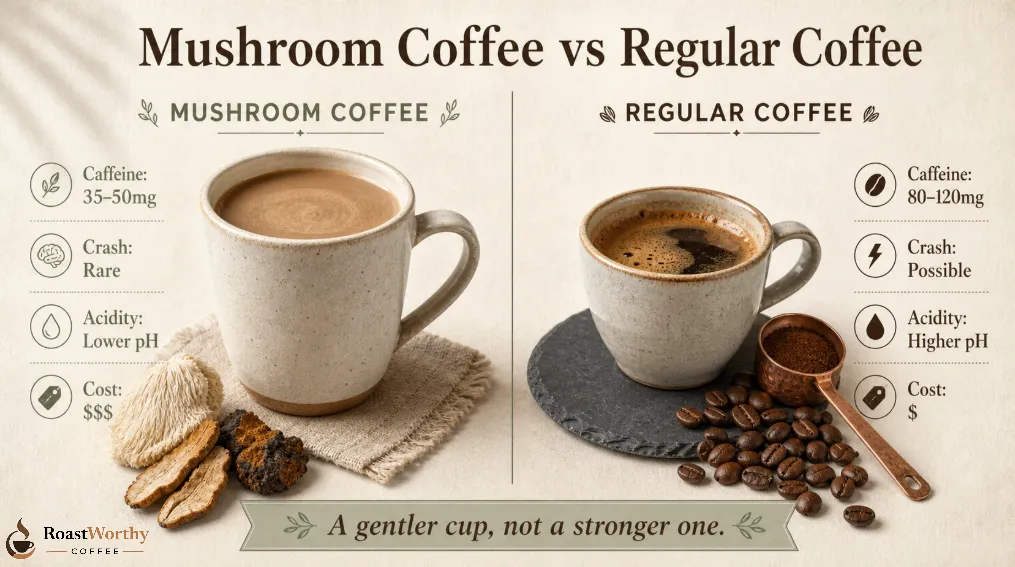
The real difference comes down to three things.
If you're sensitive to caffeine, this swap makes sense. If you love a punchy double espresso, it'll feel weak.
There's also acidity. Mushroom blends tend to sit lower on the pH scale, which is why reflux-prone drinkers often switch. Your stomach may thank you.
Who Should Drink It
This isn't for everyone. And that's fine.
Good fit: people with jitter sensitivity, mild reflux, or anyone wanting to taper caffeine without quitting the ritual.
Skip it if: you're pregnant, on blood thinners, or immunosuppressed—reishi and chaga can interact with medications. Talk to a doctor first.
And if you genuinely love the taste of a great single-origin pour-over? Mushroom coffee won't replace that. It's a function-first drink, not a flavor-first one.
Frequently Asked Questions
Does mushroom coffee have caffeine?
Yes, but less. Most blends contain 35–50mg per cup, versus 80–120mg in regular coffee, because they use less coffee and add mushroom extract.
Does mushroom coffee actually work for focus?
It can. Lion's mane shows early evidence for focus and memory, but the effect is mild and builds over weeks. The immediate “calm focus” is mostly the lower caffeine dose.
What does mushroom coffee taste like?
Like slightly earthy regular coffee. Quality blends like Four Sigmatic taste almost identical to normal coffee. Cheaper ones can taste muddy or bitter.
Is mushroom coffee safe to drink daily?
For most healthy adults, yes. Avoid it if you're pregnant, breastfeeding, on blood thinners, or immunosuppressed, since chaga and reishi can interact with medications.
Which is the best mushroom coffee brand?
Four Sigmatic is the best starting point for most people. RYZE suits daily focus drinkers, and MUD\WTR works as a near-coffee-free replacement.
Can mushroom coffee help anxiety?
Possibly, indirectly. Lower caffeine means less jitter, and reishi is linked to reduced fatigue and calm. It's not a treatment for clinical anxiety.
Is mushroom coffee good for weight loss?
Not directly. It's lower in calories than sugary coffee drinks, but no mushroom melts fat. Any benefit comes from swapping out high-calorie lattes.
The Verdict
Mushroom coffee works—just not the way the marketing implies. The smooth energy is real. The brain-boost is subtle and slow.
If you want a gentler cup without quitting coffee, Four Sigmatic's lion's mane blend is the one to start with. Buy the bag. Give it two weeks. Track how you feel.
It's not a miracle. It's a better-behaved coffee. For a lot of people, that's enough. ✒️
More Recommendations from RoastWorthy Coffee