8 Best Manual Coffee Grinders for Travel & Espresso (2026)

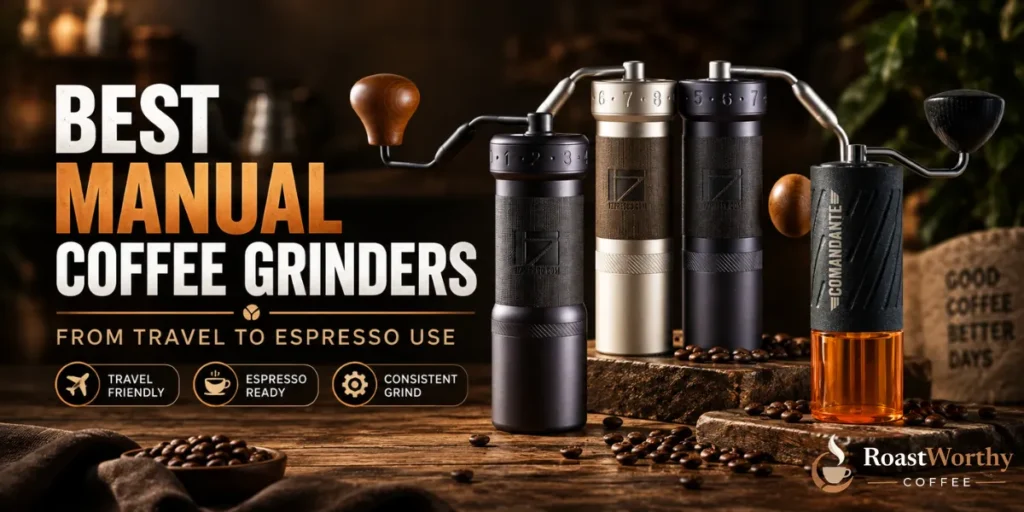
A good grinder changes coffee more than an expensive brewer does. That is not marketing. It is extraction.
The best manual coffee grinders produce grounds with a controlled particle spread. Fewer boulders. Fewer powdery fines. More repeatable brews.
The 1Zpresso K-Ultra is the strongest all-round pick for 2026. The J-Ultra is better for espresso. The ZP6 Special beats both when filter clarity matters most.
There is no single winner for every brewer… despite what most product pages suggest.
TL;DR: The Best Manual Coffee Grinders Comparison
| Manual Grinder | Best Use | Burr and Adjustment | Capacity | Approx. Price | Score |
|---|---|---|---|---|---|
| 1Zpresso K-Ultra | Best overall | Large heptagonal burr, 20-micron clicks | 35–40g | $259 | 9.4/10 |
| Comandante C40 MK4 | Premium filter brewing | Nitro Blade heptagonal burr | 40g jar | Around $300 | 9.2/10 |
| 1Zpresso ZP6 Special | Pour-over clarity | 48mm hexagonal burr, external dial | 30–35g | $209 | 9.3/10 |
| 1Zpresso J-Ultra | Espresso | Coated burr, 8-micron clicks | 35–40g | $199 | 9.5/10 |
| Kinu M47 Phoenix | Stepless espresso | 47mm burr, 5-micron adjustment | 40g | $219–$249 | 9.1/10 |
| KINGrinder K6 | Best value | 48mm steel burr, 16-micron clicks | 30–35g | Around $109 | 9.0/10 |
| Timemore C3 ESP Pro | Budget espresso | 38mm steel burr, 36 settings | About 20–25g | Around $79–$109 | 8.4/10 |
| 1Zpresso Q Air | Travel | Steel burr, 30 clicks per rotation | 15–20g | $69 | 8.3/10 |
Are Manual Coffee Grinders Better Than Electric Grinders?
Manual grinders often provide better burr quality at the same price.
A $100 hand grinder spends most of its manufacturing budget on the burr, bearings and body. An electric grinder must also pay for a motor, wiring and housing.
Electric grinders win on speed and convenience. Hand grinders win on portability, lower noise and value.
For one or two daily cups, a good hand grinder makes sense. For repeated espresso shots or a full batch brewer, buy electric.
1. 1Zpresso K-Ultra: Best Manual Coffee Grinder Overall
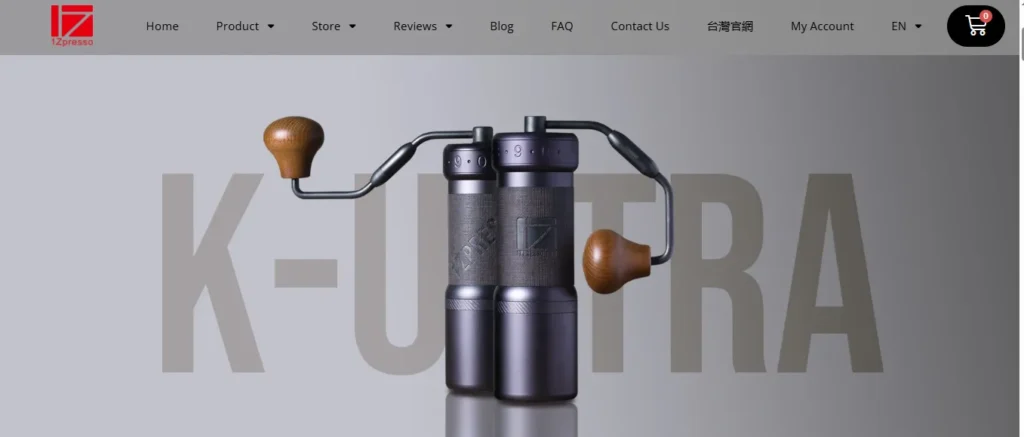
The K-Ultra is the grinder I would recommend to most people.
It has more than 100 externally controlled settings, with burr movement of 20 microns per click. The adjustment ring is quick to read and easy to return to a previous recipe.
Its large heptagonal burr produces coffee with more body than the ZP6. Acidity stays clear, but the cup does not feel thin.
That balance works across V60, AeroPress, moka pot and espresso. Espresso dialing is possible, though the 20-micron steps are not as precise as the J-Ultra’s 8-micron system.
The magnetic catch cup and folding handle also matter. Small workflow improvements become big improvements when you grind every morning.
Verdict: The best hand coffee grinder for mixed brewing in 2026.
2. Comandante C40 MK4: Best Premium Manual Grinder
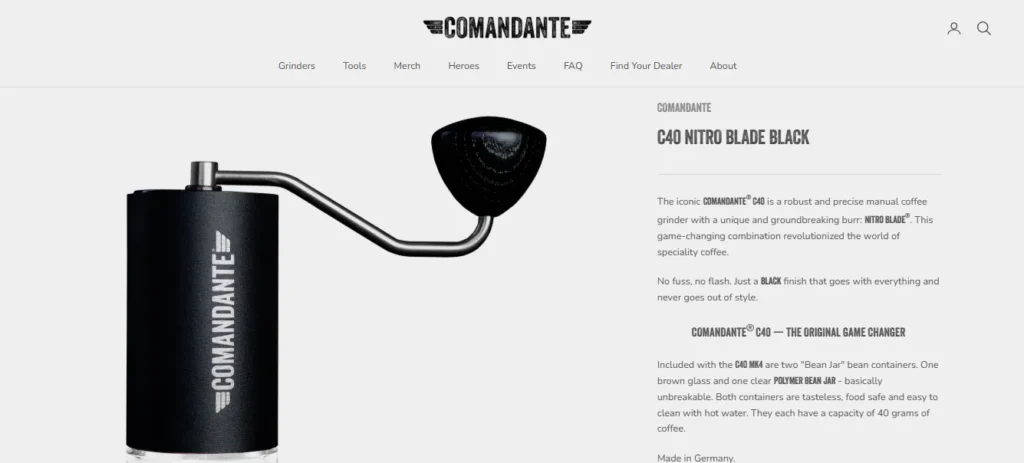
The C40 MK4 remains one of the benchmark manual coffee grinders for filter brewing.
Its Nitro Blade is a heptagonal conical burr made for specialty coffee. The grind character sits between the rich K-Ultra and the highly separated ZP6.
Coffee tastes sweet, structured and balanced. Washed Ethiopian coffees retain their florals. Colombian and Guatemalan coffees gain enough texture to avoid tasting hollow.
Build quality is excellent. The grinder is made in Germany and includes both glass and polymer bean jars, each holding up to 40 grams.
The internal adjustment is the obvious weakness. Changing from espresso to pour-over takes more effort than turning an external collar. Espresso users may also want the optional Red Clix axle for finer control.
Verdict: Still excellent. Still overpriced for some buyers. Both can be true.
3. 1Zpresso ZP6 Special: Best for Pour-Over Clarity
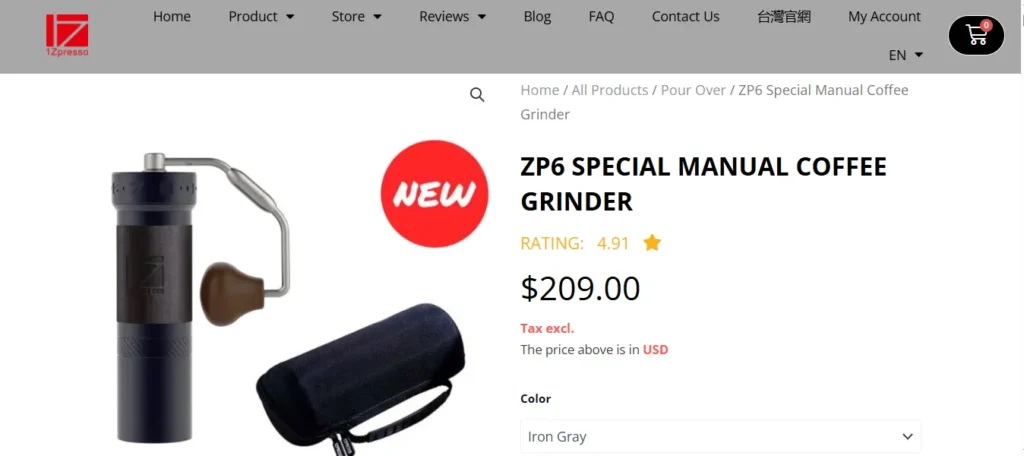
The ZP6 Special is not an all-purpose grinder. Good.
Its 48mm hexagonal burr is designed for pour-over. It produces fewer fines than most general-use conical grinders, giving water a cleaner path through the coffee bed.
The result is separation.
A washed Kenyan can taste like blackcurrant, grapefruit and cane sugar rather than one blended “fruity” impression. Light-roasted Ethiopian coffee becomes floral and tea-like.
That clarity can expose weak coffee. Dark roasts may taste sharp or empty. People who prefer thick, syrupy brews may find the ZP6 too polite.
The external dial offers 90 clicks per rotation. Adjustments are quick, visible and repeatable.
Verdict: The top manual grinder for clean, high-definition filter coffee.
4. 1Zpresso J-Ultra: Best Manual Espresso Grinder
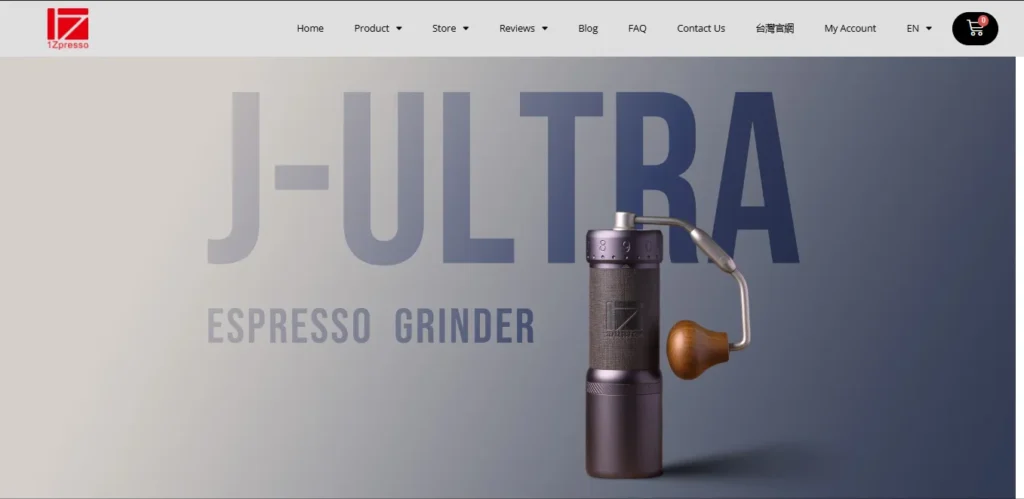
Espresso punishes broad adjustment systems.
A single click can move a shot from 24 seconds to 34 seconds. That is why the J-Ultra uses 8-micron burr movement per click, the finest adjustment offered across 1Zpresso’s current range.
Its coated burr is built for fine grinding. Shots tend to have strong texture, rounded sweetness and enough clarity to identify the coffee underneath the milk.
Grinding a dense, light-roasted coffee still takes effort. Physics has not been cancelled. The rounded body and long handle make that effort manageable.
The J-Ultra can grind for pour-over, but that is not its strongest role. The burr produces more fines than a filter specialist, which adds body while reducing flavour separation.
Verdict: The best manual espresso grinder for most home baristas.
5. Kinu M47 Phoenix: Best Stepless Hand Grinder
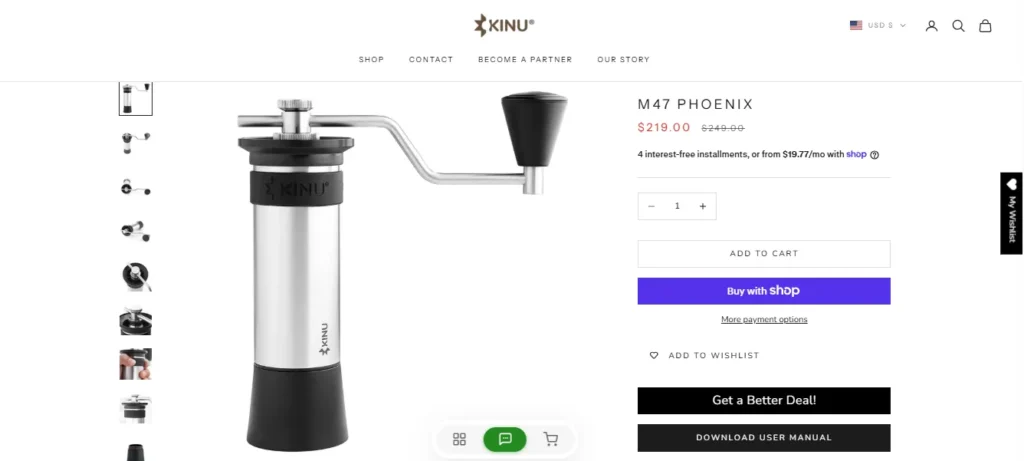
The Kinu M47 Phoenix feels like equipment, not a kitchen accessory.
It uses 47mm conical burrs and a stepless adjustment system capable of movements as fine as 5 microns. That makes it particularly strong for espresso.
Stepless control means there are no fixed clicks. You can move between two settings when a coffee needs a tiny correction.
The grinder holds 40 grams and weighs about 780 grams. It is lighter than the M47 Classic, but nobody will mistake it for an ultralight travel grinder.
Cup character leans toward body and sweetness. Traditional espresso, chocolate-heavy coffees and medium roasts suit it well.
Verdict: Built for decades of espresso, not casual backpacking.
6. KINGrinder K6: Best Value Manual Coffee Grinder
The KINGrinder K6 gets dangerously close to premium performance for roughly $100.
It uses a 48mm steel burr and an external adjustment collar with 60 clicks per rotation. Each click changes the setting by about 16 microns.
That range is fine enough for espresso and broad enough for French press. It also works well for AeroPress and pour-over.
The flavour sits in the middle. More clarity than an entry-level Timemore. More body than the ZP6. It does not quite match the K-Ultra’s finish or workflow, but the coffee quality is closer than the price suggests.
Build quality is solid, though less polished than the premium grinders above.
Verdict: The smartest value purchase on this list.
7. Timemore C3 ESP Pro: Best Budget Grinder for Espresso
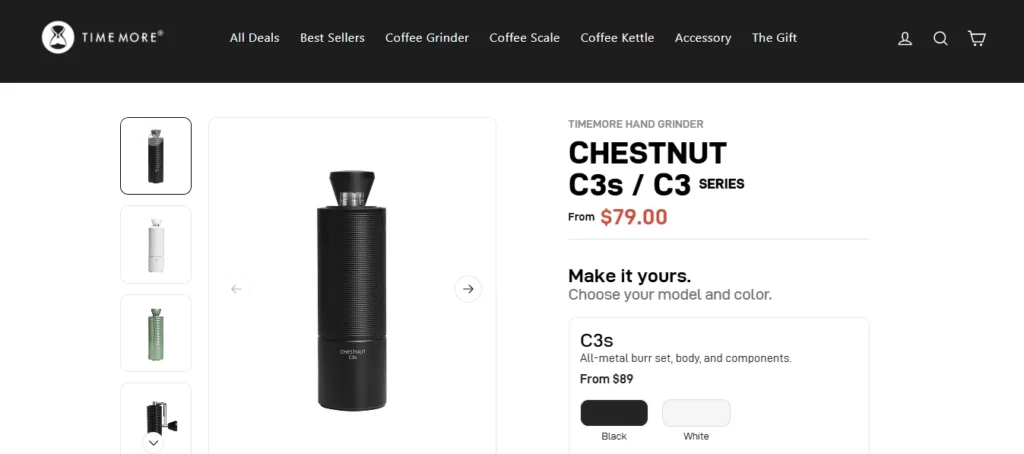
The C3 ESP Pro takes Timemore’s compact 38mm steel burr platform and gives it a finer adjustment system.
It offers around 36 grind levels, making espresso dialing far more practical than on the standard C3. The folding handle also packs neatly into a drawer or travel bag.
Filter coffee comes out sweet and rounded. The particle spread is not as controlled as the K6 or K-Ultra, but it is a large improvement over ceramic burr grinders.
Espresso grinding can feel slow, especially with dense light roasts. The smaller burr needs more rotations, and the handle may occasionally stall on hard beans.
Verdict: A sensible starting point, not a lifetime espresso grinder.
8. 1Zpresso Q Air: Best Portable Coffee Grinder
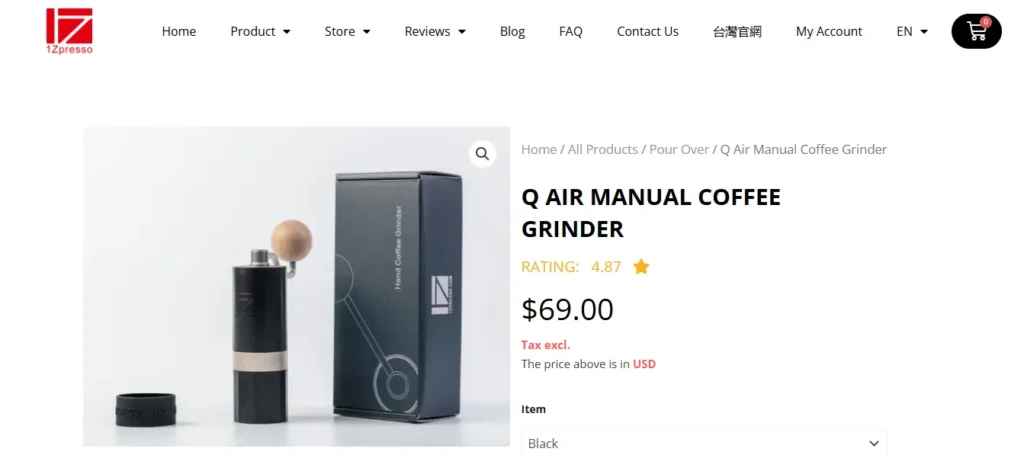
The Q Air weighs about 365 grams and fits inside an AeroPress plunger.
That alone makes it one of the strongest travel grinder options. It is small enough for a backpack without reducing coffee to ceramic-burr rubble.
Its steel burr is supported by dual bearings and a three-axis structure. Capacity sits between 15 and 20 grams, enough for one AeroPress or modest pour-over.
The 30-click adjustment works best for filter coffee. Espresso is technically possible at fine settings, but the restricted adjustment and small capacity make it a poor daily espresso choice.
The polycarbonate body feels less premium than metal. That is the trade-off for lower weight and a $69 price.
Verdict: The best portable coffee grinder when weight matters.
How to Choose a Manual Coffee Grinder
Match the Adjustment to Your Brew Method
Espresso needs small adjustments. Look for 5 to 10-micron steps or a stepless mechanism.
Filter coffee is less sensitive. Adjustments between roughly 15 and 25 microns can still offer useful control.
Do not compare micron numbers blindly. Brands measure burr movement differently, so the number does not describe cup quality by itself.
Choose the Right Burr Character
Burr geometry affects how many fines and larger particles the grinder produces.
More fines can create body and sweetness. Too many can slow drawdown and add bitterness.
Fewer fines increase clarity. Too few may make darker coffees taste thin.
The curve doesn’t lie. Particle distribution controls extraction before water reaches the brewer.
Check Capacity Before Buying
A 15 to 20-gram grinder works for solo travel.
A 30 to 40-gram grinder is better for two-cup pour-over, larger AeroPress recipes and batch brewing.
Grinding two loads every morning gets old quickly.
Consider Switching Between Brew Methods
External adjustment collars are faster and cleaner than controls located beneath the burr.
Someone moving between espresso and French press should prioritise external adjustment. A filter-only drinker can live comfortably with an internal dial.
For more setting guidance, pair this section with Roastworthy’s coffee grind size chart and pour-over coffee ratio guide.
Frequently Asked Questions
What is the best manual coffee grinder in 2026?
The 1Zpresso K-Ultra is the best overall choice. It handles espresso, AeroPress, pour-over and French press without major compromises.
Are manual coffee grinders good for espresso?
Yes. The 1Zpresso J-Ultra and Kinu M47 Phoenix offer enough adjustment control for unpressurised espresso baskets.
How much should I spend on a hand coffee grinder?
Spend $70 to $120 for good filter performance. Budget around $180 to $260 for premium espresso control or specialist pour-over burrs.
Are steel burrs better than ceramic burrs?
Steel burrs usually grind faster and produce a more controlled particle spread. Ceramic burrs resist rust but are commonly found in slower, less precise entry-level grinders.
How long does manual grinding take?
Expect roughly 30 to 60 seconds for 18 grams at filter settings. Espresso can take 45 to 90 seconds, depending on the burr, roast and bean density.
How often should a manual grinder be cleaned?
Brush the burr and catch cup every one to two weeks. Perform a full dry clean every one to three months. Do not wash the burr assembly unless the manufacturer allows it.
Final Verdict
Buy the 1Zpresso K-Ultra when you need one grinder for almost everything.
Choose the J-Ultra for serious espresso. Pick the ZP6 Special when clean, separated pour-over flavour matters more than body.
The KINGrinder K6 is the value pick. It makes several more expensive grinders look uncomfortable.
For travel, take the Q Air. It fits inside an AeroPress, weighs 365 grams and produces genuinely respectable filter coffee.
Fresh beans deserve a proper grind. No notes. And that’s rare. ☕
More Recommendations from RoastWorthy Coffee