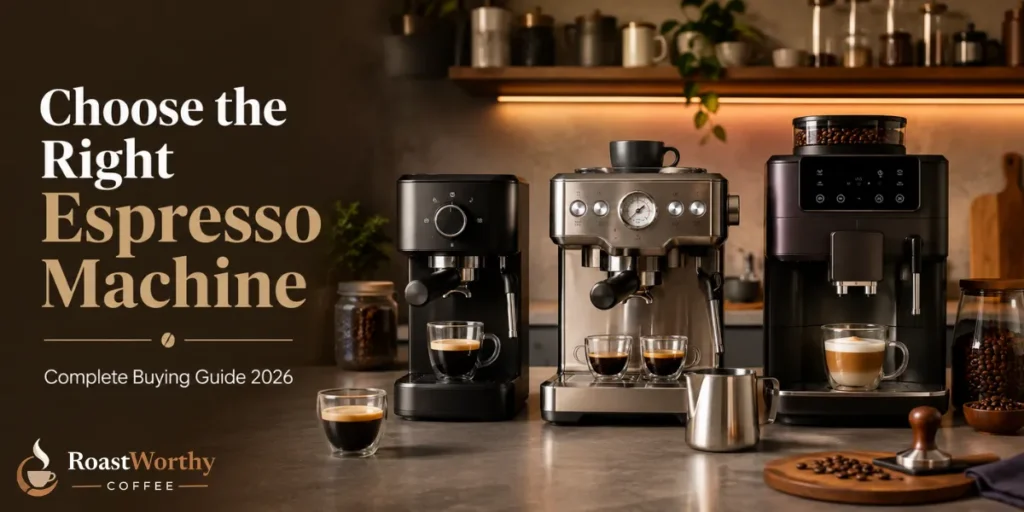
How to Choose an Espresso Machine: 2026 Buying Guide

Most people buy the wrong espresso machine. Not because they're careless. Because the spec sheets are built to confuse.
Single boiler. Dual boiler. Heat exchanger. PID. E61 group head. Semi-automatic. Super-automatic. Pressure profiling. It reads like a foreign language.
So let's cut through it. This is how to choose an espresso machine in 2026 — based on how you actually drink coffee, not the marketing. ☕
Quick Answer: How to Choose an Espresso Machine
Start With How You Drink, Not What You Buy
Here's the honest truth. The “best” espresso machine doesn't exist. The best one for you does.
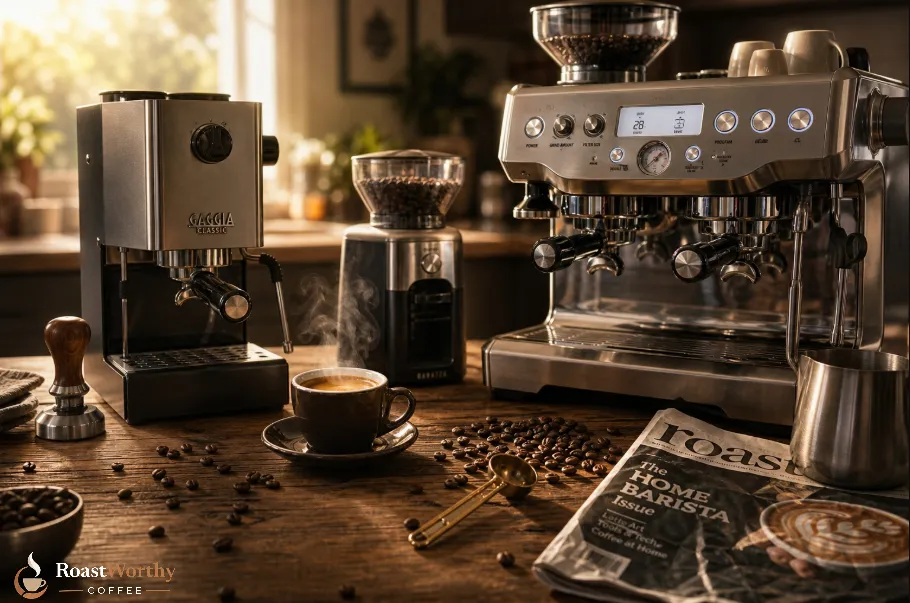
So before you read a single review, answer three questions:
- What do you drink? Straight espresso, or lattes and cappuccinos?
- How many people? One coffee a day, or four back-to-back every morning?
- How hands-on do you want to be? Tinkering is the fun part — for some people. For others it's a chore.
Your answers decide everything below. A solo espresso drinker who hates faff needs a completely different machine than a family pulling six milk drinks before school.
Get this wrong and no feature list saves you. I've watched people drop $1,500 on a dual boiler… to make one black espresso a day. That's a beautiful machine doing a single-boiler's job. Money wasted.
Decide how you drink first. The machine is the answer to that question — not the other way round.
Espresso Machine Types, Decoded
There are four real categories. Most home buyers land in just two of them.
Semi-Automatic
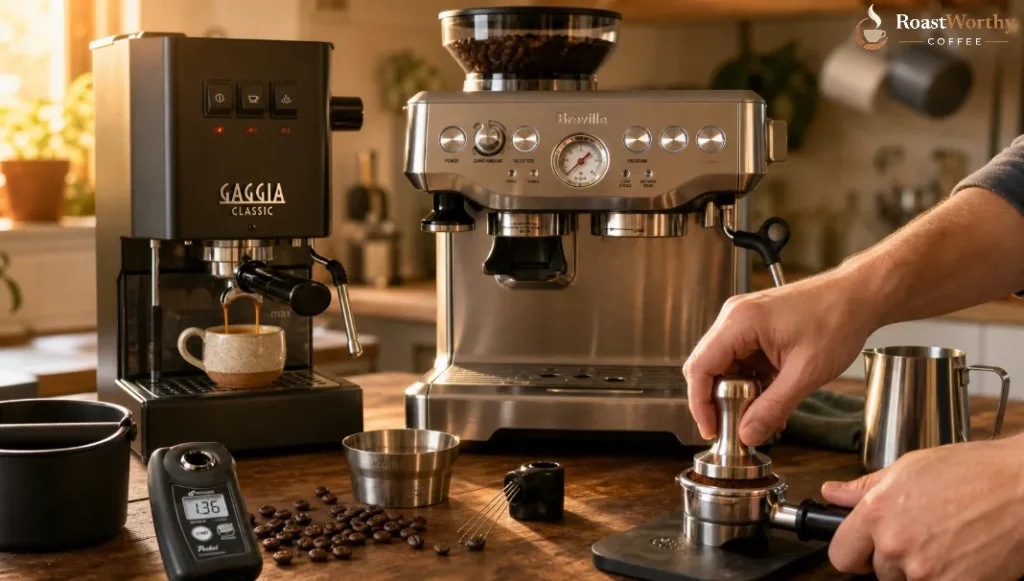
You grind, dose, tamp, and start the shot. The machine controls pump pressure and temperature. You control everything else.
This is the sweet spot for most home baristas. You learn the craft. You get café-quality results. And in 2026, it's where the best value sits by a mile.
The Breville Barista Express (around $500) and the Gaggia Classic are the obvious names. Both earn their reputation. The Barista Express even builds a grinder in — handy if your counter is tight.
Super-Automatic (Bean-to-Cup)
Press a button. The machine grinds, doses, tamps, brews, and often froths the milk. No skill required.
Convenient? Massively. But you give up control — and ceiling. A super-auto rarely matches a well-dialled semi-auto on flavour. The built-in grinders are usually mediocre, and you can't fine-tune the shot the way the coffee deserves.
Good for offices, busy households, and people who genuinely don't want a hobby. Let's be honest about that trade-off — you're buying convenience, not the best cup.
Manual / Lever
You provide the pressure yourself with a lever. Pure craft. Genuinely beautiful when mastered.
Steep learning curve, though. Skip it as a first machine. Come back when you're properly obsessed… and you will be.
Capsule (Pods)
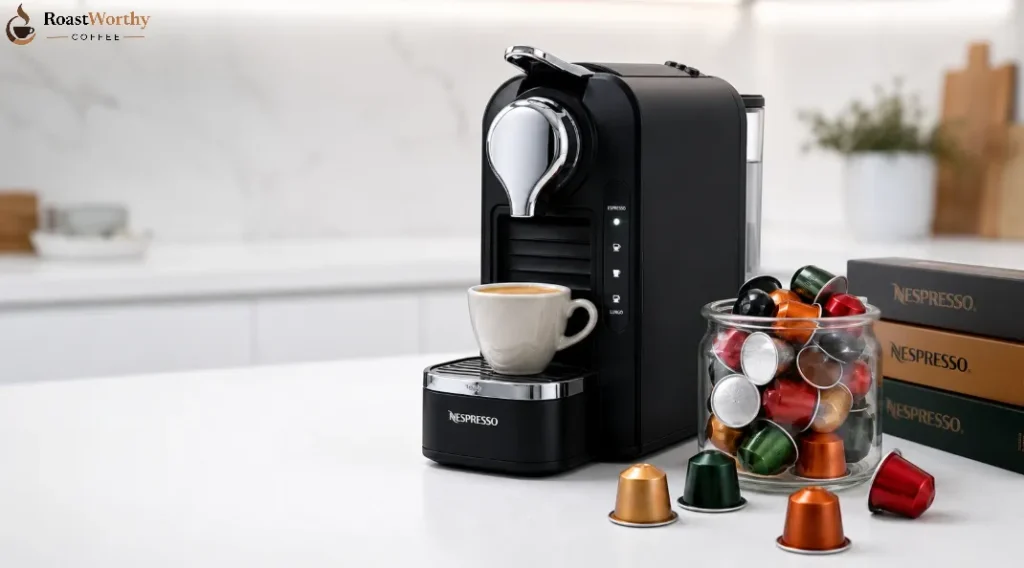
Nespresso and the rest. Consistent, cheap upfront, zero skill. But it isn't really espresso, and the per-cup cost stacks up fast. Fine as a backup. Not the answer if you're reading a 1,800-word buying guide.
| Machine Type | Skill needed | Control | Convenience | Typical price (2026) |
|---|---|---|---|---|
| Semi-automatic | Medium | High | Medium | $300–$1,500 |
| Super-automatic | None | Low | Very high | $700–$3,000 |
| Manual / lever | High | Very high | Low | $200–$2,000+ |
| Capsule | None | None | Very high | $100–$300 |
For most people learning espresso at home, semi-automatic wins. It's the right call roughly 80% of the time.
The Boiler Question (Where the Real Money Goes)
This is the decision that quietly sets your price ceiling. Here's what's actually happening inside the machine.
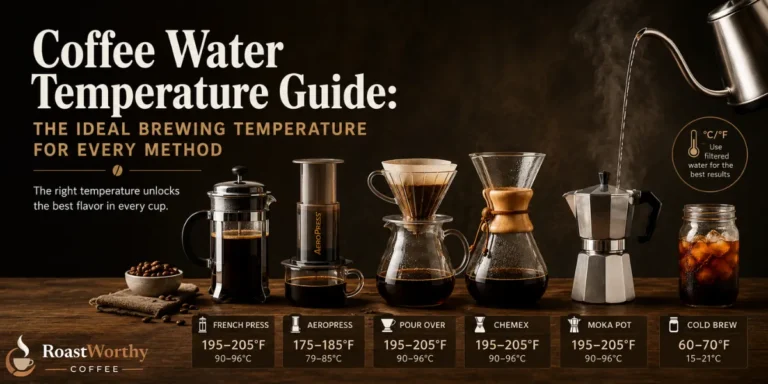
Espresso brews at around 200°F (93°C). Milk steam needs much hotter — closer to 250–270°F (120–130°C). One boiler physically cannot sit at both temperatures at the same time.
So how a machine bridges that gap defines the whole experience. There are three approaches.
Single Boiler
One boiler, two jobs. You brew first, then wait while it heats up to steam. That wait is usually 60–90 seconds.
For a solo espresso drinker, this is a non-issue — you never steam at all. For one latte at a time, it's a minor pause. For a queue of milk drinks, it's genuinely annoying.
Cheapest. Simplest. A smart choice for beginners. The Gaggia Classic is the textbook example — pun intended.
Heat Exchanger (HX)
One boiler kept at steaming temperature, with a heat-exchange tube that cools water down to brew temp on the way through.
You can brew and steam simultaneously. No waiting. The catch? Brew temperature is less stable, so you “flush” the group head briefly to dial it in. A small ritual you learn fast.
A solid middle ground. Common in prosumer machines built around the classic E61 group head.
Dual Boiler
Two separate boilers. One locked at brew temp, one at steam temp. Both ready, always.
Brew and steam at once, with rock-solid temperature stability. This is what serious milk-drink households want — and what makes back-to-back cappuccinos painless.
It costs more. It's worth it — if you pull a lot of milk drinks. If you don't, you're paying for capability you'll never touch.
| Boiler Type | Brew + steam at once? | Temp stability | Wait time | Best for |
|---|---|---|---|---|
| Single boiler | No | Good | 60–90 sec | Espresso drinkers, beginn |
| Heat exchanger | Yes | Moderate | None | One-machine households, value seekers |
| Dual boiler | Yes | Excellent | None | Daily milk drinks, multiple users |
If milk drinks are your daily routine, a single boiler will frustrate you. Spend on a dual boiler.
But if you drink straight espresso? Don't. A single boiler is all you need — and the savings buy a far better grinder.
The Features That Actually Matter
Manufacturers list dozens of features. Three of them genuinely change what's in your cup. The rest is mostly noise.
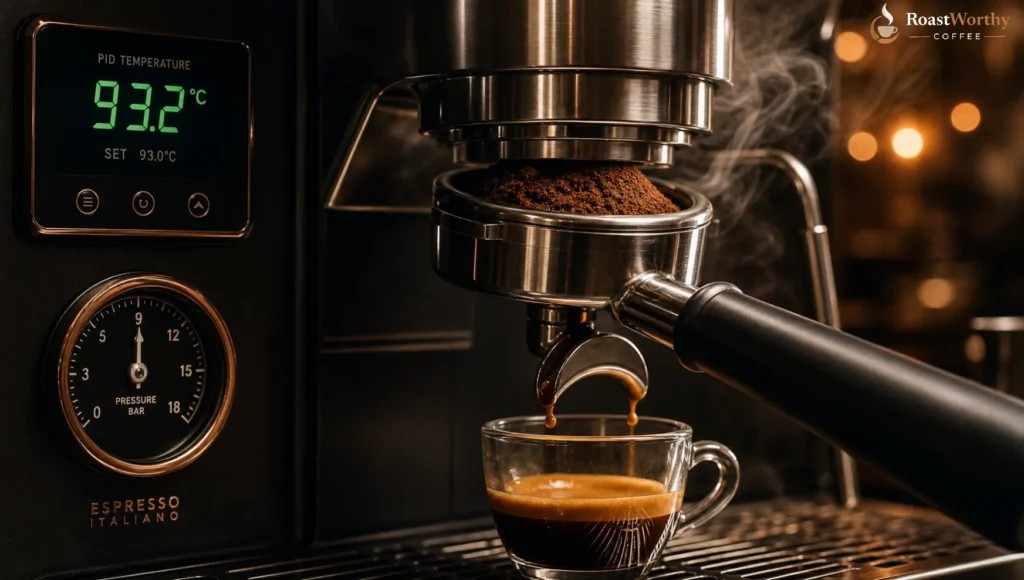
PID Temperature Control
A PID holds your brew temperature within a degree or two, shot after shot. Consistency is the entire game in espresso.
Older machines drift several degrees mid-shot. A PID doesn't. On a single boiler especially, it's the single upgrade most worth paying for. Many 2026 entry machines now include one — check before you buy.
Pressure Profiling and Pre-Infusion
Standard espresso runs at 9 bars of pressure. Pressure profiling lets you change pressure during the shot — a gentle start, a ramp up, a taper at the end. It can transform a fussy light roast.
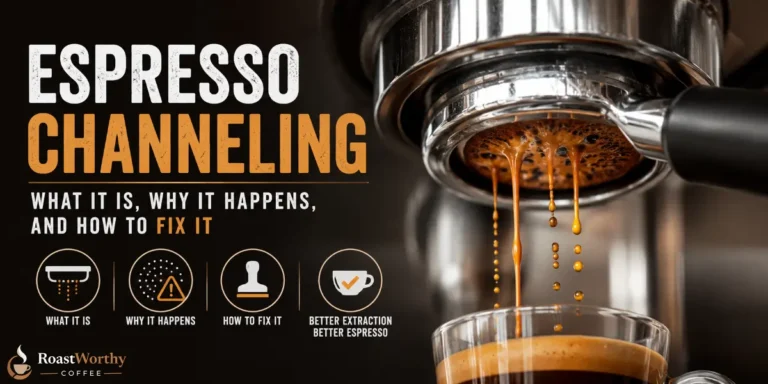
Pre-infusion is the simpler cousin: a low-pressure soak before the full shot. It wets the puck evenly and cuts down on channeling, where water punches a hole and ruins extraction.
Profiling is a power-user feature. Pre-infusion is broadly useful. Don't pay a premium for profiling unless you'll genuinely use it.
Portafilter Size
Look for a 58mm portafilter — the commercial standard. Cheap machines often ship with pressurised 51mm baskets, which are forgiving but cap how far you can grow.
A 58mm machine grows with your skill, and accessories are everywhere. It's a quiet marker of a serious entry-level machine.
How Much Should You Spend on an Espresso Machine?
Budget honestly. And remember — the machine is only half the spend.
Now the part nobody wants to hear.
Spend at least a third of your total budget on the grinder. A $1,000 machine with a bad grinder makes worse coffee than a $400 machine with a great one. The grind is where espresso lives or dies. This is not optional.
A few notes from the rest of the team, because the machine is only part of the cup:
Here's what the heat is actually doing — fresh beans degas carbon dioxide for days after roasting. A great machine on stale supermarket beans is wasted money. Buy beans roasted within the last two weeks. Taste it. Write it down. Dial it again.

Start with the origin, not the roaster. A washed Ethiopian and a natural Brazilian want completely different shots. The machine doesn't fix the bean — it reveals it. There's a whole story in the cup, and the terroir is doing something here.

Don't Forget the Footprint
Espresso machines are bigger than the photos suggest. Measure your counter — including the height under your cabinets. You need room to lift the water tank out and to swing the portafilter handle.
Check the water tank size too, if you're not plumbing it in. A 1.5L tank empties fast in a busy household. And factor noise: vibration pumps are loud, rotary pumps are quieter and pricier.
Small thing. Easily overlooked. Annoying every single morning if you get it wrong.
A Simple Way to Decide
If you're still stuck, follow this:
- Mostly espresso, on a budget, happy to learn → Single-boiler semi-automatic with PID.
- Daily milk drinks, want quality → Dual boiler semi-automatic.
- Want it fast and hands-off → Super-automatic. Accept the flavour ceiling.
- Casual, low effort, low volume → Capsule. No shame in it.
Then spend whatever's left on the best grinder you can afford. And fresh beans.
That sequence beats any single expensive machine. Every time. ✒️
FAQ: Espresso Machine Buying Guide
What's the difference between a single boiler and a dual boiler espresso machine?
A single boiler heats water for both brewing and steaming using one tank, so you wait 60–90 seconds between pulling a shot and steaming milk. A dual boil
er uses two separate boilers — brew and steam are ready simultaneously, with better temperature stability.
Is a semi-automatic or super-automatic better?
Semi-automatic gives better flavour and full control, but needs some skill. Super-automatic is fully hands-off at the push of a button, with a lower quality ceiling. Choose based on whether you want a hobby or just fast coffee.
What's a good budget espresso machine in 2026?
The Gaggia Classic and HiBREW H10A are strong entry picks, while the De'Longhi Stilosa suits the tightest budgets. Pair any of them with a quality burr grinder for the best results.
Do I really need a separate grinder?
Yes. Espresso depends on a precise, consistent grind that built-in or blade grinders rarely deliver. A good standalone burr grinder often improves your cup more than upgrading the machine itself.
What is PID and do I need it?
PID is electronic temperature control that holds brew temperature steady from shot to shot. It's not mandatory, but on a single boiler it's the most worthwhile upgrade for consistency.
Is pressure profiling worth paying for?
Only if you'll use it. Pressure profiling lets advanced users shape the shot, but most home baristas get excellent results with simple pre-infusion and a standard 9-bar pull.
More Recommendations from RoastWorthy Coffee