Low-Acid Coffee Guide: Best Beans, Brands & Reflux Tips

Low-acid coffee is best for people who love coffee but struggle with stomach burn, heartburn, or acid reflux after drinking it. The smartest starting point is a medium-dark 100% Arabica coffee from a naturally smooth origin like Brazil, Sumatra, Peru, Nicaragua, Mexico, Guatemala, or Colombia.
Cold brew is usually the easiest low-acid brewing method because it tastes rounder and less sharp. If reflux is the real issue, low acid decaf or half-caf may work better than just switching to a darker roast.
| Best For | Choose This | Why It Works |
|---|---|---|
| Sensitive stomach | Medium-dark Arabica | Smooth, sweet, and less sharp |
| Acid reflux | Low acid decaf or half-caf | Less caffeine may reduce triggers |
| Smooth daily coffee | Brazil, Sumatra, Peru, Nicaragua | Naturally softer cup profiles |
| Lowest bite | Cold brew low acid coffee | Cooler extraction tastes less acidic |
| Espresso | Medium-dark low-acid blend | More body, less citrus snap |
What Is Low Acid Coffee, and Can It Help Acid Reflux?
Low acid coffee is coffee designed to taste smoother and feel gentler for people with sensitive stomachs. It can come from naturally low-acid origins, darker roast development, cold brewing, decaffeination, or lower-caffeine blends.
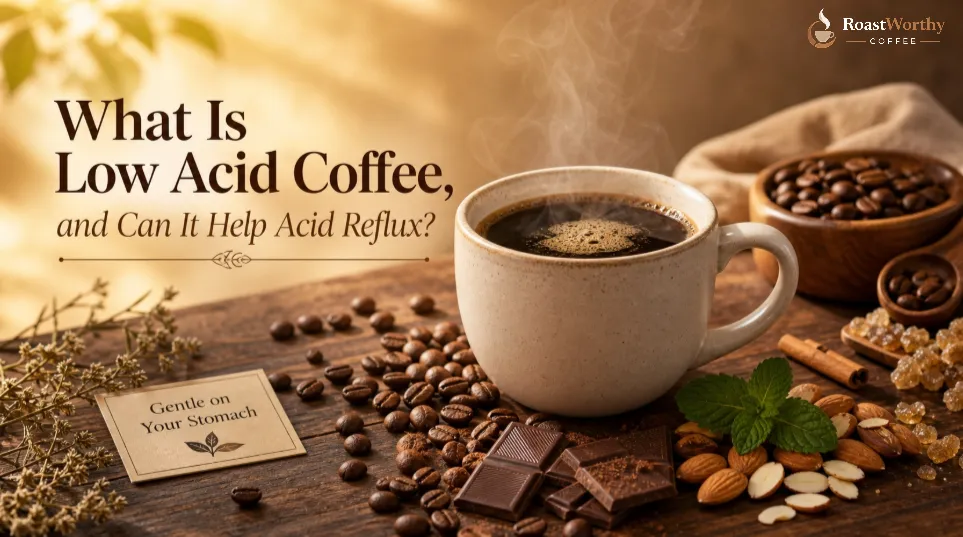
Good low acid coffee should still taste like coffee. It should give you cocoa, toasted almond, brown sugar, mild caramel, or soft spice. Bad low acid coffee tastes flat, stale, and medicinal, which usually means the roasting was lazy.
Can it help acid reflux? Sometimes. But low acid coffee is not a guaranteed fix because reflux is not only about the acid level in coffee. Caffeine can also trigger symptoms for some people, especially when the coffee is strong or consumed on an empty stomach.
That is why the best low acid coffee for acid reflux is often medium-dark Arabica, brewed gently, served in a moderate amount, and sometimes made as decaf or half-caf. Change one variable at a time. Taste it. Write it down. Brew it again. ☕
Why Some Coffee Feels Harsh on the Stomach
Coffee acidity is not one thing. There is pH acidity, which can be measured, and there is perceived acidity, which is what your tongue reads as lemon, green apple, cranberry, winey brightness, or sharp citrus.
Then there is stomach reaction. That part is personal.
Light roasts usually keep more origin brightness. That is why a washed Ethiopian coffee can taste like lemon peel, peach skin, jasmine, and black tea. Beautiful cup. Not always friendly for reflux-prone drinkers.
Darker roasts reduce some sharp impressions and push the cup toward chocolate, toasted grain, caramel, smoke, and bitterness.
Here’s what the heat is actually doing. 🔥 Longer roast development changes how the cup lands on your palate, but too much roast can create bitterness and heavy oils.
That is why the goal is not the darkest coffee possible. The goal is a clean, sweet, low-bite cup your body tolerates.
Best Low Acid Coffee Beans by Origin
Origin matters more than people think. Altitude, soil, variety, processing, and roast style all change how acidity shows up in the cup. You cannot fix every sharp coffee just by roasting it darker.
For low acid coffee, naturally softer origins are your friend. Brazil is usually chocolatey, nutty, and rounded. Sumatra often brings heavy body, earthy sweetness, and low brightness. Peru and Nicaragua can give you cocoa, caramel, and gentle fruit without the sharp edge.
| Origin | Typical Flavour | Why It Works |
|---|---|---|
| Brazil | Chocolate, peanut, brown sugar | Naturally soft and rounded |
| Sumatra | Earthy, syrupy, low brightness | Heavy body and low sharpness |
| Peru | Cocoa, mild citrus, clean sweetness | Gentle and balanced |
| Nicaragua | Nutty, caramel, soft fruit | Smooth Arabica base |
| Guatemala | Chocolate, spice, orange peel | Great when roasted medium-dark |
| Mexico | Toasted nut, cocoa, mild sweetness | Easy daily coffee |
| Colombia | Caramel, red fruit, chocolate | Works well in darker profiles |
Be careful with ultra-bright washed coffees from Kenya, Ethiopia, Rwanda, and Burundi if your stomach reacts badly. These coffees can be excellent, but excellence and stomach-friendly are not always the same thing.
If a bag says lemon, grapefruit, cranberry, winey, juicy, or bright, it may not be your first low-acid pick. If it says cocoa, nut, caramel, molasses, brown sugar, or smooth chocolate, you are probably closer.
Arabica vs Robusta Acid: Which Is Better?
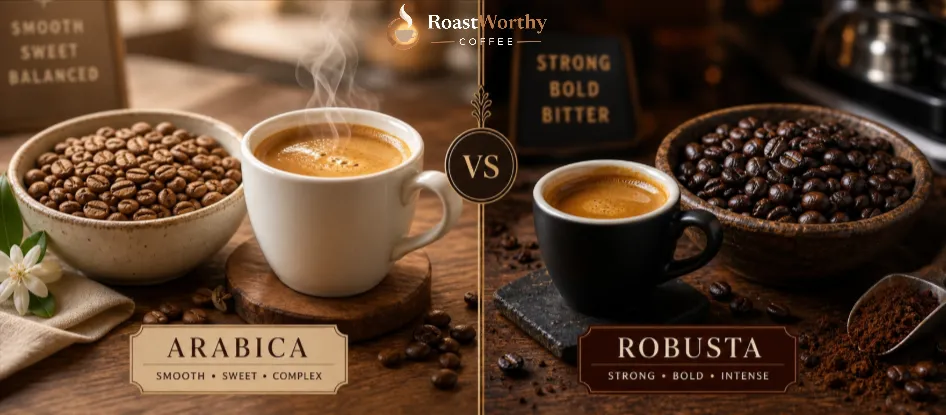
For most people, 100% Arabica is the safer choice for low acid coffee. Arabica usually has more sweetness, better aroma, and a smoother flavour range than commodity Robusta. It also usually contains less caffeine.
That caffeine point matters. In acid reflux, caffeine can be the trigger even when the coffee itself tastes smooth. This is why Arabica vs Robusta acid is not only about flavour chemistry; it is also about how your body responds to stimulation.
Robusta is not automatically bad. Good Robusta exists, and a little can improve crema in espresso. But cheap Robusta-heavy blends often taste woody, rubbery, bitter, or harsh, which is not where I would start for sensitive stomach coffee.
If you drink espresso, a blend with 10–20% Robusta can work if it is roasted well. For regular drip, cold brew, or French press, start with 100% Arabica and adjust from there.
Best Low Acid Coffee Brands to Try
The best low acid coffee brands are not always the brands shouting the loudest. Look for roast freshness, whole bean options, clear origin information, and flavour descriptions that sound like actual coffee rather than medical brochure copy.
A good low-acid brand should tell you the roast level, bean type, grind options, and expected taste. If the bag only talks about your stomach and says nothing about flavour, be careful.
1. Lifeboost Coffee
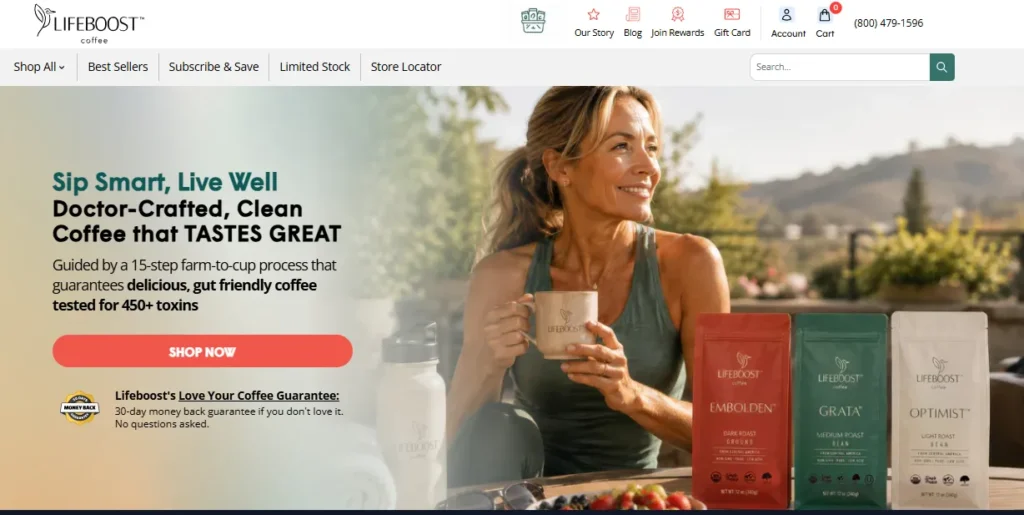
Lifeboost is one of the most searched low acid coffee brands, and it makes sense as a first stop. The brand focuses on organic, stomach-friendly Arabica coffee with smooth, chocolate-leaning flavour.
Start with medium or medium-dark roast. Avoid flavoured options during your first reflux test because added flavouring creates another variable. Keep it simple, brew it clean, and see how your body responds.
2. Puroast Low Acid Coffee
Puroast is built around low-acid claims and darker roasting. This is not the brand I would choose for delicate floral tasting, but that is not the job here.
The job is smooth, heavy, low-bite coffee for people who already like darker roasts. Expect more roast flavour, less fruit, and a fuller body.
3. Volcanica Low Acid Coffee
Volcanica is a better fit for drinkers who still care about origin. Their low-acid range usually points toward naturally softer coffees rather than simply roasting everything darker.
This is where low acid coffee can still taste alive. Try whole bean if possible and grind fresh. Pre-ground low-acid coffee loses aroma quickly, and then “smooth” becomes “flat.”
4. Fabula Coffee
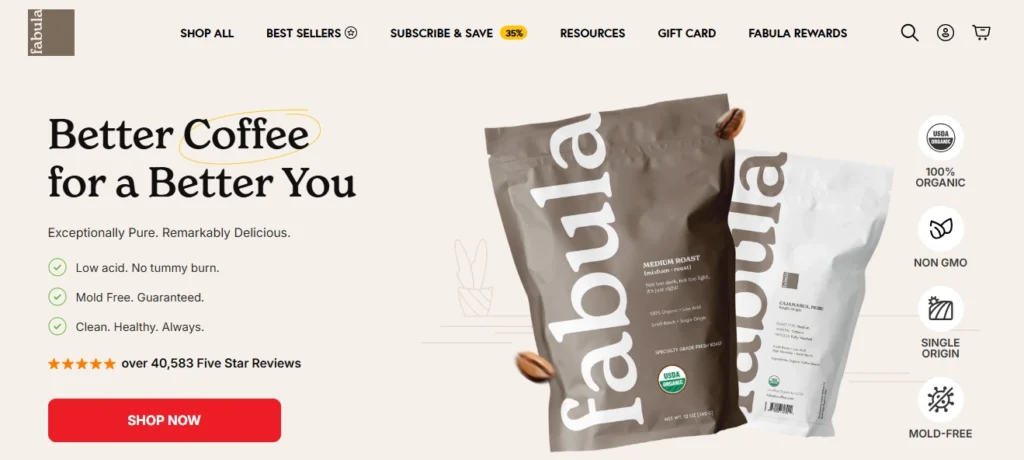
Fabula is useful for people who want organic, low-acid, and decaf options in one place. That combination matters for low acid coffee for acid reflux because caffeine may be the real problem.
Start with decaf or half-caf if regular coffee still bothers you. Brew it slightly weaker than usual. A 1:17 ratio is a better test than a thick, aggressive 1:14 mug.
5. Java Planet Low Acid Coffee
Java Planet is a practical whole bean low-acid coffee option. It feels more like normal coffee shopping and less like buying a digestive supplement, which I appreciate.
Choose medium roast for balance or dark roast if brightness bothers you most. Grind right before brewing. That one step improves aroma, sweetness, and finish more than most people expect.
Best Roast Level for Sensitive Stomachs
The best roast level for most sensitive stomachs is medium-dark. It gives you lower perceived acidity without pushing the coffee into burnt, oily territory. That is the balance point.
| Roast Level | Acidity Feel | Best For |
|---|---|---|
| Light roast | Bright and sharp | Fruit-forward specialty drinkers |
| Medium roast | Balanced | Mild stomach sensitivity |
| Medium-dark roast | Smooth and rounded | Best starting point |
| Dark roast | Low brightness, more bitterness | Dark roast fans |
| Very dark roast | Smoky, oily, bitter | Usually not ideal |
Light roasts can taste incredible, but they often carry more perceived acidity. Dark roasts can feel smoother, but they may become bitter and heavy. Medium-dark gives you the best chance of sweetness, body, and comfort in the same cup.
Look for flavour words like chocolate, almond, caramel, brown sugar, toasted grain, and baking spice. Avoid lemon, grapefruit, cranberry, winey, juicy, or sharp berry descriptors when shopping for coffee for sensitive stomach needs.
Best Brewing Methods for Low Acid Coffee
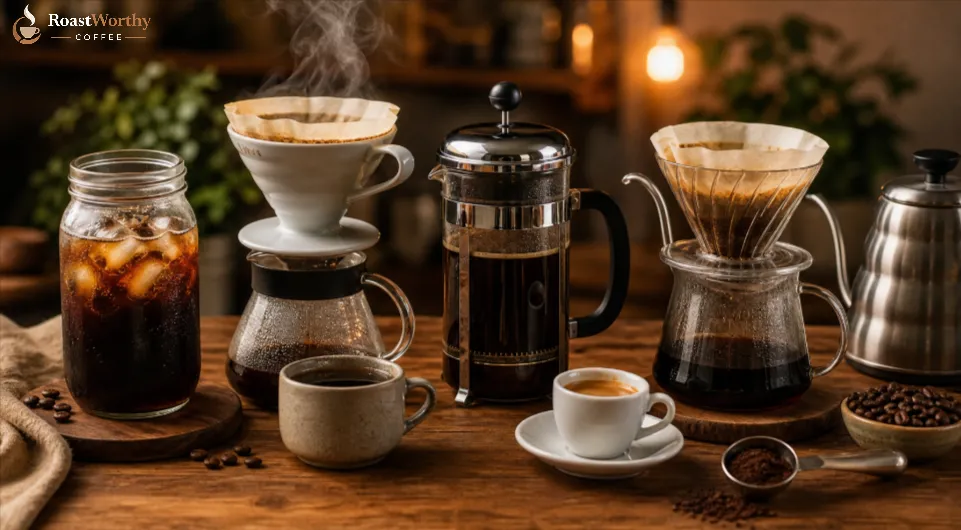
Brewing changes the way acidity shows up. The same bean can taste bright in a pour-over, round in a French press, and soft in cold brew. That is why method matters as much as the bag.
Do not change five things at once. Change dose first, then caffeine, then roast level, then brew method. The curve does not lie, but neither does your stomach.
Low Acid Decaf Coffee: Often the Smartest Move
Low acid decaf coffee is often the best choice for acid reflux. Not always because decaf is lower in acid, but because it removes most caffeine. For many people, that is the bigger issue.
Look for Swiss Water Process decaf, sugarcane process decaf, organic decaf Arabica, and medium or medium-dark roast. Whole bean is still better if you care about taste.
Avoid cheap decaf that tastes papery, stale, or burnt. Bad decaf is usually old, over-roasted, or made from low-grade beans. Good decaf should taste like cocoa, toasted grain, caramel, and soft nuts.
It will not taste exactly like regular coffee. But it should not taste punished.
What to Avoid When Buying Low Acid Coffee
A low-acid label does not automatically mean the coffee is good. Some brands lean so hard into stomach-friendly marketing that they forget the cup still needs flavour.
Avoid low acid coffee with no roast date, no origin information, only vague “premium bean” language, or huge medical promises. Also be careful with oily black beans, extra-strong blends, artificial flavouring, and cheap Robusta-heavy coffee.
The best low acid coffee brands talk like coffee people. They mention origin, roast level, bean type, grind format, and flavour direction. If the bag says everything about your stomach and nothing about taste, I would keep looking.
Coffee still has to taste good. That is not negotiable.
Quick Answer: What Is the Best Low Acid Coffee?
The best low acid coffee for most sensitive stomachs is a medium-dark 100% Arabica coffee from Brazil, Sumatra, Peru, Nicaragua, Mexico, Guatemala, or Colombia. For acid reflux, cold brew and low acid decaf are usually the gentlest starting points because they reduce sharpness and may lower caffeine impact.
FAQ: Low Acid Coffee
Is low acid coffee good for acid reflux?
Low acid coffee may help some people with acid reflux, especially when paired with lower caffeine, smaller serving sizes, and food. It is not a medical treatment, but it can be a better coffee choice for reflux-prone drinkers.
What coffee is easiest on the stomach?
Medium-dark 100% Arabica coffee brewed through a paper filter is usually easiest on the stomach. Cold brew is also a strong option because it tastes smoother and less sharp than many hot brewing methods.
Is dark roast coffee lower acid?
Dark roast coffee usually tastes lower in acidity than light roast coffee. But very dark roasts can become bitter, smoky, and oily, so medium-dark is often the better choice for sensitive stomachs.
Is cold brew low acid?
Cold brew usually has lower perceived acidity than hot brewed coffee. It tastes smoother, rounder, and less sharp, especially when made with medium-dark Brazil, Sumatra, Peru, or Nicaragua beans.
Is Arabica or Robusta better for acid reflux?
Arabica is usually better for acid reflux because it tastes smoother and typically has less caffeine than Robusta. Robusta can work in espresso blends, but too much may taste harsh and feel heavier.
What should I avoid in low acid coffee?
Avoid oily black beans, stale pre-ground coffee, extra-strong blends, vague medical claims, artificial flavouring, and bright light roasts described as citrusy, winey, or sharp.
Final Verdict
Start with medium-dark 100% Arabica low acid coffee. Brew it through a paper filter at a 1:17 ratio, drink it after food, and keep the serving moderate.
If reflux still shows up, test half-caf or decaf before giving up coffee completely. If sharpness is the issue, try cold brew. If bitterness is the issue, move away from oily dark roasts and choose a cleaner medium-dark bean.
Low acid coffee is not magic. But when the bean, roast, brew method, and caffeine level line up, it can give you what you wanted in the first place.
A proper cup of coffee.
Without the burn.
More Recommendations from RoastWorthy Coffee