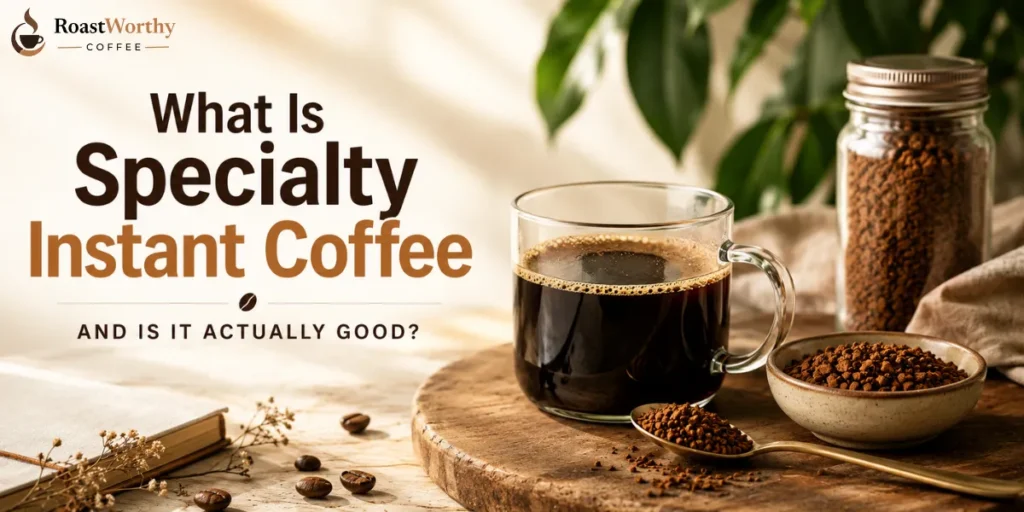
What Is Specialty Instant Coffee and Is It Actually Good?

Let's be honest. “Instant coffee” used to be a punchline.
Bitter. Flat. The stuff you drank at 2am because nothing else was open.
But specialty instant coffee is a genuinely different product — and most people don't know it exists yet. ☕
I've cupped over eight thousand coffees. I went in skeptical. I came out… mostly convinced.
Specialty Instant Coffee — The Quick Verdict
So What Actually Is Specialty Instant Coffee?
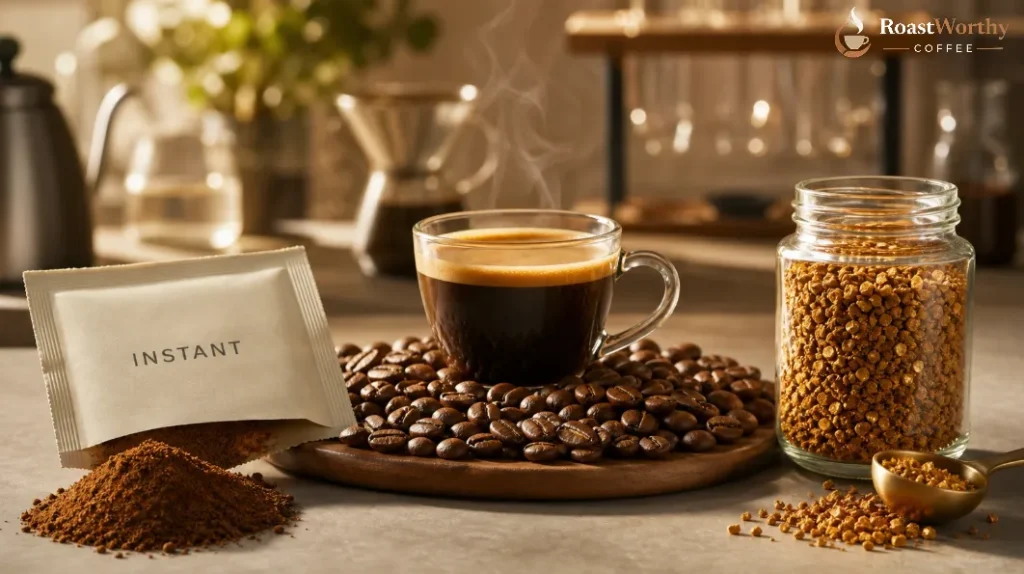
Regular instant coffee starts with cheap robusta. Bulk beans. Burned in processing.
Specialty instant coffee starts with the same single-origin arabica you'd find in a $22 bag from a good roaster.
The difference is what happens after the brew.
Here's the thing — both styles brew real coffee first, then remove the water. What's left is soluble coffee. Crystals you rehydrate with hot water.
The quality of those crystals depends entirely on how the water gets removed.
And “specialty” isn't just marketing here. The beans score 80+ on the Specialty Coffee Association's 100-point scale before they ever hit the dryer. That grade is the floor. Everything below it is just… commodity coffee in a sachet.
Freeze-Dried vs Spray-Dried: This Is the Whole Game
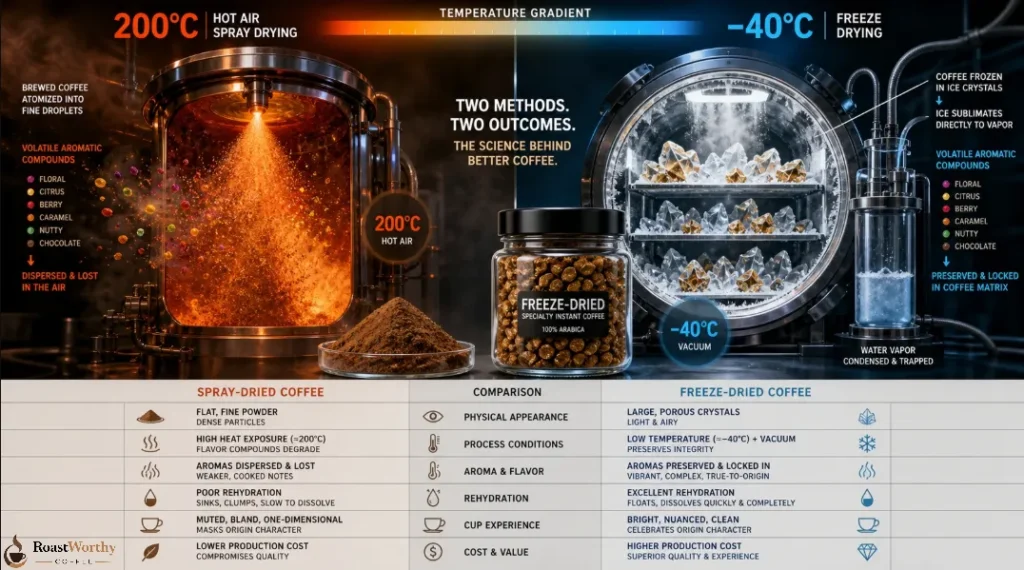
Marco here. Here's what the heat is actually doing. ⚗️
Spray-drying blasts brewed coffee through a chamber at around 200°C. The water evaporates instantly. So do most of the volatile aromatic compounds — the stuff that makes coffee taste like coffee.
Fast. Cheap. Flavour-destroying.
Freeze-drying takes the opposite approach. The coffee gets frozen to around −40°C, then placed in a vacuum.
The ice sublimates — goes straight from solid to vapor without melting. No high heat. The aromatics survive.
Freeze-dried is why specialty instant coffee tastes good at all. That's the entire breakthrough.
| Method | Temperature | Aromatics Preserved | Taste Result |
|---|---|---|---|
| Spray-dried | ~200°C | Low | Flat, bitter |
| Freeze-dried | ~−40°C | High | Bright, clean |
Want the why behind the why? Coffee aroma comes from hundreds of volatile compounds — things like aldehydes and esters that boil off at low temperatures. Heat them and they're gone. Freeze them and lock them in a vacuum, and they stay in the crystal until your hot water releases them again.
That's the same logic behind freeze-dried fruit holding its flavour. The cold does the preserving. The vacuum does the drying.
Quick rule: if the bag says spray-dried — or doesn't say anything — assume spray-dried. The good brands brag about freeze-drying. Loudly.
Why the Origin Still Matters
Kimiko here. Start with the origin, not the process.
A freeze-dryer can't add flavour. It can only preserve what was there. So if the green bean was mediocre, your instant coffee will be mediocre. Just… efficiently preserved.
The best specialty instant coffee uses named origins. Ethiopian Guji. Colombian Huila. Single farms, sometimes.
There's a whole story in this cup — a farmer at 1,900 meters picked these cherries by hand. Then someone froze the brew at −40°C so you could drink it on a mountain trail in Patagonia.
That chain is genuinely wild when you think about it.
Process matters too. A washed Ethiopian tastes clean and floral — jasmine, bergamot. A natural-process one from the same region tastes like blueberry jam, because the fruit stayed on the seed during drying and fermented into it.
Good specialty instant brands tell you which. The bad ones hope you won't ask.
When a brand gives you the region, the process, the altitude — that's a brand that respects the bean. When the label just says “premium blend,” walk away.
Is Instant Specialty Coffee Worth It? (The Honest Take)
Depends entirely on what you're comparing it to.
Against a fresh pour-over from beans roasted 5 days ago? No. It loses. The fresh cup wins on body, on aroma, on that bright living quality.
Against gas-station drip or hotel-room coffee? It destroys them. Not close.
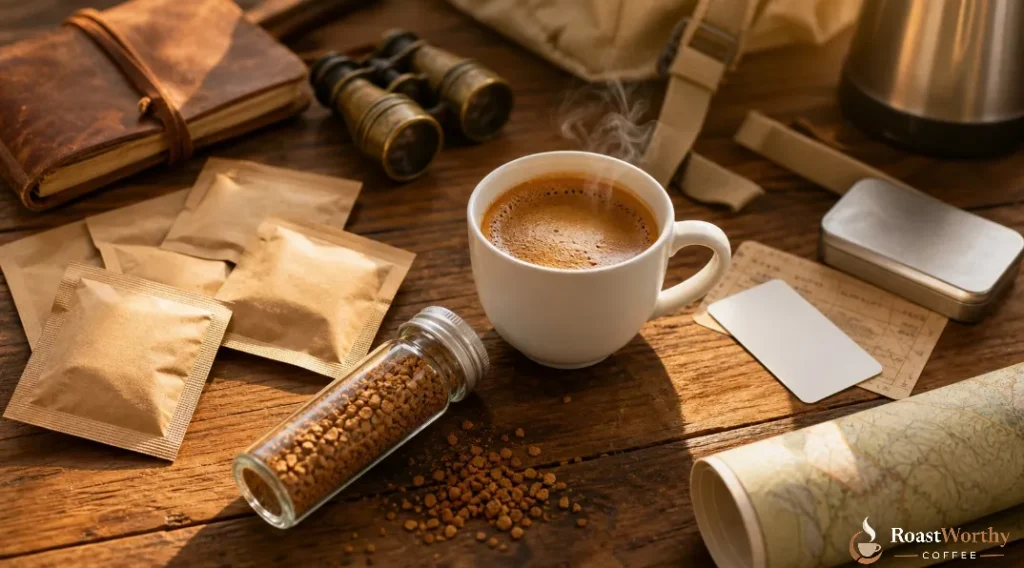
Specialty instant coffee is a travel and convenience product — and on those terms, it's excellent.
Think about where it actually shines:
I keep sachets in my bag. No joke. For a sommelier-trained critic, that's an admission.
The Best Specialty Instant Coffee We Tested
We brewed each one the same way. One sachet. 180ml water at 92°C. Tasted black, then with a splash of milk.
Here's how they ranked.
Voila
The benchmark. Voila partners with actual specialty roasters and freeze-dries their coffee.
The Ethiopian tastes like blueberry and lemon zest. Bright. Clean finish. Genuinely surprising in a cup of instant.
This one earns its price. Around $2 per serving — steep, but you're paying for real roaster partnerships.
Verdict: The closest instant gets to a real café cup. ☕
Swift Cup
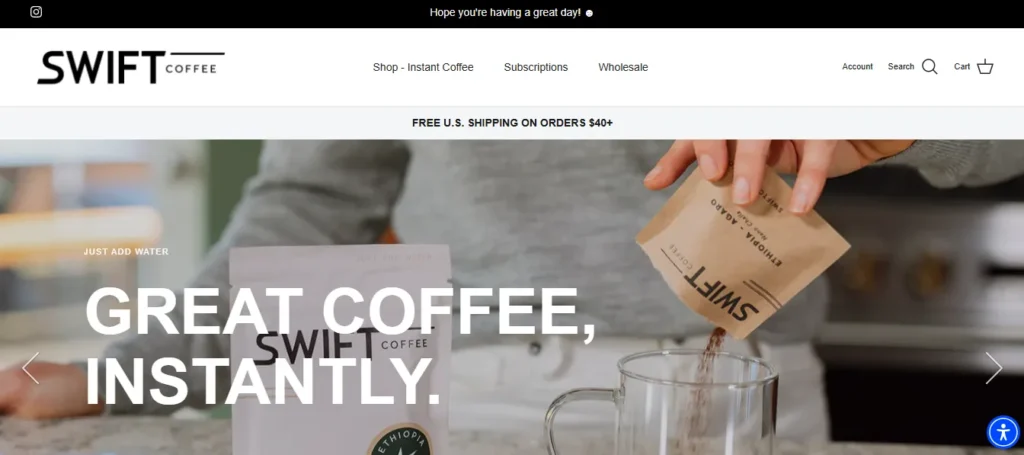
Swift Cup goes deep on rotating single origins. The selection feels like a specialty roaster, not a coffee brand.
Tasted their Colombian. Caramel, red apple, soft acidity. Smooth. Slightly less aromatic than Voila but more consistent batch to batch.
Excellent value at the subscription tier.
Verve
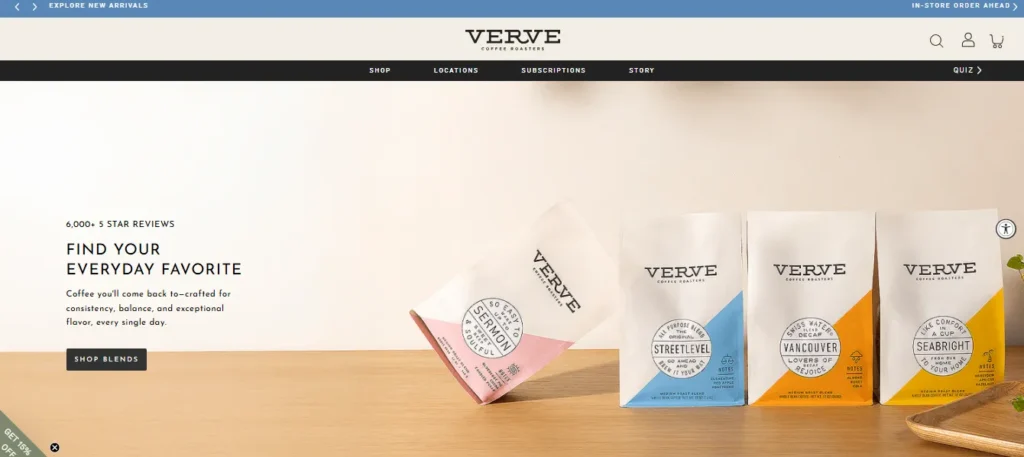
Verve is a respected California roaster, and their instant line — Craft Instant — reflects that pedigree.
The Streetlevel blend tastes like milk chocolate and toasted almond. Comforting. Less bright than the others but more crowd-pleasing.
Good gateway for people scared of fruity coffee.
| Brand | Best For | Taste | Score | Price/Serving |
|---|---|---|---|---|
| Voila | Brightness seekers | Blueberry, lemon | 8.5/10 | ~$2.00 |
| Swift Cup | Variety hunters | Caramel, apple | 8/10 | ~$1.80 |
| Verve | Comfort drinkers | Chocolate, almond | 7.5/10 | ~$1.75 |
Affiliate note: some links here are affiliate links. We only recommend coffee we'd actually drink. These three, we drink.
How to Brew Specialty Instant Coffee Properly
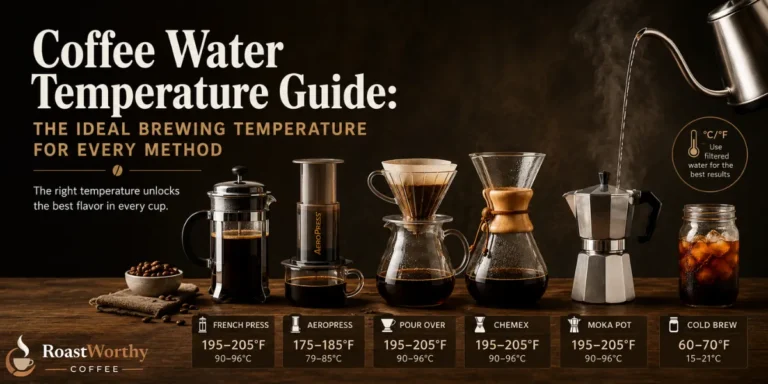
Most people ruin it with boiling water. Don't.
The taste doesn't lie — overheated instant goes bitter fast.
For iced coffee, dissolve the crystals in a splash of hot water first, then pour over ice. Dumping crystals straight into cold water leaves clumps.
One more trick. If a cup tastes too sharp, add water, not time. You can't un-brew instant — but you can dilute it back into balance.
Specialty Instant vs Regular Instant: The Real Gap
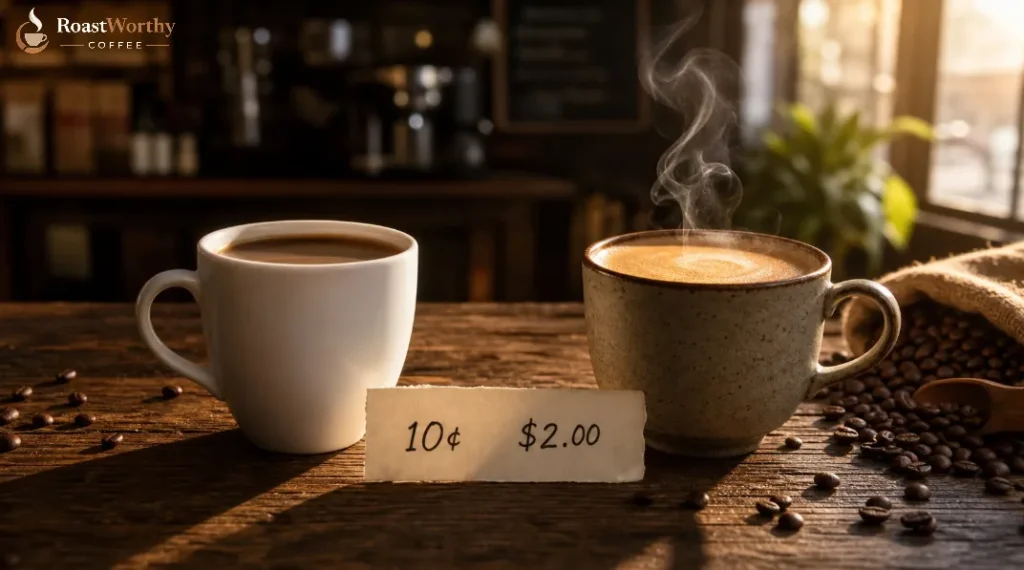
A quick reality check on the price jump.
Regular instant costs maybe $0.10 a cup. Specialty instant runs $1.50–$2.00.
That's a 15–20x premium. Is it justified?
For the flavour difference — honestly, yes, within its context. You're not comparing instant to instant. You're comparing a forgettable bitter cup to one that actually tastes like a named origin.
But understand what you're buying. Convenience plus quality. Not magic.
It's the same logic as wine. A $40 bottle isn't 40x better than an $8 one. But it's clearly better. The premium buys craft, sourcing, and care — not miracles.
Who Should Actually Buy This
Buy specialty instant coffee if you travel often, camp, or have no real brewing setup at work.
Skip it if you have a grinder and a kettle at home. At that point you're paying premium prices for a convenience you don't need.
The smartest move? A small box for the road. Real beans for the kitchen.
That's how I run it. Best of both.
Frequently Asked Questions
Is specialty instant coffee real coffee?
Yes. It's brewed from specialty-grade arabica beans, then freeze-dried into soluble crystals. You're rehydrating real coffee, not a synthetic powder.
Does freeze-dried coffee taste better than spray-dried?
Almost always. Freeze-drying uses low temperatures that preserve aromatic compounds. Spray-drying uses high heat that destroys them, leaving a flatter, more bitter cup.
Is instant specialty coffee worth the price?
For travel, camping, and office use — yes. It tastes far better than standard instant. For daily home brewing with proper equipment, fresh beans win on value and flavour.
How much caffeine is in specialty instant coffee?
Roughly 60–80mg per serving, similar to a standard cup of drip coffee. The exact amount depends on the origin and serving size.
What's the best specialty instant coffee brand?
Voila, Swift Cup, and Verve lead the category. Voila offers the brightest, most café-like cup, while Verve suits drinkers who prefer chocolatey, comforting profiles.
Can you make iced coffee with instant specialty coffee?
Yes. Dissolve the crystals in a small amount of hot water first, then pour over ice. This prevents clumping and gives a cleaner taste.
How long does specialty instant coffee last?
Sealed sachets stay fresh for 12–18 months. The freeze-drying and airtight packaging lock out moisture, which is the main enemy of soluble coffee.
The Final Word
Specialty instant coffee is the rare product that lives up to its name.
It won't replace your pour-over. It was never meant to.
But as travel coffee — as the thing you reach for on a mountain or a hotel desk — it's genuinely good. Buy a box. Throw it in your bag.
You'll be glad it's there. ✒️
More Recommendations from RoastWorthy Coffee