Best French Press Coffee Makers of 2026: Our Top 7 Picks Tested

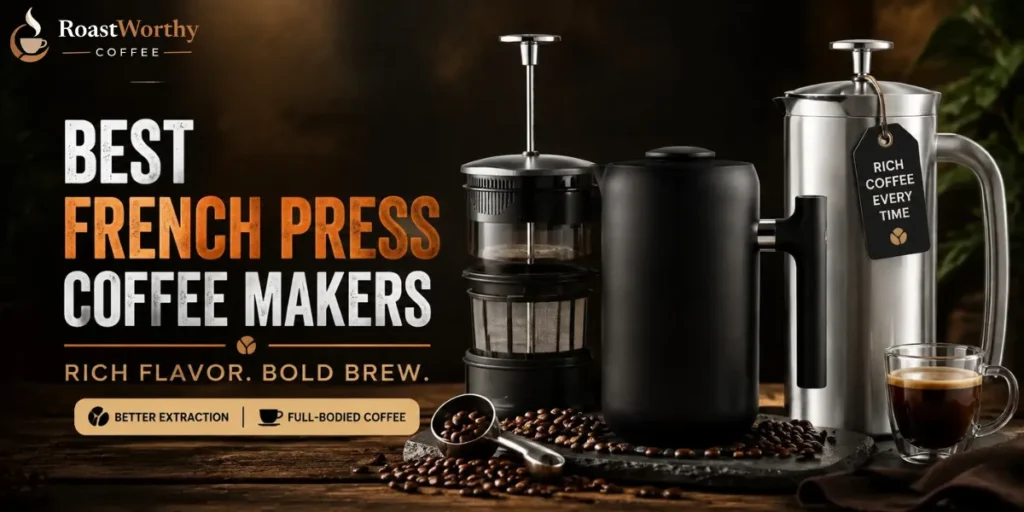
The best French press coffee maker should hold brewing temperature, control grit, and pour without painting the counter brown.
That sounds basic. Plenty of French Press Coffee Makers still miss one of those jobs.
For 2026, the Fellow Clara takes our top spot. It brews hot, balanced coffee and feels right in the hand. The ESPRO P7 runs a close second because its dual mesh filter produces the cleanest cup here.
The Best French Press Coffee Makers
| Rank | French Press | Best For | Capacity | Body | Filter | Score |
|---|---|---|---|---|---|---|
| 1 | Fellow Clara | Best overall | 24 oz | Double-wall steel | Fine mesh | 9.4/10 |
| 2 | ESPRO P7 | Lowest sediment | 18 or 32 oz | Double-wall steel | Dual micro-filter | 9.3/10 |
| 3 | Frieling Double-Wall | Durability | 36 oz tested size | 18/10 steel | Fine mesh | 9.1/10 |
| 4 | Coffee Gator | Value | About 32 oz | Double-wall steel | Dual screen | 8.7/10 |
| 5 | YETI Rambler | Camping | 34 or 64 oz | Vacuum-insulated steel | Covered mesh | 8.6/10 |
| 6 | Aarke Coffee Press | Premium design | 34 oz | Double-wall steel | Dual screen | 8.4/10 |
| 7 | Bodum Chambord | Classic glass | 34 oz | Borosilicate glass | Standard mesh | 7.8/10 |
How We Ranked These French Presses
We scored brew quality, heat retention, sediment, plunger resistance, pouring, cleaning, durability, and value.
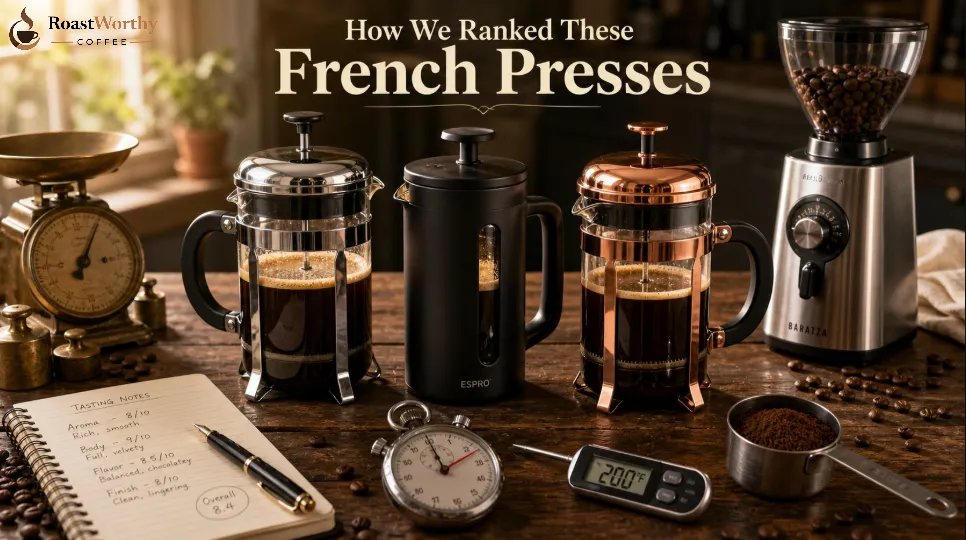
We compared current top French press reviews and hands-on results from specialist review kitchens. Each brand’s listed capacity and materials were checked separately.
We did not invent temperature figures or pretend every shiny steel pot made better coffee.
Filtration and stable brewing temperature carried the most weight. A handsome press means little if the final mug is lukewarm and muddy.
Our baseline recipe uses 30 grams of coffee, 500 grams of water, a medium-coarse grind, 200°F water, and a four-minute steep.
1. Fellow Clara: Best French Press Coffee Maker Overall
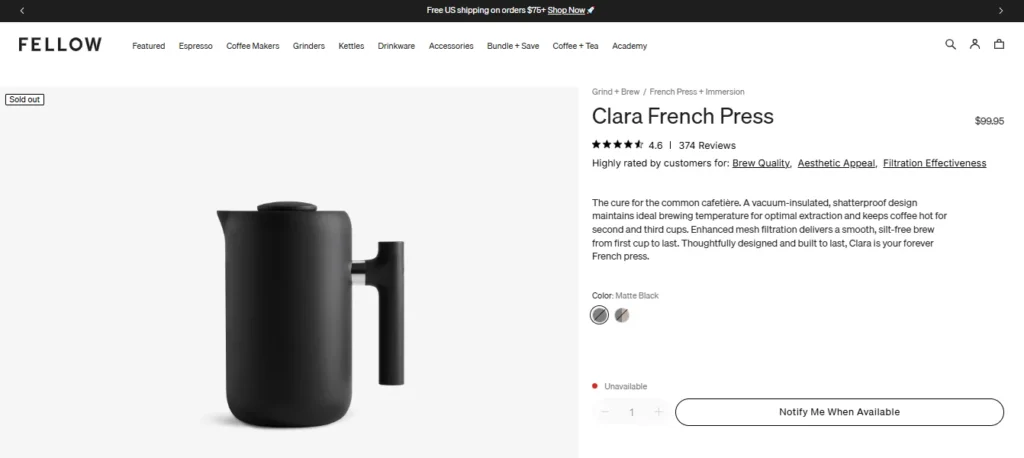
The Fellow Clara gets the whole system right.
Its 24-ounce stainless steel body is double-walled and lined for easier cleanup. The wide handle balances the press during pouring. Its all-direction lid removes the annoying search for a tiny pour opening.
The Clara also includes ratio markers and an agitation stick. Those details make repeatable brewing easier.
Coffee comes out full and smooth. The fine mesh filter controls most sediment without stripping away the oils that give French press coffee its weight.
Verdict: Clara is the best French press 2026 pick for two serious coffee drinkers. It costs more than Bodum, but the engineering earns the price.
2. ESPRO P7: Best for a Clean, Low-Sediment Cup
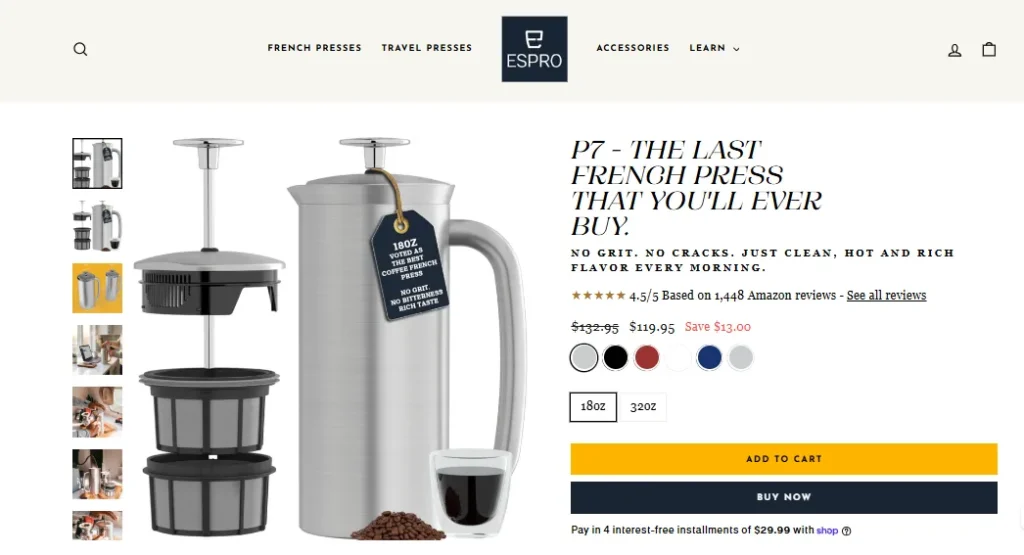
The ESPRO P7 is what happens when an engineer gets annoyed by sludge.
Instead of one flat screen, it uses two basket-shaped micro-filters. They lock together and trap far more fine coffee particles than a standard plunger press.
The result is unusual for French press coffee. It still has body, but the finish is cleaner. Light and medium roasts become easier to read.
Its double-walled stainless steel body holds heat far better than glass. Sizes include 18 and 32 ounces.
Verdict: Buy the P7 if you like immersion brewing but hate the gritty final sip. This one earns its price.
3. Frieling Double-Wall: Best Stainless Steel French Press
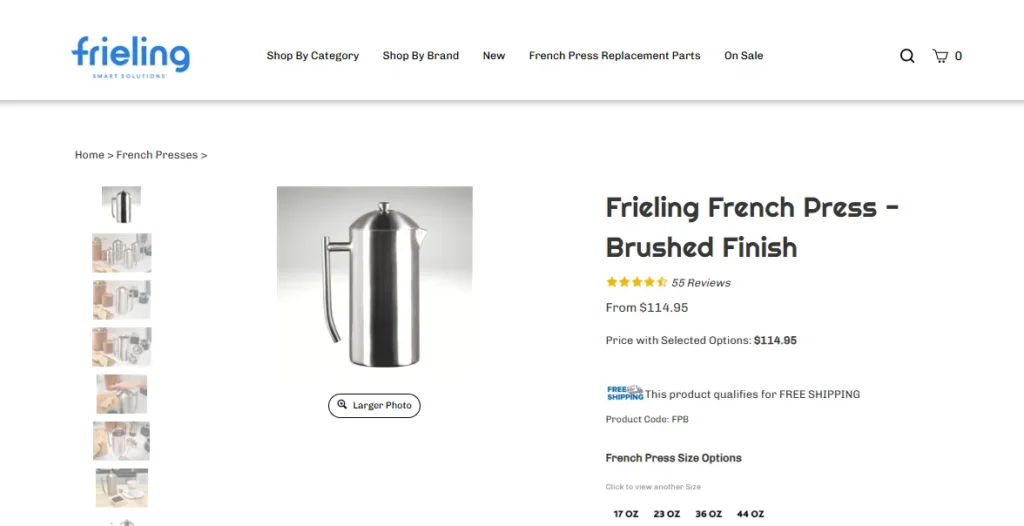
Frieling makes the press I would expect to find in a working restaurant kitchen.
The body is 18/10 stainless steel inside and out. It feels dense, stable, and hard to damage. Double-wall construction slows heat loss, while the close-fitting filter keeps the cup cleaner than most classic presses.
The 36-ounce version is the sweet spot. It makes roughly three large mugs without becoming awkward to lift.
Brushed steel is the sensible finish. Polished steel looks sharp for seven minutes, then collects fingerprints.
Verdict: Frieling is the long-term buy. It feels closer to cookware than a disposable coffee gadget.
4. Coffee Gator: Best French Press Under $40
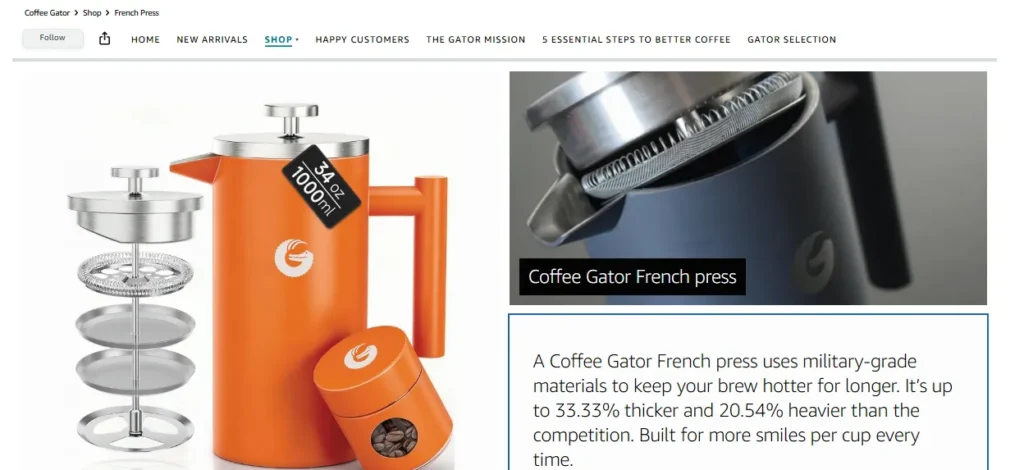
Coffee Gator gives budget buyers the feature that matters most: an insulated stainless steel body.
That puts it ahead of many low-cost glass models. Its dual-screen filter controls a reasonable amount of silt, and the capacity sits near the useful 32-ounce mark.
The compromise shows in the details. The spout can drip. The fit and finish do not match Fellow or Frieling.
Still… the coffee stays hot, the body will not shatter, and the price is sane.
Verdict: Coffee Gator is the smart budget pick for buyers who care more about hot coffee than brand prestige.
5. YETI Rambler French Press: Best for Camping
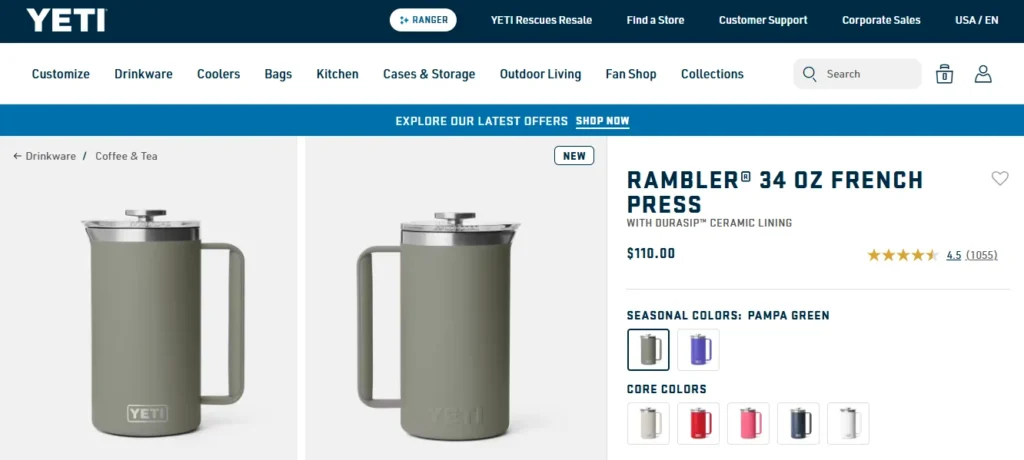
The YETI Rambler is built for campsites, vans, tailgates, and kitchens where glass objects have short lives.
The 34-ounce model uses 18/8 stainless steel, double-wall vacuum insulation, and a ceramic lining. A covered filter separates the grounds after plunging, which slows continued extraction.
It is also dishwasher safe. That matters after a muddy weekend.
The weakness is pouring. The lid behaves more like travel drinkware than a classic spout. Remove it before serving if coffee runs down the side.
Verdict: YETI wins outdoors. At home, Fellow and Frieling pour better.
6. Aarke Coffee Press: Best Premium Metal Design
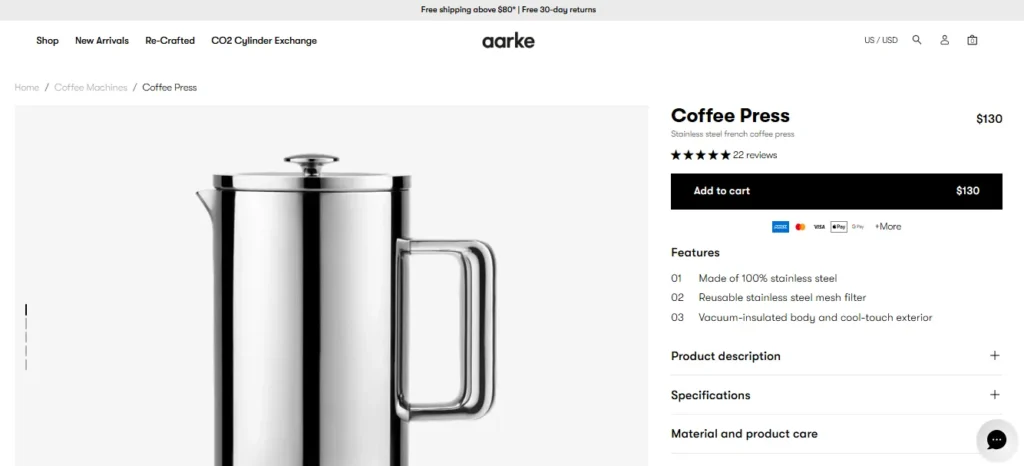
Aarke makes one of the sharpest stainless French presses on the counter.
The 34-ounce body is double-walled. Its heavy handle provides useful counterbalance, and every part can go in the dishwasher.
Heat retention is strong. Pouring is controlled. Cleanup is painless.
The filter is the issue. It lets more fine sediment through than the ESPRO or Fellow. Some drinkers call that texture. Others call it mud.
Let’s be honest… at this price, the filtration should be tighter.
Verdict: Buy Aarke for build, design, and easy cleaning. Buy ESPRO for the better cup.
7. Bodum Chambord: Best Classic Glass French Press
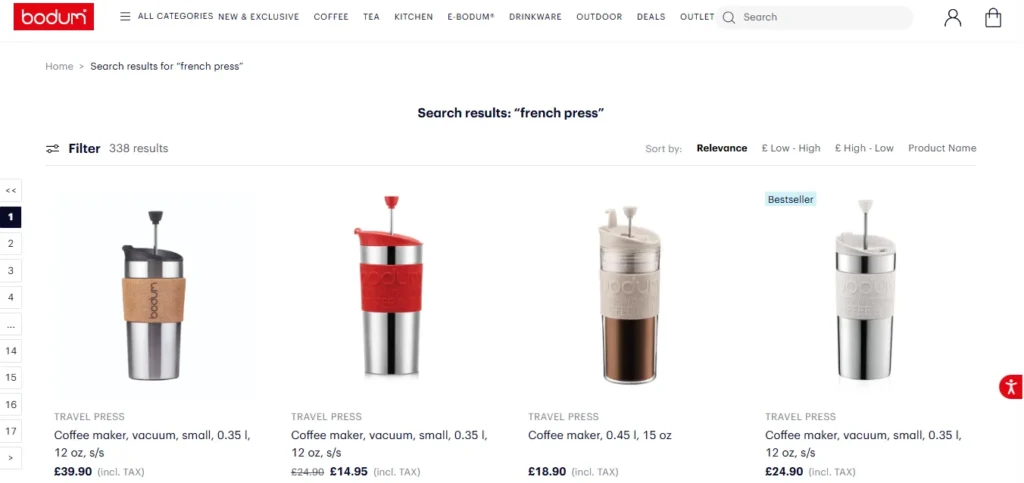
The Bodum Chambord is the French press most people picture first.
Its borosilicate glass carafe sits inside a steel frame. You can watch the bloom rise, the crust form, and the grounds settle. That visual feedback is useful for beginners.
The popular 34-ounce model is sold as an 8-cup French press. Those are small 4-ounce cups, not eight breakfast mugs.
Coffee tastes broad and rich. It also carries more sediment than our top picks. Heat retention is average because the glass body is not insulated.
Verdict: Chambord remains the best entry point for buyers who want a traditional glass French press. It is iconic… not technically superior.
Glass vs Stainless French Press: Which Is Better?
Glass gives you visibility. Stainless steel gives you temperature stability and durability.
For coffee quality, double-walled stainless steel wins. It reduces heat loss during the four-minute steep and keeps later cups warmer.
Here’s what the heat is actually doing.
Hot water pulls different compounds from coffee across the brew. A sharp temperature drop can leave the cup thin, sour, or oddly dry.
Glass still has a place. It costs less, looks lighter, and lets beginners see the brewing process.
Choose glass for price and visibility. Choose stainless steel for heat retention and daily abuse.
What Size French Press Should You Buy?
A manufacturer’s “cup” rarely means a full mug.
Bodum’s 8-cup French press holds about 34 ounces. After the grounds absorb water, expect around 27 to 30 ounces of served coffee.
Do not buy a giant press for one person. Most presses work best near their intended brewing volume.
How to Make Better French Press Coffee
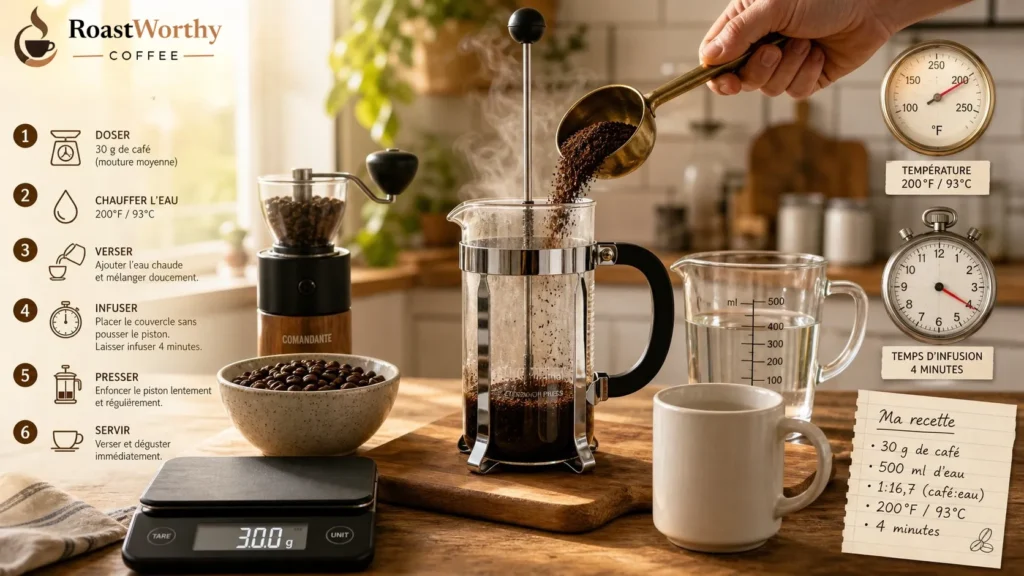
Start at a 1:16 ratio. Use 30 grams of coffee for 480 grams of water.
Grind medium-coarse, not boulder coarse. Extremely large particles can under-extract and taste hollow.
Pour water between 195°F and 205°F. Stir enough to wet every ground, then place the lid on without plunging.
At four minutes, press slowly. If the plunger fights back, the grind is too fine or the filter is overloaded.
Pour into mugs or a separate carafe. Coffee left on the grounds can make later cups harsher.
Taste it. Write it down. Brew it again. ☕
FAQs About French Press Coffee Makers
What is the best French press coffee maker in 2026?
The Fellow Clara is our best overall pick. It combines strong heat retention, clean filtration, easy pouring, and thoughtful brewing markers.
Is a glass or stainless French press better?
Stainless steel is better for heat retention and durability. Glass is cheaper and lets you watch the brewing process.
Why is my French press coffee gritty?
Your grind may be too fine, or the filter may not seal closely. A dual-filter model such as the ESPRO P7 reduces grit.
How long should French press coffee steep?
Start with four minutes. Adjust grind size before making large changes to steep time.
What coffee-to-water ratio works best?
A 1:15 to 1:17 ratio works for most beans. Start at 1:16, then change the dose in small steps.
Is an 8-cup French press really eight cups?
Not in everyday mug terms. A 34-ounce Bodum equals eight 4-ounce servings, or roughly three normal mugs after brewing loss.
Final Verdict
The Fellow Clara is the best French press coffee maker for most homes. It keeps the brew hot, filters well, and pours cleanly.
The ESPRO P7 is better for drinkers who want the least sediment. Frieling is the durability pick. Coffee Gator handles tight budgets without falling back to fragile glass.
Bodum still makes the classic. The newer insulated presses simply brew with tighter temperature control.
Pick the brewer that fixes your biggest annoyance. Then use a scale, hold the ratio steady, and change one variable at a time. The cup will tell you what worked. ⚗️
More Recommendations from RoastWorthy Coffee