What Is Third Wave Coffee? The Coffee Movement Explained

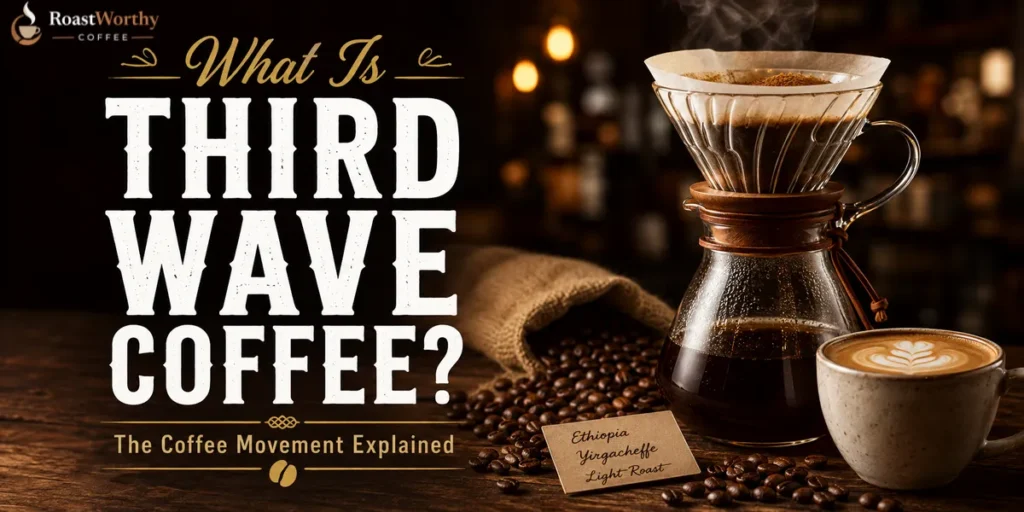
Third Wave Coffee is the idea that coffee is a craft product… not a commodity. It treats the bean the way wine treats the grape. The farm matters. The altitude matters. The processing method, the roast, the water temperature — all of it matters.
There's a whole story in this cup. And it goes back further than most people think.
Trish Rothgeb coined the term “third wave” in 2002. But the roots run to a Berkeley storefront in 1966. Start with the origin, not the roaster — that principle applies to the movement itself.
What Is Third Wave Coffee, Explained Simply
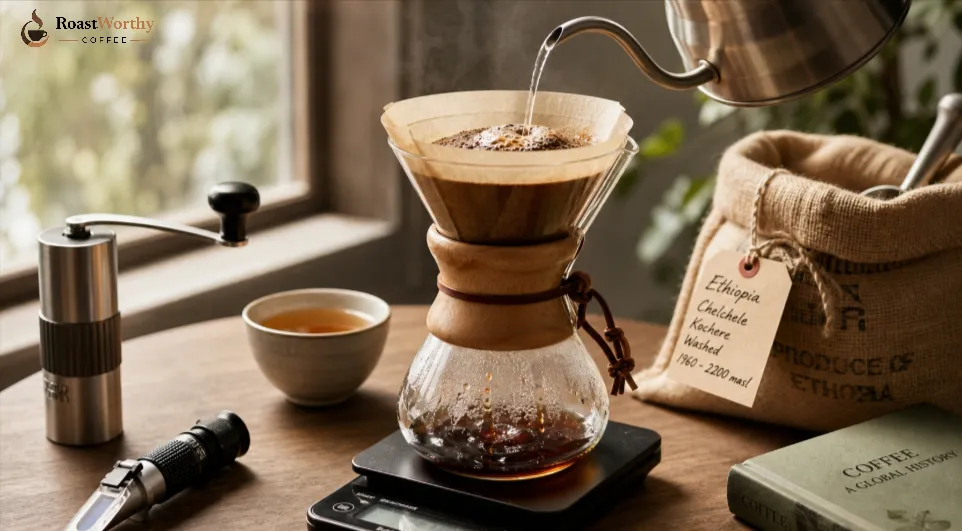
Strip away the jargon and it comes down to one belief: coffee is an artisanal food, worth understanding as deeply as wine, cheese, or single-estate chocolate.
That belief isn't abstract. It shows up in specific, measurable choices.
Second wave sold you the experience. Third wave sells you the coffee. That's the whole shift in one line.
First Wave, Second Wave, Third Wave: The Full History
The “waves” framing describes how much we've cared about coffee over roughly a century. Each wave fixed a problem the last one ignored.
First Wave: Coffee Becomes Convenient (Early 1900s)
The first wave was about getting coffee into every kitchen. Cheaply. Reliably.
Vacuum sealing, instant coffee, pre-ground cans. Folgers and Maxwell House built empires on convenience. Nobody asked where the beans came from. Nobody asked when they were roasted.
Coffee was fuel. Freshness and origin didn't enter the conversation. The goal was availability, and the first wave nailed it.
Second Wave: Coffee Becomes Social (1960s–1990s)
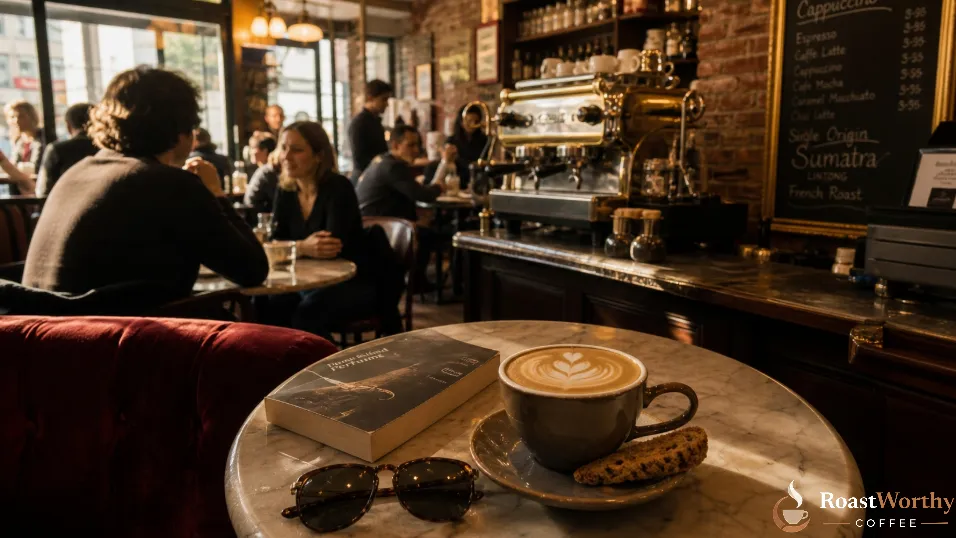
Here's where the story gets interesting. Peet's Coffee opened in Berkeley in 1966. Alfred Peet roasted darker, richer, fresher than anything on American shelves. He trained the people who would go on to found Starbucks.
Starbucks scaled that idea worldwide. Espresso drinks. Café culture. The word “barista.” Suddenly people knew what a latte was, and origin words like “Sumatra” and “Colombia” showed up on menus.
But second wave coffee was still about the café, not the coffee. Roasts stayed dark and consistent. Branding mattered more than the bean. The experience was the product.
Third Wave: Coffee Becomes Craft (2000s–Now)
Then the script flipped. A new generation of roasters asked a different question. Not “how do we scale this?” but “how good can this actually be?”
Three roasters became the movement's foundation — often called the third wave trinity:
They built the playbook. Direct trade sourcing. Transparent pricing. Meticulous roast profiles. Cafés that looked more like laboratories than lounges. Blue Bottle in Oakland joined soon after and pushed the aesthetic even further.
They didn't just sell coffee. They taught people how to taste it.
Who Coined “Third Wave Coffee”?
Trish Rothgeb — then Trish Skeie — named it in 2002, in an article for the Roasters Guild newsletter. She was watching a shift happen in real time and gave it a vocabulary.
Her framing borrowed from feminism's “waves.” Each one, a distinct cultural moment. The name stuck because it described something real: coffee people were starting to treat the bean as the star.
The people who grew this coffee deserve credit too. That was part of Rothgeb's point. The movement was as much about producers as consumers.
The Pillars of Third Wave Coffee
The movement rewired the entire supply chain — from farm gate to your grinder. Four pillars hold it up.
Direct Trade and Traceability
Third wave roasters often skip the commodity market entirely. They buy straight from producers, sometimes visiting the farms themselves.
Direct trade is a relationship, not a transaction. It means paying above commodity price for quality. And it means you can trace your bag to a single farm, a single lot, occasionally a single week of harvest.
This matters beyond the flavour. Before third wave, a brilliant lot and a mediocre one fetched roughly the same commodity price. That was broken. Direct trade fixed part of it — and rewrote the economics for producing countries.
Light Roast Focus
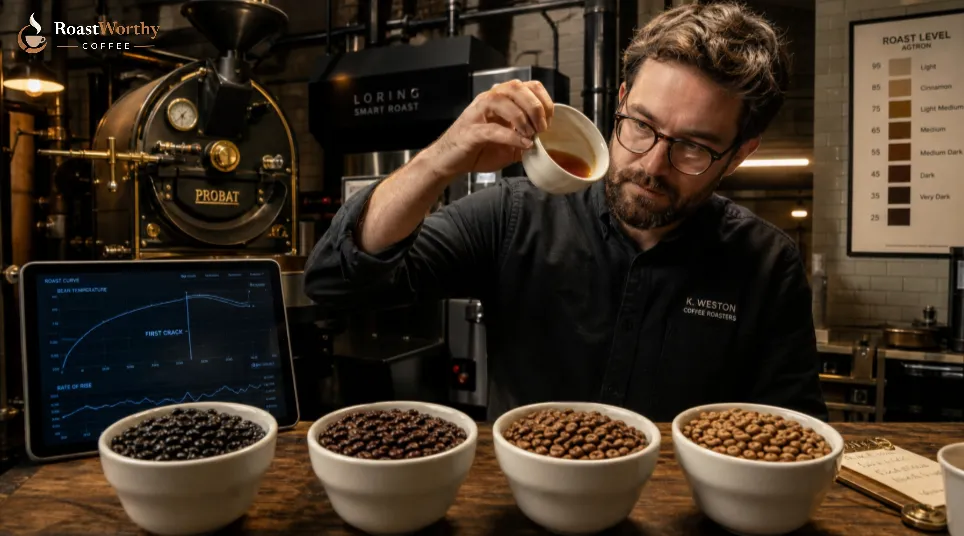
Second wave roasted dark. Dark roasting hides defects and standardises flavour. Every cup tastes like roast, not like origin.
Third wave roasts light. On purpose.
A light roast focus lets the terroir speak. A light-roasted Ethiopian Yirgacheffe tastes like blueberry and jasmine. A Kenyan SL28 tastes like blackcurrant and grapefruit. Burn those beans dark and those flavours disappear forever.
Single-Origin and Terroir
Blends have their place. But third wave elevated the single origin to the main event.
A Kenyan grown at 1,900 metres tastes nothing like a Colombian from 1,400. Altitude, soil, climate, varietal — the terroir is doing something here that a blend flattens out.
Third wave wants you to taste that difference. And to understand why it exists.
Craft Brewing and Science
Manual brewing became the third wave signature. Pour-over. AeroPress. Precise ratios. Baristas treated as skilled professionals, not order-takers.
The movement is science-informed. Grind size, water temperature, extraction time — all measured, all dialled in. This is craft coffee at the level of a controlled experiment.
Third Wave vs Specialty Coffee: What's the Difference?
People use these terms interchangeably. They're related, but not the same thing.
Specialty coffee is a technical grade. It means green beans scored 80+ points on the Specialty Coffee Association's 100-point scale. It's a quality benchmark, measured by trained cuppers.
Third Wave Coffee is a philosophy. It's the cultural movement built around specialty-grade beans — the roasting, the sourcing, the storytelling, the aesthetic.
Think of it this way. Specialty is the ingredient. Third wave is the cuisine.
| Aspect | Specialty Coffee | Third Wave Coffee |
|---|---|---|
| What it is | A quality grade (80+ SCA points) | A cultural movement |
| Focus | Bean quality standard | Origin, roast, farmer story |
| Roast level | Varies | Usually light to medium-light |
| Sourcing | Can be commodity-graded | Often direct trade |
| Measured by | Cupping score | Values and practices |
| The vibe | Technical | Craft and transparency |
You can have specialty-grade beans roasted dark and sold anonymously. That's specialty coffee without the third wave ethos. The movement is what you do with the quality.
The Craft Coffee Vocabulary You'll Actually See
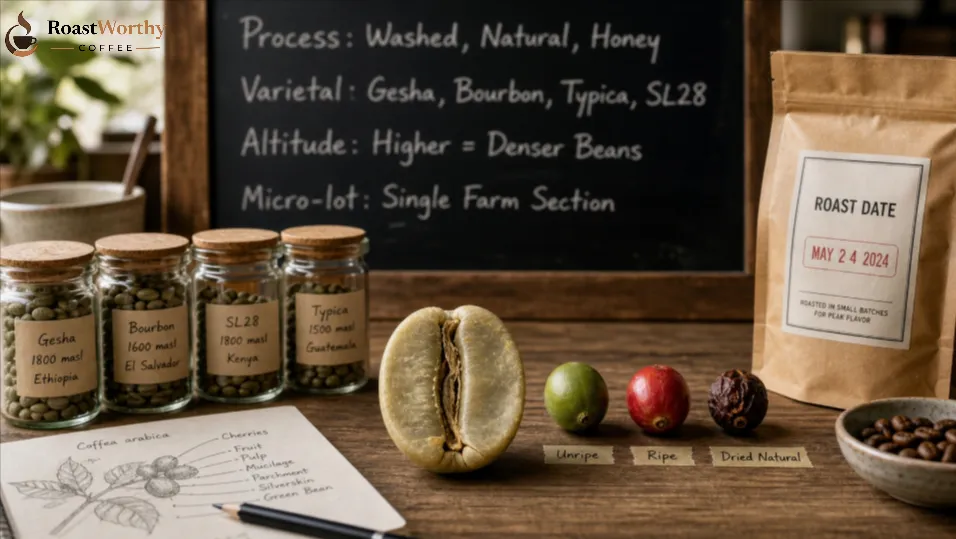
Walk into any third wave café and you'll meet a language that didn't exist on menus 25 years ago. Here's what it means.
Making this language normal might be the movement's biggest legacy. Coffee stopped being one flat thing and became a spectrum.
The Rise of the Micro-Roasters
Second wave was built by giants. Third wave was built by micro-roasters — small operations obsessed with getting a single bag right.
Tim Wendelboe in Oslo. Onyx in Arkansas. Sey in Brooklyn. They roast in small batches. They publish their sourcing. They'll tell you the farmer's name and, increasingly, what they paid.
Craft coffee scaled down before it scaled up. That intimacy is the point — and it's why the movement spread from big cities to small towns, one independent roaster at a time.
Why Third Wave Coffee Changed How We Drink
The impact runs deeper than better-tasting mornings.
If you've ever asked “what farm is this from?” or ordered a pour-over, you've felt the ripple. That's the third wave working on you.
Frequently Asked Questions
What is third wave coffee in simple terms?
It's the movement that treats coffee as a craft product — like fine wine. It emphasises the bean's origin, the farmer, light roasting, traceability, and precise brewing, from farm to cup.
Who coined the term “third wave coffee”?
Trish Rothgeb (then Trish Skeie) coined it in 2002 in a Roasters Guild article. She used it to name a cultural shift toward treating coffee as an artisanal product.
What's the difference between third wave and specialty coffee?
Specialty coffee is a technical grade (80+ points on the SCA scale). Third Wave Coffee is the cultural movement built around specialty-grade beans, focused on sourcing, roasting, and storytelling.
What are the three waves of coffee?
First wave made coffee convenient (canned, instant, mass-market). Second wave made it social (Peet's, Starbucks, café culture). Third wave made it a craft (single-origin, direct trade, light roasts).
Why does third wave coffee use light roasts?
Light roasting preserves the origin's natural flavours — fruit, floral, and bright acidity. Dark roasting masks these behind roast character, so third wave roasters keep it light to reveal terroir.
Is third wave coffee more expensive?
Usually, yes. Direct trade pays farmers above commodity prices, and micro-lots are tiny. You're paying for quality, traceability, and fairer producer economics.
Is there a fourth wave of coffee?
Many argue yes. The fourth wave pushes toward coffee science, experimental fermentation, and hyper-specialisation — treating coffee less like a beverage and more like a research field.
Where Third Wave Coffee Is Going: The Fourth Wave Debate
The movement is maturing. Some argue we've entered a “fourth wave” — coffee as pure science and specialisation.
That looks like process experiments borrowed from winemaking. Carbonic maceration. Extended fermentation. Yeast inoculation. Origin producers are now innovating faster than roasters.
There's also consolidation. Peet's bought Stumptown and Intelligentsia. Blue Bottle went to Nestlé. The grassroots movement grew up and got acquired — which raises real questions about what “third wave” even means now.
But the founding principle holds. Start with the origin, not the roaster. The difference today is that the origins themselves have become the laboratories.
Key Takeaways
More Recommendations from RoastWorthy Coffee