Bulletproof vs Purity Coffee: Which Clean Coffee Is More Legit?

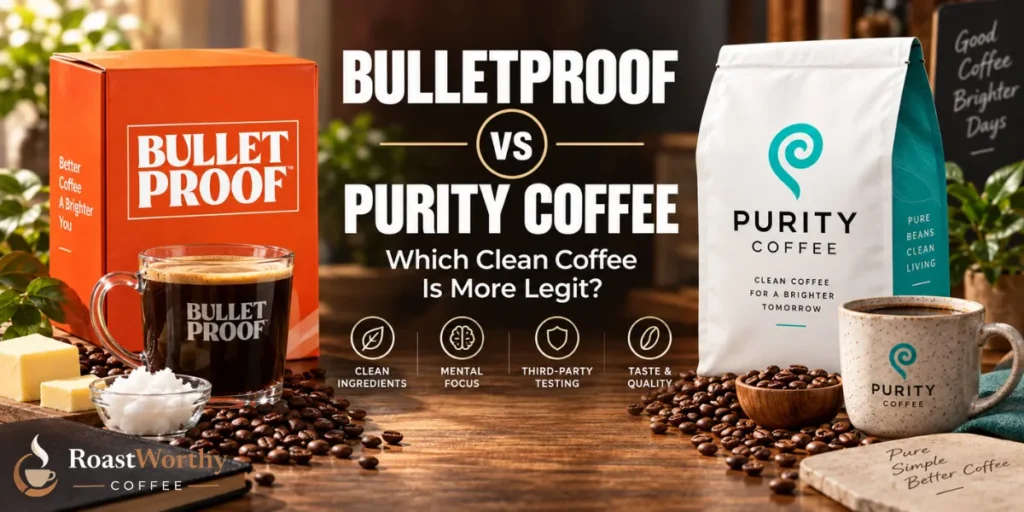
Purity Coffee wins on published evidence, organic credentials, and testing transparency.
Bulletproof wins on price, availability, format variety, and brand recognition.
“Clean coffee” is easy to print on a bag. Proving it is harder.
That is the real argument behind Bulletproof vs Purity Coffee. Both brands promise carefully sourced, toxin-tested coffee. Both discuss mold, mycotoxins, sustainability, and better production standards.
Only one makes its supporting paperwork particularly easy to find.
Purity provides direct Certificate of Analysis links on product pages and carries stronger organic and habitat certifications.
Bulletproof publishes a detailed testing method, including third-party laboratories and LC-MS/MS analysis, but does not offer the same level of visible batch documentation on its standard product pages.
Let’s be honest. Purity has the stronger evidence case.
Bulletproof remains the cheaper and easier coffee to live with.
Bulletproof vs Purity Coffee at a Glance
| Category | Bulletproof Coffee | Purity Coffee |
|---|---|---|
| Flagship coffee | The Original Medium Roast | FLOW Original Medium Roast |
| Bean type | 100% Arabica | Specialty-grade organic Arabica |
| Mold and mycotoxin testing | Yes | Yes |
| Third-party testing | Yes | Yes |
| Public testing method | Detailed methodology published | Detailed testing information published |
| Public COA access | Not clearly provided on standard product pages | COA links displayed on product pages |
| Organic certification | Select coffees only | USDA Organic across the core range |
| Sustainability certification | Rainforest Alliance | Smithsonian Bird Friendly; selected coffees also list Demeter Biodynamic |
| Antioxidant positioning | General clean-coffee and performance focus | CGA and trigonelline measurement focus |
| Whole-bean price | $18.99 per 12-ounce bag | $29 per 12-ounce bag |
| Subscription price | From $17.10 for one bag | $23.20 per bag |
| Formats | Whole bean, ground, pods, instant, functional coffee | Whole bean, ground, pods, sachets, instant and decaf |
| Best for | Value, convenience, keto routines | Testing transparency, organic sourcing |
| Roastworthy score | 8.0/10 | 9.0/10 |
Current listed prices and subscription structures can change. Bulletproof lists its Original 12-ounce whole-bean coffee at $18.99, while Purity lists FLOW at $29. Purity offers a 20% subscription reduction. Bulletproof starts at 10% for one subscribed item and increases with quantity.
What Does “Clean Coffee” Actually Mean?
Clean coffee is not a USDA certification.
There is no government-backed seal that automatically confirms a coffee is mold-free, low in mycotoxins, high in antioxidants, or better for your metabolism.
USDA Organic is regulated. A brand must work with an accredited certifying agent and meet federal production and handling rules before displaying that seal. “Clean coffee” is broader brand language.
That does not make every clean-coffee claim meaningless.
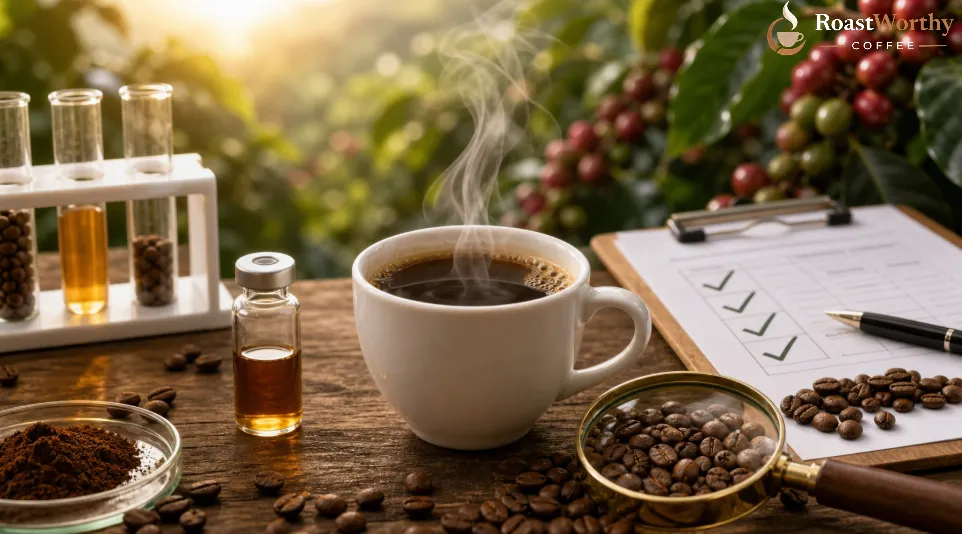
Mold and mycotoxin testing can provide useful quality-control information. Ochratoxin A is a real fungal contaminant that can develop in agricultural products, especially through poor drying or storage.
The question is not whether mycotoxins exist. They do.
The better question is this: How clearly does each company explain what it tests, how it tests, and what the laboratory found?
That is where this clean coffee comparison gets interesting.
Testing Transparency: Purity Wins
How Bulletproof Tests Its Coffee
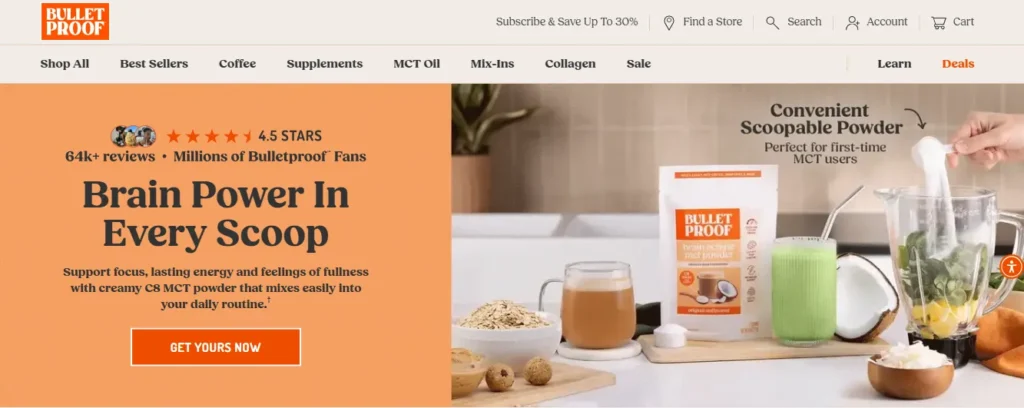
Bulletproof says its green coffee undergoes testing for mold toxins and heavy metals. It works with accredited third-party laboratories and uses liquid chromatography with tandem mass spectrometry, commonly written as LC-MS/MS.
That is a serious analytical method.
Bulletproof also discusses ingredient-specific testing, finished-product testing, internal risk assessments, roast-curve controls, and post-roast cupping. Its published methodology is far more detailed than the vague “tested for purity” language used by many wellness coffee brands.
The weakness is access.
During this review, I could not find batch-specific laboratory reports attached to the standard Original whole-bean or ground coffee pages. Consumers are being asked to trust Bulletproof’s process description and internal standards.
That is better than offering no testing explanation.
It is not the same as showing the report.
How Purity Tests Its Coffee
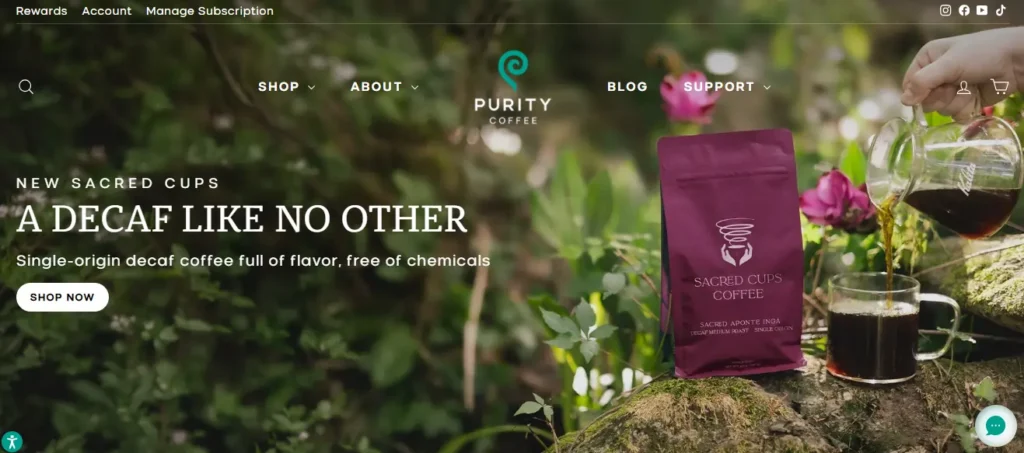
Purity takes the extra step.
Its product pages include COA links for mold and mycotoxin testing. The company also publishes broader information covering mold, yeast, ochratoxin A, aflatoxins, pesticides, heavy metals, acrylamide, caffeine, chlorogenic acids, trigonelline, roast level, acidity, and sensory evaluation.
Some of Purity’s larger historical datasets are older research sets rather than a simple live dashboard of every bag ever roasted. That distinction matters.
Still, Purity gives shoppers more evidence to inspect.
Winner for mycotoxin testing transparency: Purity Coffee
Bulletproof publishes its method. Purity publishes more of the proof.
Certifications and Sourcing
Bulletproof: Rainforest Alliance Certified
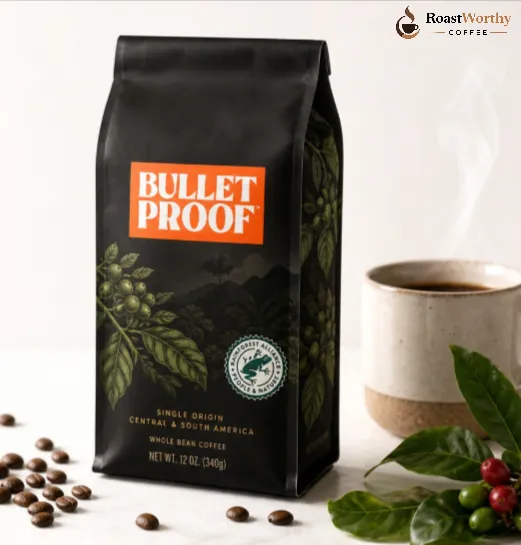
Bulletproof says its standard coffee is sourced from Rainforest Alliance Certified farms in Central and South America.
That certification addresses environmental, social, and economic farming practices. It is meaningful. It should not be confused with USDA Organic certification.
Bulletproof does sell selected organic coffees. Its mainstream Original blend, however, is marketed around Rainforest Alliance sourcing and toxin testing rather than USDA Organic status.
That may be enough for many buyers.
It is simply a different standard.
Purity: Organic, Bird Friendly and Sometimes Biodynamic
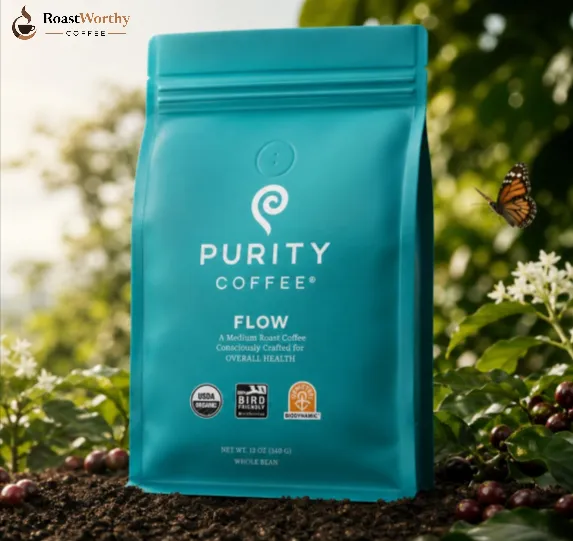
Purity’s flagship FLOW coffee lists USDA Organic and Smithsonian Bird Friendly certification.
Smithsonian Bird Friendly coffee must already be certified organic. Participating farms must also meet habitat and shade-management requirements designed to protect birds and biodiversity. The Smithsonian describes it as an especially demanding environmental coffee standard.
Selected Purity products, including its EASE dark roast, also list Demeter Certified Biodynamic status. Buyers should check the exact bag because certification combinations can differ between coffees.
This is not a small technical win.
Purity gives buyers a clearer chain of independently verified agricultural credentials.
Winner for organic coffee and sourcing certifications: Purity Coffee
Health Credentials: Strong Claims Need Careful Reading
Purity and Bulletproof sell coffee, not medicine.
That sentence should sit beside every wellness-coffee comparison online.
Bulletproof’s Keto Coffee Positioning
Bulletproof built much of its identity around coffee blended with MCT oil and grass-fed butter or ghee.
The keto angle comes mainly from the finished recipe. It does not mean Bulletproof’s roasted beans possess a magical ketogenic quality unavailable in other black coffee.
The coffee itself is the base. The added fats create the famous Bulletproof drink.
Bulletproof has since expanded into functional coffees containing ingredients such as B vitamins, lion’s mane, prebiotics, creatine, collagen, and other additions.
Some shoppers love that system.
Others just want coffee without a chemistry set on the kitchen counter.
Purity’s High-Antioxidant Coffee Positioning
Purity places more attention on chlorogenic acids, or CGAs, and trigonelline.
These compounds naturally occur in coffee. Their levels vary with bean selection, agriculture, processing, roast development, and brewing.
Purity says it selects coffees for antioxidant potential and adjusts roasting protocols to retain desirable compounds. It has also published information about laboratory analysis conducted for CGA and trigonelline.
That is a stronger measurement-based argument than simply printing “antioxidant-rich” on the front of a bag.
Still… more CGA does not guarantee that every drinker receives a measurable health benefit. Human metabolism, total diet, dose, sleep, genetics, and brewing all matter.
Winner for measurable health credentials: Purity Coffee
Not because it promises miracles. Because it shows more of the work behind the claim.
Taste Comparison
I am comparing the two flagship medium roasts here: Bulletproof Original and Purity FLOW.
Bulletproof Original Taste
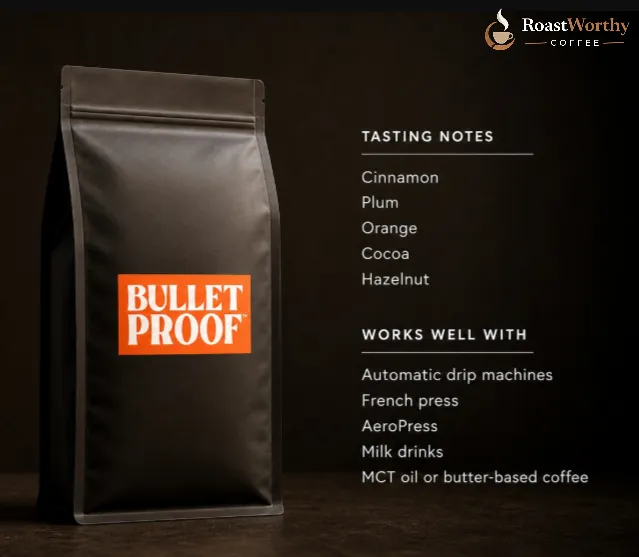
Bulletproof describes Original as tasting of cinnamon, plum, orange, cocoa, and hazelnut.
That combination suggests a familiar medium-roast cup with mild fruit, rounded sweetness, and enough roast development to soften the acidity. It is designed for broad appeal.
It should work well with:
This is not the bag I would choose for a delicate V60 competition.
That is not its job.
Bulletproof wants consistency and an easy morning cup. It understands the assignment.
Purity FLOW Taste
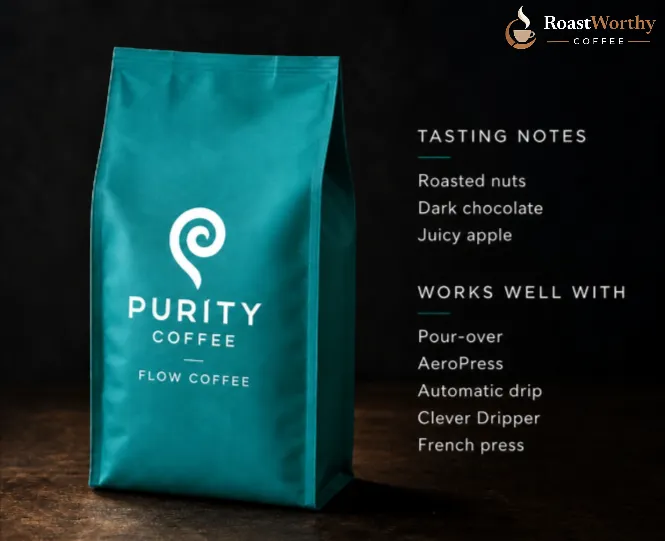
Purity describes FLOW as tasting of roasted nuts, dark chocolate, and juicy apple-like high notes.
The apple-like acidity gives it more lift than the usual dark, flat wellness roast. The chocolate and nut character keeps it accessible.
That profile should suit:
Purity’s taste language is still conservative. Do not expect a wild natural Ethiopian that tastes like blueberry jam and rum.
This is polished, controlled, medium-roast coffee.
Winner for balance and black-coffee drinking: Purity
Winner for milk, butter, or MCT-based coffee: Bulletproof
For more options in this category, see our comparison of the best mold-free coffee brands and our guide to organic coffee certifications.
Formats and Convenience
Bulletproof has the wider lifestyle ecosystem.
Its range includes whole beans, ground coffee, pods, instant coffee, decaf, cold-brew grinds, enhanced coffee, functional pods, creamers, collagen, ghee, and MCT products.
Purity offers plenty of choice too. Its range includes whole bean, ground, pods, portable sachets, decaf, reduced-caffeine coffee, instant options, and larger bags.
The difference is positioning.
Bulletproof sells an entire performance routine.
Purity sells coffee selected and roasted through a health-focused framework.
Winner for format variety: Bulletproof
Winner for straightforward coffee choices: Purity
Price Comparison: Bulletproof Is Much Cheaper
Purity’s flagship 12-ounce bag costs $29.
Bulletproof Original costs $18.99 for the same weight.
That puts the regular prices at roughly:
| Coffee | One-Time Price | Approx. Price per Ounce | Subscription Price |
|---|---|---|---|
| Bulletproof Original | $18.99 | $1.58 | From $17.10 |
| Purity FLOW | $29.00 | $2.42 | $23.20 |
Purity costs about 53% more before subscription savings.
Its premium pays for organic certification, Bird Friendly sourcing, visible COA links, antioxidant testing, and a more documentation-heavy clean-coffee proposition.
Bulletproof’s price is easier to justify for everyday use. Buying several subscription items can also increase its discount.
Winner for price and value: Bulletproof
Purity earns its premium. Bulletproof makes more financial sense for a household brewing several cups daily.
Which Coffee Should You Buy?
Choose Bulletproof Coffee When
Choose Purity Coffee When
Frequently Asked Questions
Is Purity Coffee cleaner than Bulletproof?
Purity provides stronger public documentation through product-level COA links and broader organic certifications. Both brands state that they test for mold and mycotoxins.
Does Bulletproof Coffee contain mold?
Bulletproof says it tests every batch for toxins and tests green beans for mold-related contaminants. No company can reasonably prove that every bag is permanently free from every microscopic organism, but testing can confirm that targeted contaminants remain below detection or accepted limits.
Does Purity Coffee publish lab results?
Yes. Purity links mold and mycotoxin COAs from product pages and publishes further information about testing for contaminants and beneficial coffee compounds.
Is Bulletproof Coffee organic?
Not every Bulletproof coffee is certified organic. The company offers selected organic products, while its flagship Original coffee emphasizes Rainforest Alliance certification and toxin testing.
Is Purity Coffee worth the higher price?
It is worth the premium for buyers who prioritize USDA Organic certification, Bird Friendly sourcing, visible COAs, and antioxidant-focused testing. Bulletproof offers better value for general daily use.
Which tastes better, Bulletproof or Purity?
Purity FLOW should suit black-coffee drinkers who like chocolate, nuts, and mild apple-like acidity. Bulletproof Original is better suited to smooth drip coffee, milk, ghee, or MCT oil.
Final Verdict: Purity Is More Legit, Bulletproof Is Better Value
Purity Coffee wins this comparison.
Its case is simply easier to audit. It combines organic certification, Bird Friendly standards, contaminant testing, visible COA links, and measured antioxidant positioning.
Bulletproof is not smoke and mirrors. Its testing methodology is specific. Its use of accredited laboratories and LC-MS/MS gives the clean-coffee claim substance.
But transparency is not only about saying the work happened.
It is about letting customers see the result.
Buy Purity for the evidence.
Buy Bulletproof for the price, convenience, and keto-friendly product system.
The paperwork does not lie. ☕✒️
More Recommendations from RoastWorthy Coffee