How to Choose the Best Coffee Beans: A Beginner’s Complete Guide

Most bad coffee isn't a brewing problem. It's a bean problem.
You can own a $3,000 espresso machine and still pull a flat, papery shot if the beans were roasted four months ago. Before you upgrade any gear, learn how to choose the best coffee beans. That single skill fixes more cups than any machine ever will. ☕
I've logged eight hundred roast profiles in my garage since 2017. Almost every bad cup I've tasted — mine or someone else's — traces back to one of seven variables. Not twenty. Seven. Master those and you'll outperform people who spent ten times more on equipment.
Here's the full system, in the order it actually matters.
Coffee Bean Selection Guide: The 30-Second Checklist
Check these seven things before buying any bag — takes about 30 seconds once you know what to look for.
- Roast date within the last two weeks — skip anything only showing “best by.”
- Whole bean, not pre-ground — grind fresh right before brewing.
- 100% Arabica for a smoother, more complex cup while you're learning.
- Origin that matches the flavor you want — Latin America for balanced, Africa for fruity.
- Processing method — washed for clean and bright, natural for fruity and wild.
- Flavor notes on the bag that actually sound appealing to you.
- Roast level matched to your brew method — light for pour-over, dark for espresso.
Full breakdown of each factor below. ☕
Roast Date Is the Number That Matters Most
Forget “best by” dates. Those are printed for shelf-life liability, not flavor.
Coffee doesn't spoil like milk does. It goes stale — and it goes stale fast — because roasting fills the bean with CO2 and hundreds of volatile aromatic compounds that start escaping the moment the roast finishes.
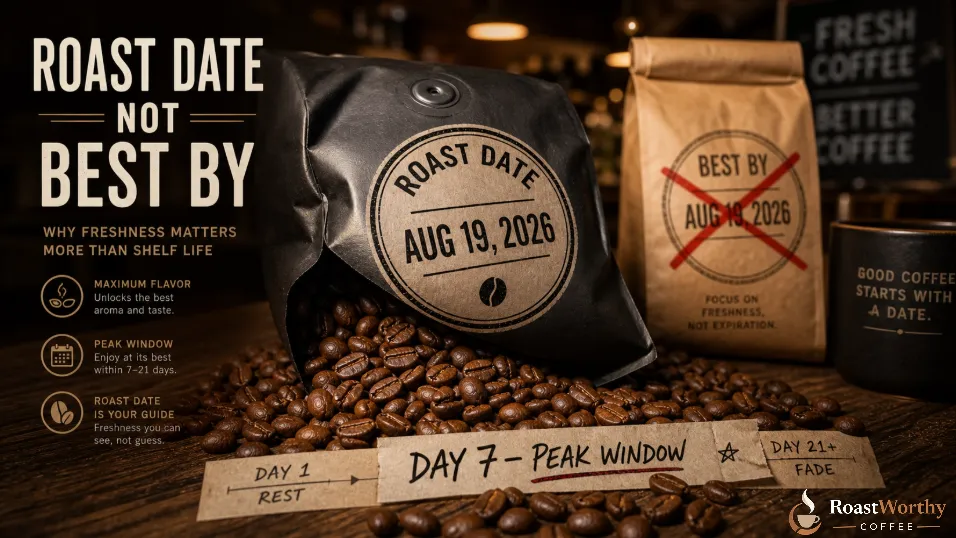
Look for a printed roast date on the bag, not a best-by date. If a bag only shows “best by,” put it back on the shelf.
Here's the actual degassing and flavor timeline I track on every bag I open:
If a grocery store bag has no roast date printed anywhere, assume it's been sitting three to six months. That's exactly why supermarket coffee tastes the way it does — it's not necessarily bad coffee, it's dead coffee.
A fresh, cheap bean beats a stale, expensive one every single time. Roast date first. Everything else on this list is secondary.
Whole Bean vs Ground: This Isn't Close
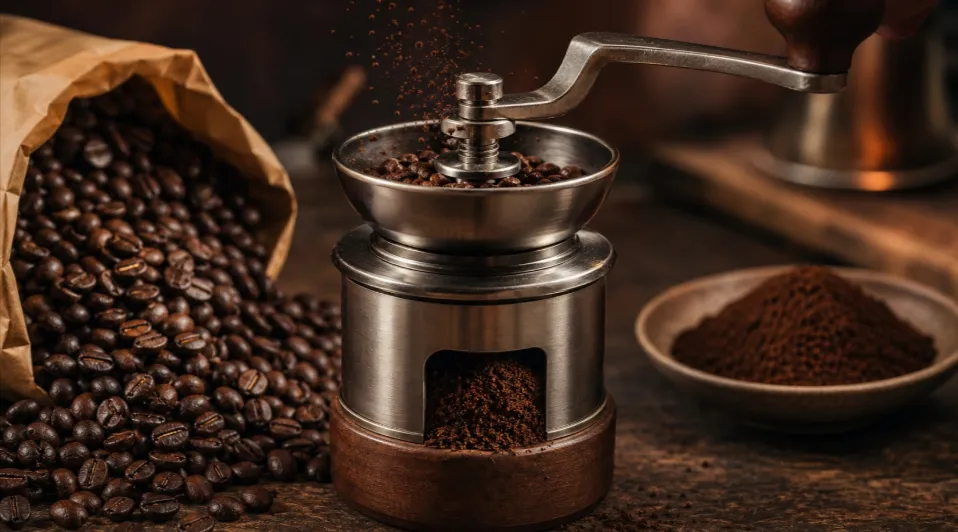
Buy whole bean. Every time, no exceptions.
Ground coffee starts oxidizing the instant it's ground, because you've just exposed a massive amount of surface area to oxygen. Within 20–30 minutes, a meaningful chunk of the best aromatic compounds are already gone. By the next day, you're brewing a shadow of the original bean.
Whole beans, by contrast, hold their flavor for weeks because the intact bean structure protects the oils and aromatics inside.
If you don't own a grinder yet, that's your first purchase — not a fancier bag of beans. A $40 burr grinder does more for your cup quality than a $200 upgrade on the beans themselves. Blade grinders don't count here; they pulverize unevenly and produce a muddy, inconsistent extraction regardless of how good the beans are.
Arabica vs Robusta: Know What's in the Bag
Two species dominate the global market, and they taste nothing alike.
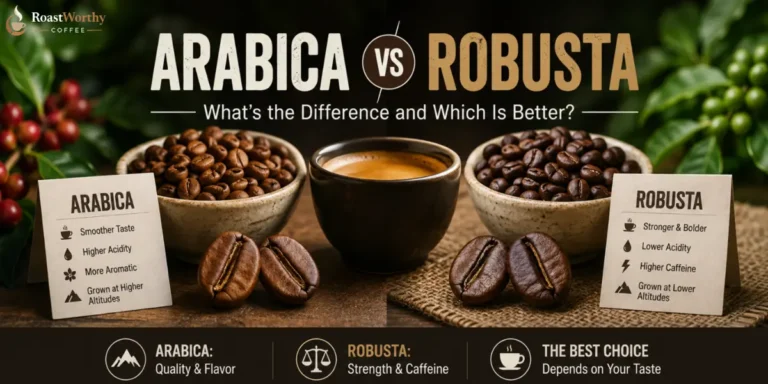
| Trait | Arabica | Robusta |
|---|---|---|
| Flavor | Sweet, fruity, acidic, complex | Harsh, rubbery, grainy, bitter |
| Caffeine content | Lower, roughly 1.2% | Higher, roughly 2.2% |
| Grown at | High altitude, 600m+ | Low altitude, sea level to 600m |
| Price | Higher | Cheaper |
| Best for | Filter, pour-over, quality espresso | Cheap blends, some crema-focused espresso |
For learning to appreciate coffee, buy 100% Arabica. Nearly all of specialty coffee — the stuff with tasting notes and single-origin labeling — is built on Arabica.
Robusta isn't automatically garbage. Good Robusta exists, and some Italian espresso blends use it deliberately for crema and body.
But in most cheap supermarket blends, Robusta is there to cut cost, not to add flavor. If a bag doesn't specify the species at all, it's usually a Robusta blend hiding that fact.
Read the Origin Like a Map
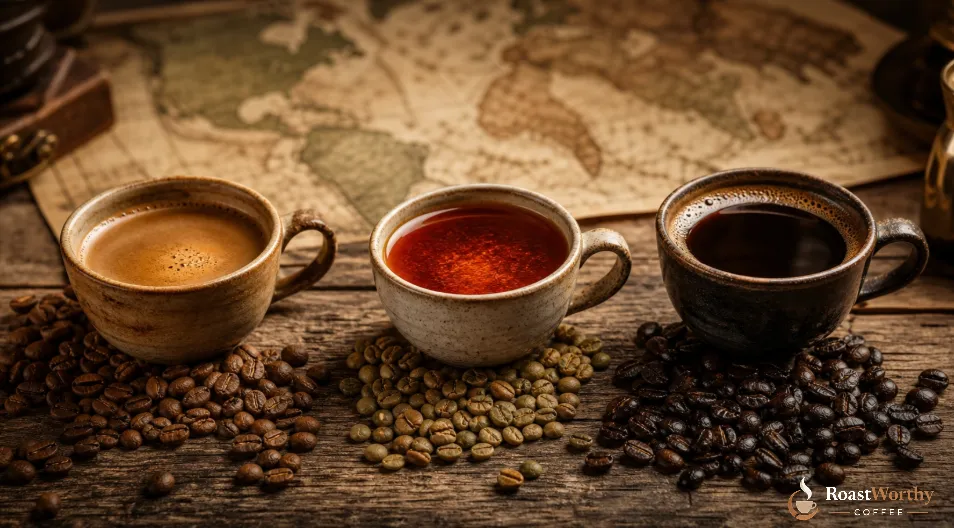
Single-origin coffee tells you exactly where every bean in the bag came from. That location — altitude, soil, climate — shapes the flavor before roasting ever touches the bean.
You don't need to memorize a world atlas. Just learn the broad flavor families that origin tends to produce:
Start with a Latin American coffee for your first bag. Once your palate has a baseline, try an Ethiopian natural. The contrast will teach you more about flavor in one cup than any article can explain.
Processing Method: Why Two Beans Taste So Different
This is the variable most beginners skip entirely, and it's a mistake — because it can shift flavor more dramatically than origin does.
Processing is how the coffee cherry gets removed from the seed after harvest. Here's what the process is actually doing chemically. ⚗️
If a bag tastes surprisingly funky and fruity — almost like fermented berries — it's probably natural process. If it tastes clean, precise, and almost tea-like, it's washed. Neither is objectively better. They're different tools for different moods.
Decode the Flavor Notes on the Bag
Good specialty bags list flavor notes: blueberry, dark chocolate, lemon, brown sugar.
Those aren't additives. Nobody put blueberries in your coffee bag. A trained cupper actually tasted those flavors in the brewed cup and is telling you, in advance, what to expect.
Use flavor notes to match beans to your taste — not to feel intimidated by them.
If you like bright, lively cups, chase notes like citrus, berry, floral, or tea. If you prefer rich and comforting, look for chocolate, caramel, nut, or brown sugar on the label.
If a bag lists no notes at all and just says “smooth” or “bold,” treat that as a warning sign. Those words describe nothing specific and usually mean the roaster isn't cupping their own coffee carefully.
Match the Roast Level to How You Brew
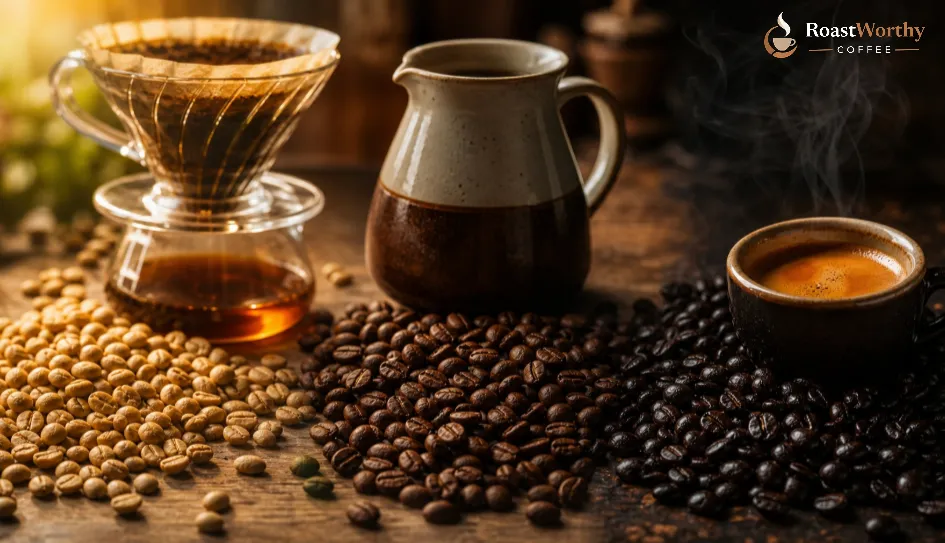
Roast level changes the flavor more than almost any other single factor. Here's what the heat is actually doing to the bean.
The longer beans stay in the roaster, the more origin character burns off and the more generic “roast” flavor takes over — smoke, char, toasted sugar.
❌ A common beginner mistake: assuming dark roast means stronger caffeine. It doesn't. Roasting actually burns off a tiny amount of caffeine over time, so light roasts retain slightly more caffeine by weight, not less. “Strength” here is entirely about flavor intensity, not stimulation.
Start with a medium roast and a origin from Latin America. Move toward lighter roasts as your palate develops — that transition usually happens naturally within a month or two of regular tasting.
Where to Actually Buy Good Beans
Skip the supermarket shelf if you have any other option.
Buy from a specialty roaster that prints a roast date and ships within a day or two of roasting. A local roaster is ideal here — you can realistically get beans that are two to five days off the roast, not months.
When you order online, buy small and often. A 250g bag finished in two weeks beats a 1kg bag that goes stale in your cupboard before you're halfway through it. Subscriptions from small roasters solve this automatically, since most ship on a rolling roast schedule.
Store Beans So You Don't Waste the Purchase
You did the work to find great beans. Don't let air, light, and heat undo it.
Storage isn't complicated. It's just consistent discipline, applied daily.
Frequently Asked Questions
How do I choose the best coffee beans as a beginner?
Start with roast date first — buy beans roasted within the last two weeks. Then pick 100% Arabica, whole bean, medium roast, from a Latin American origin. That combination is forgiving and beginner-friendly while you build your palate.
Are more expensive coffee beans always better?
No. A fresh $12 bag beats a stale $25 bag every time. Price often reflects rarity, altitude, or ethical sourcing premiums, not automatically cup quality. Freshness matters more than price in almost every comparison.
How long do coffee beans stay fresh after roasting?
Peak flavor sits between days 4 and 14 after the roast date. Beans stay reasonably good for 3–4 weeks total, then fade quickly. Past two months, most of the aromatic complexity is gone.
Is dark roast stronger than light roast?
No. Dark roast tastes more intense and bitter, but it isn't higher in caffeine. Light roasts actually retain slightly more caffeine by weight because less is burned off during roasting. “Strength” describes flavor, not stimulation.
Should I buy whole bean or ground coffee?
Whole bean, always. Ground coffee loses its best aromatic compounds within 20–30 minutes of grinding due to oxidation. If cost is the concern, buy a cheap burr grinder before spending more on beans.
What's the difference between washed and natural processed coffee?
Washed coffee is clean and bright with precise acidity, since the fruit is removed before drying. Natural coffee is fermented, wild, and fruity because the whole cherry dries around the seed. Both are valid — they're simply different flavor styles.
A Simple System for Choosing Beans
Here's the entire framework in order. Run this checklist every time you're standing in front of a bag.
- Is there a roast date within the last two weeks? If not, stop and pick a different bag.
- Is it whole bean? Buy whole, grind at home right before brewing.
- Is it 100% Arabica? For learning your palate, this should be yes.
- Does the origin match a flavor family you actually want to drink?
- Does the processing method fit your mood — clean and washed, or wild and natural?
- Do the listed flavor notes sound like something you'd genuinely enjoy?
- Does the roast level match your brew method — light for pour-over, darker for espresso?
Seven questions. About thirty seconds once you know what you're looking for. Dramatically better coffee, guaranteed.
Your first few bags won't be perfect matches for your taste, and that's fine. Buy them anyway. Taste it. Write it down. Buy the next one. That's how a palate actually gets built — not by reading, by tasting and logging. ☕
More Recommendations from RoastWorthy Coffee