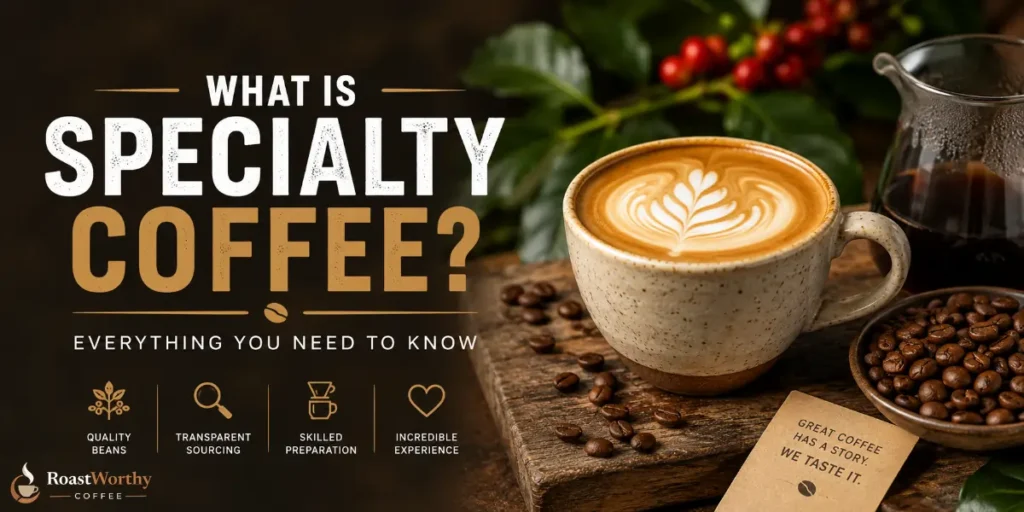
What Is Specialty Coffee? Everything You Need to Know

Specialty coffee is coffee that scores 80 points or higher on the Specialty Coffee Association's 100-point cupping scale. That's the line. Below 80, it's commercial. At 80 and above, it earns the name.
But the number is just the start.
Specialty coffee is also about where the beans came from, who picked them, and how clean the cup tastes. It's coffee with a paper trail. Origin, process, altitude, and a roaster who can tell you all three.
I'm going to walk you through what that actually means. The science, the people, the cup. No fluff.
TL;DR: Specialty coffee = 80+ SCA cupping score, hand-picked ripe cherries, max 5 defects per 350g, and traceable sourcing. It's the top ~5% of coffee grown worldwide. The opposite of commodity-grade.
Specialty Coffee: The Definition, Properly Explained
Let's be honest. Most people throw “specialty” around like it means “expensive.” It doesn't.
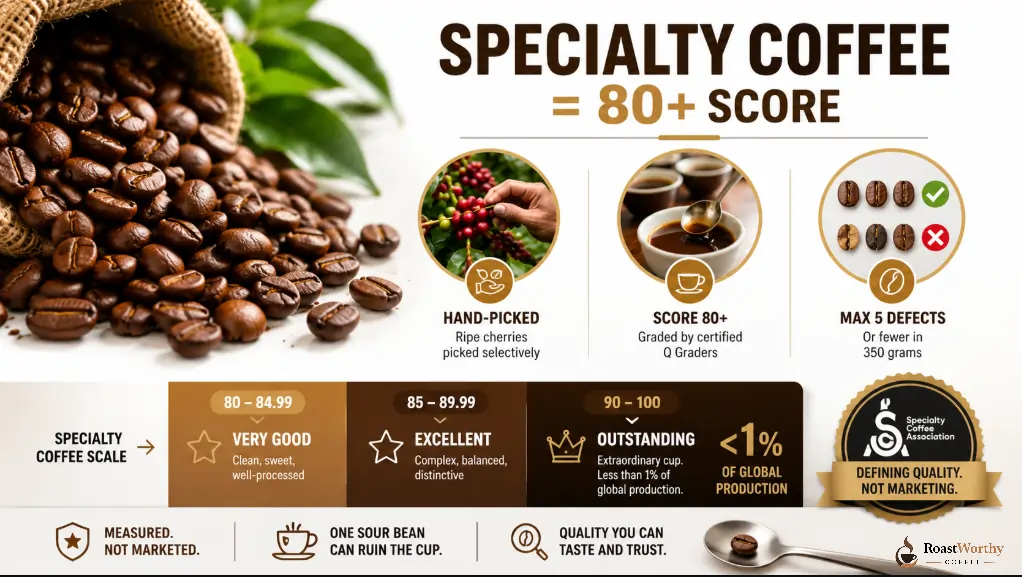
There's a real definition. The widely accepted one comes from the Specialty Coffee Association. Coffee scoring 80 points or above on the 100-point cupping form is specialty. Full stop.
And the scale has tiers:
Three minimum requirements get thrown around alongside the score. Beans hand-picked by selective picking of ripe cherries. A score of 80+. And a maximum of five defects per 350 grams.
That last one matters more than people think. One sour bean ruins a cup.
Specialty isn't a marketing word. It's a measurable grade. The flavour doesn't lie. ☕
Specialty vs Commercial Coffee
Here's where it gets real.
Commercial coffee is grown for volume. Machine-stripped, mixed ripe and unripe, roasted dark to hide defects. It scores below 80. It's the stuff in the big tins.
Specialty coffee is the opposite. Selectively picked. Lightly roasted to show origin character. Traceable to a farm or a single lot.
| Feature | Specialty Coffee | Commercial Coffee |
|---|---|---|
| SCA score | 80+ | Below 80 |
| Harvesting | Hand-picked, ripe cherries only | Machine or strip-picked |
| Defects | Max 5 per 350g | Many, masked by roast |
| Roast | Lighter, origin-forward | Darker, uniform |
| Sourcing | Traceable / direct trade | Anonymous, commodity blend |
| Price driver | Quality + transparency | Volume + cost |
The price gap follows quality. A lot scored 85+ by a licensed grader commands a real premium over an uncertified one.
You're not paying for hype. You're paying for the top 5% of beans grown on earth.
How Coffee Gets Scored: Cupping and the Q Grader
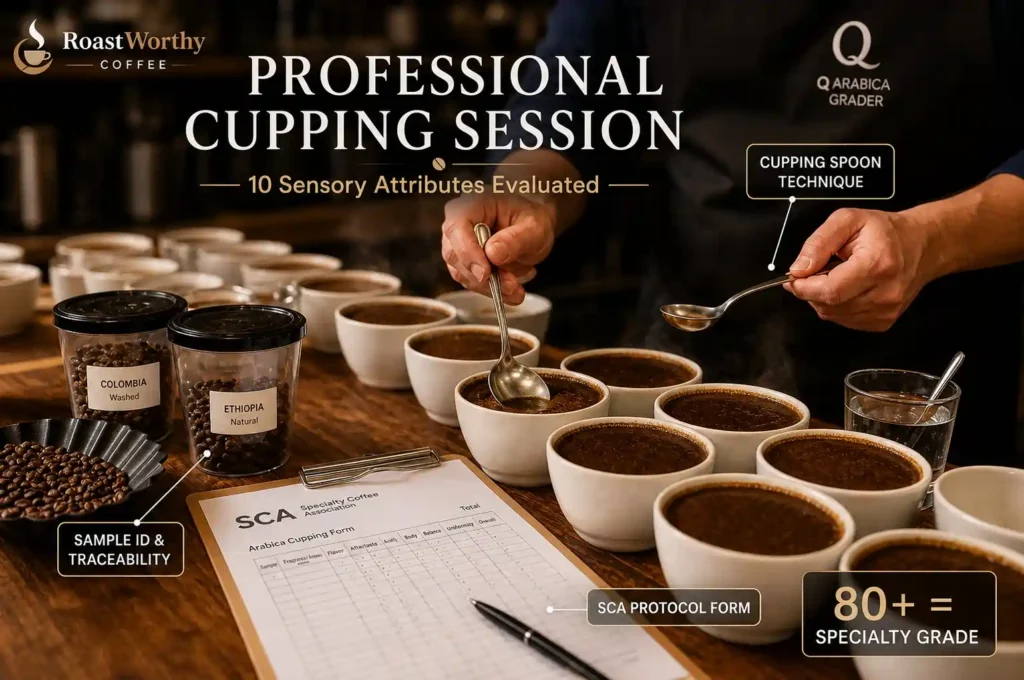
Here's what's actually happening when coffee gets graded. ⚗️
It's called cupping. A standardised tasting protocol. The SCA scoring sheet rates ten sensory attributes, each out of 10:
Add them up, apply the protocol, and you get a cupping score out of 100. Eighty is the cutoff.
Who scores it: the Q Grader
The person doing this isn't guessing. They're often a Q Grader — a professional licensed by the Coffee Quality Institute to evaluate coffee using the SCA protocol.
It's brutal to earn. The classic program required passing 22 individual tests — sensory triangulation, identifying specific aroma compounds, calibrating scores to a reference. Exams run across a week. The license expires every three years. You re-test to keep it.
The newer Evolved Q Grader program, built on the SCA's 2023 Coffee Value Assessment, tests four areas: physical, descriptive, affective, and extrinsic.
The point is this: a Q score with a named grader and a sample reference is the most reliable independent quality signal a buyer can get. The curve doesn't lie.
Taste it. Write it down. Score it again. That's the whole job.
Where It Comes From: Sourcing and Traceability
Start with the origin, not the roaster.
A good specialty bag tells you where the coffee was born. Country. Region. Often the farm. Sometimes the single lot and the altitude it grew at. That's traceable sourcing, and it's non-negotiable in this world.
There's a reason. When you know the farm, you can reward the farmer who grew well. That's the logic behind direct trade — roasters buying straight from producers or co-ops, cutting out the anonymous commodity chain.
The “Big Three” of American third wave — Intelligentsia, Stumptown, and Counter Culture — built the playbook on exactly this. Direct trade. Transparent pricing. Meticulous roast profiles.
This matters beyond the flavour. The people who grew the coffee deserve the credit and the premium.
And the terroir is doing something real. A washed Ethiopian Yirgacheffe tastes nothing like a natural Brazilian. Same plant. Different place, different process, different cup. 🌍
Third Wave Coffee: The Movement Behind It
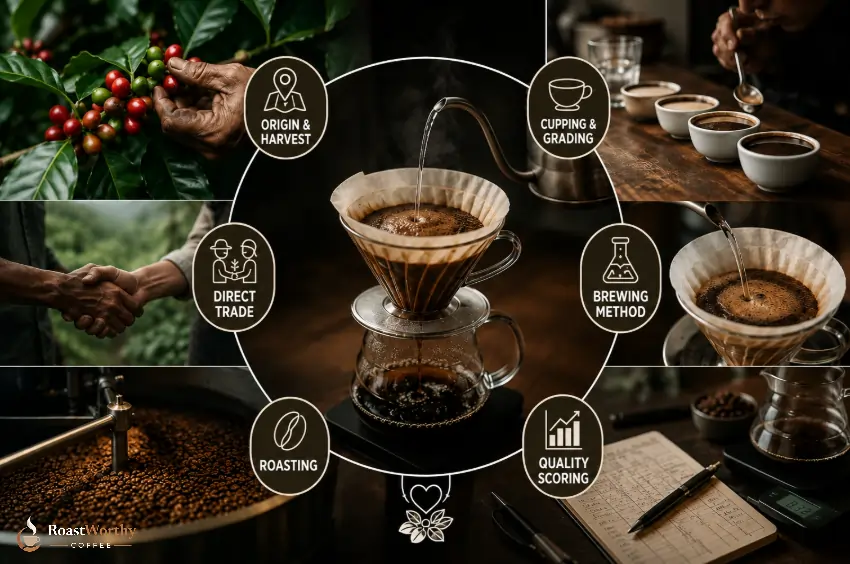
Specialty coffee and third wave coffee are tangled together. They're not identical, but they grew up in the same room.
Third wave treats coffee as a craft product — like wine, like artisan cheese. Not a commodity to be burned and sugared into submission.
Its core principles:
Specialty coffee is the quality standard. Third wave is the culture and philosophy that champions it. One is the score. The other is the scene.
What Specialty Coffee Actually Tastes Like
This is the part people skip. So let's fix it.
Commercial coffee tastes like “coffee.” Roasty. Bitter. Flat. A single note played loud.
Specialty tastes like things. A washed Kenyan can taste like blackcurrant and tomato leaf.
A natural Ethiopian like blueberry and jasmine.
A honey-processed Costa Rican like brown sugar and red apple.
That's not menu poetry. That's what clean, ripe, carefully processed coffee actually does in the cup.
If your coffee only tastes bitter, the problem is the bean or the roast — not the coffee plant. I've had worse. Much worse. ✒️
Frequently Asked Questions
What score makes coffee “specialty”?
80 points or higher on the SCA 100-point cupping scale. Below 80 is commercial grade.
Is specialty coffee the same as third wave coffee?
No. Specialty is the quality grade (the 80+ score). Third wave is the cultural movement that prioritises that quality, traceability, and lighter roasting.
What is a Q Grader?
A taster licensed by the Coffee Quality Institute to score coffee using the SCA protocol. The license requires passing rigorous sensory exams and renews every three years.
What does “direct trade” mean?
Roasters buying coffee straight from farmers or co-ops instead of through anonymous commodity channels. It improves traceability and pays producers more for quality.
Why is specialty coffee more expensive?
Hand-picking ripe cherries, keeping defects under five per 350g, traceable sourcing, and skilled roasting all cost more. You're buying roughly the top 5% of coffee grown worldwide.
Can I taste the difference at home?
Yes — especially with a lighter roast and a manual brew like pour-over. Origin character (fruit, floral, sweetness) shows up far more clearly than in dark commercial blends.
Is Specialty Coffee Worth It?
Short answer: yes, if you care about the cup.
You're paying for selective picking, low defects, traceable sourcing, and a roaster who knows what they're doing. That's a lot of human labour and skill in one bag.
Will everyone taste the difference? No. Some people want hot, caffeinated, and cheap. That's fine.
But if you've ever wondered why a £6 bag and a £18 bag aren't the same drink — this is why. The gap is real, and it's measurable.
Buy the bag. Brew it properly. It's worth the work.
More Recommendations from RoastWorthy Coffee