Why Does My Coffee Taste Bitter? Causes and Easy Fixes

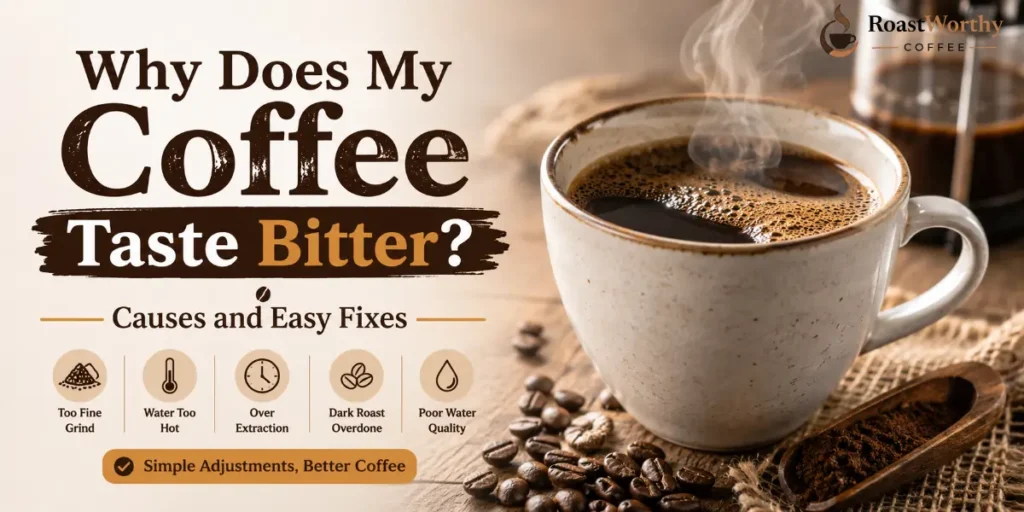
Bitter coffee is almost always an extraction problem — not a bean problem, and not a “you bought cheap coffee” problem either. You simply pulled too much out of the grounds.
That's it. The fix is usually one variable away, and most people never realize how close they are.
Here's what the heat and water are actually doing inside your cup… and how to dial it back before it ruins another brew.
Key Takeaway
Bitter coffee = too much extraction. Coarsen your grind, cool your water to 200°F, shorten your brew time, and use fresh beans. Fix one variable at a time. ☕
Bitter Coffee Troubleshooting: Find Your Fix Fast
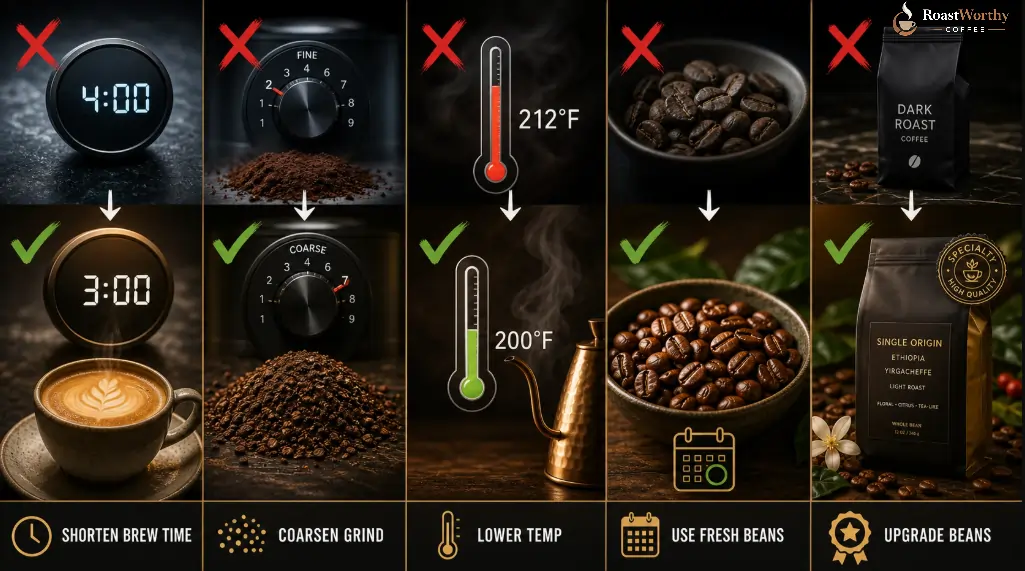
Before the deep stuff, scan this. Match your symptom to the most likely cause and the fastest fix.
| Symptom | Likely Cause | Quick Fix |
|---|---|---|
| Harsh, dry, lingering bitter | Over-extraction | Shorten brew time |
| Bitter + ashy | Grind too fine OR dark roast | Coarsen grind / switch roast |
| Bitter + sharp | Water too hot | Rest kettle 30 sec |
| Flat + dull bitter | Stale beans | Buy fresh, grind fresh |
| Bitter from any method | Bad beans | Upgrade to specialty |
Found your row? Good. Now here's the why behind each one.
Why Your Coffee Tastes Bitter (The Short Answer)
Coffee compounds extract in stages, not all at once. Acids and sweetness come out first, and the bitter compounds come out last.
When you brew too long, grind too fine, or use water that's too hot, you drag those bitter compounds out at the tail end of extraction. That's over-extraction in a nutshell.
Bitterness is the taste of too much extraction. Sourness is the taste of too little — and most home brewers chase one problem only to overshoot straight into the other.
The 5 Real Causes of Bitter Coffee
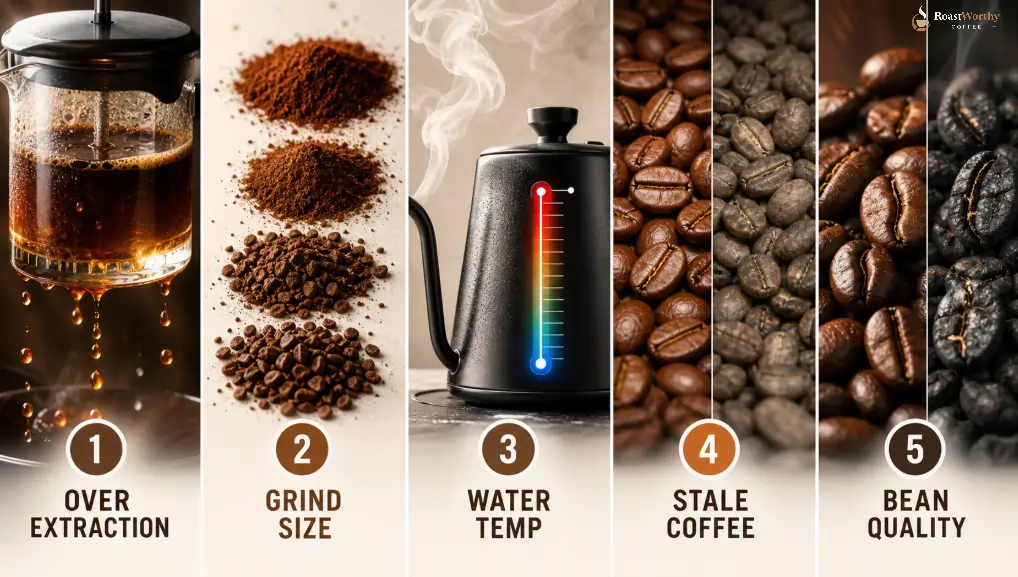
Let's get specific. These are the five things that actually make coffee taste bitter, listed in order of how often they're the real culprit.
Fix these in order, one at a time. Nine times out of ten, you'll stop at number two and never get further down the list.
Cause 1: Over-Extraction
This is the big one, and it's behind most bitter cups. The longer water sits on the grounds, the more it extracts — including all the bitter stuff at the end.
Think of drip machines that run slow, a French press left for 10 minutes, or espresso shots that drip for 40 seconds. Every one of those is over-extracted.
The fix: shorten your contact time. For pour-over, aim for a total brew time of 2:30 to 3:30, and for French press, pull the plunger at 4 minutes — not 8.
Cause 2: Grind Too Fine
Grind size controls how fast your coffee extracts, and finer grounds extract faster and harder. That speed is exactly what tips a brew into bitterness. ⚗️
If your coffee tastes bitter and you're brewing in a French press or pour-over, your grind is almost certainly too fine for the method.
The fix: go coarser. Here's the rough guide to match grind to brewer:
Move one notch coarser on your grinder, then brew again. Taste it. Write it down. Brew it again.
Cause 3: Water Too Hot
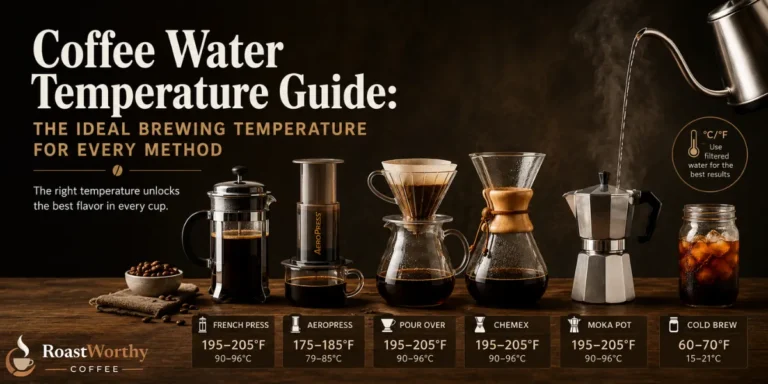
The sweet spot for brew water is 195–205°F (90–96°C), but boiling water hits 212°F. That extra heat scorches the grounds and yanks bitterness straight out of them.
A lot of people pour straight off the boil without thinking about it — and then wonder why the cup tastes harsh.
The fix: let your kettle rest. Boil it, then wait 30 seconds before pouring, which drops you right into the target range. No thermometer needed — the 30-second rule gets you close enough.
Cause 4: Stale Coffee
Coffee starts losing freshness the moment it leaves the roaster, and it goes downhill faster than people expect. Pre-ground coffee sitting in a bag for three months is stale, and stale coffee tastes flat and dully bitter.
This is the single biggest argument for home roasting. Your coffee is never more than 48 hours off the roaster, and that matters more than any gear you own. 🔥
The fix: buy whole beans and use them within 2–4 weeks of the roast date. Grind right before brewing, every single time, with no exceptions.
Cause 5: Poor Quality or Over-Roasted Beans
Some beans are simply bitter from the start, and dark roasts are the worst offenders. The longer beans roast, the more their natural sugars carbonize into bitter, ashy compounds.
That charred, smoky taste in a lot of commercial dark roast isn't flavor — it's carbon, plain and simple.
The fix: try a medium roast from a real specialty roaster. You'll taste a sweetness and acidity you probably forgot coffee was capable of.
The Fastest Fix for Bitter Coffee
If you only change one thing today, change your grind. Go one step coarser and keep everything else exactly the same.
Then taste the difference — it's usually obvious immediately. Grind size is the most powerful lever you have, because it's faster to adjust than buying new beans or a new kettle and it fixes bitterness in most setups instantly.
The curve doesn't lie. Coarser grind means slower extraction, which means less bitterness… it's just physics doing its job.
How to Dial In a Non-Bitter Cup (Step by Step)
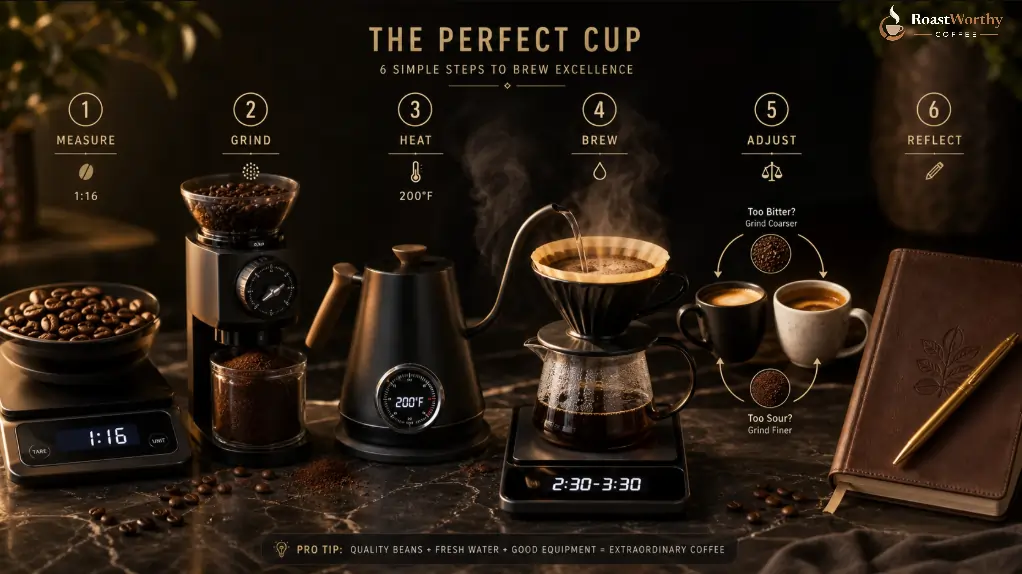
Here's a repeatable process that works for both pour-over and drip without much fuss.
- Use a 1:16 ratio — 1 gram coffee to 16 grams water. (So 25g coffee, 400g water.)
- Grind medium, fresh, right before brewing.
- Heat water to 200°F. Boil, then rest 30 seconds.
- Brew for a total of 2:30–3:30.
- Taste it. Bitter? Coarsen the grind. Sour? Fine it up.
- Change one variable at a time, and write down what you did.
Your first dialed-in cup might be imperfect, and that's fine — make it anyway. By cup five you'll have it locked in.
Does the Brewing Method Matter?
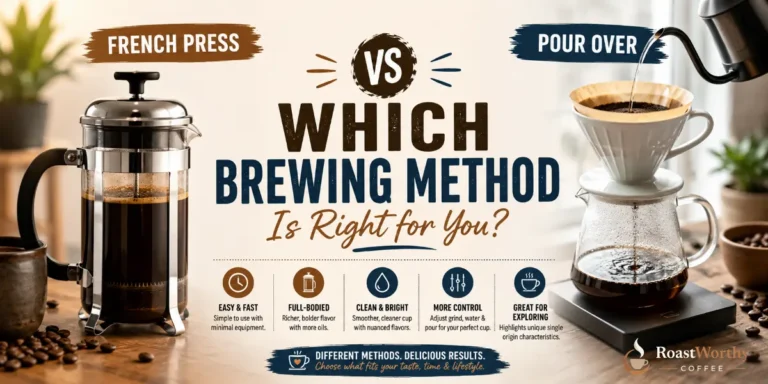
Yes, and more than you'd think. Some methods are far more forgiving than others, so here's the bitterness risk broken down by method.
Cold brew is basically the cheat code if you hate bitterness. The cool water extracts way less of the harsh stuff, even over a long steep.
When Bitterness Is the Bean's Fault
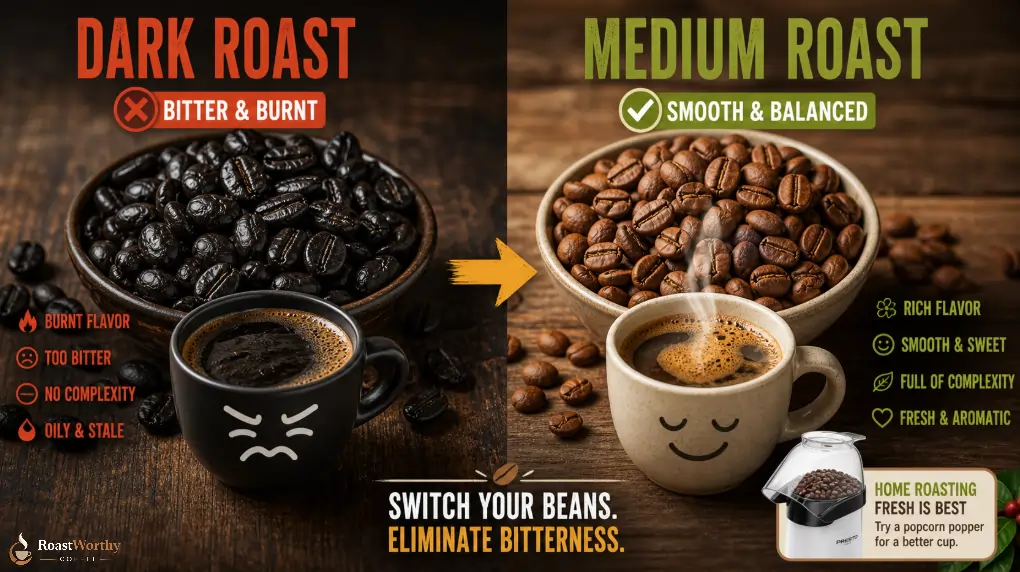
Sometimes you do everything right and the cup is still bitter — and that's when you stop blaming your technique and look hard at the beans.
Mass-market dark roasts are engineered to taste identical every time, and “identical” usually means roasted hard enough to bury the bean's origin. That heavy roast is exactly where the bitterness is coming from.
Switch to a fresh, single-origin medium roast and most of your bitterness problems vanish before you even touch your grinder. If you want full control, roasting your own beans lets you set the roast level yourself — a $15 popcorn popper is enough to start, and that's exactly where I began.
Frequently Asked Questions
Why does my coffee taste bitter even with good beans?
It's almost always over-extraction, even with great beans. Your grind is too fine, your water's too hot, or your brew time is too long — so coarsen the grind first and work from there.
Does adding salt fix bitter coffee?
A tiny pinch of salt can mask bitterness because it suppresses the bitter receptors on your tongue. But it's only a band-aid, so fix the actual extraction instead of covering it up.
Is dark roast more bitter than light roast?
Yes, noticeably so. Longer roasting carbonizes the sugars and creates bitter, ashy compounds, while medium and light roasts taste far sweeter and brighter.
What temperature should water be to avoid bitter coffee?
Aim for 195–205°F (90–96°C). Boil your kettle, then wait 30 seconds before pouring, because boiling water scorches the grounds and pulls out bitterness.
Why is my French press coffee so bitter?
You're probably steeping too long or grinding too fine, which are the two classic French press mistakes. Use a coarse grind and plunge at 4 minutes — not 8 or 10.
Can stale coffee taste bitter?
Yes, it can. Stale beans go flat and develop a dull bitterness over time, so buy whole beans, use them within 2–4 weeks of the roast date, and grind fresh every time.
More Recommendations from RoastWorthy Coffee