Is Coffee Good or Bad for You? What the Science Actually Says

Most people drink coffee before they ever ask whether they should. So let's settle it.
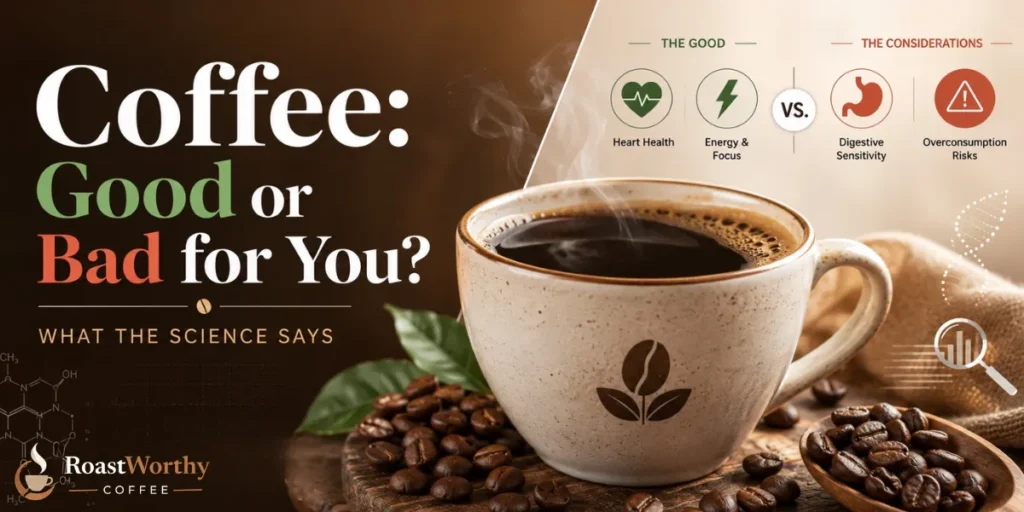
Is coffee good or bad for you? For most healthy adults, the science leans clearly good — with a few real caveats worth knowing. The largest studies tracking hundreds of thousands of people consistently find that moderate coffee drinkers live longer, not shorter. That's not a marketing line. That's the data.
But “it's fine” is not the whole story. There's a whole story in this cup. ☕
Coffee Health Benefits and Risks at a Glance
Here's the balance sheet on coffee pros and cons.
| Factor | Effect | Verdict |
|---|---|---|
| Antioxidants | Major dietary source | Strong positive |
| Heart disease | Lower risk at moderate intake | Positive |
| Liver health | Lower disease and cancer risk | Strong positive |
| Type 2 diabetes | Reduced risk | Positive |
| Brain health | Lower Parkinson's/Alzheimer's risk | Positive |
| Anxiety | Can worsen in sensitive people | Negative |
| Sleep | Disrupted if consumed late | Negative |
| Bone density | Minor concern for at-risk groups | Mild negative |
| Cholesterol | Raised by unfiltered coffee | Manageable |
The pattern is clear. The benefits are broad and consistent. The risks are specific and avoidable.
One more thing the table can't show. Almost every benefit below follows a dose curve, not a straight line. More is not always better. The story lives in the middle.
The Case For Coffee
Coffee is not just caffeine in hot water. It's one of the largest sources of antioxidants in the average Western diet. That alone reframes the question.
It's also one of the most studied beverages on earth. Tens of thousands of papers. Decades of cohort data. When that much evidence points the same direction, it's worth listening.
Antioxidants and Cellular Defense
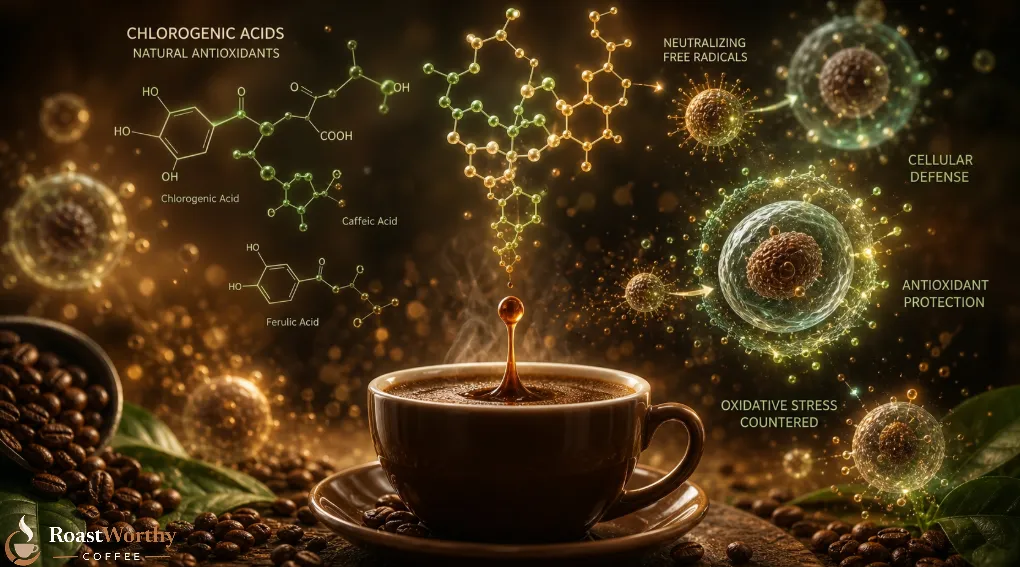
Coffee carries chlorogenic acids — plant compounds that fight oxidative stress. For many people, coffee delivers more antioxidants per day than fruits and vegetables combined. Not because coffee is richer. Because people drink it more reliably than they eat kale.
These compounds matter beyond the flavour. They're linked to lower inflammation, which sits at the root of dozens of chronic conditions.
Chlorogenic acids do more than mop up free radicals. They appear to influence how your body handles blood sugar and blood pressure. That's part of why the benefits stretch across so many systems. One drink. Many pathways.
Cardiovascular Health
For years, coffee got blamed for heart trouble. The evidence flipped.
Large meta-analyses now associate moderate intake — roughly three to four cups daily — with a lower risk of heart disease and stroke. The relationship is a U-shape. A little helps. A lot may not. Zero offers no protective edge.
Why the U-shape? At moderate doses, the anti-inflammatory and blood-vessel benefits win out. Push intake far higher and the caffeine load can nudge blood pressure and heart rate the wrong way for some people. The bottom of the curve is the sweet spot — not the far right.
One caveat: unfiltered coffee — French press, espresso, Turkish — contains cafestol and kahweol. These raise LDL cholesterol slightly. Paper filters trap most of it. If your cholesterol runs high, a pour-over beats a press.
This is the rare coffee risk you can engineer away entirely. Switch the filter. Keep the coffee. Few health trade-offs are that simple.
Liver Health
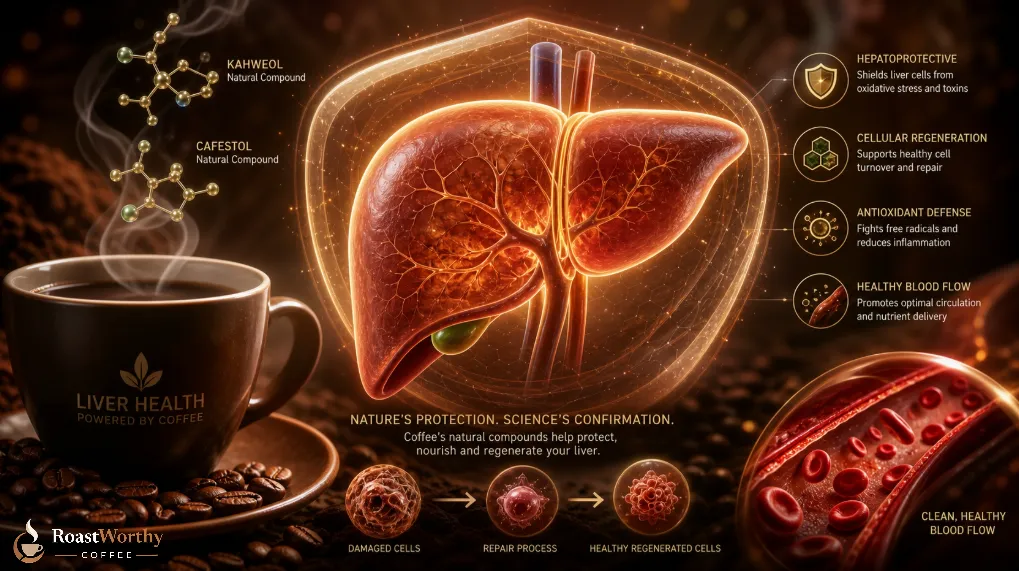
This is where coffee genuinely impresses. The terroir of your liver, so to speak, loves the stuff.
Regular coffee drinkers show lower rates of liver fibrosis, fatty liver disease, cirrhosis, and even liver cancer. The protective effect appears dose-dependent — more cups, more benefit, up to a point. Few foods or drinks show this consistency.
The signal is strong enough that some hepatologists now mention coffee to patients with liver concerns. Not as medicine. As a habit that happens to help. Studies suggest the protection holds even for people who already have liver stress from alcohol or excess weight.
Metabolic and Cognitive Effects
Coffee drinkers have a meaningfully lower risk of type 2 diabetes. Decaf shows much of this benefit too, so it's not purely the caffeine. The plant compounds appear to improve how cells respond to insulin over time.
For the brain, regular consumption links to reduced risk of Parkinson's and Alzheimer's disease. Caffeine blocks adenosine, sharpening focus and reaction time in the short term. Over decades, the neuroprotective signal holds up.
There's even mood data. Some long-term studies link moderate coffee intake to lower rates of depression. Correlation, not proof — but it fits the wider picture.
The Case Against Coffee
Now the honest part. Coffee isn't universally good. Context changes everything.
The same caffeine that sharpens one person rattles another. Biology decides. So before you commit to four cups a day, know which body you're working with.
Caffeine and Anxiety
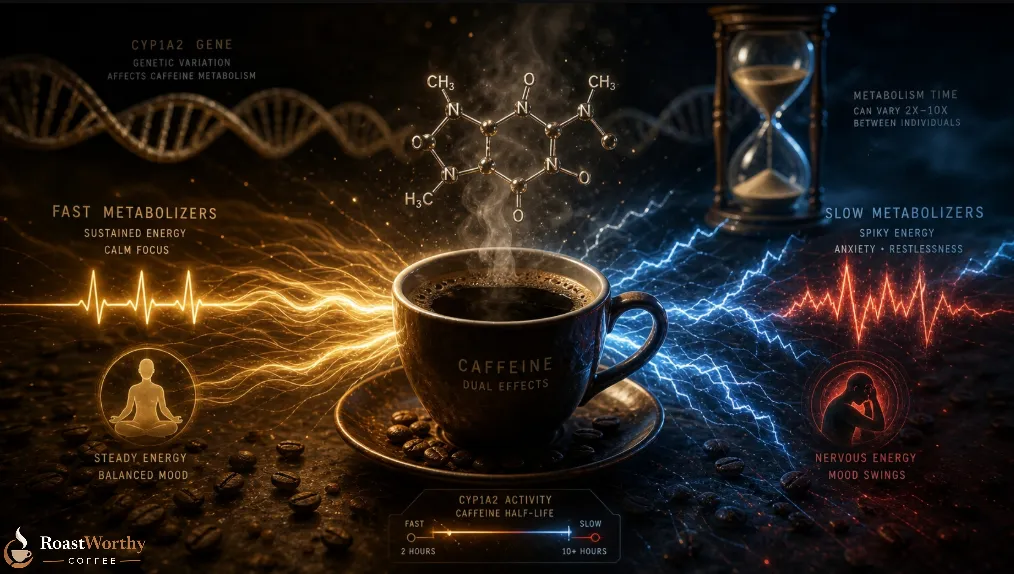
Caffeine is a stimulant. For people prone to anxiety, it can amplify it — racing heart, jitters, that wired-but-tired edge. If you already run anxious, coffee may not be your friend.
The threshold varies wildly. Genetics decide how fast you metabolize caffeine. Some people clear it in two hours. Others carry it for ten. Know which one you are.
The gene most responsible is CYP1A2. Fast metabolizers shrug off a strong espresso. Slow metabolizers feel one cup for half the day. There's no shame in being sensitive — it's just chemistry. Listen to it.
Sleep Disruption
Caffeine has a half-life of around five to six hours. A 3 PM cup means a quarter of that caffeine is still circulating at 9 PM.
Poor sleep undoes nearly every benefit coffee offers. If coffee wrecks your sleep, the math stops working in your favour. Cut your last cup to early afternoon.
This is the most underrated trap in the whole debate. People blame coffee for tiredness when the real culprit is the caffeine they drank too late, which ruined the sleep, which sent them back to the cup. A loop. Break it by moving your last cup earlier.
Bone Density
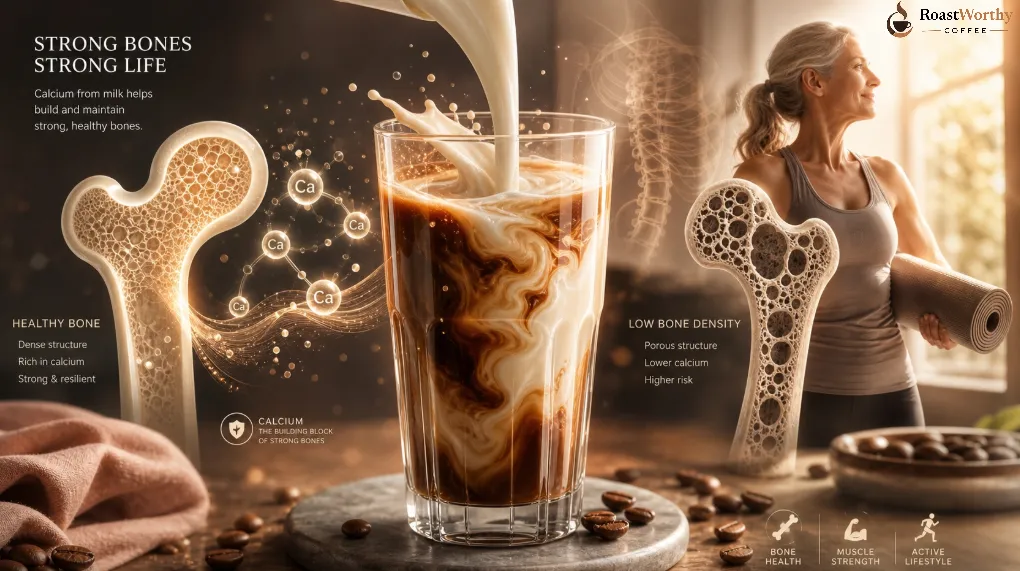
High caffeine intake can slightly reduce calcium absorption. For most people this is negligible. For older adults — especially postmenopausal women with low calcium intake — heavy coffee consumption may chip at bone density over time. A splash of milk offsets much of the concern.
The dose matters here too. We're talking about heavy, multi-cup daily habits paired with a calcium-poor diet. A couple of cups with milk is a non-issue for most.
Pregnancy and Sensitive Groups
Pregnant women are generally advised to cap caffeine at 200mg daily — roughly one to two cups. People with uncontrolled high blood pressure, certain heart arrhythmias, or acid reflux should also tread carefully.
Coffee is also acidic, which can aggravate reflux and sensitive stomachs. If yours rebels, a darker roast or a cold brew — both lower in acidity — often sits easier. Small swap. Big difference.
So, Is Coffee Healthy? The Honest Verdict
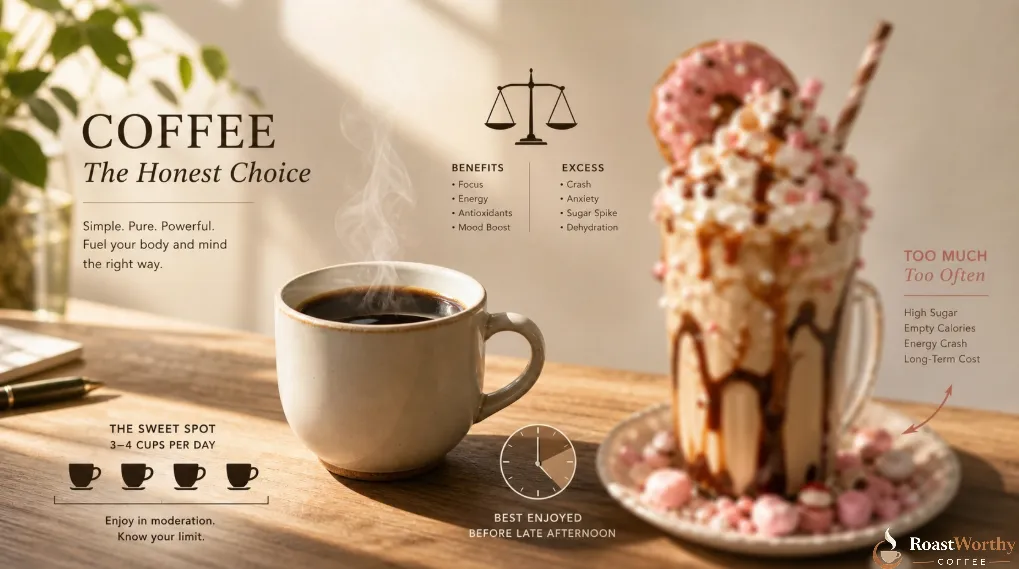
Let's be honest. For the average healthy adult, coffee is one of the most well-studied, genuinely beneficial drinks you can have.
The sweet spot sits around three to four cups a day. Filtered, not loaded with sugar and syrup. Not after mid-afternoon.
That last point gets ignored most. A black coffee is health-neutral to positive. A 600-calorie caramel drink is dessert. The bean isn't the problem there. What you do to it is.
So the real answer to “is coffee good or bad for you” isn't about coffee at all. It's about the dose, the timing, and what you pour in. Get those right and the bean does the rest.
How to Drink Coffee the Smart Way
Small adjustments turn coffee from fine into genuinely good for you.
This isn't about quitting. It's about drinking it well.
And one more, because it gets missed: drink water alongside it. Coffee is mildly diuretic. A glass of water per cup keeps you even. Simple, free, effective.
Quality Matters More Than You Think
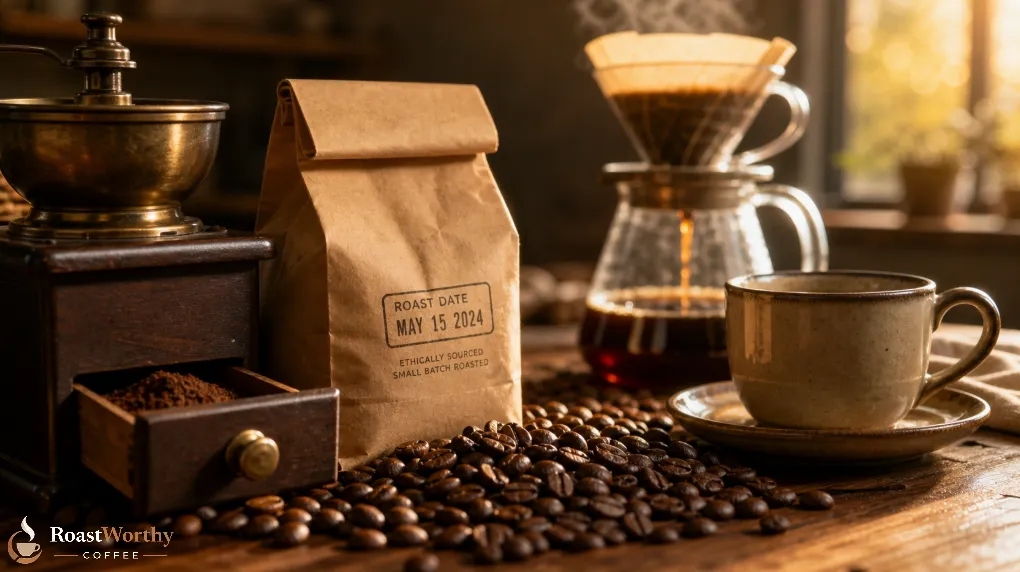
Here's something the health studies rarely mention. The coffee itself matters.
Freshly roasted, properly stored beans carry more of those beneficial compounds than stale, oxidized supermarket grounds sitting on a shelf for months. Oxidation degrades the chlorogenic acids that do the heavy lifting.
Buying fresh — and grinding fresh — isn't just a flavour upgrade. It's arguably a nutritional one. The people who grew it deserve a cup that does it justice. 🌱
Pre-ground coffee starts losing those volatile compounds within minutes of grinding. Whole beans, ground right before brewing, hold onto far more. The same logic applies to storage. Keep beans in an airtight container, away from heat and light. Oxygen is the enemy.
If you want to taste the difference, start with single-origin beans from a roaster who dates their bags. Light to medium roasts tend to retain more antioxidants than very dark ones, since prolonged roasting burns some of them off.
A roast date on the bag is the single best signal of quality. No date, no transparency. The good roasters are proud to tell you. The rest hide it.
Frequently Asked Questions
How much coffee is safe to drink per day?
For most healthy adults, up to 400mg of caffeine — roughly four cups — is considered safe and is the range linked to the most health benefits.
Is coffee bad for your heart?
No, for most people. Moderate coffee intake is associated with lower risk of heart disease and stroke. Unfiltered coffee can raise cholesterol slightly, so use a paper filter if that's a concern.
Does coffee cause anxiety?
It can in sensitive individuals. Caffeine is a stimulant and may worsen anxiety, jitters, and a racing heart in people who metabolize it slowly or are already prone to anxiety.
Is coffee good or bad for your liver?
Good. Regular coffee consumption is consistently linked to lower rates of fatty liver disease, cirrhosis, and liver cancer — one of coffee's most well-supported benefits.
Does coffee weaken your bones?
For most people, no. Heavy caffeine intake can slightly reduce calcium absorption, a minor concern mainly for older adults with low calcium intake. A splash of milk offsets it.
Is decaf coffee healthy too?
Yes. Decaf keeps most of coffee's antioxidant and metabolic benefits — including the lower diabetes risk — without the caffeine. It's a solid option for sensitive drinkers.
Does coffee dehydrate you?
Not meaningfully at normal intake. Coffee is mildly diuretic, but the water in the cup more than offsets it. Regular drinkers build a tolerance to the effect anyway.
When is the best time to drink coffee?
Mid-to-late morning, roughly 9:30 to 11:30 AM, when natural cortisol starts dipping. Avoid the first 30 minutes after waking and anything past early afternoon.
The Bottom Line
So, is coffee good or bad for you? Good — if you drink it sober about how. Filtered, moderate, sugar-light, and not at midnight.
The science isn't wishy-washy on this anymore. Coffee earns its place. Just drink it well… and drink it fresh. ☕
More Recommendations from RoastWorthy Coffee