Arabica vs Robusta Coffee: Differences & Which Is Better?

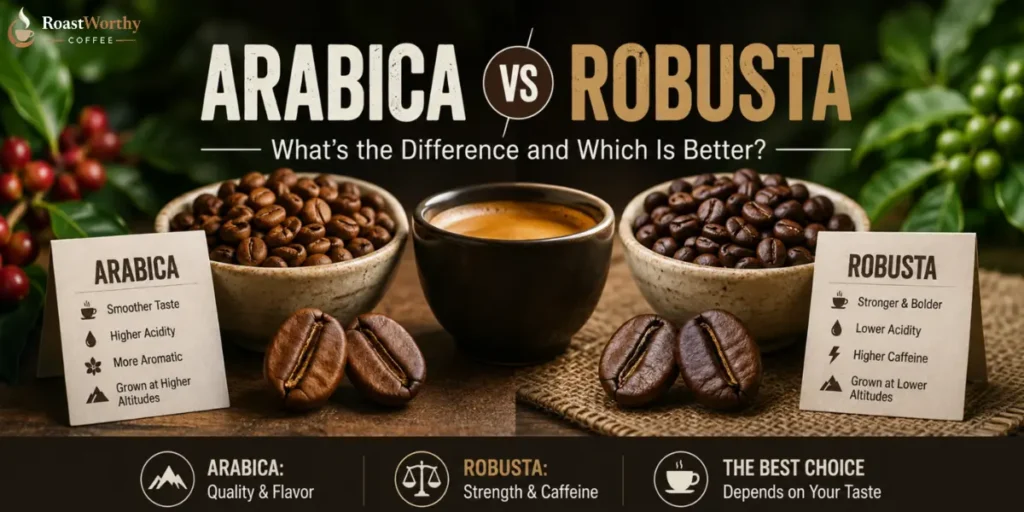
Two beans grow almost all the world's coffee. They could not be more different.
Arabica vs Robusta Coffee is the oldest divide in the cup — one plant grew wild in Ethiopian forests, the other was named for how tough it is to kill. One tastes like fruit and flowers. The other tastes like… a punch to the palate.
Here's the honest version of the difference. And which one belongs in your cup.
Arabica vs Robusta Coffee: The Short Answer (TL;DR)
The quick take before we go deeper:
Neither is objectively “better.” They're built for different jobs. Keep reading — the why is where it gets interesting.
Two Different Coffee Species
Start with the origin, not the roaster.
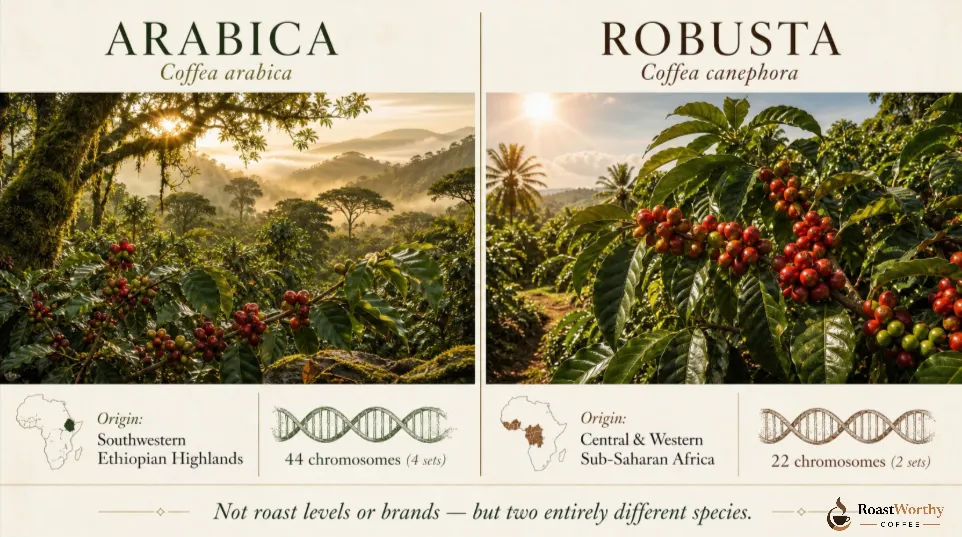
Arabica (Coffea arabica) came from the highlands of southwestern Ethiopia. It's still grown semi-wild in some forests there. No other coffee species can claim that lineage.
Robusta (Coffea canephora) came from central and western sub-Saharan Africa. The name says it all — robust. Disease-resistant. Heat-tolerant. Stubborn as a mule.
They aren't roast levels or brands. They're separate species. As different as two grape varieties that make completely different wine.
One more genetic detail matters. Arabica has four sets of chromosomes; Robusta has two. That extra genetic complexity is part of why Arabica carries so many more flavor compounds. There's a whole story in this cup, and it starts in the plant's DNA.
Growing Altitude: Where They Actually Grow
The terroir is doing something here — and altitude is the biggest lever.
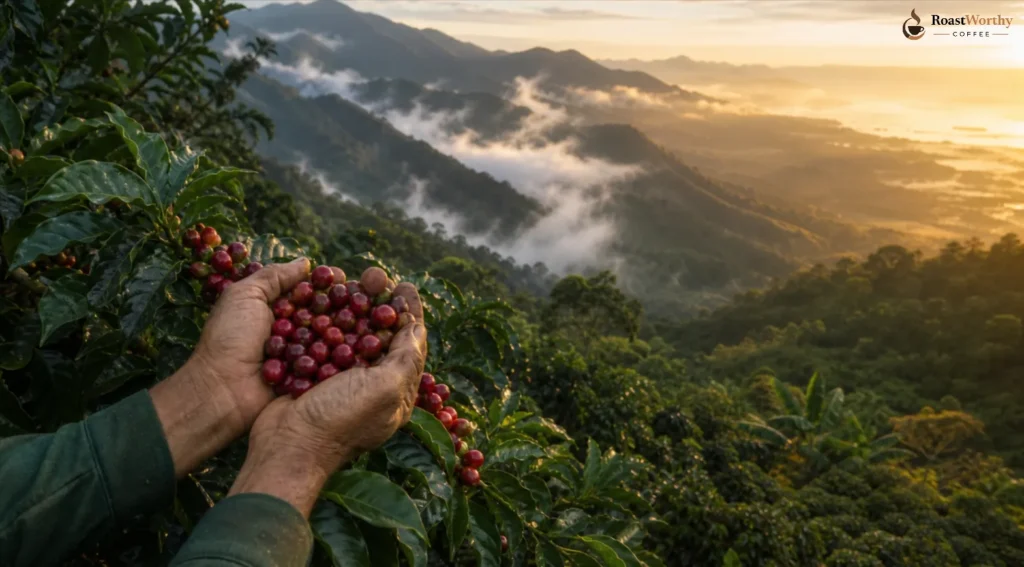
Arabica needs elevation. It thrives between 1,000 and 2,200 meters, in cool, misty mountain climates. Colombia, Ethiopia, Guatemala, Kenya. The slow growth at altitude concentrates sugars inside the cherry. That's where the sweetness comes from.
Robusta grows low. From sea level up to about 800 meters. It shrugs off heat, humidity, and pests that would wipe out Arabica in a season. Vietnam, Uganda, India, and parts of Brazil grow it in volume.
This matters beyond geography. Altitude explains almost everything about price and flavor. High farms are colder, slower, and harder to harvest — usually by hand, cherry by cherry.
Temperature is the hidden factor. Arabica likes 15–24°C. Push it above 30°C and the plant stresses, the cherries ripen unevenly, and quality drops. Robusta happily takes 24–30°C. As the climate warms, that difference is reshaping where coffee can grow at all.
Caffeine Content: Robusta Wins by a Mile
This one isn't close.
Robusta carries roughly 2.2–2.7% caffeine by dry weight. Arabica sits around 1.2–1.5%. That's nearly double the jolt per gram.
Here's what the caffeine is actually doing. It's a natural pesticide the plant makes to defend itself. More caffeine means fewer insects — part of why Robusta survives at low, buggy altitudes where Arabica gets eaten alive.
That bitterness you taste in Robusta? Partly the caffeine itself. Caffeine is bitter. More of it, more bite.
If you want a heavier hit, Robusta delivers. It's why many espresso blends fold in a percentage of it — for the kick and the crema. This is a real, measurable part of the Arabica vs Robusta difference, not marketing.
Flavor Profile: The Real Divide
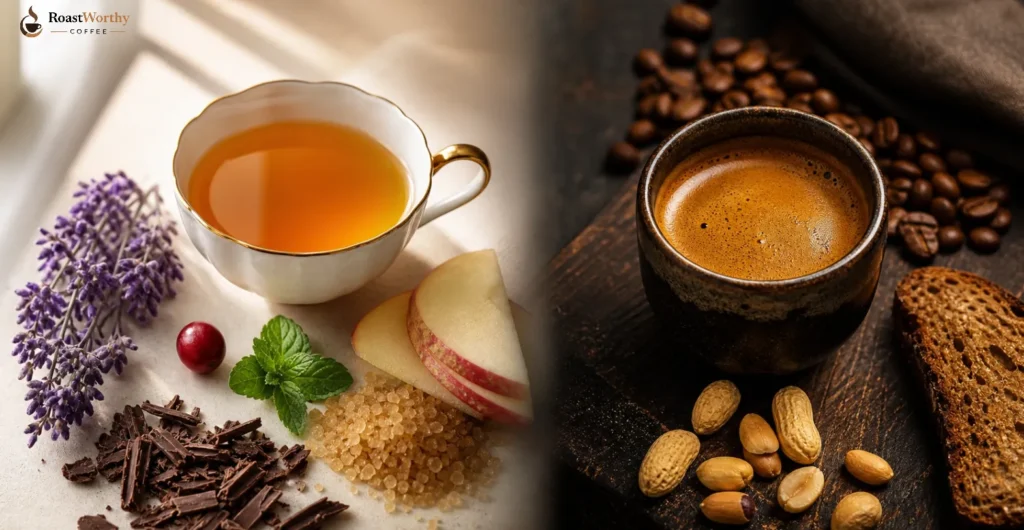
The flavor profile is where people take sides — and where the argument actually lives.
Arabica tastes bright and layered. Depending on origin, you get fruit, florals, chocolate, caramel, berry. An Ethiopian natural can taste like blueberry jam. A Colombian washed can taste like red apple and brown sugar. A Kenyan can taste like blackcurrant and tomato.
Robusta tastes bold and blunt. Woody, grainy, sometimes rubbery or peanut-like. Less sweetness up front. A heavier, thicker body that coats the tongue. It's not built for subtlety — it's built for strength.
Why the gap? Arabica has nearly twice the lipids and far more sugars than Robusta. Those fats and sugars are the raw material for flavor and aroma during roasting. More sugar, more caramelization, more sweetness in the cup.
Arabica is the bean specialty coffee is built on. Nearly every single-origin bag you see on a specialty shelf is Arabica. But well-processed fine Robusta is slowly starting to challenge that reputation.
Acidity Level: Brightness vs Bitterness
Acidity in coffee isn't a bad thing. It's what makes a cup feel alive.
Arabica has higher, brighter acidity — the tang you taste in a good Kenyan or a Yirgacheffe. It reads as citrus, wine, or green apple. Roasters chase it. That's a feature, not a flaw.
Robusta has low acidity and higher bitterness. It sits flat and heavy on the palate. That flatness is exactly why it cuts through milk and sugar so well. Less exciting black, more reliable in a latte.
If you drink your coffee black and want brightness, that alone settles Arabica beans vs Robusta beans for most people. If you want something bold that stands up to steamed milk, Robusta has a real argument.
Arabica Beans vs Robusta Beans: Side by Side
The full Arabica vs Robusta difference in one view:
| Factor | Arabica | Robusta |
|---|---|---|
| Species | Coffea arabica | Coffea canephora |
| Caffeine content | 1.2–1.5% | 2.2–2.7% |
| Flavor profile | Sweet, fruity, floral, complex | Bold, woody, bitter, grainy |
| Acidity level | High, bright | Low, flat |
| Body | Lighter to medium | Heavy, thick |
| Growing altitude | 1,000–2,200m | 0–800m |
| Ideal temperature | 15–24°C | 24–30°C |
| Bean shape | Oval, curved center crease | Rounder, straight crease |
| Price | Higher | Lower |
| Disease resistance | Low | High |
| Global share | ~60% | ~40% |
| Best for | Filter, pour-over, black | Espresso blends, instant, milk drinks |
Even the beans look different. Arabica is oval with an S-shaped center crease. Robusta is rounder with a straight line down the middle. Once you know the tell, you can spot it in the bag.
Price Comparison: Why Arabica Costs More
The people who grow this deserve credit — and the price reflects real labor.
Arabica costs more for concrete reasons. It grows on steep, high-altitude slopes. It's harvested by hand. It's fragile, low-yielding, and vulnerable to disease and frost. Every one of those factors adds cost to the bag.
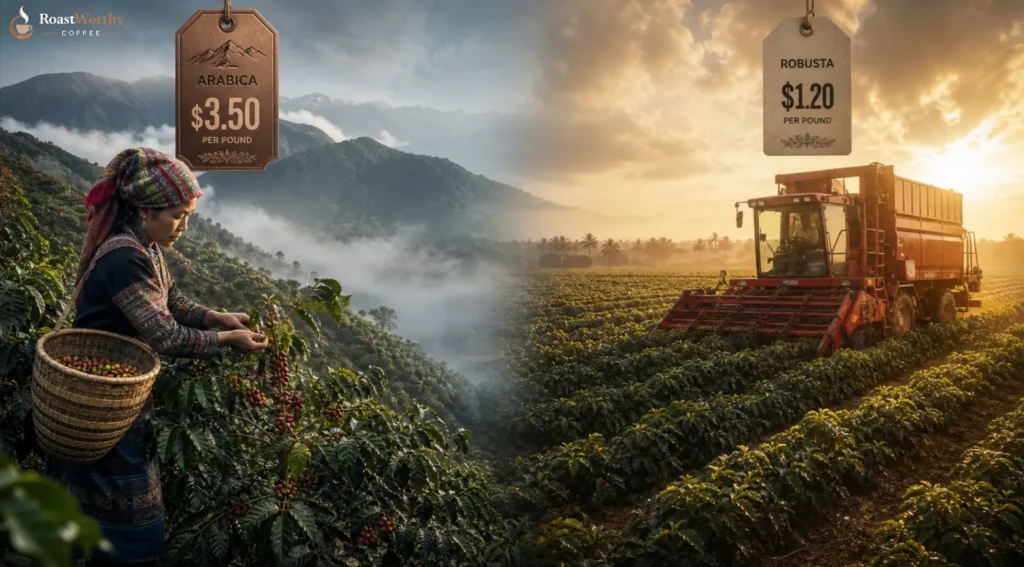
Robusta is cheaper across the board. Higher yields per hectare, easier mechanized harvesting on flatter land, tougher plants that don't die at the first sign of trouble. It's the workhorse behind most instant coffee and budget supermarket blends.
On the commodity market, Arabica typically trades at a significant premium over Robusta — often 40% higher or more, depending on the season. In this price comparison, you're paying for the mountain, the hand-picking, and the flavor those two things create.
There's a supply story too. Arabica is more sensitive to weather shocks. A frost in Brazil or drought in Colombia can spike Arabica prices worldwide. Robusta, grown in hardier conditions, tends to hold steadier. This matters beyond the flavor — it shapes what ends up affordable in your cup.
So Which Is Better: Arabica or Robusta Coffee:
Let's be honest. It depends entirely on what you want.
For most drinkers, Arabica is the better everyday cup. Sweeter, brighter, more forgiving, more interesting. If you're buying whole beans for pour-over or drip, go Arabica. Full stop.
Choose Robusta when:
The smartest move for many is a blend — mostly Arabica for flavor, a touch of Robusta for body and crema. Plenty of iconic Italian espresso blends do exactly this, sometimes 80/20 or 70/30. It's not a compromise. It's a recipe.
The Rise of Fine Robusta
Here's the shift worth knowing about.
For decades, Robusta meant “cheap filler.” That's changing. A small movement of producers — in India, Uganda, and Brazil — is growing washed, carefully processed fine Robusta.
Done right, it tastes cleaner. Chocolatey. Nutty. Even a little sweet. Nowhere near a great washed Arabica, but light-years better than the rubbery stuff in old instant tins.
The terroir is doing something here too. Give Robusta altitude, shade, and real processing care, and it surprises you. Some specialty roasters now sell single-origin fine Robusta on purpose — not as filler, but as a statement.
Will it dethrone Arabica? No. But it's making the old “Arabica good, Robusta bad” line look lazy. The story is getting more interesting.
Which Bean Suits Your Brew Method
Match the bean to how you actually drink.
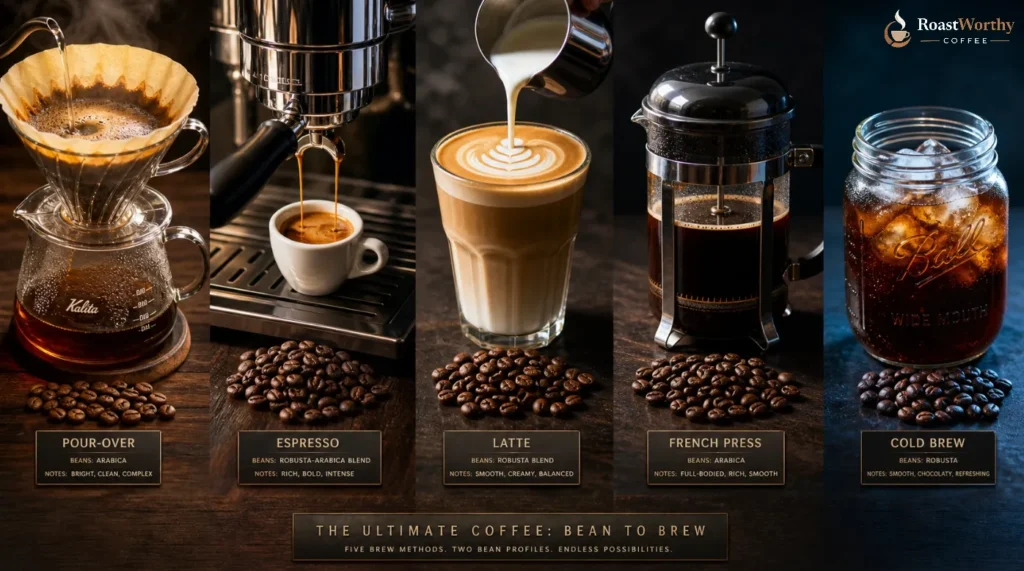
There's no single right answer. There's a right answer for your cup.
How to Tell Arabica From Robusta
Two quick tells — at the shelf and in the cup.
The bag usually says. Specialty roasters proudly label “100% Arabica” or name the exact species and origin. Cheap supermarket blends often stay quiet about it — and that silence is itself a hint.
In the cup, taste for it. Bright, fruity, clean acidity points to Arabica. Flat, bitter, woody, heavy body points to Robusta. Taste them side by side once, and you'll never confuse them again.
Frequently Asked Questions
Is Arabica or Robusta better?
Arabica is better for flavor — sweeter, brighter, more complex. Robusta is better for caffeine, crema, and cost. For most everyday drinkers, Arabica wins.
Does Robusta have more caffeine than Arabica?
Yes. Robusta has nearly double — around 2.2–2.7% versus Arabica's 1.2–1.5% by dry weight.
Why is Arabica more expensive than Robusta?
Arabica grows at high altitude on steep slopes, is hand-harvested, yields less, and is more disease-prone. All of that raises its cost, often 40% above Robusta.
Which coffee beans are better for espresso?
Arabica gives sweeter, more nuanced espresso. Robusta adds body, crema, and caffeine. Many classic espresso blends mix both — often 70–80% Arabica.
Does Arabica taste less bitter than Robusta?
Yes. Arabica is sweeter with brighter acidity. Robusta is more bitter, woody, and heavy-bodied, partly because of its higher caffeine content.
Which is healthier, Arabica or Robusta?
Both are healthy in moderation. Robusta has more caffeine and chlorogenic antioxidants; Arabica has more sugars and lipids. Neither is meaningfully “healthier.”
The Bottom Line
Arabica and Robusta aren't really rivals. They're two tools for two different jobs.
Want a bright, sweet, complex cup you sip black? Reach for Arabica. Want a caffeine-heavy, crema-rich espresso base that won't break the bank? Robusta has your back.
Taste both. Side by side. That's the only way the Arabica vs Robusta difference stops being a chart and starts being real in your own cup. ☕
More Recommendations from RoastWorthy Coffee