
What Is a Coffee Bloom and Why Does It Matter for Flavor?


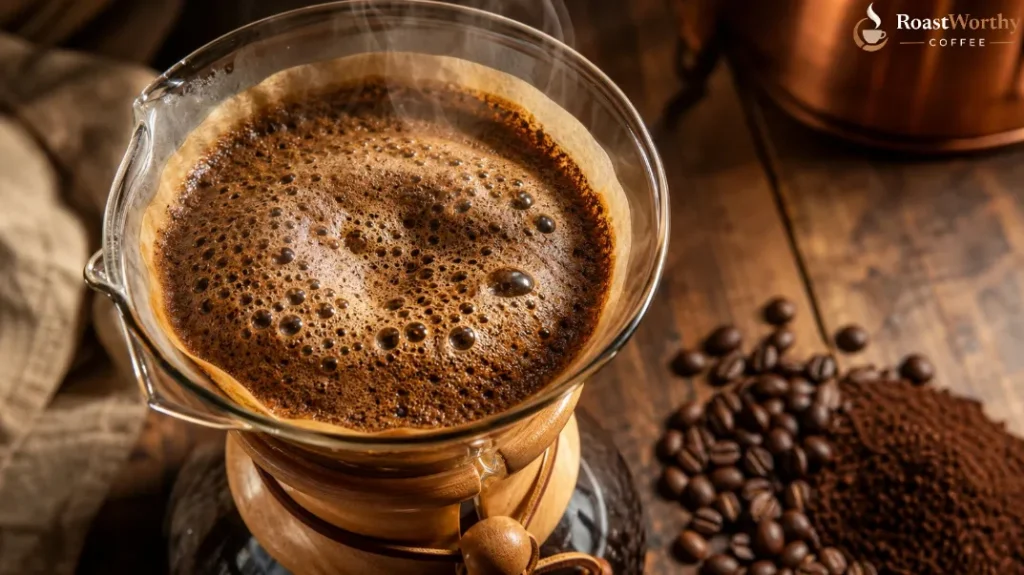
Pour hot water over fresh coffee grounds and watch them rise. That swelling, bubbling dome is the coffee bloom. It's not a garnish. It's chemistry.
Here's what the heat is actually doing. ⚗️
A coffee bloom is the rapid release of carbon dioxide that happens when hot water first hits fresh-roasted grounds. The bigger the bloom, the fresher the roast. Skip it, and your extraction goes sideways.
Key highlight: The coffee bloom is the single fastest freshness test you have. No equipment. No guessing.
What Actually Happens During a Coffee Bloom
Roasting creates CO2. Lots of it. The Maillard reaction and caramelization inside the bean produce gas that gets locked into the bean's structure.
That gas wants out.
Right after roasting, beans off-gas for days. This is CO2 degassing. A bean roasted yesterday is loaded. A bean roasted three weeks ago has lost most of it.
Grinding multiplies the surface area, so the trapped CO2 escapes far faster — and erupts the moment brewing water arrives. That eruption is the bloom.
Key highlight: A fresh roast holds the most gas. A flat bloom means the gas already left… and so did the freshness.
The Numbers Behind Degassing
Fresh coffee loses roughly 40% of its CO2 in the first 24 hours after roasting. The rest leaks out over the following two to three weeks.
This is why timing matters more than most people think.
The window from day 4 to day 14 post-roast is where bloom and flavor peak together. The curve doesn't lie.
Why CO2 Ruins Extraction If You Skip the Bloom
Here's the problem nobody tells beginners.
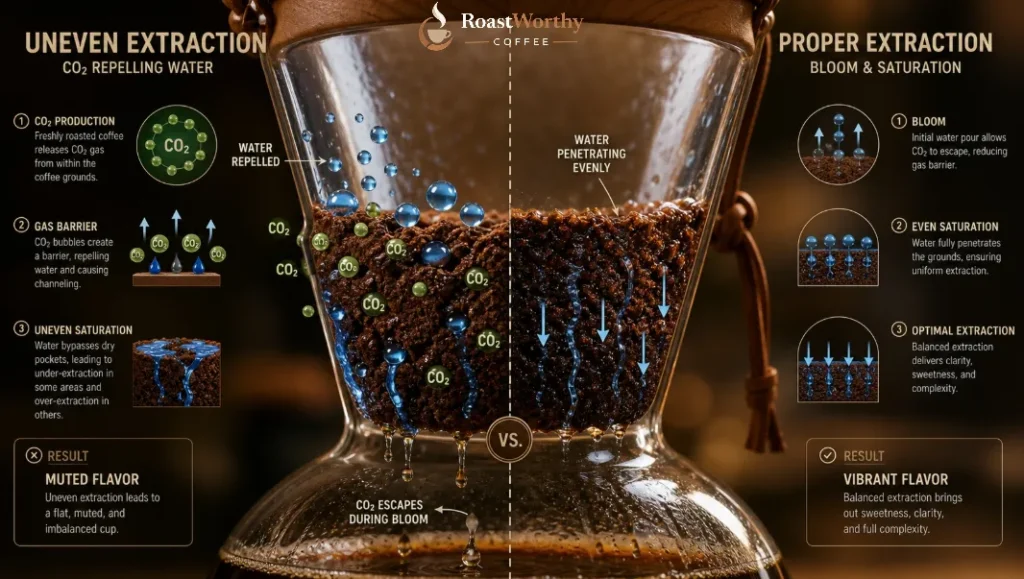
CO2 repels water. When gas is actively escaping your grounds, it physically pushes water away from the coffee. Water can't soak in evenly.
Uneven saturation means uneven extraction. Some grounds get over-extracted. Others get nothing. The result tastes sour, thin, and inconsistent.
Pre-infusion coffee bloom fixes this — you wet the grounds, let the gas escape, then brew once the coffee can actually absorb water.
Key highlight: Skip the bloom on a fresh roast and you're fighting your own coffee. The gas wins.
How to Bloom Coffee Properly
Every brew method that uses a fresh roast benefits from a bloom. The technique is simple. The ratio matters.
The Standard Bloom Ratio
Use roughly twice the weight of your grounds in water for the bloom. Brewing with 20g of coffee? Pour 40g of water. Let it sit. Watch it rise and settle.
Taste it. Write it down. Brew it again.
Bloom Time
Let the bloom run 30 to 45 seconds — push to 60 seconds for very fresh, gassy roasts. You'll know it's done when the bubbling slows and the dome collapses. That's the CO2 finishing its escape.
Then proceed with your main pour.
Key highlight: Two parts water per one part coffee, 30–45 seconds. Memorize those two numbers and your daily cup improves immediately.
Coffee Bloom Across Brewing Methods
Not every method blooms the same way. The principle holds. The execution changes.
| Method | Bloom Approach | Time |
|---|---|---|
| Pour over | Wet grounds, gentle swirl, wait | 30–45s |
| French press | Add water, stir crust, wait | 30–60s |
| Aeropress | Quick saturate, stir, wait | 20–30s |
| Espresso | Built-in pre-infusion on machine | 2–5s |
Manual drip methods need a deliberate bloom; espresso machines automate it through pre-infusion.
Pour Over Bloom
The pour over bloom is where you'll see the most dramatic dome. Spiral your water from the center out. Cover all the grounds with the minimum water needed.
Watch for tiny bubbles breaking the surface — that “blooming flowers” effect signals a fresh, healthy bloom. Get it right and your extraction evens out.
French Press Bloom
The French press bloom looks different. You're immersing, not dripping.
Pour your bloom water. Wait 30 seconds. Then break the crust with a spoon.
A thick, risen crust means fresh coffee and strong off-gassing — break it, stir down, then add the rest of your water.
What the Bloom Tells You About Your Beans

Your bloom is a diagnostic tool. Read it.
A big, bubbling, dome-shaped bloom means a fresh roast. The beans are gassing hard. Buy more from that roaster.
A weak, flat, barely-rising bloom means stale coffee. The CO2 already left. You waited too long… or the roaster sold you old stock.
Key highlight: No bloom at all? Those beans are dead. Use them for cold brew where freshness matters less, or compost them.
Light Roast vs Dark Roast Bloom
Roast level changes the bloom too. Here's why.
Darker roasts develop more CO2 and have a more porous, brittle structure. They bloom bigger and faster. Light roasts are denser, hold gas longer, and bloom slower.
A light roast can still bloom well at day 14, when a dark roast has already gone flat. ☕
Common Bloom Mistakes
I've watched beginners make all of these. No judgment. Make the mistake, learn, move on.
The most common mistake is over-pouring the bloom — keep it to that 2:1 ratio and nothing more. Your first few blooms will be imperfect. Do them anyway.
Does Bloom Improve Flavor or Just Extraction?

Both. And they're connected.
Trapped CO2 carries a slightly sour, harsh edge into your cup. Letting it escape during the bloom removes that. The coffee tastes cleaner.
Even extraction then pulls the right balance of acidity, sweetness, and body. You get the flavors the roaster intended.
A properly bloomed coffee tastes more like itself — that's the entire point. If you're chasing the best possible cup, the bloom is the foundation, not a step you skip.
Frequently Asked Questions
Why do you bloom coffee?
You bloom coffee to release trapped CO2 from fresh-roasted beans. The gas repels water and causes uneven extraction. Blooming clears it so water saturates the grounds evenly.
How long should a coffee bloom last?
A coffee bloom should last 30 to 45 seconds for most fresh roasts. Very fresh, gassy beans can go up to 60 seconds. When the bubbling slows and the dome collapses, it's done.
What does a good coffee bloom look like?
A good coffee bloom rises into a bubbling dome and breaks the surface with small bubbles. The bigger and more active the bloom, the fresher your coffee.
Should I bloom stale coffee?
No. Stale coffee has already lost its CO2 through degassing, so there's nothing to release. You'll see little or no bloom. The coffee is past its prime regardless.
How much water do I use for a coffee bloom?
Use roughly twice the weight of your grounds. For 20g of coffee, pour 40g of water for the bloom, then proceed with your full brew.
Does coffee bloom matter for espresso?
Yes, but it's automatic. Espresso machines handle it through pre-infusion, gently wetting the puck before full pressure. Fresh beans still produce visible CO2 in the crema.
Key Takeaways
The coffee bloom is CO2 escaping fresh beans when water hits them. Bloom every fresh roast for 30–45 seconds using twice the water-to-coffee weight. A big bloom means freshness. A flat bloom means stale coffee. Skip it and your extraction goes uneven… sour… thin. It's the easiest upgrade to your daily cup.
More Recommendations from Roastworthy Coffee