Hario V60 Review: The Pour Over That Changed Coffee Forever

Quick Verdict
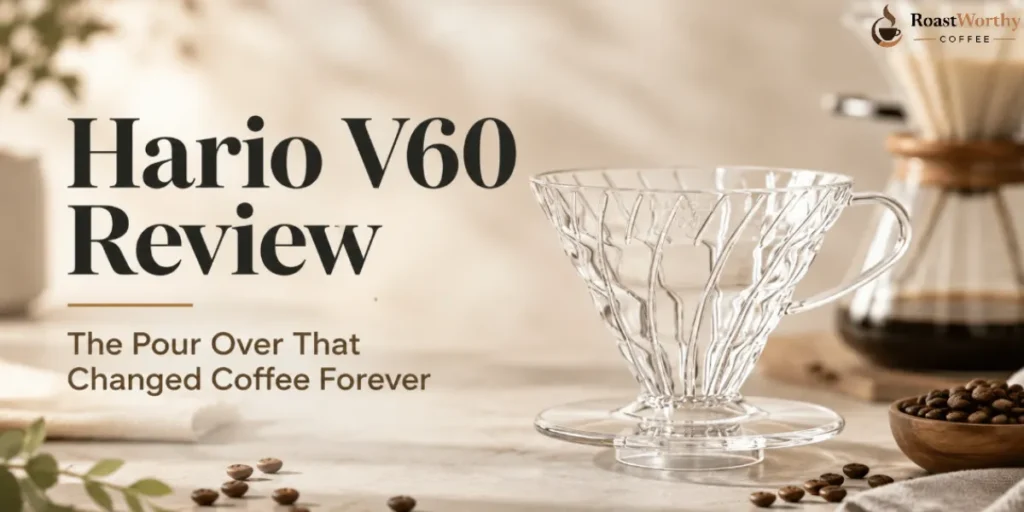
The Hario V60 remains the best pour over dripper for brewers who want clarity, control, and room to improve. It can produce bright, transparent coffee with remarkable separation between flavours. It can also punish sloppy pouring and uneven grinding.
The Hario V60 review can be summed up in one sentence: this cheap cone rewards precision better than brewers costing five times more.
It does not automate anything. It does not hide bad technique. The V60 gives water, grind, temperature, and pouring speed back to the brewer.
That freedom changed modern pour over coffee. It also created thousands of recipes, opinions, arguments, and very good cups.
What Is the Hario V60?
The Hario V60 is a cone-shaped manual coffee dripper made by Japanese glassware company Hario.
Its name comes from the V-shaped cone and its 60-degree angle. The modern V60 arrived in 2005, though Hario had explored cone drippers much earlier.
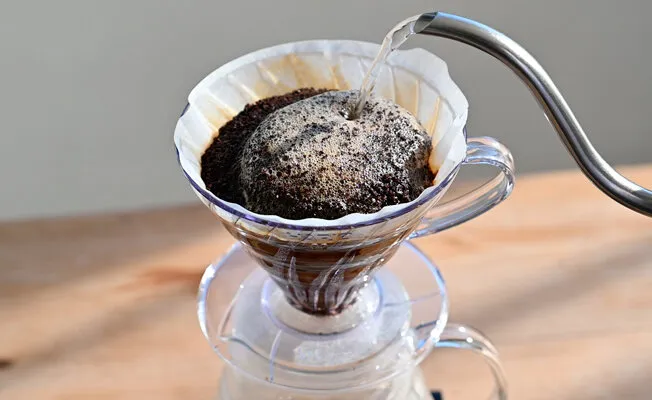
Three details define the brewer:
That combination produces a relatively open flow path. The dripper does not heavily restrict drainage.
Your pouring technique becomes the flow control.
Pour faster and water passes through sooner. Pour gently, grind finer, or add more pulses… and contact time increases.
Simple object. Serious range.
Why the V60 Changed Pour Over Coffee
Older fan-shaped drippers used small drainage holes to regulate water. The V60 took a different position.
Its large single hole removed much of that built-in resistance. Baristas could now shape extraction through grind size, agitation, and pouring structure.
That mattered during specialty coffee’s shift toward lighter roasts. Light-roasted beans often need higher extraction to show their best sweetness.
The V60 gave skilled brewers enough control to chase that sweetness without muddying the cup.
It also became a competition brewer. Recipes spread from cafés into home kitchens. Scales, gooseneck kettles, and brew timers followed.
The V60 did not invent pour over coffee. It made precision brewing accessible, repeatable, and cheap.
Hario V60 Design: What the Parts Actually Do
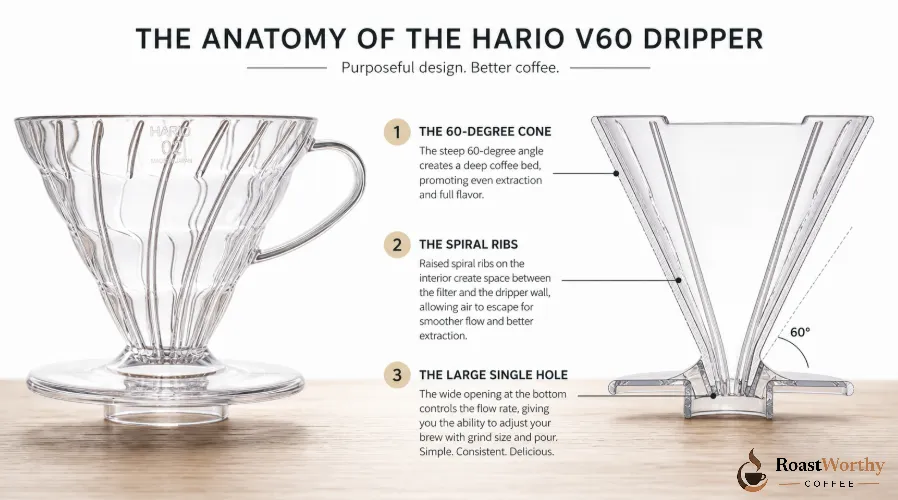
The 60-Degree Cone
The cone forms a deeper coffee bed than many flat-bottom drippers.
Water travels through more coffee before leaving the brewer. That can support strong extraction and clear flavour separation.
The downside is uneven flow. Water may find one easy path and ignore denser areas.
That is channeling… and the cup usually tastes both sour and dry.
The Spiral Ribs
The raised spiral ribs create space between the V60 filter and the brewer wall.
Air can escape as the coffee blooms. Water can also continue flowing along the sides instead of sealing the paper flat.
The ribs are not decoration. They help the bed expand and drain.
The Large Single Hole
The opening gives the brewer its speed and sensitivity.
A coarse grind may drain too quickly. A fine grind can stall when fines migrate downward.
The hole is not controlling your brew. You are.
That is why a good burr grinder matters more than buying the expensive V60.
What Does V60 Coffee Taste Like?
A well-brewed V60 tastes clean, aromatic, and separated.
With a washed Ethiopian coffee, I get jasmine first. Then lemon peel, peach tea, and a light honey finish.
A medium-roasted Colombian coffee becomes rounder. Think red apple, caramel, cocoa, and a cleaner finish than French press.
The paper traps much of the suspended sediment and some oils. Body usually lands between tea-like and medium.
The V60 is strongest when the coffee has something specific to say.
Natural Ethiopian coffees can taste intensely fruity. Washed Kenyans show sharp berry acidity. Good Colombians become sweet and structured.
Dark roasts are possible, but this is not where the brewer shines. Lower temperatures and faster brews help control bitterness.
My Best V60 Recipe
This V60 recipe is built for a Size 02 dripper and one generous mug.
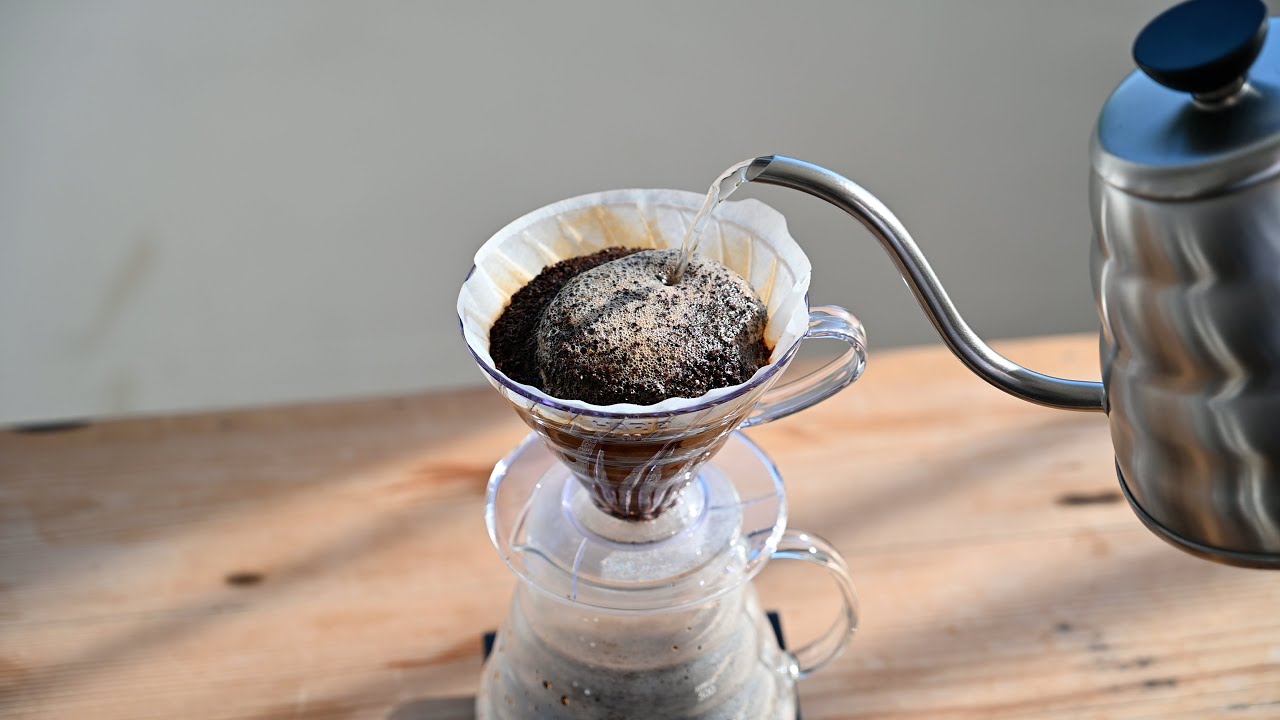
Equipment
A controlled kettle makes pouring far easier. Our guide to the best gooseneck kettles covers the models worth buying.
Starting Recipe
Use a medium-fine grind. It should look finer than coarse sand but clearly rougher than espresso.
For light roast coffee, start at 94°C. Use 91–92°C for a developed medium roast.
- Step 1: Rinse the filter thoroughly and discard the rinse water.
- Step 2: Add 20 grams of coffee and level the bed.
- Step 3: Pour 60 grams of water for the bloom.
- Step 4: Swirl gently and wait until 0:40.
- Step 5: Pour steadily to 180 grams by 1:05.
- Step 6: Continue to 260 grams by 1:35.
- Step 7: Finish at 320 grams around 1:55.
- Step 8: Let the brewer drain completely.
Target a total brew time between 2:45 and 3:15.
Taste before changing anything. Then change one variable only.
Too sour? Grind finer.
Too bitter or drying? Grind coarser.
Weak but bitter? Improve pouring and reduce channeling. Do not automatically add more coffee.
😋 Taste it. Write it down. Brew it again.
Hario V60 Sizes Explained
Hario sells the classic V60 in three main sizes.
| V60 Size | Hario Capacity | Practical Use |
|---|---|---|
| 01 | 1–2 cups | One small serving |
| 02 | 1–4 cups | One large mug or two smaller cups |
| 03 | 1–6 cups | Larger shared brews |
The Size 02 is the correct choice for most people.
It handles common recipes using 15–30 grams of coffee. Filters are widely available, and most published V60 recipes use this size.
The Size 01 works for compact 200–250 gram brews. It has less headroom and feels cramped during larger pulses.
The Size 03 suits bigger batches, but cone brewers become harder to extract evenly as bed depth increases.
For regular two-person brewing, a Chemex or quality flat-bottom brewer may be easier.
Ceramic vs Plastic V60
The ceramic V60 looks better on a coffee shelf. The plastic V60 brews better with less effort.
There… I said it.
| Material | Heat Behaviour | Durability | Best Use |
|---|---|---|---|
| Plastic | Low heat loss after minimal rinsing | Excellent | Best overall |
| Ceramic | Needs thorough preheating | Good, but breakable | Style and stable home setup |
| Glass | Needs preheating | Fragile | Visual appeal |
| Metal | Heats quickly and loses heat quickly | Excellent | Travel and commercial use |
Plastic has low thermal mass. It steals less heat from the slurry during the first pour.
Ceramic can perform just as well once fully heated. That requires more hot water and more preparation.
The metal V60 is durable and responsive. It is also expensive compared with the plastic version.
Buy the plastic V60 Size 02 unless appearance matters more than convenience.
Hario V60 Filter Choice
Use the filter size that matches the brewer.
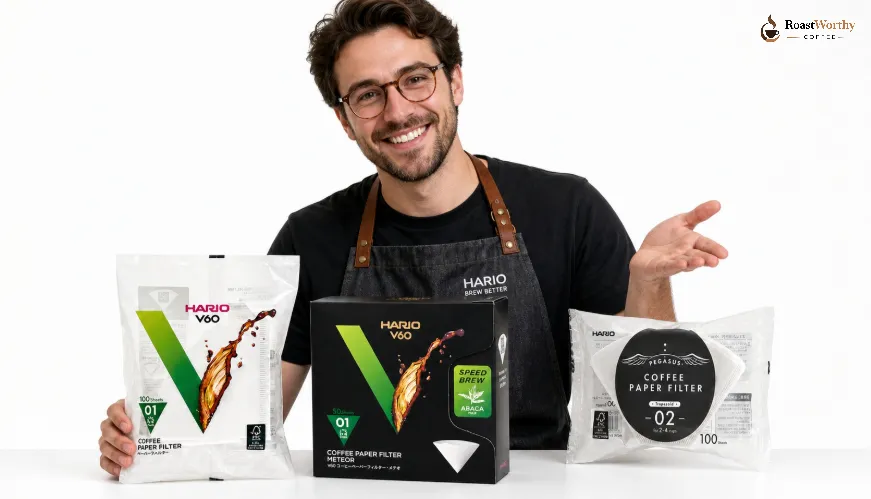
An 01 filter fits the Size 01. The 02 fits the Size 02. The 03 fits the Size 03.
Fold the crimped edge before placing the paper inside. Rinse it with hot water to remove loose paper taste and heat the brewer.
Filter flow affects brew time. When a familiar recipe suddenly stalls, the paper may be part of the problem.
Do not chase an exact time at the expense of flavour. A sweet 3:30 brew beats a hollow 2:40 brew.
Hario V60 vs Chemex
The V60 and Chemex both use cone-shaped paper filters. They do not produce the same cup.
| Feature | Hario V60 | Chemex |
|---|---|---|
| Best batch size | One to two cups | Two to six cups |
| Filter style | Lighter cone paper | Thick bonded paper |
| Cup character | Bright, detailed, flexible | Very clean, lighter-bodied |
| Flow control | Highly dependent on pouring | Slower and filter-led |
| Portability | Excellent | Poor |
| Learning curve | Steeper | Moderate |
| Cost | Low | Higher |
The Chemex removes more oils and fine sediment. It gives larger brews a polished, delicate character.
The V60 shows more texture and responds more clearly to recipe changes.
Choose Chemex for serving several people and for its beautiful carafe design.
Choose V60 for daily brewing, single-origin coffees, and tighter control.
Our full V60 vs Chemex comparison breaks down batch size, filter cost, and flavour differences.
Is the V60 Beginner-Friendly?
Yes… but it is not forgiving.
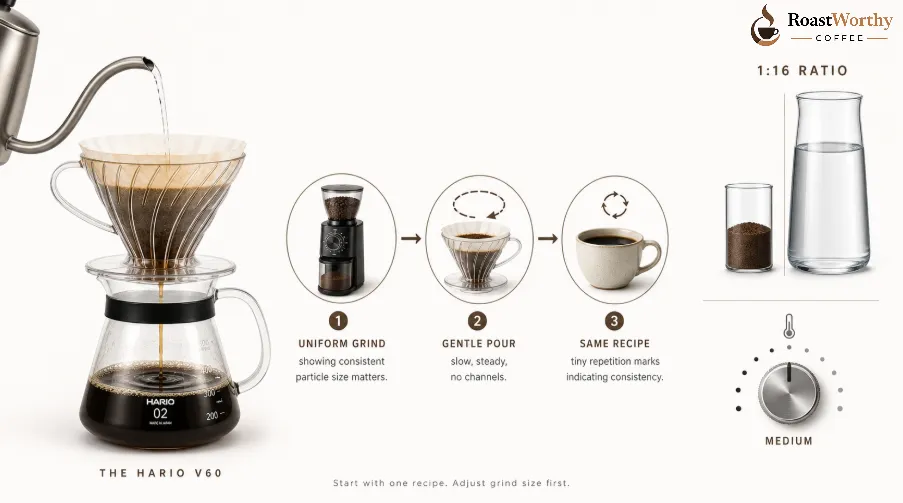
A beginner can make enjoyable coffee on day one. Consistent coffee requires a decent grinder and a repeatable pouring method.
The V60 exposes three common problems:
Start with one recipe. Keep the coffee dose and water ratio fixed.
Adjust grind size first. That solves more brews than changing five variables at once.
A 1:16 ratio is a strong starting point. Our pour over coffee ratio guide explains when to move closer to 1:15 or 1:17.
Common V60 Problems
The Brew Drains Too Fast
Grind finer and pour with less force.
A fast drawdown often tastes thin, sharp, and underdeveloped.
The Brew Stalls
Grind coarser and reduce swirling.
Too much agitation pushes fine particles into the filter. That blocks flow.
The Coffee Tastes Sour
Increase extraction.
Try a finer grind, hotter water, or slightly more contact time.
The Coffee Tastes Bitter and Dry
Reduce extraction or channeling.
Grind coarser. Use cooler water for darker roasts. Keep pours gentle and controlled.
The Bed Looks Muddy
Your grinder may be producing too many fines.
The curve does not lie… but neither does a clogged filter. ⚗️
Pros and Cons
What I Like:
What I Do Not Like:
Who Should Buy the Hario V60?
Buy it if you enjoy light-roasted single-origin coffee.
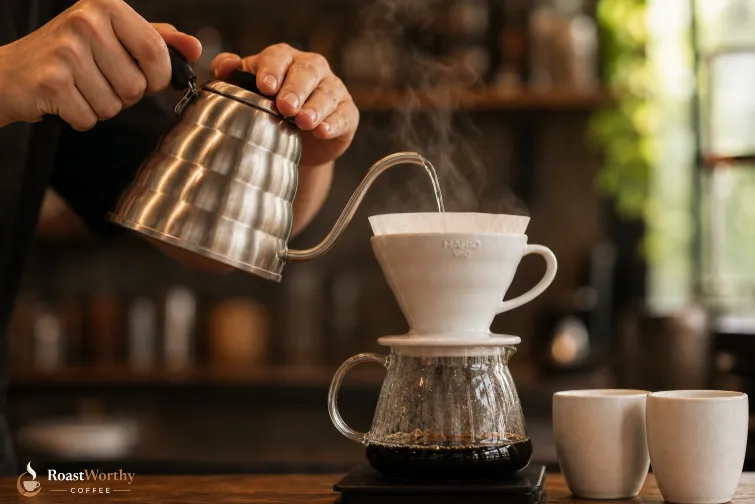
Buy it if you want to understand extraction rather than press one button.
Buy it if you already own a burr grinder, scale, and controlled kettle.
Skip it if you want effortless consistency before work. A Clever Dripper, Hario Switch, or automatic brewer fits that job better.
Skip it if you mainly brew dark, oily coffee with milk. The V60’s clarity offers less value there.
Frequently Asked Questions
Is the Hario V60 worth buying?
Yes. It offers excellent flavour clarity, low cost, and more brewing control than most manual drippers.
Which Hario V60 size is best?
The Size 02 is best for most homes. It handles one large mug or two smaller servings comfortably.
Is plastic or ceramic V60 better?
Plastic is the better brewer for most people. It needs less preheating, costs less, and does not break easily.
What grind size should I use for V60?
Start medium-fine. Grind finer if the coffee tastes sour, or coarser if it tastes bitter and dry.
What is the best V60 coffee ratio?
Start with 1:16. Use 20 grams of coffee with 320 grams of water, then adjust by taste.
Is V60 better than Chemex?
The V60 is better for single cups and recipe control. Chemex is better for larger batches and very light-bodied coffee.
Final Verdict: Is the Hario V60 Worth It?
The Hario V60 remains a reference brewer because its design still makes sense.
It is cheap, durable, and capable of competition-level coffee. Few products deliver that range without electronics or moving parts.
The plastic Size 02 is the standout. It heats quickly, travels well, and survives normal kitchen abuse.
The learning curve is real. So is the payoff.
The V60 did not change coffee by making brewing easier. It changed coffee by making control available to everyone.
More Recommendations from RoastWorthy Coffee