
Iced Latte Recipe: How to Make Café-Style Iced Coffee at Home


Most people are one good espresso shot away from making this at home. The iced latte recipe is simple: espresso, cold milk, ice — in that order. What separates a flat, watery result from a café-quality drink is technique, not equipment.
Two shots. Cold milk. Full ice cubes. That's the structure. Vanilla, oat milk, brown sugar — those are variations on a base that works every single time.
Here's what the heat is actually doing: hot espresso poured over cold milk flash-chills on contact while keeping the crema intact. Get the pour order right and you get a layered, smooth drink that costs $0.40 to make at home. Get it wrong and you're drinking diluted coffee water.
Let's build it right. ☕
What Is an Iced Latte (And What It Isn't)
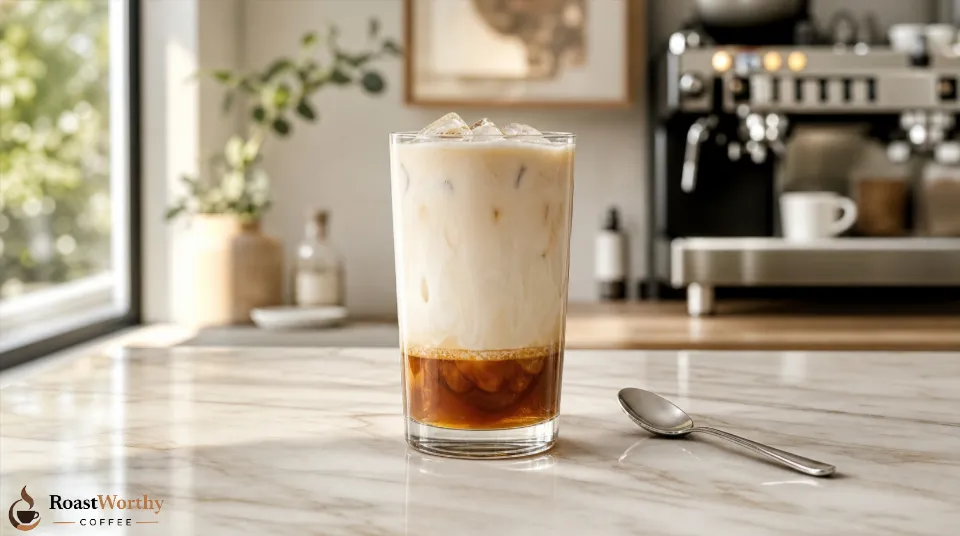
Espresso and cold milk over ice. That's the whole thing.
Not iced coffee — that's brewed drip coffee over ice, a completely different drink. Not a Frappuccino — that's a blended product with a different texture and a much longer ingredient list.
The ratio defines it: 1 part espresso to 3–4 parts cold milk. Shift that ratio too far in either direction and you lose the drink. Too much milk and the espresso disappears. Too much espresso and it turns harsh once dilution starts.
The café standard is 60ml espresso to 180ml cold milk in a 12 oz glass. Start exactly there.
What You Need
No specialist gear required. This works with what most home kitchens already have.
If you don't own an espresso machine, a Moka pot is the best alternative. Fill the basket completely and grind slightly finer than usual. You won't hit 9 bars, but you'll get enough concentration to hold up over ice and through milk.
AeroPress works too — brew at a 1:5 ratio (15g coffee to 75ml water) for a concentrate that's strong enough. Regular drip coffee doesn't survive ice and milk. It goes pale and flavourless within minutes.
Homemade Iced Latte Recipe (Step-by-Step)
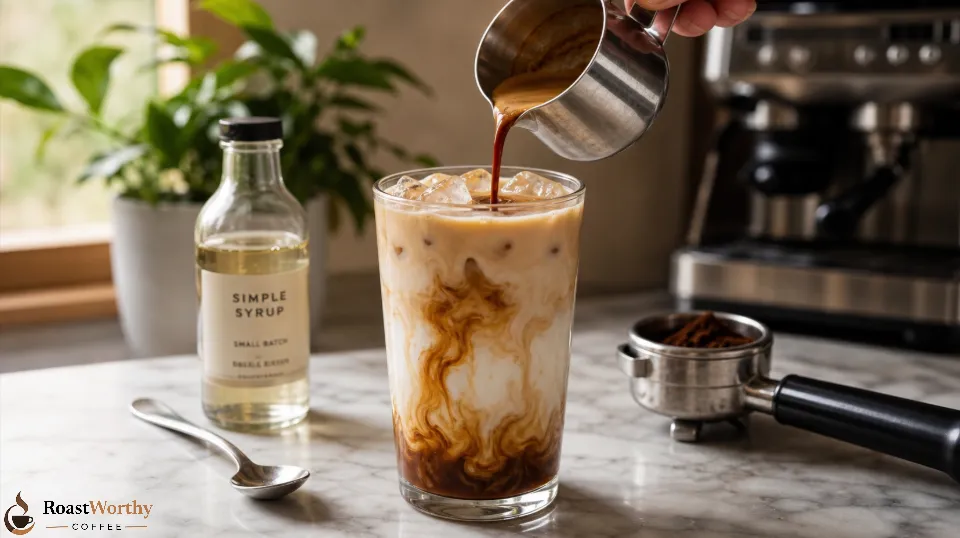
This is the foundation. Nail this before trying any variation.
Ingredients:
Steps:
- Brew your espresso. Two shots, 25–30 second extraction, targeting 60ml total. If your shot runs long past 35 seconds, coarsen your grind slightly.
- Pack the glass with ice first. Full cubes, packed tight. Gaps mean faster melt.
- Pour cold milk over the ice. This step creates a thermal buffer before the hot espresso arrives. Don't skip it, don't reverse it.
- Pour espresso slowly over the milk. Hold the cup close to the surface and pour in a thin, steady stream. The espresso drifts down through the milk in visible layers.
- Add sweetener if using. Stir once — one slow pass from top to bottom. Done.
Total time: 4–5 minutes including the espresso pull.
Why Cold Milk Goes In Before Espresso
This is where most homemade attempts fall apart.
Pour hot espresso directly onto ice first and you immediately lose 30–40% of your ice volume before the milk even arrives. What you're left with is watery, flat, and disappointing before the first sip.
Milk goes in before the espresso. The cold milk cushions the thermal shock. The ice holds. The espresso layers through the drink visually and the crema survives long enough to taste it.
One small sequence change. The difference in the glass is significant.
How to Make a Vanilla Iced Latte
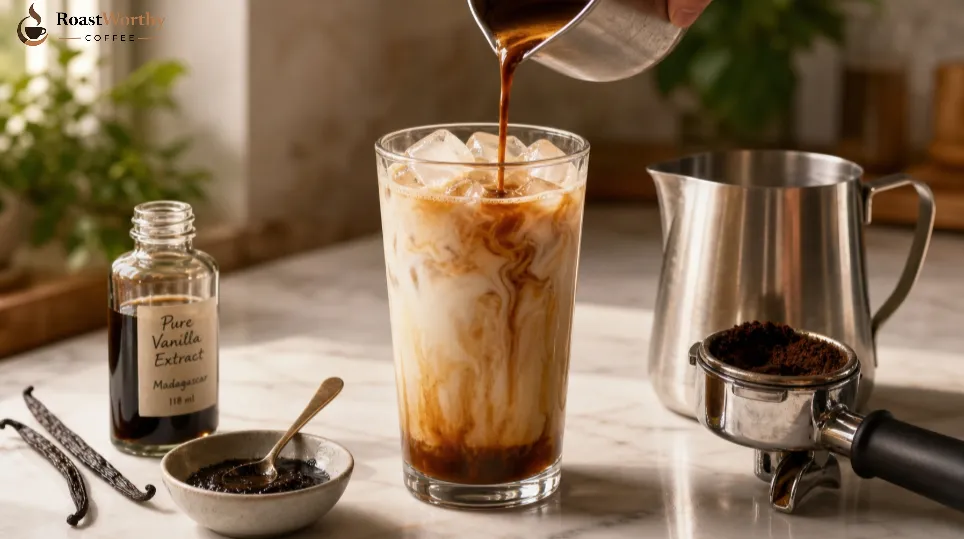
The vanilla variation outsells every other flavour at most cafés that offer it. The reason is that vanilla complements espresso — it doesn't compete with it.
What changes from the base:
The syrup hits the ice first. The milk distributes it evenly as it pours. No dense sugar layer at the bottom of the glass.
For a richer version, stir half a teaspoon of real vanilla bean paste into the milk before pouring. Paste is thicker than extract, more aromatic, and noticeably different in cold applications. Worth the upgrade.
Oat Milk Iced Latte: The Best Non-Dairy Version
Oat milk is the most espresso-compatible non-dairy option available. Not opinion — chemistry. ⚗️
Beta-glucan starches in oats break down into natural sugars during production. That inherent sweetness bridges espresso bitterness better than almond, soy, or coconut milk. The fat profile in barista-grade oat milk also sits close to 2% dairy, so it stays creamy over ice instead of thinning out.
What changes from the base:
Always use barista-grade, not regular oat milk. The barista formulation includes an emulsifier (usually rapeseed or sunflower oil) that prevents the milk from curdling when hot espresso hits it. Regular oat milk can split. It doesn't always — but it happens often enough to not risk it.
Brown Sugar Shaken Iced Latte Recipe
Thirty extra seconds. Genuinely worth it.
Shaking the espresso with ice and brown sugar aerates the shot, fully dissolves the sweetener, and chills the espresso rapidly without the slow dilution that sitting ice causes.
What changes from the base:
The texture is lighter and slightly aerated, with a thin foam layer from the shaking. Brown sugar adds caramel and molasses edges that pair well with a medium-roast Colombian or Brazilian espresso — the round, chocolatey character of those origins meets the brown sugar cleanly.
Iced Latte vs. Iced Coffee: Key Differences
| Iced Coffee | Iced Latte | |
|---|---|---|
| Base | Brewed drip or pour-over | Espresso shots |
| Milk | Optional | Required — defines the drink |
| Strength | Moderate | Stronger, more concentrated |
| Flavour | Lighter, slightly acidic | Rich, roast-forward |
| Best Roast | Light to medium | Medium to medium-dark |
| Dilution Risk | High | Controlled with pour order |
Both drinks are worth making. They are not the same drink, and swapping one for the other changes the result entirely.
Picking the Right Roast

The roast level changes the character of the drink once espresso meets cold milk.
Medium roast is the default for good reason. Sweetness and chocolate-caramel tones come forward when cold. Those flavours are durable — they hold up through dilution without becoming harsh.
Light roast produces something more acidic and fruit-forward. Ethiopian or Colombian light roasts turn the drink citrusy and almost sparkling in character. Use three shots instead of two — light roasts lose perceived strength quickly at cold temperatures and through milk.
Dark roast can work, but complexity fades fast over ice. With milk in the mix, most dark roasts taste flat and one-dimensional once cold. If dark is your preference, a vanilla or brown sugar variation compensates for what the roast drops in the cold.
Taste it. Write it down. Roast it again.
Tips for a Better Homemade Iced Latte
How to Make Iced Lattes for a Group
The ratios stay identical regardless of batch size.
For larger groups, the shaken method scales well. Shake two portions at a time in a large mason jar, strain into individual glasses. Faster than pulling individual shots and the aeration adds a consistency that straight-poured batches sometimes miss.
FAQs
Can I make this without an espresso machine?
Yes. A Moka pot is the best no-machine option — full basket, slightly finer grind than usual. AeroPress at a 1:5 ratio also works well. French press or drip coffee won't — the concentration is too low to hold up through ice and milk.
What milk works best?
Whole milk for richness and texture. For non-dairy, barista-grade oat milk is the closest match — creamy, naturally sweet, and it doesn't separate when hot espresso hits it. Avoid skim milk; it goes thin and watery almost immediately over ice.
Why does mine taste watery?
Two causes: wrong ice or wrong pour sequence. Crushed ice melts before the drink is even built. Hot espresso poured directly onto ice accelerates the melt. Use full cubes, add milk before espresso. Those two changes fix the problem in most cases.
How many shots should I use?
Two shots for a 12–16 oz glass with medium roast. Three shots for light roast, or if you prefer a stronger drink. One shot gets lost completely once the milk and ice dilute it.
Can I prep espresso ahead of time?
Not really. Pre-brewed refrigerated shots lose crema and flatten in flavour within 10–15 minutes. If you need to prep ahead, cold brew concentrate is a better option — it's stable for days in the fridge and holds up well through milk.
Is this the same as a cold brew latte?
No. Cold brew is made by steeping coarse-ground coffee in cold water for 12–24 hours. This recipe uses hot espresso poured over ice. Cold brew is smoother and lower in acidity. An espresso-based preparation is brighter, more complex, and faster by about 23 hours and 55 minutes.
Your first attempt will be imperfect. Make it anyway.
Pour order, roast choice, milk type — all of it becomes instinct after a few tries. You stop measuring and start tasting. That's exactly where you want to be. ☕
More Recommendations from RoastWorthy Coffee